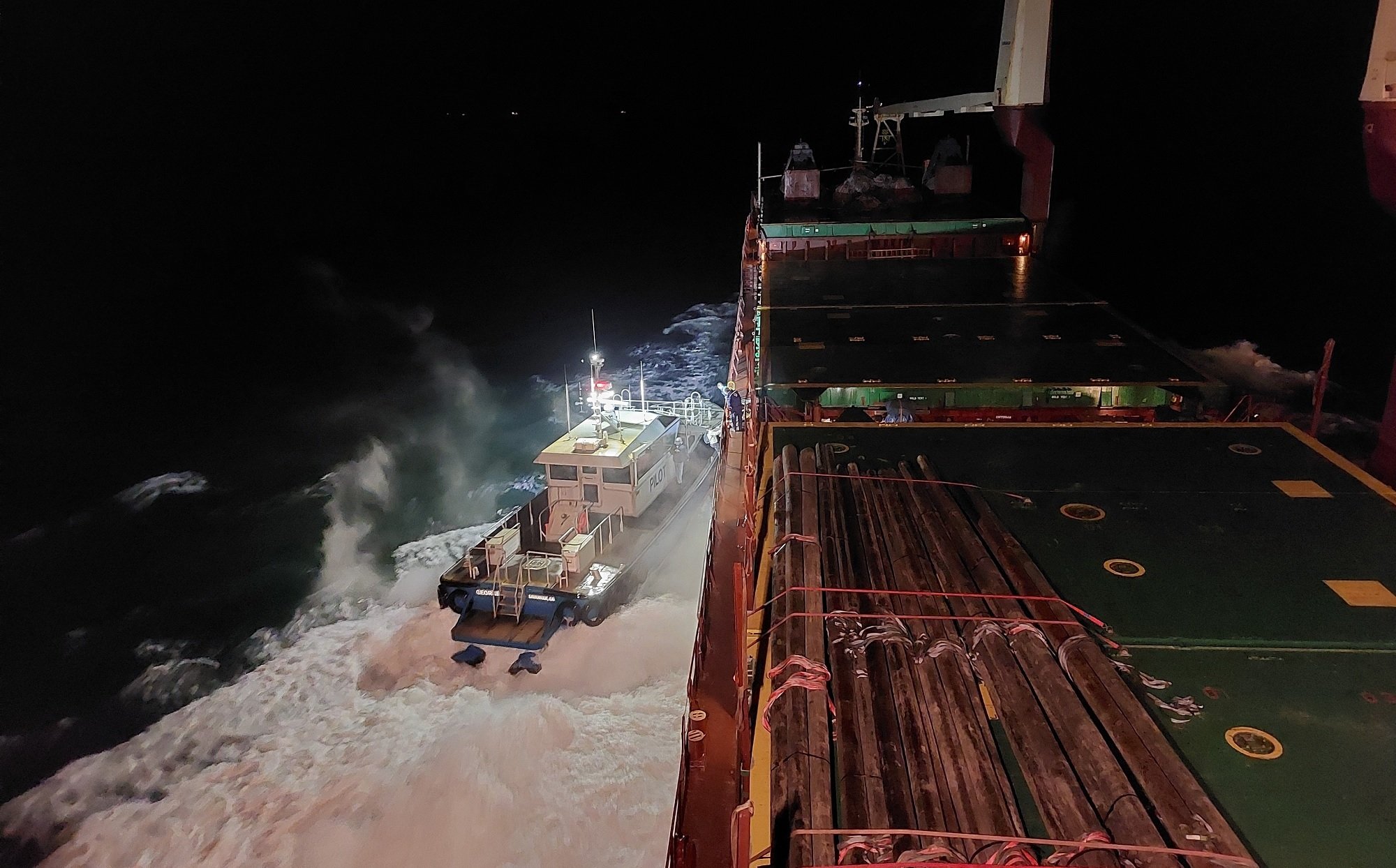
They have arrived at the Brajdica dock, controlled by the Filipino company ICTSI, after a two-month voyage from Shanghai, transported by the ship Zhenhua 25
Rijeka – The skyline of the port of Rijeka is enriched by two new ship-to-shore cranes, confirming the rapid growth underway in the Croatian port. This time the order is not for the Rijeka Gateway, the 650 thousand TEU container terminal just put into operation by Maersk, but was placed by the historic Adriatic Gate Container Terminal, now under the control of the Filipino company ICTSI at the Brajdica dock.
The two Super Post-Panamax cranes produced by ZPMC arrived in Rijeka after a two-month voyage from Shanghai, transported by the ship Zhenhua 25. Before arriving in Croatia, the vessel called at Turkey, where it unloaded three other cranes at the Evyap Terminal in Izmit. As AGCT explains, the two cranes “represent a significant investment in the modernization and expansion of the terminal’s capacity.” After installation and testing, full operation is announced for the end of the year.
In 2024, AGCT completed a 17.4 million euro project that increased the depth of the terminal’s southern dock to over 16 meters. In July, the ICTSI dock handled the ship CMA CGM Adonis (15,536 TEU), the largest ever to dock in Rijeka. Other container ships of similar size from the French shipping company will now call at the terminal on a rotating basis.
Today the dock is 400 meters long and handles 400 thousand TEU of containers, but the plans include an extension to 680 meters and an increase in capacity to one million TEU. A second dredging phase is being planned to accommodate 24,000 TEU vessels. The company is meanwhile making a 40 million dollar investment for the two newly arrived STS cranes, plus two hybrid RTG cranes, electric tractors, and energy efficiency and automation measures. In the adjacent terminal, Maersk is not standing by and has already announced the second phase of the Rijeka Gateway, to also reach over one million TEU of capacity.
Between Rijeka Gateway and AGCT, Rijeka now operates with a potential capacity of one million TEU and plans to reach two million in a few years, demonstrating the work underway in Croatia to enhance the national logistics system with the aim of positioning itself alongside Koper and Trieste as a reference hub for Central Europe. The bottleneck remains the rail transport of goods in and out. The design of the Rijeka-Karlovac lowland line will only start next year: the project is estimated at around 3 billion euros, but it will strengthen the weak connection with Hungary. The Croatian government attributes absolute importance to the project, also in light of perhaps exaggerated estimates, which link it to the possibility of quintupling the port’s turnover, bringing it to 3.3 billion euros per year.