A comprehensive logistics flagship warehouse with an investment of over 1 billion yuan commences operation, achieving a key leap from “port-to-port” to “end-to-end”.
Maersk places a “super piece” in Lingang.
On November 20, the largest, newest, and most advanced comprehensive storage facility in Lingang officially commenced operation.
This giant conjoined building in blue and white tones is located near the Donghai Bridge in the Lingang New Area of the Shanghai Pilot Free Trade Zone. It is Maersk’s latest comprehensive logistics flagship warehouse, built with an investment of over 1 billion yuan, covering a land area of 110,000 square meters and a total storage area of nearly 150,000 square meters. It has not only become the largest warehousing and logistics project in China for this shipping giant at one stroke but also serves as a new starting point for the company to efficiently serve China and connect with the world. It represents a key leap in Maersk’s strategic transformation from “port-to-port” to “end-to-end”.
Against the backdrop of global supply chain restructuring, why is this foreign-funded shipping giant making a heavy bet on Shanghai?
Maersk’s Strategic Pivot
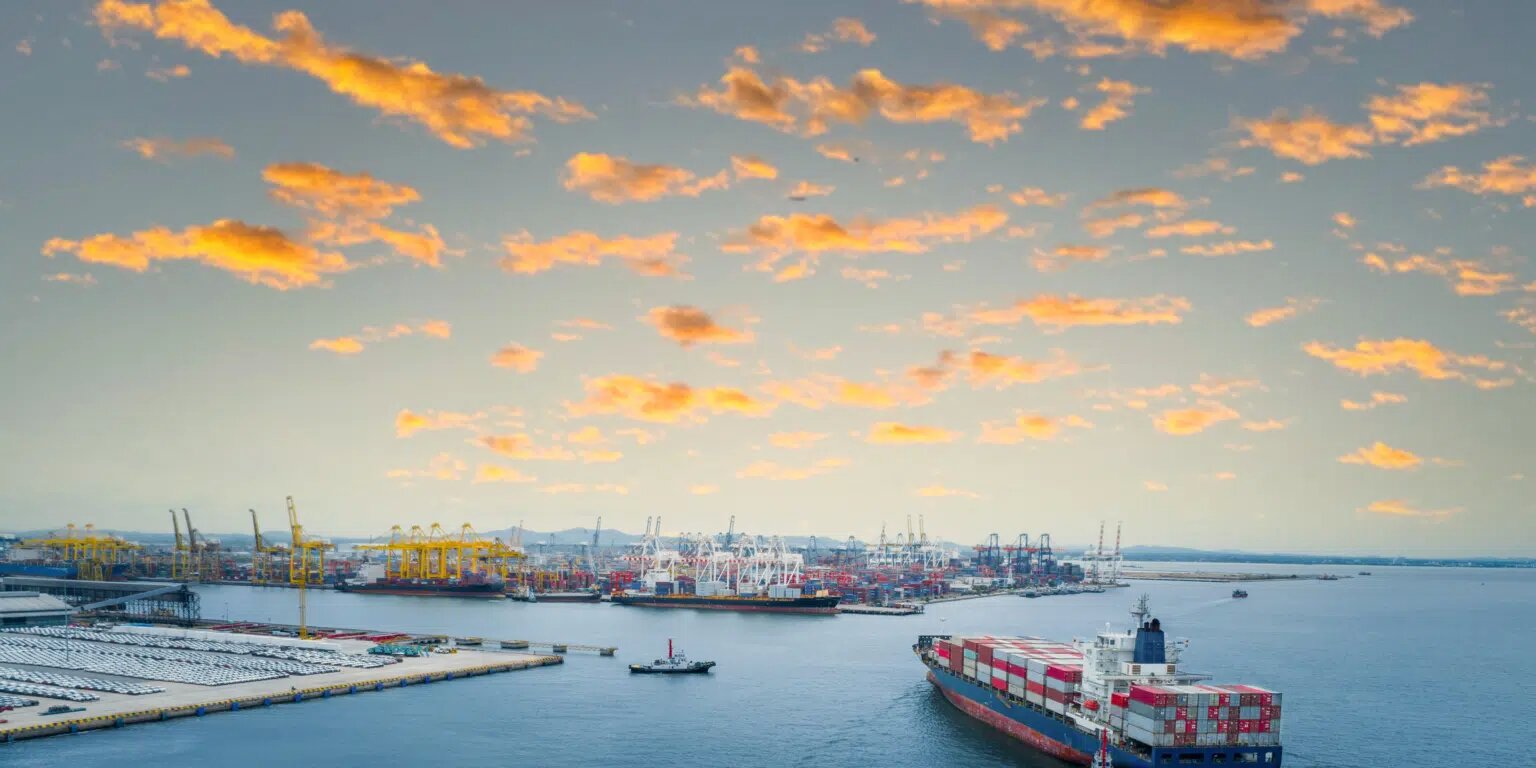
Looking out from the windows of the office building at Maersk’s Lingang comprehensive logistics flagship warehouse, the Donghai Bridge winds its way forward, leading to the Shanghai Yangshan Deep-Water Port.
“This is the ‘last mile’ for China’s exports and the ‘first mile’ for imports. Now, customers don’t need to worry about this mile,” said Ding Zejuan, President of Maersk Greater China.
The flagship warehouse not only enjoys a prime location but also benefits from open policies—it is located within the Yangshan Special Comprehensive Bonded Zone of the Shanghai Lingang New Area. Leveraging the advantages of institutional innovation, it can enjoy support from multiple innovative and simplified regulatory policies.
Here, the customs enclosure becomes “unnoticeable”. Maersk will be approved to implement a classified supervision policy, allowing bonded and non-bonded goods to be stored in the same warehouse and supporting the direct change of status between the two within the zone without needing to pass through the checkpoint.
For example, for export enterprises, once export goods arrive at the Maersk Lingang comprehensive logistics flagship warehouse, they are deemed exported, and companies can immediately handle export tax rebates. In the traditional model, export goods arriving at the port must wait for matching vessel schedules, and companies only receive tax rebates after the goods are shipped. For importers, goods can be quickly transferred to the bonded warehouse upon arrival at the port, with customs clearance and shipment occurring only after consumer orders are confirmed.
Opening up this crucial “mile” means companies no longer need to stock goods in advance; they can make decisions at the last moment, significantly increasing flexibility and substantially reducing logistics costs. This implies a great enhancement in supply chain resilience.
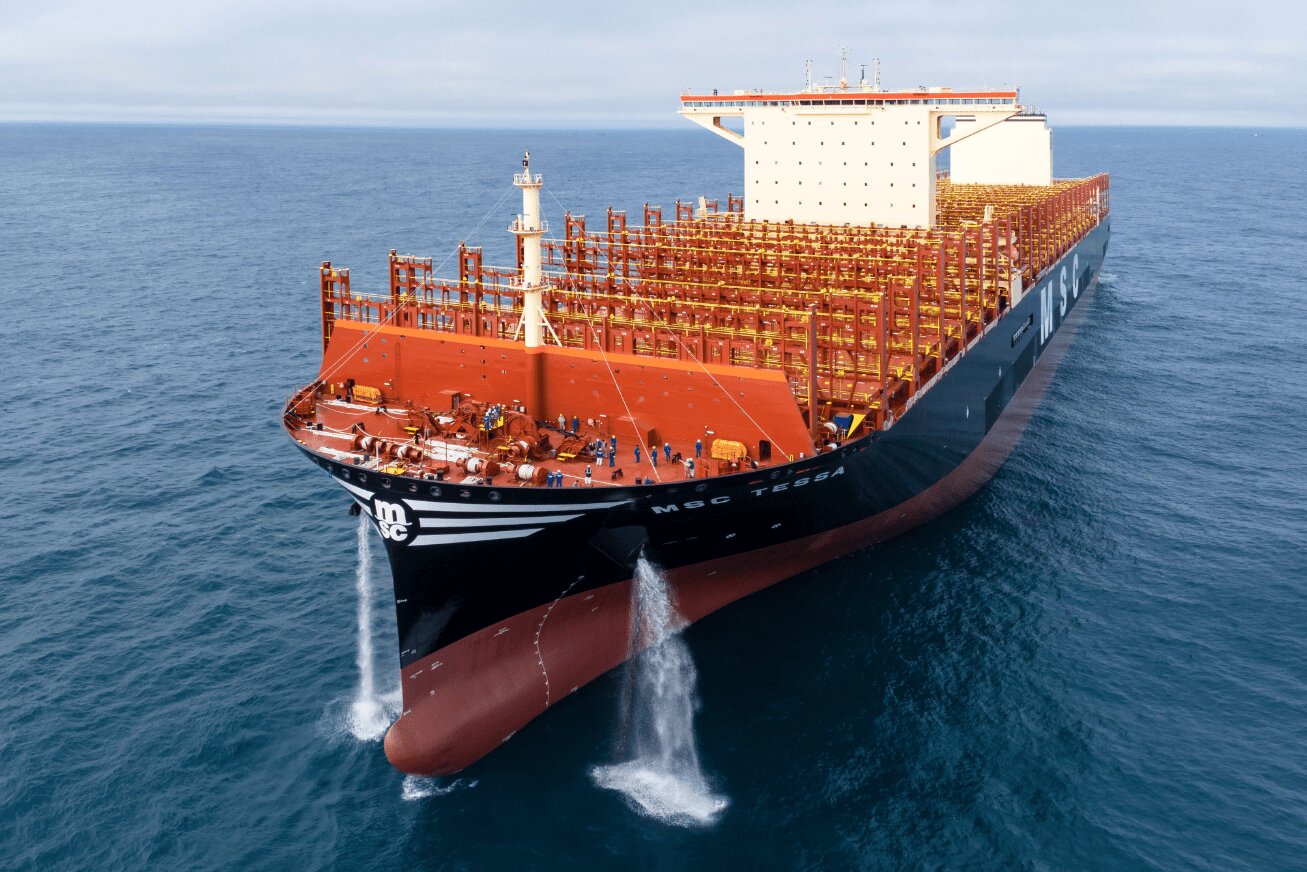
In the future, the Lingang comprehensive logistics flagship warehouse can be developed into a distribution center for China’s imports and exports, an e-commerce cross-border fulfillment center, and even a regional and global distribution center—through the “Gemini” network formed by Maersk and Hapag-Lloyd, goods from some surrounding countries and regions will be transferred to the Shanghai Port, an international hub port, for distribution, and then shipped to other overseas hub ports via large container ships for distribution to global markets.
A New Growth Pole for Shanghai Port
Industry insiders believe that Maersk’s establishment of the Lingang comprehensive logistics flagship warehouse will further enhance the soft power of the Shanghai International Shipping Center.
In August this year, the monthly container throughput of Shanghai Port exceeded 5.02 million TEUs, setting a new monthly record. When introducing the background of this new record, Zhou Yong, Deputy General Manager of the Production Business Department of Shanghai International Port Group, mentioned that the “Gemini” shipping alliance between Maersk and Hapag-Lloyd, which began operations in February this year, provided strong support for the growth of Shanghai Port’s container volume.
Shanghai Port is one of the few major hub ports in the “Gemini” global route network. Consequently, more goods from surrounding countries are transshipped through the Shanghai Port hub, significantly increasing the international transshipment volume at Shanghai Port.
In recent years, Shanghai Port has actively sought new growth and vigorously developed its international transshipment business. Data shows that in 2024, the international transshipment volume at Shanghai Port exceeded 7 million TEUs, a year-on-year increase of over 20%, which was a key support for Shanghai Port becoming the world’s first port with an annual throughput exceeding 50 million TEUs.
To increase international transshipment volume, besides full container transshipment, consolidation business is also crucial. In the first half of this year, the international transshipment and consolidated container volume at Shanghai’s Yangshan Deep-Water Port reached 2.696 million TEUs, a year-on-year increase of 10.6%.
“We are deepening cooperation with globally leading enterprises like Maersk, Kuehne+Nagel, and Mainfreight to improve service quality and attract more international logistics companies to establish transshipment and consolidation centers in Shanghai,” said a relevant person in charge of the Shanghai Port International Transshipment and Consolidation Center.
A Benchmark for the Shipping Industry’s Transformation
Furthermore, Maersk’s Lingang comprehensive logistics flagship warehouse will also become a new benchmark for the Shanghai International Shipping Center in leading the global shipping industry’s green, low-carbon, and intelligent transformation.
“It is named the ‘flagship warehouse’ because it utilizes the latest intelligent technologies and represents the latest explorations in carbon neutrality, holding benchmark significance,” said a relevant person in charge of Maersk, adding that these technologies and explorations will be replicated globally.
Maersk’s heavy investment in placing this “global benchmark” in Shanghai also reflects foreign companies’ long-term confidence in Shanghai and China. Today, the Chinese market is already one of Maersk’s largest global markets. Although the global trade landscape is undergoing profound changes, feedback from customers indicates that overall cargo volume continues to grow, and the long-term optimistic attitude remains unchanged.
And Shanghai will not disappoint this expectation. “In just two years, I have witnessed the Maersk Lingang comprehensive logistics flagship warehouse progress from groundbreaking to its official operation today. This is the ‘Lingang Speed’ from blueprint to reality,” said Zhao Yihuai, Full-time Deputy Director of the Lingang New Area Administrative Committee.
The “Lingang Speed” created by continuously optimizing the business environment is precisely the “open attitude” of China and Shanghai firmly embracing the world and working hand in hand with all parties to create the future.
(Source: Jiefang Daily Reporter: Wang Li)