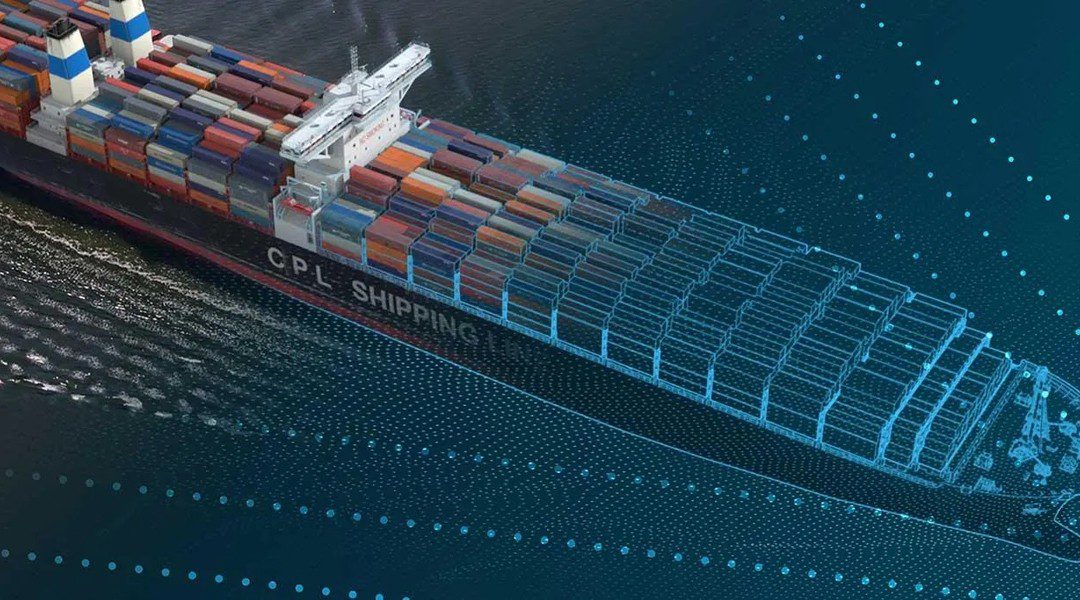
As the developer of the world’s first generative AI tool for ship design, London-based deep tech company Compute Maritime has recently taken the lead in the UK government-funded GenDSOM project. The goal is to utilize generative AI and additive manufacturing (3D printing) technology to develop a new generation of Crew Transfer Vessels (CTV).
The total project amount is £700,000 (approximately RMB 669.65 billion), funded by the UK government. In addition to the lead, Compute Maritime, project partners include Siemens Digital Industries Software, Rapid Fusion, HP, BYD Naval Architects, and the University of Southampton.
The GenDSOM project aims to significantly shorten the time cycle from design to manufacturing and provide high-performance, innovative solutions. This goal will be achieved by introducing a higher level of intelligence into modern ship design, specifically through integrating simulation, optimizing processes, and validating them against the constraints and workflows of additive manufacturing.
Project partners will collaborate based on their respective expertise. Among them, Compute Maritime is responsible for generative artificial intelligence, BYD Naval Architects is responsible for design and providing a crew transfer vessel as a test case, the University of Southampton is responsible for simulation, Siemens is responsible for optimization, Rapid Fusion is responsible for additive manufacturing, and the integrated development process will be supported by the advanced computing capabilities of HP Z Workstations & Solutions.
The project’s focus is on optimizing hull design and utilizing Rapid Fusion’s Apollo robotic system for large-format additive manufacturing to produce hydrofoils.
Shahroz Khan, CEO of Compute Maritime, stated: “Facing multiple challenges, the maritime industry urgently needs a truly evolved intelligent design framework to balance sustainability with operational and economic feasibility.”