The distinguishing difference this year is that the ICS no longer treats it as an isolated threat, but as a catalyst that violently reshapes trade flows, sea routes, freight rates, the sanctions framework, crew safety and investment decisions.
The “ICS Maritime Barometer Report 2025-2026”, based on a record number of responses from leading shipping executives, depicts an industry operating in an environment of constant uncertainty.
As noted, the survey gathered over 180 responses, the majority of which came before the start of the major conflict in the Middle East in early 2026, a factor that makes the intensity of concerns already present in the industry even more indicative.
According to the ICS, geopolitical instability has evolved into a risk multiplier, as it not only affects security in specific maritime zones, but is linked to sanctions, wars, tariffs, trade agreements, direct attacks on ships, restrictions on freedom of navigation and upheavals in the structure of global trade.
In fact, the concept of accumulation and cross-feeding of risks runs throughout the entire report.
In practice, this means that shipping companies are no longer called upon to manage one risk at a time.
Geopolitical tension can simultaneously change routes, increase insurance costs, activate sanctions regimes, increase administrative burden and strengthen cyber threats.
As the ICS notes, uncertainty is no longer treated as a temporary disruption, but as a structural condition within which operational and investment decisions are made.
After geopolitical instability, cyber attacks emerge as the second biggest risk for shipping.
The increasing digitalization of ships, ports and logistics, the use of remote monitoring systems, artificial intelligence and the interconnection of operational systems create new points of vulnerability.
The ICS points out that, although the risk has slightly receded in ranking, confidence in the industry’s ability to address it has also weakened, indicating a gap between threat and preparedness.
In third place among risks are unilateral and regional regulations, followed by increasing administrative burden and trade barriers. This picture highlights an increasingly fragmented regulatory map.
Shipping is called upon to operate simultaneously under different regimes, such as the EU ETS, FuelEU Maritime, national emissions trading systems, carbon taxes and different reporting obligations, a fact that now affects not only compliance, but also route planning, investments and fuel choices.
The barometer also places particular emphasis on the green transition, with shipping executives considering regulations to be the factor with the greatest impact on operational decisions, while public funding is ranked as very important, but at the same time shows the lowest level of confidence.
In simple terms, the industry recognizes that decarbonization requires public support, infrastructure and financing mechanisms, but is not certain that these will be available consistently and adequately.
This finding is particularly important, as the transition to alternative fuels depends not only on the technological readiness of ships.
It requires fuel production, bunkering infrastructure, port investments, a stable regulatory framework and financial incentives to reduce costs.
The ICS emphasizes that progress on decarbonization will depend on the interplay between policy, finance and realistic measures.
On the critical issue of future fuels, the picture is characterized as pragmatic.
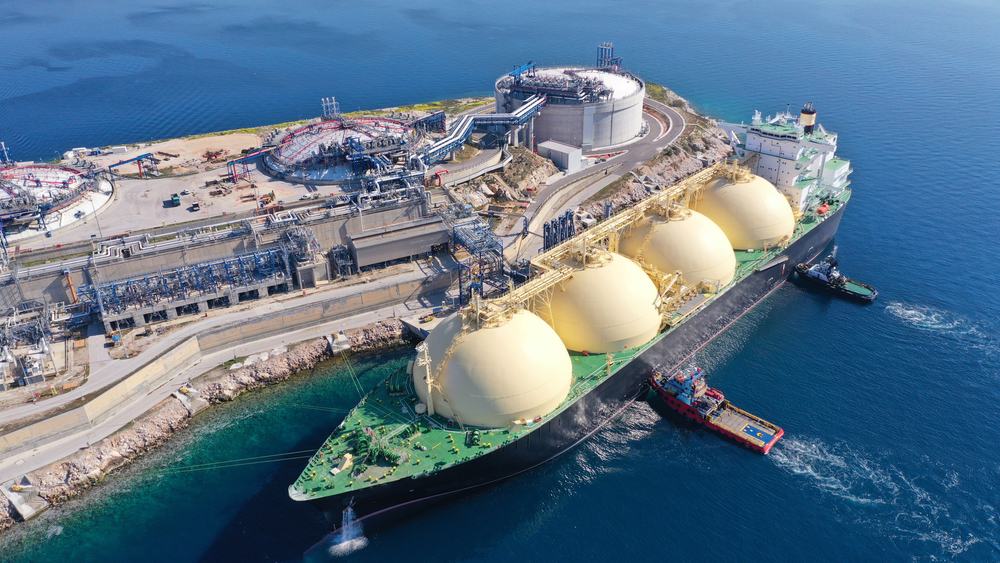
LNG and biofuels are highlighted by participants as the most sustainable options, followed by HFO in combination with emission reduction technologies.
This preference does not indicate abandonment of more ambitious solutions, such as ammonia, methanol, or hydrogen, but shows that in a high-uncertainty environment, companies prefer solutions with mature supply chains, known technology, and compatibility with existing infrastructure.
At the same time, the delay in IMO discussions on the Net-Zero Framework adds another layer of uncertainty.
The majority of participants state that they have not directly changed their plans, however a portion of companies have already modified or abandoned decarbonization strategies.
Within this environment, the message of the new ICS President, John Denholm, also acquires particular importance.
The Board of Directors of the International Chamber of Shipping unanimously elected him president, succeeding Emanuele Grimaldi, during the organization’s annual general assembly at Palazzo Valentini in Rome.
In his note titled “Clarity amidst the chaos” which introduces the barometer, Denholm notes that shipping is entering a period where uncertainty forms the backdrop for every decision.
His key message is that the industry needs clarity, coordination, certainty, and collective effort.
As he points out, the investments required for the energy transition will not materialize without regulatory certainty and global alignment, while the digital transition requires a corresponding strengthening of cybersecurity.
To have more articles from Naftemporiki appear easily and quickly in your searches, you must add the site to your preferred sources. You can do this by going here.