Russia’s invasion of Ukraine has put Germany under pressure to become more independent of natural gas from Russia. A new LNG terminal in Brunsbüttel near Hamburg is supposed to increase Germany’s security of supply.
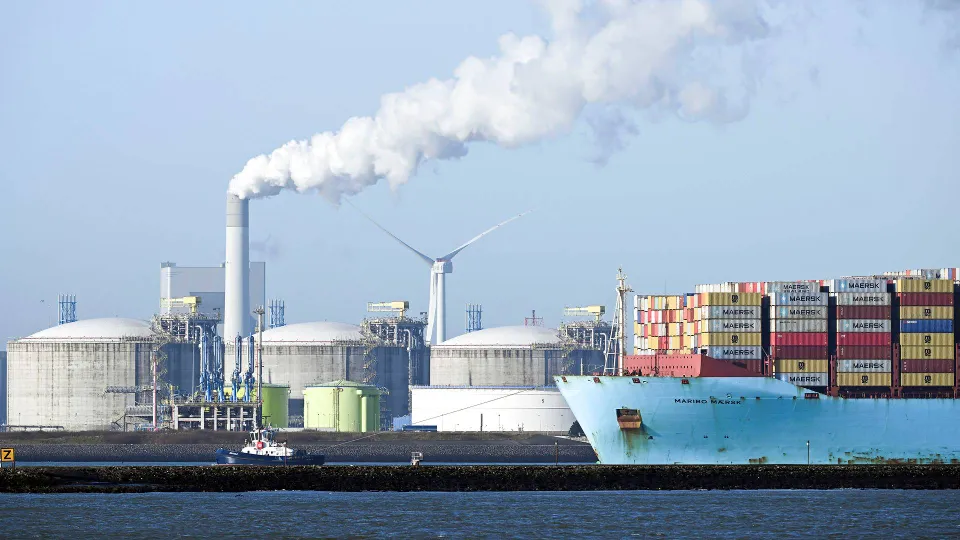
Import terminal for LNG at the Port of Rotterdam. | Photo: Federico /Ritzau Scanpix
The German government aims to carry through the construction of a terminal for liquefied natural gas (LNG) in Brunsbüttel west of Hamburg as soon as possible in the attempt to limit the country’s dependence on Russian gas supplies.
First step in the project is a declaration of intent made between the German bank Kreditanstalt für Wiederaufbau (KfW) and the Dutch gas company Gasunie that will be in charge of construction and operation of the terminal, which is supposed to be able to deliver 8 million cubic meters of natural gas annually.
”We must reduce dependence on Russian gas. LNG terminals help to increase security of supply in Germany and Europe. At the same time, we are preparing for the future by designing the terminal in such a way that green hydrogen or hydrogen derivatives (such as ammonia) can be imported at a later date,” says Germany’s Minister of Economic Affairs and Climate Robert Habeck, according to a Gasunie announcement.
The parties hope that construction of the LNG terminal can begin before the end of the year.
Terminal will be able to take LNG from the US and Qatar
The project is not new but has been limited by, among other things, a delayed environmental approval due to resistance from German environmental organizations. In December last year, one of the investors, Dutch Vopak LNG Holding, chose to halt its active participation in the project.
After Russia’s invasion of Ukraine, the German government has, however, chosen to treat the Brunsbüttel terminal as an urgent project. With the inclusion of KfW and Gasunie, the investors up until now, Vopak (which is still co-owner) and German company Oiltanking (which specializes in storage of oil products), step out.
It is expected to take three and a half years to complete the terminal from when construction begins. When it’s done, Germany will be able to import LNG from the US and Qatar, among other places.