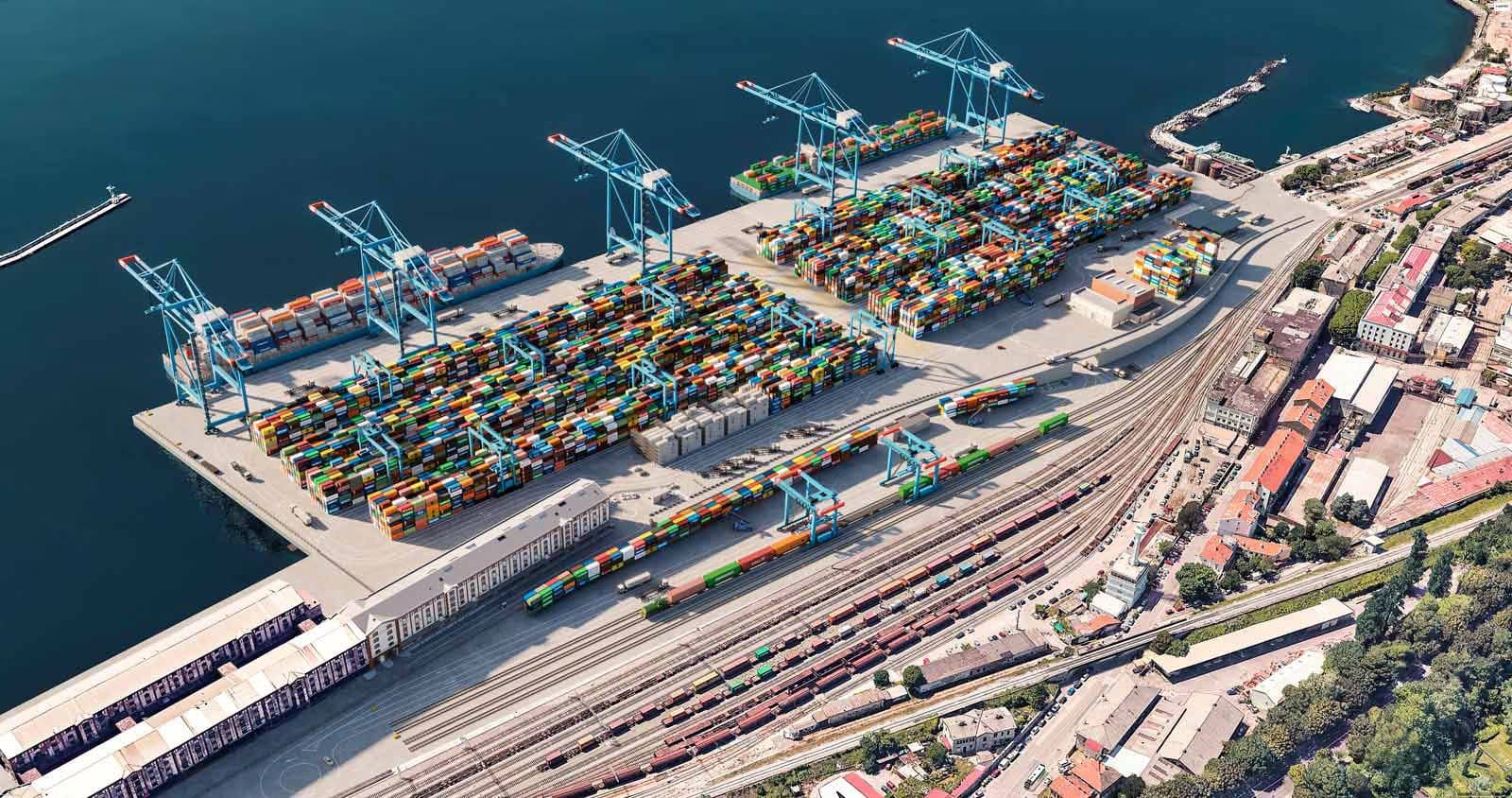
The Port Authority of Gijón will allocate 1.5 million euros over the next four years to the maintenance of the port’s internal railway network. This was approved by the board of directors, which gave the green light to the contracting of the service through a framework agreement aimed at reinforcing intermodality at the Gijón facilities. The contract includes preventive and corrective maintenance work on the approximately 35 kilometers of railway tracks within the port area. Among the planned actions are periodic inspections, cleaning of elements, adjustments and greasing, with the aim of guaranteeing the conservation and operability of a key infrastructure for access to all docks and main logistics areas of the port.
In the same session, the board also approved the regulations that will govern the installation and use of temporary posts intended for nautical-sports activities in the local port and on the beaches of Poniente and El Arbeyal. The measure is part of the development of the Reform, Planning and Accessibility Plan (PROA), a roadmap for the transformation of port spaces in contact with the city.
The new regulations establish technical, aesthetic and operational criteria for these posts, in order to ensure their landscape integration, compatibility with port activity and proper coexistence with the flow of users and the development of activities linked to the blue economy. The president of the Port Authority, Nieves Roqueñí, has stressed the need for “clear, transparent and homogeneous criteria” that facilitate administrative processing and improve the quality of facilities and services related to nautical-sports activities.
Lower steelmaking activity
During the meeting, the board also analyzed the evolution of port traffic so far this year. Up to April 2026, the port has exceeded four million tons moved, although conditioned by two external factors: the virtual disappearance of imported thermal coal and the reduction in demand for raw materials by ArcelorMittal, linked to the decline in steelmaking activity.
The rest of the traffic shows a stable or clearly positive performance, even in a context in which the Spanish port system recorded a 1.3% decline in March. Thus, liquid bulk has experienced a slight growth in the year-to-date, while general cargo has registered sustained growth, driven by container traffic and the movement of steel products. In the cumulative total, general cargo amounts to 623,619 tons, 21.9% more than in 2025, in contrast to the 2% drop recorded by the Spanish port system up to March. Notable in this regard is the strong dynamism of container traffic, which in the cumulative total for April exceeds 330,000 tons and reaches 23,652 TEUs, driven by the new line with Canada and the start-up of the rail service. TEUs have grown by 3.97% compared to April 2025, while the associated tonnage has increased by 3.14%.