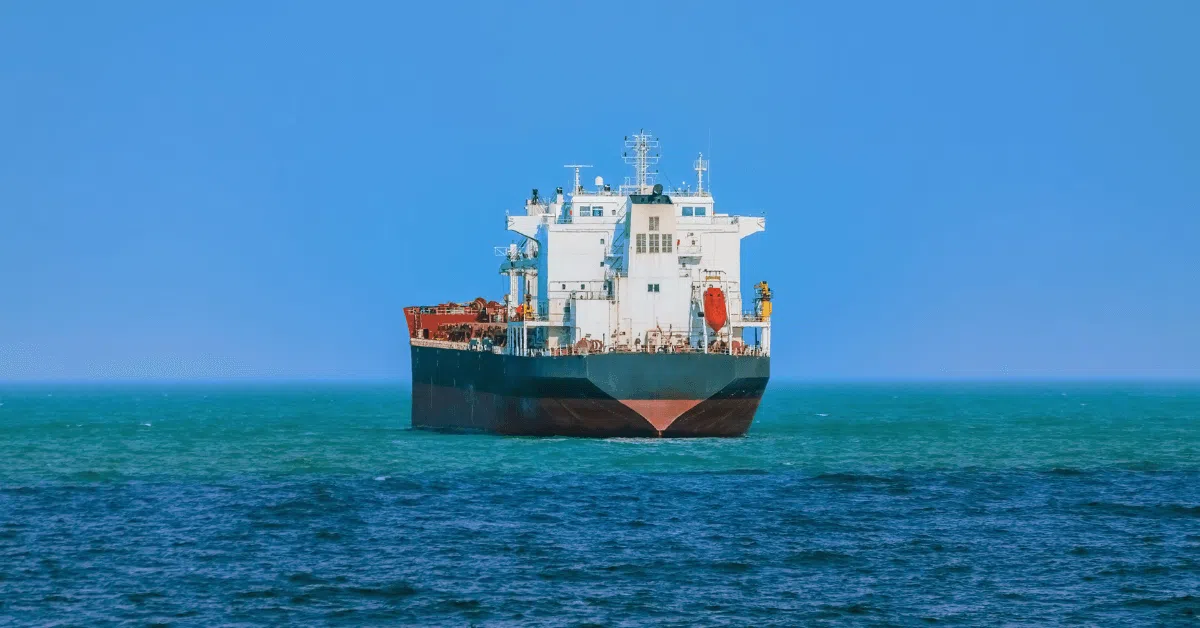
Indonesia’s Attorney General’s Office will auction the Iranian-flagged supertanker MT Arman 114 and its cargo of light crude oil on 2 December 2025 at a limit price of Rp1,174,503,193,400 (about USD 70.47 million).
The sale will appear as a single lot on lelang.go.id. Bidders must file a Rp118 billion guarantee (around USD 7.08 million) and provide permits for handling oil and gas. The AGO says the lot includes the VLCC MT Arman 114 (IMO 9116412, built 1997) and 166,975.36 metric tons of light crude.
The vessel remains under guard off Batu Ampar, Batam. As of 25 November, 19 companies had registered, including Pertamina. Prosecutors describe the sale as execution of a final criminal ruling despite a parallel civil dispute.
The tanker was seized after a July 2023 interception in the North Natuna Sea, where authorities say it conducted an illegal ship-to-ship transfer with MT S Tinos, with AIS spoofing and equipment that caused an oil slick.
In July 2024, the Batam District Court sentenced the ship’s master, Mahmoud Mohamed Abdelaziz Mohamed Hatiba, to seven years and a Rp5 billion fine (about USD 300,000), ordering the vessel and cargo confiscated.
A civil ruling on 2 June 2025 recognized Ocean Mark Shipping Inc. of Panama as the owner and ordered the vessel returned, but prosecutors appealed and say the earlier criminal judgment allows the auction to proceed.
The case drew international attention because the tanker previously operated as Grace 1 and Adrian Darya 1 and was detained off Gibraltar in 2019.
Maritime records list Ocean Mark Shipping Inc. as owner, while analyses have linked the ship to Iran’s “shadow fleet” and networks associated with the National Iranian Tanker Company. Iran’s oil ministry has denied state ownership of the crude. US sanctions designations have recently listed the vessel within networks moving Iranian crude in Southeast Asia.
Officials say the auction aims to recover state losses related to pollution and guarding the ship. Buyers gain access to a large crude parcel and a functional VLCC but face sanctions-related scrutiny and unresolved civil litigation.