Logistics is the lifeblood of the real economy, and reducing costs and increasing efficiency is the key to ensuring smooth domestic and international dual circulation. Recently, the General Office of the State Council forwarded the notice of the General Administration of Customs on “Several Measures to Promote the Capacity Expansion and Quality Improvement of Comprehensive Bonded Zones” (hereinafter referred to as “Several Measures”), proposing 24 reform measures in four aspects: enhancing the development capability of new business formats and models, ensuring the resilience and security of industrial and supply chains, promoting the integrated development of domestic and foreign trade, and improving the efficiency of smart supervision and collaborative governance. This set of policy combinations injects strong institutional momentum into cost reduction and efficiency improvement for the logistics industry.
Policy Iteration — From “Building Pillars and Frameworks” to “Capacity Expansion and Quality Improvement”
Comprehensive Bonded Zones (hereinafter referred to as “CBZs”) are hailed as the “jewel in the crown” of the open economy. In 2025, 168 CBZs nationwide achieved an import and export value of 7.2 trillion yuan, contributing nearly one-sixth of the country’s total import and export value with less than one twenty-thousandth of the national land area. However, facing the accelerated reshaping of the global trade landscape, CBZs also encounter problems such as weakened policy advantages, insufficient prominence in promoting the integration of domestic and foreign trade, and lack of international competitiveness.
The 24 reform measures released this time effectively connect with the several opinions issued by the State Council in 2019 — the former focused on “high-level opening-up and high-quality development,” “building pillars and frameworks” for CBZ development; the latter focuses on “capacity expansion and quality improvement,” striving to promote four major transformations in CBZ industrial forms, functions, development models, and supervision methods.
Pan Cheng, Director of the Department of Free Trade Zones and Special Regional Development of the General Administration of Customs, stated that these reform measures actively align with international high-standard economic and trade rules, researched and proposed based on the regional functional positioning and actual needs of enterprises. From the policy framework of “four transformations and four improvements,” each transformation is closely related to logistics cost reduction and efficiency improvement: “transforming industrial forms” pushes logistics to extend from traditional warehousing and transportation to high-end services; “transforming functions” strengthens the support and guarantee capability of logistics for industrial and supply chains; “transforming development models” promotes the integrated integration of domestic and foreign trade logistics; “transforming supervision methods” uses smart means to significantly reduce customs clearance time and lower institutional transaction costs.
The deeper significance of the policy lies in that it no longer regards CBZs merely as windows for foreign trade, but positions them as hub platforms linking domestic and international markets and resources. Through capacity expansion and quality improvement, CBZs are transforming from “policy depressions” into “institutional innovation highlands,” providing solid top-level design support for logistics cost reduction and efficiency improvement.
Three-Dimensional Empowerment — Reducing Logistics Costs Across the Entire Chain
Many of the 24 measures directly or indirectly affect the logistics field, forming a three-dimensional logistics empowerment chain from bonded warehousing and cross-border transportation to zone-port linkage.
The bonded logistics model is accelerating its iteration. Taking the “TIR + Bonded” business as an example, Manzhouli Airport Customs successfully implemented the first shipment, organically combining the policy advantages of CBZ bonded warehousing and convenient circulation with the efficient customs clearance throughout TIR transportation, eliminating the cumbersome processes of multiple /unloading and repeated customs declarations for goods under traditional models, significantly reducing corporate capital pressure and logistics costs, truly realizing the dual benefits of “bonded optimal storage + TIR express delivery.” Ordos CBZ also simultaneously implemented the first “TIR + Bonded” business, achieving “one truck direct delivery, door-to-door” for goods, eliminating secondary inspections at ports. In the first quarter of this year, the import and export value surged 53.4% year-on-year, with import value skyrocketing by 6365.1%.
Bonded blending of bulk commodities releases agglomeration and dispersion effects. The “Several Measures” explicitly allow enterprises within the zone to conduct physical blending of metal mineral products under the bonded logistics model. Taking iron ore as an example, relying on the bonded ore blending policy, steel enterprises can complete blending operations within the zone before exiting the zone, effectively reducing /unloading and transshipment costs and improving production efficiency. This policy directly embeds logistics cost savings into the front end of the production chain, optimizing the overall efficiency of the supply chain.
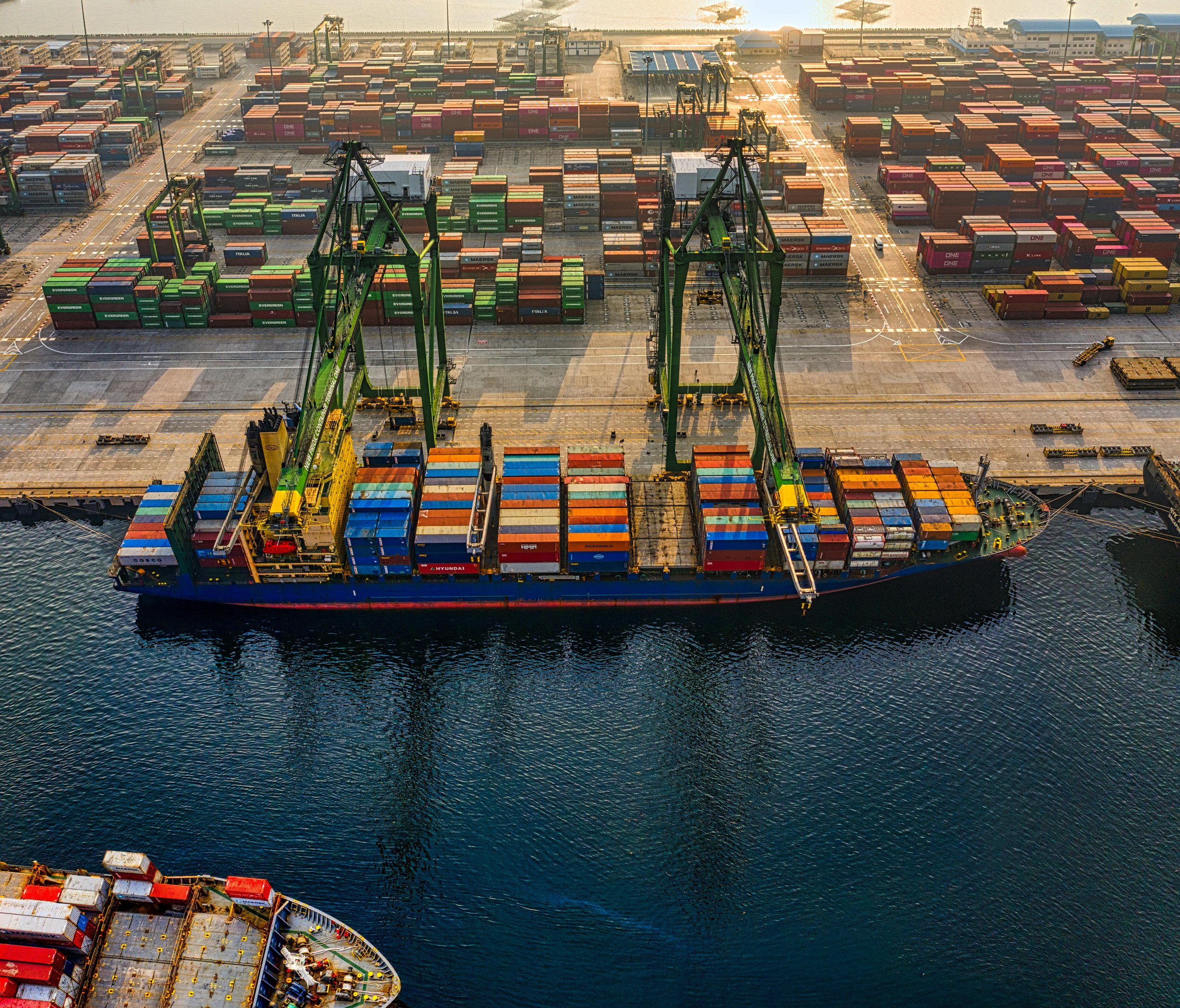
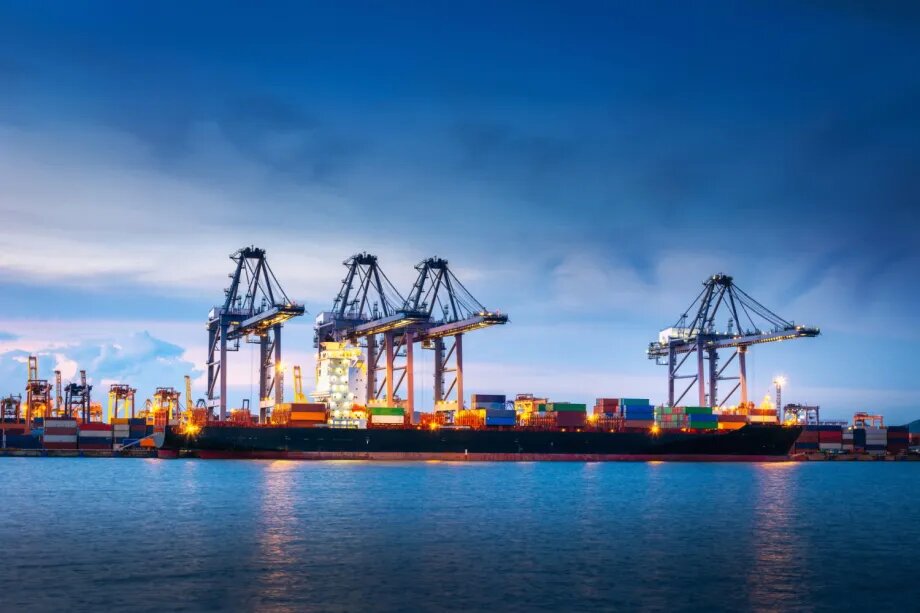
Zone-port linkage creates efficient hubs. Support for the coordinated development of CBZs and ports continues to increase. In qualified CBZs, supporting service facilities such as air cargo front-end stations and China-Europe Railway Express assembly centers are established, enabling seamless connection of “air-rail-road-water” multimodal transport within CBZs. For example, Ordos CBZ opened up the “Beijing-CBZ” cargo transportation channel, implemented bonded warehousing and domestic sales business for high-end imported servers, achieving a domestic sales import value of 110 million yuan, laying the foundation for the logistics agglomeration of high-value-added goods and regional supply chain coordination.
Pain Point Resolution — Cross-border E-commerce Welcomes New Return Mechanism
In the first part of the “Several Measures,” “Enhancing the Development Capability of New Business Formats and Models,” it explicitly proposes promoting the development of cross-border e-commerce by “allowing exported cross-border e-commerce goods to be returned to the comprehensive bonded zone, stored, sorted, and repackaged together with goods within the zone before re-export.” Experts indicate that this seemingly short sentence is essentially one of the most groundbreaking institutional innovations in the cross-border e-commerce export field in the past few years, directly targeting the industry’s pain point of “easy to export, difficult to return.”
Previously, once cross-border e-commerce export goods left the country, if they needed to be returned to China due to quality issues or consumer rejection, they could only be imported as ordinary goods in full batches with payment of tariffs and VAT, or be abandoned and destroyed locally. Enterprises often gave up on return shipments due to high costs. After the implementation of the new policy, exported goods can be returned to the CBZ for bonded storage, sorted together with export goods within the zone, repackaged, and then re-exported. This means export enterprises can establish a closed-loop return system, converting previously unrecoverable cargo value into goods for re-export, significantly reducing capital losses and warehousing and circulation costs. The entire chain of “export + return + repackaging + re-export” is completed within the CBZ under bonded status, eliminating institutional costs.
Cross-border e-commerce enterprises can also benefit from multiple supporting policies. For CBZ export-to-domestic-sale products involving compulsory product certification, certification fees can be reduced, and certification procedures simplified; under the smart supervision system, the comprehensive service management platform provides one-stop services for enterprises; in the field of fund settlement, qualified cross-border e-commerce enterprises can also enjoy trade foreign exchange receipt and payment facilitation policies, making foreign exchange collection and settlement more convenient and efficient, effectively alleviating the capital turnover pressure of small and medium-sized cross-border e-commerce enterprises.
Experts state that the release of the “Several Measures” is a systematic opportunity for the logistics industry to reduce costs and increase efficiency. When bonded logistics channels become smoother, zone-port linkage becomes more seamless, “bonded+” new business formats fully blossom, and the smart supervision system accelerates operation — logistics costs will decrease simultaneously in multiple links, forming a considerable cumulative effect.
Full Media Reporter Gan Chen compiled from Xinhua Net, CCTV Net and other media reports