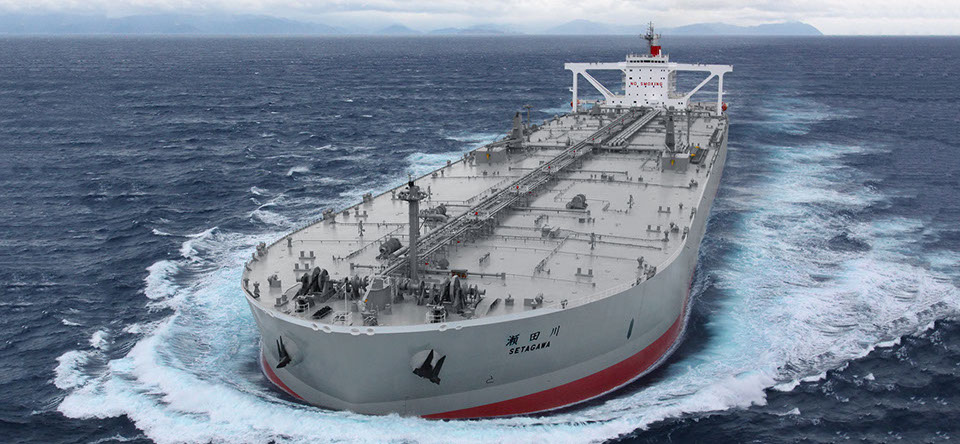
Since the start of Operation Epic Fury, the organization United Against Nuclear Iran (UANI) has detected a significant volume of Iranian oil in maritime transit. The illicit sales of crude would represent a key source of financing for the Islamic Revolutionary Guard Corps (IRGC), currently involved in military operations against the United States, Israel, Arab states of the Persian Gulf, and international maritime shipping.
In the weeks prior to the conflict, Tehran increased crude loadings and offshore storage, with the aim of mitigating the impact of the war on its oil trade. Amid the hostilities, the so-called Iranian ghost fleet continued to operate actively: loading oil, transiting the Strait of Hormuz, and heading towards its main buyer, China.
“The Strait of Hormuz remains a critical point in the current war with Iran, as the Iranian regime intensifies its efforts to disrupt maritime traffic. Since the start of the conflict, at least 24 commercial vessels have been hit and three near-miss incidents have been recorded,” UANI reported.
“The growing risk has generated severe congestion and instability in the Persian Gulf shipping lanes. Before the outbreak of hostilities, about 138 vessels transited the Strait of Hormuz daily. Since March 1, 2026, maritime traffic data shows growing concentrations of vessels stopped on both sides of the strait, many of them avoiding transit for safety reasons,” it added.
In his April 1 speech, President Trump declared that the United States does not depend on the Strait of Hormuz and called on other oil-dependent nations to take the lead in protecting their own commercial shipments through the waterway. However, he predicted that transportation flows “will open naturally” once the conflict ends.
“Numerous tankers sanctioned by OFAC and listed by UANI – along with some unsanctioned and apparently legitimate ones – have transited the Strait of Hormuz by intermittently turning off their AIS signals. These vessels pause briefly off Qeshm Island before proceeding, where they apparently receive tacit authorization from the Iranian regime after security checks and, in some cases, substantial payments,” UANI reported.
On April 2, the Panama-flagged tanker Deepblue (IMO 9350862) crossed the strait, briefly turning off its AIS signal as it passed near Larak Island. The vessel has been previously linked to Iranian diesel shipments.
At least three tankers bound for Oman transited the Strait of Hormuz from the Persian Gulf on March 1. Two VLCCs – loaded with crude according to their AIS signals – and one liquefied natural gas vessel sailed near the Omani coast and did not pass through Iran’s new checkpoint near Qeshm and Larak islands.
“Since the outbreak of the conflict, UANI has tracked at least 27 shipments of Iranian oil, 20 of which originated from Kharg Island, Iran. These shipments represent approximately 38 million barrels of Iranian crude, generating estimated revenues of over $3 billion for the IRGC, which continues to fund Iran’s active missile and drone programs, central to the conflict.”
This figure is notably higher than usual due to the sharp increase in oil prices, including Iranian crude,” stated UANI.
“Since the start of the conflict, UANI has observed at least 26 tankers from the ghost fleet loaded with Iranian oil that have left the Persian Gulf—some transmitting their AIS signals and others operating clandestinely. These vessels are heading to Malaysia to conduct ship-to-ship (STS) transfers with other ghost fleet tankers bound for China,” it added.
UANI has also monitored Iranian-flagged tankers operating beyond the Persian Gulf. “Since the conflict began, at least 19 Iranian-flagged vessels have arrived in Southeast Asian waters bound for the Eastern Outer Port Limits (EOPL) anchorage area off Johor, Malaysia. On April 1, the Iranian-flagged tanker Sinopa (IMO 9172038) transited the Strait of Malacca. Today, the Sinopa crossed the Singapore Strait, arrived at the EOPL, and turned off its AIS signal,” the entity specified.
“Meanwhile, at least 24 Iranian-flagged tankers have begun returning and reporting empty to Iran from the EOPL anchorage area in Malaysia and Southeast Asian sea routes, since the start of the conflict,” it expanded.
Since February 28, UANI has recorded 85 tankers loaded with Iranian oil in the EOPL anchorage area, a critical point of the ghost fleet located approximately 70 km off the coast of Malaysia. All these vessels have been detected in satellite imagery.
“On April 1, 34 tankers listed in UANI’s Ghost Armada were anchored or loitering in the EOPL area with their AIS signals active. Despite the ongoing conflict, Iranian oil trade to China continues normally, while ghost fleet vessels operate with impunity along Southeast Asian sea routes,” the entity specified.
Additionally, five Iranian-flagged bulk carriers left the Persian Gulf between March 28 and 31 and are now heading to various destinations, according to their AIS signals. The Behnavaz (IMO 9346548) is heading to Zhuhai, China. The Andia (IMO 9193197) is also heading to China. The Bahjat (IMO 9405954) is heading to Kuantan, Malaysia. The Behta (IMO 9349590) and the Bavand (IMO 9387798) have not declared their destinations.
The Iranian-flagged, OFAC-sanctioned container ship Artabaz (IMO 9283007) departed from the port of Klang, Malaysia, on April 1. It is sailing west through the Strait of Malacca, with its AIS signal indicating Chennai, India as its destination.
The Iranian-flagged bulk carrier Aries (IMO 9369722) is sailing in the South China Sea after having departed from the port of Dafeng, China, on March 25, following the unloading of an unknown cargo. According to its AIS signal, it is returning to Bandar Abbas, Iran.