The debate on whether the U.S. federal government should allow the movement of liquefied natural gas by rail could come to a head this summer, with the Pipeline and Hazardous Materials Safety Administration (PHMSA) poised to make some big decisions.
To add more complexity to the issue, six environmental groups and 14 states plus the District of Columbia and a Native American tribe have filed a lawsuit against the U.S. Department of Transportation over the 2020 rule.
Environmental groups call for ban of LNG by rail
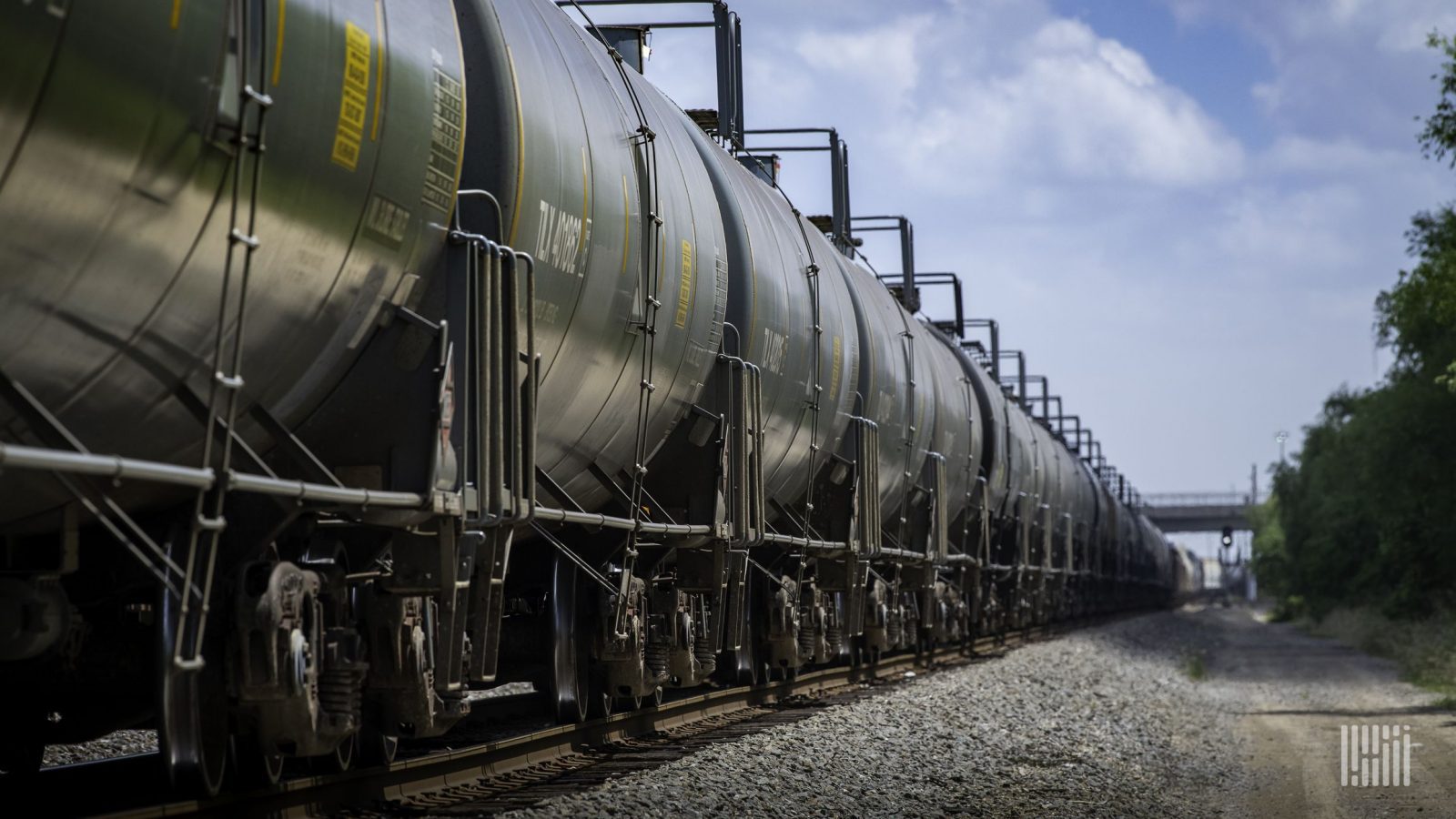
UN tanks are smaller intermodal packages that hold approximately 10,000 gallons of product, while tank cars hold about 30,000 gallons, PHMSA told .
In fact, environmental groups want a ban on LNG by rail altogether. The groups last month called for U.S. Transportation Secretary Pete Buttigieg to ban the transport of LNG by rail, citing climate and health threats.
The environmental groups launched the campaign, Ban LNG by Rail, with a video, a social media campaign and a petition. They contend that LNG is a highly unstable and explosive liquid, which if unleashed through a spill, could result in rapidly expanding clouds of vapor that could flash-freeze human flesh.
“We think it’s far too dangerous to move this flammable, hazardous and potentially explosive cargo by rail through communities. These freight rail tracks go right next to — in some cases just feet away — from people’s homes and target our most vulnerable communities and cities,” said Tracy Carluccio, deputy director of Delaware Riverkeeper Network, in a recent interview with .
Environmental groups also are against fracking, which is the process used to capture methane from the Earth. They contend that releasing the natural gas, liquefying and transporting it and then re-gasifying it releases significant amounts of emissions.
“Allowing LNG to be transported by rail would unleash more fracking, present a catastrophic risk to countless communities and delay the critical transition to clean energy,” Thomas Meyer, national organizing manager at Food & Water Watch, said in a late-May release. “The Trump administration’s outrageous LNG rail rule must be overturned. If Secretary Buttigieg is serious about prioritizing climate action and fulfilling his department’s mission of ensuring a safe and equitable transportation system, he must take action to ban LNG by rail once and for all.”
Carluccio also said the U.S. should not be swayed by Europe’s demand for LNG imports amid the Ukraine-Russia conflict. Europe has historically relied upon Russia to supply the continent with LNG, although it is seeking to wean itself from LNG and bolster energy consumption from renewable sources.
“We’re afraid that that pledge from the Biden administration will be eroded by this immediate crisis in the Ukraine and the demand for gas by Europe,” Carluccio told , explaining that the White House entered into an agreement with the European Union to increase the export of LNG by 15 billion of cubic meters per year.
This agreement could encourage domestic production of LNG, she said.
U.S. LNG exports averaged 11.5 billion cubic feet per day during the first four months of 2022, up 18% from the same period in 2021, according to EIA.
Freight rail association says LNG rail transport is safe
PHMSA told that the agency is currently in the process of reviewing more than 9,000 comments submitted to November 2021’s proposed rulemaking on whether to suspend the rule temporarily. The agency said that while PHMSA’s 2020 rule remains in effect, no transportation of LNG has occurred under the rulemaking, and the agency is unaware of any demand for the construction of tanks cars that are required to be used under the existing authorization.
PHMSA also said that it does not comment on ongoing litigation, including the lawsuit before the D.C. Circuit Court from 14 states and environmental groups.