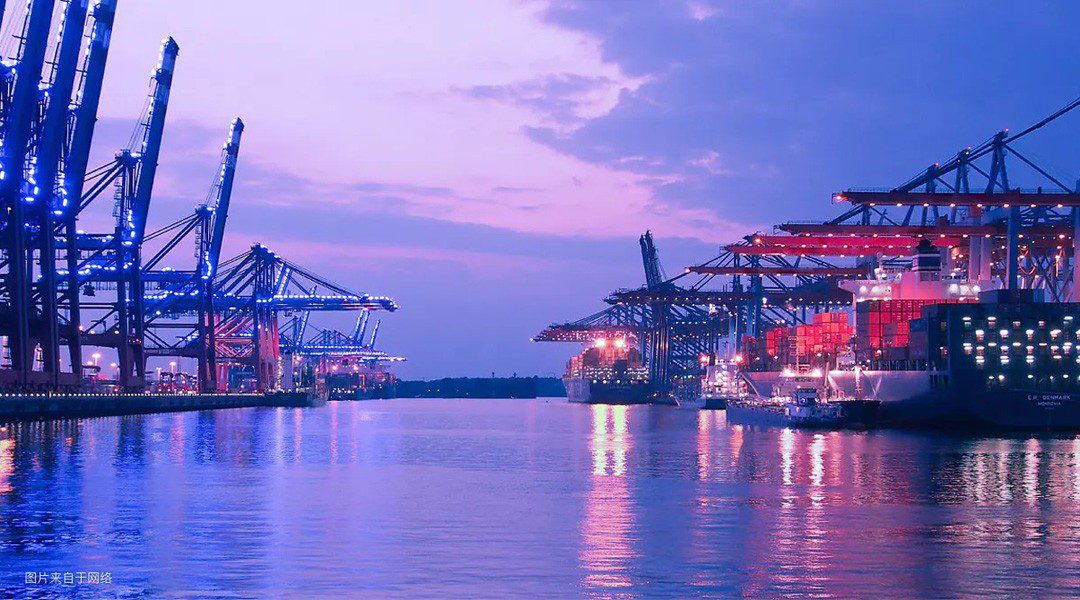
“The port of Elefsina is a strategically important investment. I want to make it clear that the legislative initiative from the Ministry of Development concerns exclusively the use of the Elefsina shipyard. That is, the possibility of using the shipyard’s areas for anything related to ancillary functions, port operations, storage, energy, etc.,” stated the Minister of Shipping and Island Policy, Vasilis Kikilias, in an interview he gave to the SKAI TV station and journalists Dimitris Oikonomou and Akis Pavlopoulos.
As he noted, “In any case, the concession of a port involves a process which must have full concession terms. This means it will either be the product of a competitive process or through another investment scheme, namely G2G, so that we are also compliant within the framework of legality in which we are going to operate.”
When asked if there is an issue with Cosco and the signatures from the Greek side, Mr. Kikilias replied that he does not respond to rumors, emphasizing that “agreements are meant to be upheld by all sides.”
Subsequently, speaking about investment and geo-economic developments, he stressed that “80% – 90% of global trade is conducted by sea. Therefore, whoever controls the sea routes and port infrastructure essentially dominates the planet. Greece has pivotal ports, pivotal port infrastructure for these uses and it is obvious that whoever comes and makes such investments in Greece, as has been done in the past at the port of Piraeus and the port of Thessaloniki, will obviously have the ability to dominate at the economic and energy level.”
Specifically, regarding the role of the Greek fleet, he noted that since it “constitutes 20% of the global fleet, it is the most powerful force on the planet in ocean-going shipping and this is a huge achievement of the Greeks. Therefore, in every negotiation, it is a strong, reinforcing factor. And for energy, in order to transport American LNG from the coasts of America to the other side of the Atlantic, to Europe, and with the agreements signed for the reverse pipelines in Alexandroupoli, to store the LNG in the Greek FSRUs and for Greece to become an energy hub, the Greek fleet is required.”
Referring to the investment interest he noted that “investments, if and when they come from the American side, will be private investments. They will mean development, wealth for our country, new jobs and the development of those professions related to the shipbuilding sector and a heavy industry, which the country needs.”
He added that “there is a balance of trade transactions and an investment interest from abroad. Kyriakos Mitsotakis and his government, in these 7 years of governance, have tried very hard to bring foreign investments to the country. Our goal is the prosperity of Greek society and the Greek family. Can these investments have an impact? Can they affect the lives of citizens? I believe yes.”
Finally, regarding the dimension of defense and the defense industry, he stressed that “a port can have various uses. Commercial uses, energy uses, but it can also be a port for warships. A very important effort is being made in the Greek shipyards, with investments in recent years, so that we can gradually begin to acquire a piece of the defense industry which we lost for many decades. Our neighbors, the Turks, have an almost autonomous defense industry and the time has come for the tenders that will be held for the large offshore vessels of the Coast Guard or for ships of the Navy, to involve the Greek shipyards.”