IMF has downgraded its growth expectations for the global economic development in 2022. Lower growth could challenge shipping’s volumes, but this may be counterbalanced by carriers’ need to sail longer due to the Ukraine war.
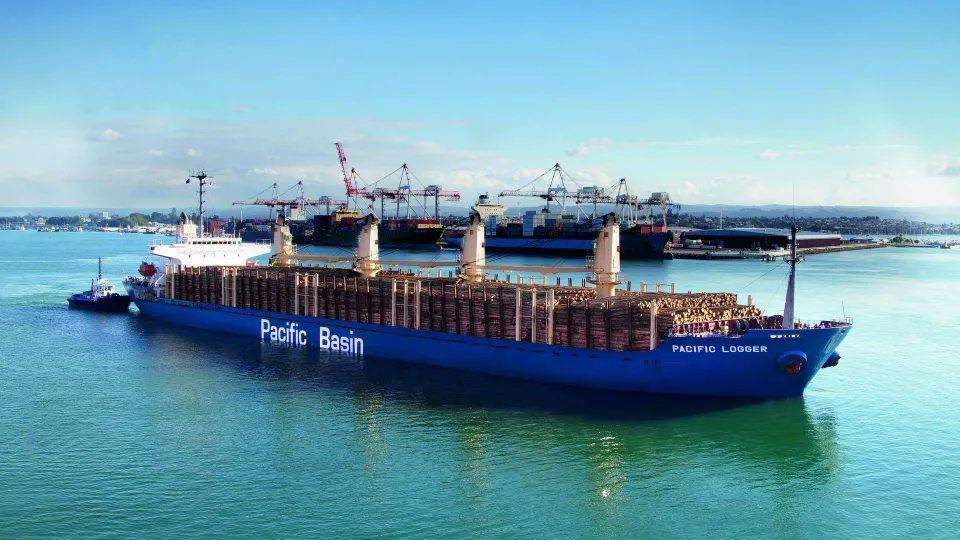
Photo: PR / Pacific Basin
The International Monetary Fund (IMF) downgrades its forecasts for global economic growth in 2022 and 2023, and this will put pressure on volumes within the shipping industry.
Such is the assessment by analyst firm Clarksons Platou Securities in a comment on the IMF’s new, more pessimistic growth expectations for the global economy.
”While slower economic growth, and potentially a global recession, would be negative for shipping volumes, what is likely to cushion the impact on shipping, in our view, is significantly longer trading distances because of the /Ukraine crisis (the miles part of tonne-mile demand) and relatively low fleet growth,” writes the analyst firm in a comment.
Clarksons Platou expects the war in Ukraine, where ports have been blocked by Russian forces, to cause the carriers to sail longer distances within dry bulk, oil and container.
In other words, the demand for tonne-mile will increase, according to the analyst firm.
The IMF’s downward adjustment to the growth forecast is by 0.8 percentage points to 3.6 percent in 2022 and 2023, referring to the Ukraine war as the limitation to the progress seen in the world economy as countries have lifted restrictions caused by the coronavirus pandemic.
Based on a historic perspective, growth rates affect shipping’s segments differently, according to Clarksons Platou.
For example, if the global economy grows at a 1-percent lower speed, then the dry bulk segment will typically grow 0.9 percent less.
The container market either grows or declines 1.2 times the growth rate in the global economy, while the crude oil tanker segment is affected by a factor of 0.9 percent, like in dry bulk’s case.
”For both dry bulk and tankers we have seen a lengthening of average trading distances on the back of reduced Russian exports. Low underlying fleet growth also means that slowing economic growth is less worrisome today than in prior periods,” writes Clarksons Platou.
English edit: Kristoffer Grønbæk