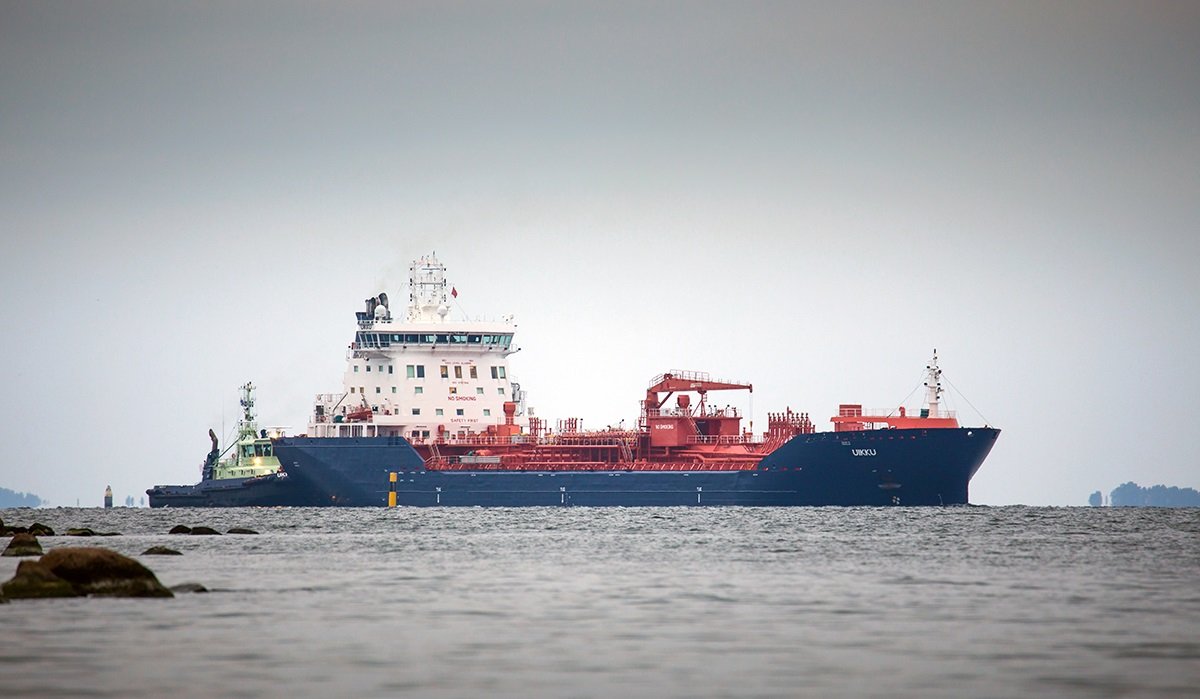
It has been one year since the Maritime Financial Services Platform was officially put into operation on June 17, 2025. Over the past year, Ningbo Maritime Safety Administration (MSA), closely adhering to the high-quality development deployment of the modern shipping service industry and taking “maritime credit” as the main line, has continuously optimized and upgraded “maritime credit” products. On the basis of continuously enriching the existing “Maritime Credit + Shipping Finance” functional module, it has innovatively launched the “Maritime Credit + Shipping Insurance” functional module, making up for the shortcomings of shipping finance and insurance, unblocking the coordination bottlenecks between government, banks, and enterprises, and solving the industry pain points of “data fragmentation, difficulty in risk control assessment, and high cost of bank-enterprise docking” for financial and insurance institutions, injecting digital credit momentum into Ningbo’s efforts to build a world-class strong port and cultivate a high-end shipping service ecosystem.
Iterative Upgrade of Six Major Credit Evaluation Systems
Shipping Enterprises Achieve Three-Dimensional and Precise “Credit Profiling”
At the initial launch, the platform first introduced ship safety evaluation, company evaluation, and financial evaluation indices. Over the past year, based on the needs of financial institutions, it has fully applied maritime regulatory data such as the Ship Reporting System and ship energy consumption, deeply explored the correlation between data and credit, and from the perspectives of green finance, credit guarantee, enterprise and public convenience, and risk warning, continuously expanded, improved, optimized, and innovated ship safety evaluation, efficiency evaluation, green evaluation, and comprehensive evaluation, forming a credit evaluation system composed of six major indices covering four dimensions: ship safety, operation, green, and company management. This achieves full-scenario, differentiated adaptation of credit evaluation, comprehensively meeting the diversified business risk control needs of financial institutions for credit granting, underwriting, etc. All evaluation indicators on the platform achieve real-time evaluation, standardized calculation, and full-process traceability. After obtaining authorization from shipping enterprises, financial institutions can retrieve the complete credit files of ships and enterprises with one click, completely reversing the industry’s previous extensive risk control model that relied on subjective experience and lacked objective data support, making financial risks quantifiable, assessable, and controllable, fundamentally solving the problem of information asymmetry between banks and enterprises.
Launch of “Maritime Credit + Shipping Insurance” Module
Constructing a New Insurance Model of Pre-warning and Full-process Governance
Shipping insurance is an important part of the modern shipping service industry and a key competitiveness indicator for building a world-class strong port and the New波罗的海 Exchange (Xinbo Index). Relying on the profound accumulation of Ningbo’s large port and large shipping, and based on fully soliciting opinions from insurance institutions, Ningbo MSA, in conjunction with Donghai Shipping Insurance Co., Ltd., developed and constructed the “Maritime Credit + Shipping Insurance” functional module, which was launched on April 3 this year. It has broken down the data barriers between maritime supervision and shipping insurance, promoting the transformation of shipping insurance from “post-event claims” to “pre-event prevention and control, full-chain governance”. Relying on the six major credit evaluation models, the module achieves three major functional breakthroughs: precise pre-insurance profiling, integrating multi-dimensional data such as safety inspections, administrative penalties, and crew performance to quantify ship risks, providing scientific support for differentiated insurance pricing; dynamic mid-insurance warning, focusing on ship cargo characteristics of concern to insurance institutions, newly adding warning functions for adverse weather conditions, voyage risks in particularly sensitive areas, and ships carrying special cargoes such as易流态 (easily liquefiable), steel coils, and logs, providing support for insurance risk reduction; full-chain credit incentives, where ships with good credit can enjoy premium discounts and better claims services, helping shipping enterprises reduce costs and increase efficiency.
Focus on Building a Maritime Financial Resource Allocation Center
Creating an Open and Transparent Hub for Government-Bank-Enterprise Supply and Demand Docking
To deepen the platform’s synergistic effectiveness, Ningbo MSA, in conjunction with the Ningbo Financial Regulatory Bureau, developed the Maritime Financial Resource Allocation Center, which was launched for trial operation on June 16. Relying on the credit evaluation system of Zhejiang’s “Maritime Finance” service platform, this center deeply integrates the high-quality resources of shipping enterprises, financial institutions, and maritime departments. By breaking down the three major information barriers of regulatory data, financial products, and enterprise demand, and taking the information exchange between maritime-related enterprises and financial institutions as the entry point, it creates a one-stop comprehensive service portal, precisely unblocks the bottlenecks and difficulties in the shipping financial service chain, builds an efficient, transparent, and safe shipping financial service ecosystem, and creates a fair and transparent shipping financial market environment. Currently, over 140 shipping companies and /repair enterprises have registered, nearly 40 financial institutions have settled in, and 220 products have been released, with some financial products attracting attention from multiple enterprises.
Platform Implementation Results are Prominent
A Multi-Win Pattern for Government, Banks, and Enterprises is Taking Shape
After one year of deep digital cultivation, the value of the platform’s credit empowerment has been fully released. Financing services have improved in quality and efficiency. As of June 2026, the ship mortgage guarantee claims in the Ningbo area amounted to 750 million yuan, a year-on-year increase of 36.3%; the ship mortgage guarantee claims of the pilot bank, Zhejiang Rural Commercial Bank, reached 8.99 billion yuan, a year-on-year increase of 13.7%. The loan approval cycle was shortened by 60%, and ship mortgage registration was compressed from 3 days to 1 day; the average ship loan interest rate decreased by 1.025%, saving an average annual interest of 258,000 yuan per ship. The insurance industry has gathered and returned. Since the launch of the shipping insurance module, premiums for high-quality ships have been reduced by nearly 10%, with a clear trend of ships from other regions returning for insurance, and the energy level of the regional shipping insurance hub continues to improve. The market ecosystem continues to improve, with a steady increase in the number of safety-creditworthy enterprises and ships in the jurisdiction, and “credit has value, trustworthiness benefits” has become a consensus in the shipping industry.
A relevant person in charge of Ningbo MSA stated that in the next stage, they will continue to improve the service functions of the Maritime Financial Services Platform and the Resource Allocation Center, deepen cross-departmental and cross-industry data sharing, continuously expand multi-party cooperation among banks, insurance companies, and shipping enterprises, constantly amplify the superposition effect of “Maritime Credit + Digital Finance”, and use the digital credit ecosystem to safeguard the green transformation and industrial upgrading of shipping, contributing maritime strength to the construction of a strong transportation country and a world-class strong port.
Full Media Reporter Chen Junjie Correspondent Lian Linyi