Nautilus Labs has published a white paper comparing the impact of different data source inputs on simulation accuracy rates that form the basis for performance and voyage optimisation models.
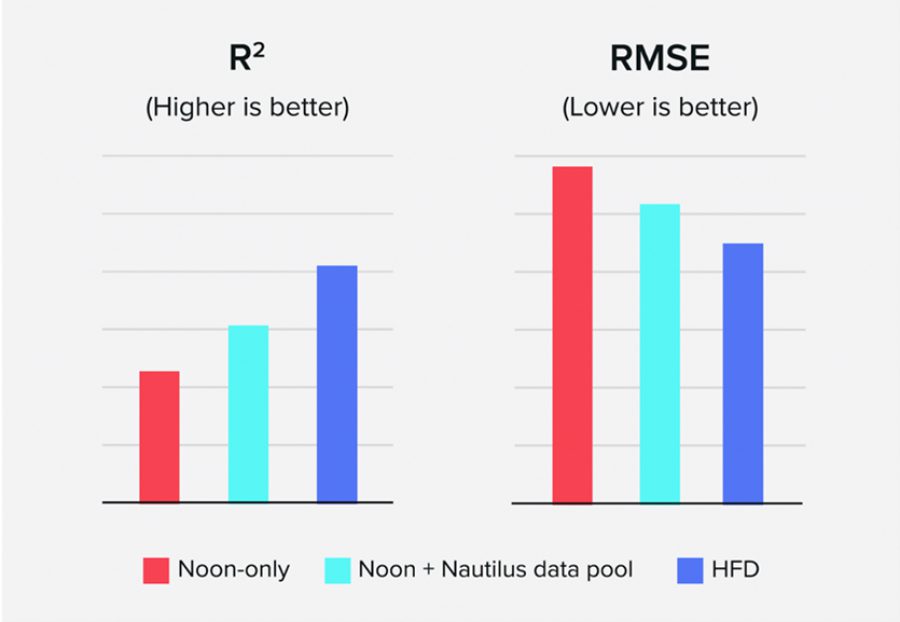
The study evaluated data science metrics, R² and RMSE, which measure the accuracy of simulations built with three types of data sets:
i)models based on noon reports only
ii)models based on high-frequency sensor data
iii)models based on a combination of a vessel’s noon reports enriched with high-frequency sensor data of similar vessels.
The paper found that while simulations built on high-frequency sensor data yield the most accurate simulations, in situations where a vessel is not equipped with sensors, simulation accuracy can be significantly improved by feeding the underlying model with a combination of data from the vessel’s noon reports and sensor data from similar vessels.
The team made the following findings:
“While high-frequency sensors are the gold standard in data collection for seafaring vessels, the reality is that many fleets may not yet be fully equipped with sensors,” said Todd Sundsted, chief technology officer (CTO) at Nautilus Labs.
“Being able to produce more accurate simulations even for vessels without sensors brings us much closer to achieving fleet-wide optimisation and efficiency rooted in machine learning-based simulations.”