Global uncertainty
Rising inflation and a cost-of-living increases, a surging US dollar, high fuel prices and the ongoing Russia-Ukraine conflict play significantly on the confidence of general consumers. The recent collapse of the Sri Lankan government and its economy also serve
as a warning to other emerging markets. Will these global difficulties translate into the cancellation of production orders, a rise in
inventory levels and a significant reduction in container volumes? Or will pent up demand, an early peak season, the lifting of
Chinese restrictions and ongoing US demand for Asian goods see continued strong container demand?
At this stage it is too early to say, but this uncertainty has so far not been reflected in overall ONE first half liftings. However, a combination of China lockdowns and a cancellation of bookings from Russia meant a year-on-year (April-June) decrease of 5%.
Overall freight rates continue to be significantly higher than last year. However, we continue to face higher operational costs, driven by port and inland congestion and global inflation. Labour unrest is contributing to port congestion: in the past few weeks we have seen port strikes in Germany, rail strikes in the United Kingdom and truck strikes in South Korea and the USA. We have increased vessel speeds to maintain schedules, which has increased fuel consumption. We have also seen rising agency and IT expenses as well as increasing taxes. We are committed to significant investments in decarbonisation and digitalisation programmes. This includes the recent placing of a 10-ship vessel order at Japanese and South Korean yards. These vessels will be built to allow them to be retrofit to be powered by ammonia or methanol, as well as offer carbon capture capabilities.
Shanghai lockdowns
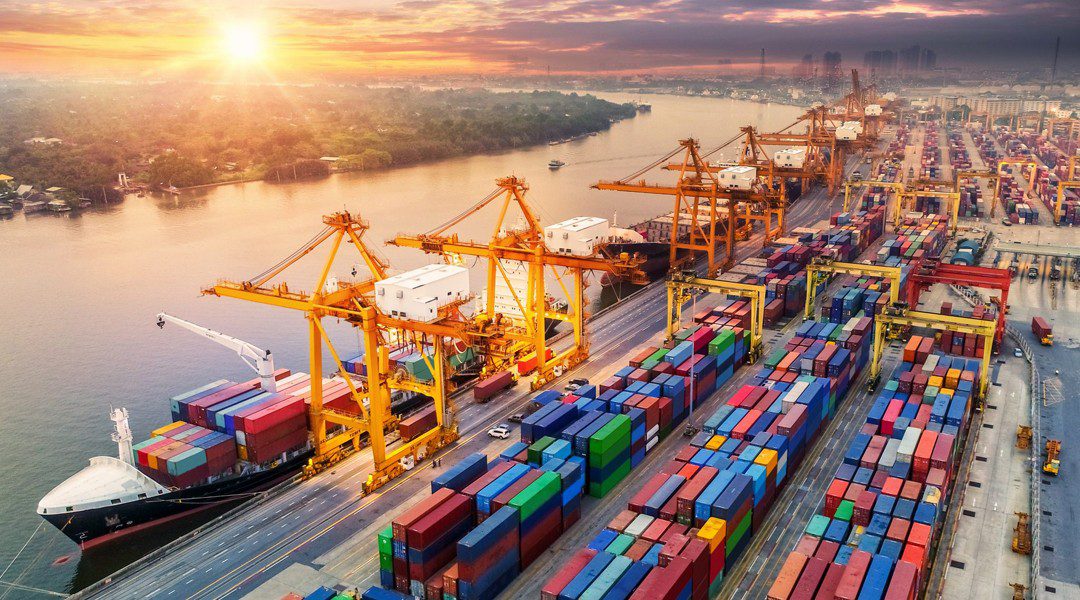
Daily operations have now nearly fully recovered at Shanghai terminals following a tightening of Covid-19 restrictions by the Chinese authorities in May. However, trucking and labour shortages remain a challenge and ongoing local lockdowns mean that the threat of future restrictions are still very much present. With reefer and dangerous goods yards particularly impacted, in April we advised customers to consider change of destinations for time and temperature sensitive commodities and waived change of destination (COD) and cargo retained onboard (ROB) fees. We also offered free cancellation fees for ONE QUOTE shipments exported from Shanghai. We were able to assist reefer customers by holding their containers at transhipment ports before delivering to Shanghai. We stand ready to make future changes to customer arrangements and support shippers should the situation change significantly again.
ILWU negotiations
Negotiations between the union which represents over 22,000 US West Coast port workers and employers continue. Whilst negotiations are still ongoing, the contract expired 1 July. The Pacific Maritime Association, representing employers, and the International Longshore and Warehouse Union, representing workers, issued a joint statement stating that they were aware of the “strategic importance of the ports to the local, regional and US economies, and are mindful of the need to finalize a new coast-wide contract as soon as possible.” We have seen cargo shifting between the East and West coasts, possibly driven by shippers’ expectations of the potential for worsening port conditions on the West coast.
Future investments
Investing in a greener future and ensuring a sustainable supply chain for our customers is at the heart of ONE’s long-term strategy. The company has made good progress towards this by ordering new vessels and purchasing 33,000 containers so far this year. ONE is implementing its ambitious fleet growth programme and in May confirmed a US$1.6bn order of 10 Very Large Container Ships. Scheduled to be delivered in 2025, the orders will be fulfilled by Japan’s Nihon Shipyard and South Korea’s Hyundai Heavy Industries yards. Each vessel will have a capacity of 13,700 TEU. The move embodies ONE’s Midterm Strategy announced in March, to safeguard a sustainable supply chain for the future and underscores ONE’s green strategy and decarbonization plan. The vessels are designed with the highest efficiency standards and incorporate a variety of cutting-edge technologies. Addressing the continued global container shortage, ONE has already purchased 3000 reefer containers and 30,000 dry containers in 2022. Recognising and reacting to a fast-changing supply-chain situation is critical to our customers’ success. In /21 we were able to increase our fleet capacity by chartering in additional tonnage on a short-term basis. Our recently announced 10-year US$20bn investment strategy will see us acquire more vessels, agree longer term charters as well as upgrade terminals, our digital infrastructure and acquire more containers. In the shorter term we have implemented operational changes such as increasing vessel speeds and allocating vessels to key trade lanes as quickly as possible. This is helping to eliminate the problem of unloaded cargo caused by port delays and cargo volume increases. Ensuring rapid container recirculation is also vital and we continue to work with and incentivise terminals and customers to return containers as quickly as possible. Whilst the situation of ship crews being unable to disembark due to local Covid-19 restrictions has improved, there are still locations where changeovers are subject to screening and approval from the local authorities. Working in close collaboration with the owners of our ships, we continue to make temporary port calls as needed to allow for seafarer changeovers.