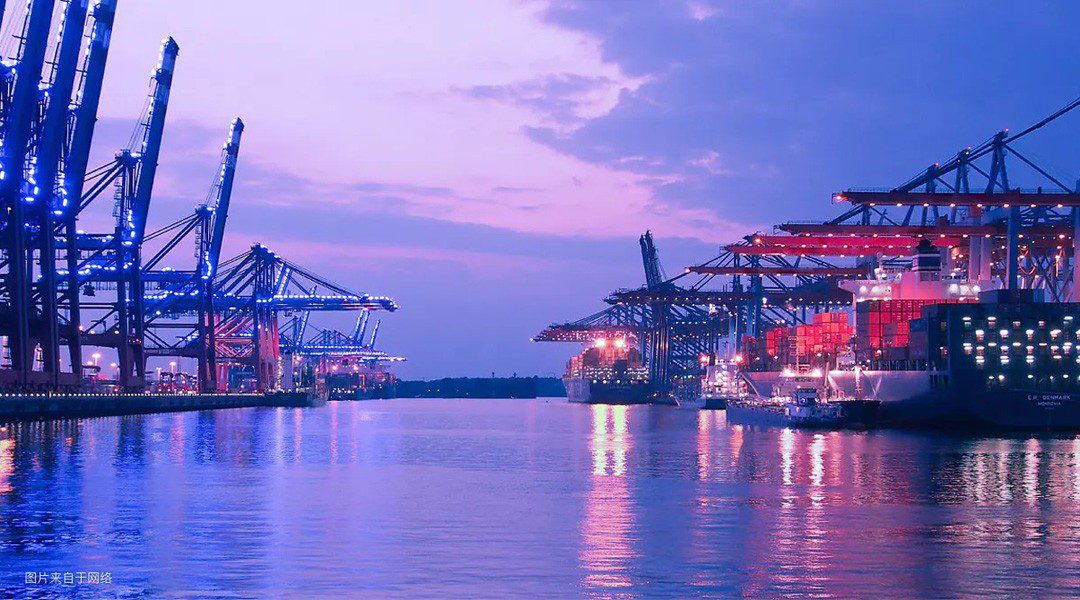
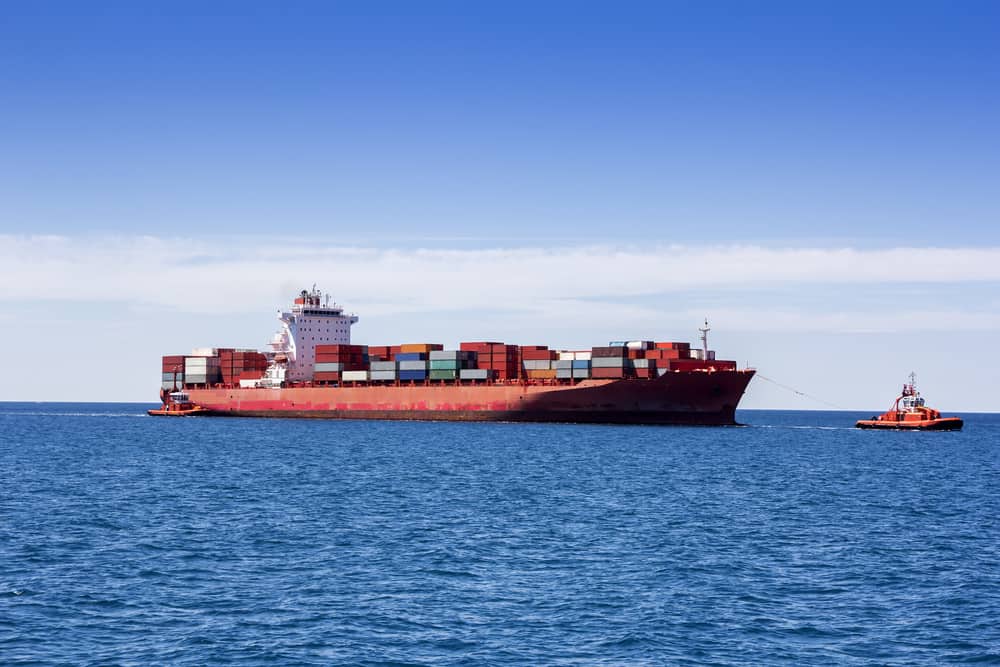
After more than a decade of economic crisis, burdened with massive debt, and undergoing court-supervised restructuring, Brazil’s Enseada shipyard is experiencing a revival.
As the largest beneficiary of the Brazilian Merchant Marine Fund (FMM), the Enseada shipyard has been approved for total investments amounting to 8.4 billion reais (approximately 11.2 billion yuan). According to the fund’s management agency, the Secretariat of Ports and Airports, these funds will be used for building new offshore support vessels and for the shipyard’s modernization.
Located approximately 1,500 kilometers north of Rio de Janeiro, the Enseada shipyard has resumed shipbuilding after about eight years of stagnation following its restructuring, while also operating as a private port and logistics hub for the Brazilian Navy and the offshore oil industry. In the future, the shipyard is expected to serve the country’s nascent offshore renewable energy industry.
In early October, the Minister of the Secretariat of Ports and Airports, Silvio Costa Filho, along with Brazilian President Lula, inspected the Enseada shipyard, strongly promoting investment projects in the shipbuilding industry of Bahia state, where the shipyard is located.
Lula stated: “This inspection aims to revitalize Brazil’s shipbuilding industry, whose revival plan is closely linked to the strategy of the state-owned oil giant Petrobras. Focusing on the domestic shipbuilding industry is part of the President’s overall plan to strengthen national industry and create jobs.”
Currently, Brazil is seeking to attract foreign partners to invest and boost its domestic shipbuilding industry. China is one of the important partners.
In July of this year, Chinese and Brazilian shipbuilding companies signed a Memorandum of Understanding at a shipbuilding strategy forum held in Rio de Janeiro, Brazil, to establish technical and commercial partnerships.
The memorandum was signed by major Chinese shipbuilding companies China Offshore Oil Engineering Company (COOEC), China State Shipbuilding Corporation (CSSC), COSCO Shipping Group (COSCO), CIMC Group (CIMC) and Brazilian shipbuilding companies EBR, Rio Grande, Mauá, and Enseada.
During meetings between Chinese and Brazilian shipbuilding company representatives, both sides discussed common interests, explored possibilities for future cooperation, as well as Brazil’s local content policies for shipbuilding, the National Industrial Investment Incentive Program (PDIC), and the operational mechanisms of the Merchant Marine Fund.
During the forum, Petrobras and Transpetro presented substantial newbuilding demands for the next five years, covering OSVs, MR1 product tankers, LNG carriers, and FPSOs.
Meanwhile, in July, the Korean shipbuilder Hanwha Ocean proposed a plan to build a new shipyard in the Niterói region of Rio de Janeiro state. This plan was announced at a meeting of the Rio de Janeiro State Industrial Federation and is expected to create 7,000 jobs. Hanwha Ocean is targeting contracts for FPSOs, FLNGs, and drill ships.
The Key Role of the Merchant Marine Fund
In addition to attracting foreign investment, the Brazilian Merchant Marine Fund is playing a crucial role in injecting new vitality into the struggling Brazilian shipbuilding industry. In May of this year, the Brazilian government committed 22 billion reais (approximately 29.38 billion yuan) in financial support for 26 projects, covering shipyard modernization and expansion, port infrastructure construction, and new shipbuilding projects.
An executive from the Enseada shipyard stated: “The Brazilian Merchant Marine Fund is essential for the construction and revitalization of the Enseada shipyard and other regional shipyards. These investments ensure project feasibility and work continuity.”
Since 2016, the Enseada shipyard had not built any offshore vessels. But thanks to state support, the shipyard now boasts one of the largest orderbooks for offshore support vessels globally, outside of China.
According to disclosures from the Secretariat of Ports and Airports, the shipyard has been approved for FMM funding to build 8 Remote Operated Vehicle Support Vessels (RSVs) and 6 Oil Spill Response Vessels (OSRVs) to meet Petrobras’s demands.
However, according to Clarksons data, as of October, the Enseada shipyard had only officially received orders for 6 units of 5,000 dwt Oil Spill Response Vessels. This series of vessels was ordered by CMM Offshore and will be delivered to Petrobras under a $1.5 billion, 12-year charter agreement. The new vessels feature battery hybrid power, are designed by Kongsberg Maritime, equipped with Wärtsilä engines, and are expected to start deliveries from 2029 onwards, with the potential to use ethanol fuel during future operations.
Beyond the offshore oil sector, the Enseada shipyard also announced in 2024 an order to build 80 mining barges for LHG Mining, each with a carrying capacity of 2,900 tons.
Besides the Enseada shipyard, other Brazilian shipyards have also陆续 received orders for offshore support vessels. For example, Detroit Brasil secured an order from Starnav for 10 units of 5,000 dwt Platform Supply Vessels (PSVs); EISA secured an order from Posidonia Shipping for 2 units of 4,500 dwt PSVs. Overall, Petrobras plans to tender chartering and construction contracts for 52 new offshore support vessels by 2028.