1.Port Description
General Information
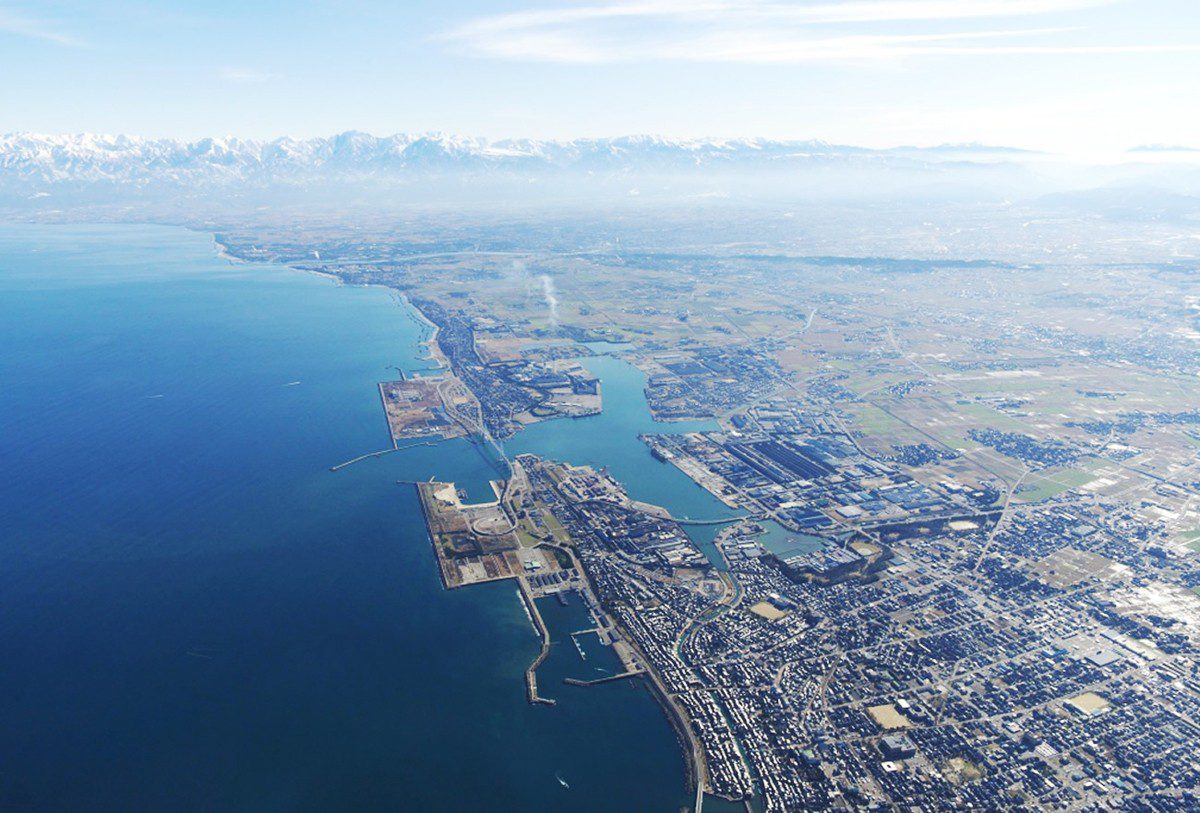
Fushiki Port is a medium-sized commercial port located in Takaoka City, Toyama Prefecture, Japan. It serves as a key hub for regional trade, handling a variety of cargoes, including containers, bulk commodities, and general goods. The port is managed by the Toyama Prefectural Government and supports both domestic and international shipping activities. The port has been operational since 1899 and plays a vital role in the Hokuriku region’s economy.
Port Types
– By size: Middle port (annual cargo throughput: ~5 million metric tons)
– By geographical location: Harbor (coastal port)
– By purpose: Commercial port (multi-purpose facility)
– Additional classification: Designated Important Port by Japanese government (since 1951)
Long./Lat.
36.8000° N, 137.0667° E (verified by Japan Hydrographic Association)
Secondary reference point: Breakwater entrance at 36°48’05″N 137°04’02″E
Time Zone
Japan Standard Time (JST), UTC+9. No daylight saving time observed. Port operations follow 24-hour JST schedule.
Port Location
Fushiki Port is situated on the western coast of Toyama Bay, facing the Sea of Japan. It is surrounded by industrial and urban areas, with easy access to major transportation networks. The port is protected by breakwaters extending 1,850 meters to the north and 1,200 meters to the west. Nearby landmarks include the Fushiki-Toyama New Port to the south and the Jinzu River mouth to the north.
Port Limits
The port limits extend to the breakwater entrance, defined by the Toyama Prefectural Government Ordinance No. 42 (Port Regulations). The official port area covers approximately 2.8 km² of water surface. Vessels are considered “arrived” upon crossing the breakwater. The jurisdiction area extends 500 meters beyond the breakwaters for safety purposes.
Load Lines
Applicable under the International Load Line Convention (1966) as implemented by Japan’s Ministry of Land, Infrastructure, Transport and Tourism (MLIT). Ships must comply with the load line markings as per their certification. For Fushiki Port specifically:
– Summer zone applies year-round
– Tropical load line not applicable
– Winter seasonal period not enforced due to protected harbor location
Water Density
Average salinity: 1.025 g/cm³ (typical for Sea of Japan coastal waters).
Seasonal variations:
– Summer: 1.023-1.025 g/cm³
– Winter: 1.026-1.027 g/cm³ (due to reduced freshwater inflow)
Charts and Books
Essential navigation references:
– Japanese Hydrographic Charts:
• No. 1102 (Toyama Bay) – scale 1:50,000
• No. 11021 (Fushiki Port Approach) – scale 1:15,000
• No. 11022 (Fushiki Port Details) – scale 1:5,000
– Admiralty Sailing Directions: NP 32 (Japan Pilot), 2023 edition
– Notices to Mariners: Issued weekly by the Japan Coast Guard (7th Regional HQ)
– Tide Tables: Japan Coast Guard Publication TP-2023
Port Restrictions
Current operational limits (per Toyama Port Authority 2023 regulations):
– Maximum DWT: 50,000 tons (for general berths)
– Special permission available for vessels up to 70,000 DWT with restrictions
– Maximum beam: 32 meters (standard berths)
– Maximum draft:
• Main channel: 12 meters
• Inner harbor: 9 meters
• South basin: 7 meters
– Air draft: 45 meters (limited by Fushiki Ohashi Bridge clearance)
– LOA restrictions:
• General berths: 200 meters
• Oil terminal: 180 meters
Regulations
Key regulatory requirements:
– Compliance with Japan Coast Guard and ISPS Code requirements (Port Facility Security Plan approved by MLIT)
– Mandatory pre-arrival notifications via JP-MICS system (minimum 24 hours prior)
– Special provisions for hazardous cargo under Japan’s Fire Service Act
– Ballast water management per Japan’s Invasive Alien Species Act
– Garbage disposal regulations per MARPOL Annex V as implemented by Japan
– COVID-19 protocols as per current Ministry of Health guidelines
Weather Condition
Climate data (Japan Meteorological Agency 2022 records):
– Annual average temperature: 14.5°C
– Summer (June-August): 22-30°C, humidity 70-85%
– Winter (December-February): 0-8°C, frequent snowfall (annual average: 120cm)
– Precipitation: 2,300mm annually, peak in July
– Wind patterns:
• Prevailing NW winds in winter (5-15 m/s)
• SE winds in summer (3-10 m/s)
– Typhoon season: July-October (average 1-2 direct impacts per decade)
– Fog occurrence: 15-20 days/year, mainly spring mornings
Tide and Currents
Detailed hydrographic characteristics:
– Tidal range:
• Mean spring range: 0.5 meters
• Mean neap range: 0.3 meters
• Highest recorded: 0.8 meters (storm surge conditions)
– Currents:
• Harbor entrance: 0.5-1.0 knots (flood), 0.3-0.8 knots (ebb)
• Inner basin: negligible (<0.2 knots)
• Strong NW currents (up to 2 knots) may develop during winter monsoon
– Wave conditions:
• Significant wave height inside breakwaters: <1.0m 95% of time
• Maximum recorded: 4.2m during typhoon events
Identification Cards
Crew documentation requirements:
– Shore passes issued by port authorities upon request (processing time: 2-4 hours)
– Seaman’s book sufficient for crew identification
– Additional requirements:
• Valid passport
• Crew list certified by shipping agent
• Vaccination certificates as per current health regulations
Traffics
Transportation infrastructure:
– Nearest airport: Toyama Airport (30 km)
• Regular domestic flights to Tokyo (Haneda), Sapporo, Fukuoka
• International charters to Seoul, Shanghai, Taipei
• Daily flights: 15-20 (JAL/ANA operations)
– Railway:
• JR Fushiki Station (2 km from port)
• Scheduled trains to:
◦ Toyama (15 min)
◦ Kanazawa (40 min)
◦ Tokyo (3.5 hours via Hokuriku Shinkansen)
– Highways:
• National Route 8 (direct port access)
• Hokuriku Expressway (15 km distant)
• Nearest intermodal terminal: Toyama Rinkai Railway (5 km)
Holidays
Official non-working days (2023 schedule):
– National holidays (cargo operations suspended):
• January 1-3 (New Year)
• 2nd Monday of January (Coming of Age Day)
• February 11 (National Foundation Day)
• February 23 (Emperor’s Birthday)
• March 20-21 (Spring Equinox)
• April 29 – May 5 (Golden Week)
• 3rd Monday of July (Marine Day)
• August 11-15 (Obon Festival – limited operations)
• 3rd Monday of September (Respect for the Aged Day)
• September 22-23 (Autumn Equinox)
• 2nd Monday of October (Sports Day)
• November 3 (Culture Day)
• November 23 (Labor Thanksgiving Day)
– Local holidays: Takaoka Mikurumayama Festival (May 1)
– Emergency cargo operations may be arranged with 72-hour notice (150% surcharge applies)
Currency
Financial information:
– Japanese Yen (JPY) – official currency
– Current exchange rate (August 2023): 1 USD = 145-150 JPY (floating rate)
– Currency exchange facilities:
• Port administration building (limited hours)
• Major banks in Takaoka city center (3 km)
– Financial regulations:
• No currency restrictions for seafarers
• Cash transactions over ¥1 million require declaration
• Credit cards widely accepted in port area
Main Cargo Handled
Annual cargo statistics (2022 data from Toyama Prefecture):
– Total throughput: 4.87 million metric tons
– Exports (1.92 million tons):
• Machinery and equipment (35%)
• Chemicals (25%)
• Seafood products (20%)
• Aluminum products (15%)
• Other (5%)
– Imports (2.95 million tons):
• Coal (40%)
• Petroleum products (25%)
• Timber (15%)
• Iron/steel (10%)
• Other (10%)
– Container traffic: ~45,000 TEUs annually
– Specialized facilities:
• Dedicated coal terminal (2 berths)
• Oil terminal (1 berth)
• RORO ramp
• Cold storage facilities (5,000 m²)
2. Notification and Reports
General Information
All vessels calling at Fushiki Port must comply with Japan’s Maritime Traffic Safety Law (Law No. 115 of 1972) and Toyama Prefectural Port Regulations. The following procedures are mandatory under Japan’s Port Regulations Law (Law No. 218 of 1948):
1. Foreign-flagged vessels must submit advance notifications through the Japan Maritime Information and Communication System (JP-MICS) at:
– 24 hours prior to arrival
– 12 hours prior to arrival
– Final confirmation at 3 hours prior
2. Domestic vessels follow simplified reporting under the Domestic Ship Safety Law
3. Special requirements apply for:
– Vessels carrying dangerous goods (IMO Class 1-9)
– Vessels with deficiencies from previous PSC inspections
– Vessels requesting waste discharge
Arrival and Departure Checklists
Pre-Arrival Checklist
– JP-MICS submission confirmation number
– Crew/passenger health declaration (MHLW Form Q-1)
– Bunker declaration (quantity and sulfur content)
– Last 10 ports of call (for quarantine assessment)
– ISPS security level confirmation
– ETA confirmation from appointed agent
Departure Checklist
– Port clearance certificate
– Customs departure approval
– Updated crew list (if changes occurred)
– Waste delivery receipts
– Final draft survey confirmation (for bulk carriers)
Documents and Certificates
Mandatory Documents
1. Crew-related:
– Crew list (4 copies, Japan Immigration Form IMM-11B)
– Passports with valid Japanese visas (if required)
– Seafarer’s Employment Agreements
– STCW certificates (original + copy)
2. Ship-related:
– Certificate of Registry (original)
– Class certificate (valid)
– Tonnage certificate
– Deratting Exemption Certificate
3. Safety-related:
– Safety Management Certificate (SMC)
– Safety Equipment Certificate
– Radio Safety Certificate
4. Cargo-related:
– Cargo manifest (customs approved format)
– Dangerous goods declaration (IMO Form)
– Stowage plan for container vessels
Vessel Traffic Services (VTS)
1. Coverage Area:
– Entire Toyama Bay (radius of 20nm from Fushiki Port)
– Special zones:
• T-1: Outer approach (12-20nm)
• T-2: Inner approach (3-12nm)
• T-3: Port area (within breakwaters)
2. Services Provided:
– Traffic organization
– Navigational assistance
– Safety information broadcasts
– Emergency coordination
3. Reporting Procedures:
– Initial report at 20nm (T-1 zone entry)
– Intermediate report at 12nm (T-2 zone entry)
– Final report at 3nm (T-3 zone entry)
Emergency Co-ordination Centre
1. Primary Center:
– Japan Coast Guard 7th Regional HQ
– Address: 1-1-1 Toyama-shi, Toyama 930-8506
– 24-hour emergency: +81-76-441-0110
– Secondary: +81-76-441-0119 (VHF Ch16)
2. Port Emergency Contacts:
– Port Security: +81-766-22-3115
– Medical Emergency: +81-766-22-3113
– Pollution Response: +81-766-22-3117
Harbour Management Communications
1. Port Authority Contacts:
– Main Office: +81-766-22-3111
– Port Operations: +81-766-22-3112
– Harbor Master: +81-766-22-3114
2. Communication Methods:
– VHF Channels (as previously detailed)
– Email: Not publicly available (agent-mediated)
– Fax: +81-766-22-3119 (Port Administration)
Radio
1. Primary Stations:
– Fushiki Port Radio (JOS) – 24/7 watch
– Toyama Coast Guard Radio (JOG)
2. Frequencies:
– 2182 kHz (distress)
– 500 kHz (working)
– 156.8 MHz (VHF Ch16)
3. Message Routing:
– All ETA messages via JP-MICS
– Urgent messages via JOS/JOG
VHF
Channel Allocation
– Ch06: Tug operations
– Ch09: Port operations
– Ch10: Quarantine
– Ch12: VTS/Pilot
– Ch13: Bridge-to-bridge
– Ch16: Distress/Safety
Communication Protocols
1. Initial contact on designated working channel
2. Standard marine communication phrases required
3. Japanese/English bilingual operators available
Radars
1. Radar Coverage:
– Primary: Fushiki Breakwater Radar (25nm)
– Secondary: Takaoka CG Radar (30nm)
2. Technical Specifications:
– X-band radar (9GHz)
– AIS integration
– Weather filtering
3. Access Procedures:
– Request via VHF Ch12
– Provide ship’s particulars
– Follow radar operator instructions
Notices of Readiness
1. Validity Requirements:
– Physically in port limits
– All cargo gear operational
– Holds properly prepared
– Documentation complete
2. Submission Procedures:
– In writing to charterer’s agent
– Time-stamped by port authority
– Copy to terminal operator
Immigration
1. Procedures:
– Crew list submission 24h prior
– Passport inspection
– Landing permits issued
2. Special Cases:
– Crew changes require 72h notice
– Medical disembarkation priority
Health
1. Quarantine Procedures:
– Health declaration review
– Crew temperature checks
– Ship sanitation inspection
2. Medical Facilities:
– Port clinic (basic care)
– Toyama City Hospital (full service)
Customs
1. Clearance Timeline:
– Standard: 4-6 hours
– Express: 2 hours (additional fee)
2. Restricted Items:
– Narcotics
– Weapons
– Endangered species
Prior Declaration and Authorization
1. Special Cargo:
– DG: 72h notice required
– Heavy lift: 48h notice
– Project cargo: case-by-case
2. Operations:
– Bunkering: 24h notice
– Hot work: permit required
Restricted Activities
1. Prohibited:
– Unauthorized discharges
– Fishing/swimming
– Drone operations
2. Speed Limits:
– As previously detailed
Incidents
1. Reporting Timeline:
– Immediate: Safety-critical
– 24h: All others
2. Investigation:
– JCG-led for major incidents
– Port authority for minor
Others
1. Additional Requirements:
– Gangway watch
– Security patrols
– Waste management
3. Port Navigation
General Information
Navigation within Fushiki Port is governed by:
1. Japan Coast Guard Maritime Traffic Safety Law (Law No.115 of 1972)
2. Toyama Prefectural Port Regulations (Ordinance No.42)
3. IMO COLREGs (as implemented in Japan)
4. Japan’s Ports and Harbors Law (Law No.218 of 1948)
Key navigation requirements:
– Mandatory AIS transmission within 12nm of port
– Continuous VHF watch on Ch16/12
– Speed limits strictly enforced
– Daylight transit recommended for vessels >200m LOA
Pilot Station and Pilotage
1. Pilot Boarding Areas:
– Primary: 36°48.5’N 137°04.5’E (1.5nm NE of breakwater)
• Depth: 15m
• Protection: Partial lee from breakwater
– Alternative: 36°47.8’N 137°05.2’E (during NW monsoon)
• Depth: 12m
• Maximum wave height: 2.5m
2. Contact Procedures:
– Initial contact: VHF Ch16 (switch to Ch12)
– Required information:
• Vessel name/call sign
• LOA/beam/draft
• ETA at boarding point
• Any defects affecting maneuverability
3. Pilot Boat Specifications:
– “Fushiki Pilot 1” (18m, 500HP)
– “Fushiki Pilot 2” (16m, 400HP)
– Both equipped with:
• IRB (inflatable rescue boat)
• Night vision equipment
• MOB recovery system
4. Boarding Requirements:
– Pilot ladder:
• SOLAS compliant
• Last inspected within 3 months
• Properly lit at night
– Accommodation ladder combination permitted for freeboard >9m
Approaches and Channels
1. Main Deepwater Channel:
– Dimensions:
• Length: 3.2nm (from 12m contour)
• Width: 200m (300m at turning basins)
• Depth: 12m CD (14m at spring tides)
– Markings:
• 6 pairs of lateral buoys (spaced 400m)
• 2 leading light ranges (205°T and 285°T)
2. Secondary Channels:
– North Channel (to coal terminal):
• Length: 1.2nm
• Width: 150m (no overtaking zone)
• Depth: 10m (dredged quarterly)
– South Channel (to general cargo berths):
• Length: 0.8nm
• Width: 120m
• Depth: 9m (maintained monthly)
3. Special Navigation Notes:
– Strong cross-currents (up to 2 knots) near 36°48.2’N 137°05.0’E
– Fishing nets frequently deployed 0.5nm NE of main channel
– Dredging operations ongoing in South Channel (2023-2024)
Anchorages
1. Designated Anchorage Areas:
– Anchorage A (Commercial):
• Position: 36°49.0’N 137°06.0’E
• Area: 500m radius circle
• Depth: 15-20m
• Holding: Clay (good holding power)
• Maximum stay: 72 hours
– Anchorage B (Emergency):
• Position: 36°47.5’N 137°07.0’E
• Area: 400m radius circle
• Depth: 12-15m
• Holding: Sand/clay (fair)
2. Anchoring Procedures:
– Prior permission required via VHF Ch12
– Must maintain 1nm separation from other anchored vessels
– Night illumination required (all-round white light)
Navigation Aids
1. Fixed Aids:
– Fushiki Breakwater Light:
• Character: Fl G 4s
• Height: 12m
• Range: 10nm
– Leading Lights:
• Front: 36°48.1’N 137°04.3’E
• Rear: 36°48.4’N 137°04.6’E
• Alignment: 205°T
2. Floating Aids:
– Port Hand:
• Red can buoys (Q.R)
• Spacing: 400m
– Starboard Hand:
• Green conical buoys (Q.G)
• Spacing: 400m
3. Electronic Navigation:
– DGPS:
• Station: Fushiki (315kHz)
• Accuracy: ±1m (95%)
– AIS:
• Base station: 36°48.0’N 137°04.0’E
• Coverage: 25nm
Maximum Authorized Speed
1. Speed Zones:
– Outer approach (12-3nm): 10 knots
– Pilot boarding area: 5 knots
– Main channel: 8 knots
– Inner harbor: 5 knots
– Berthing areas: 3 knots
2. Speed Monitoring:
– AIS-based speed enforcement
– Radar speed checks at channel bends
– Penalties for violations:
• First offense: Warning
• Repeat offenses: Fines up to ¥500,000
Navigation Priority
1. Traffic Separation Scheme:
– Inbound: Eastern side
– Outbound: Western side
– Separation zone: 50m centerline
2. Vessel Priority:
– Order:
1. Vessels >200m LOA
2. Tankers with IMO Class 1 cargo
3. Passenger vessels
4. Fishing vessels
– Crossing rules:
• Starboard tack has priority
• Power-driven vessels yield to sailing vessels
Weather Restrictions
1. Navigation Suspension Criteria:
– Visibility: <1nm
- Wind: >25m/s (Beaufort 10)
– Waves: >3m at entrance
– Current: >3 knots in main channel
2. Special Measures:
– Tug escort requirements:
• 15-20m/s: 1 additional tug
• 20-25m/s: 2 additional tugs
– Daylight-only transit when:
• Visibility 1-2nm
• Wind 20-25m/s
Night Entry or Departure
1. Permitted Conditions:
– Vessels <200m LOA
- Minimum visibility: 1nm
- No adverse weather forecast
- Pilot available
2. Special Requirements:
- Additional navigation lights:
• Masthead lights doubled
• Stern light must be visible 3nm
- Bridge team:
• Master on bridge
• Extra lookout posted
- Tug escort:
• Minimum 2 tugs
• Standby at breakwater
UKC (Under-Keel Clearance)
1. Minimum Requirements:
– Main channel: 10% of draft or 1.0m (greater)
– Berthing areas: 0.5m absolute minimum
– Squat allowance: 0.1m per knot above 5 knots
2. Tide Considerations:
– Chart datum: 0.3m below MSL
– Highest astronomical tide: +1.2m
– Lowest astronomical tide: -0.5m
Bridges
1. Fushiki Ohashi Bridge:
– Location: 36°47.9’N 137°03.8’E
– Clearance:
• MHWS: 42m
• HAT: 41m
• LAT: 43m
– Passage Procedures:
• Prior notice via VHF Ch12
• Daylight transit only for vessels >35m air draft
• Speed limit: 5 knots within 200m
Air Drafts Limit and Air Gap
1. Vertical Restrictions:
– Fushiki Ohashi Bridge:
• Design clearance: 42m
• Operational clearance: 40m (2m safety margin)
– Power lines (inner harbor):
• Minimum clearance: 35m
• Safety margin: 3m required
2. Air Draft Calculation:
– Formula: Air Draft = Height above waterline + tide – squat
– Maximum permitted: 39m (at MHWS)
Vessels Shifting
1. Standard Procedures:
– Notice: 1 hour via VHF Ch12
– Daylight preferred (exceptions possible)
– Tug requirements:
• <150m: 1 tug
• 150-200m: 2 tugs
• >200m: 3 tugs
2. Special Conditions:
– Night shifting: Additional pilot required
– Poor visibility: Minimum 2 tugs regardless of size
Vessels Transiting
1. Requirements:
– Continuous VHF watch on Ch12
– Speed maintenance ±0.5 knots of declared speed
– No stopping except emergencies
– Overtaking prohibited in:
• Main channel bends
• Within 0.5nm of bridge
Vessels Towing
1. Requirements:
– Advance notice: 48 hours
– Maximum dimensions:
• Length: 200m
• Beam: 50m
– Daylight transit only
– Escort tugs:
• 1 per 50m of tow length
• Minimum 2 tugs
2. Special Provisions:
– AIS must be carried by tow and tug
– Night navigation prohibited
– Weather restrictions:
• Max wind: 15m/s
• Max waves: 2m
Tugs and Working Boats
1. Tug Resources:
– Available tugs (2023):
• “Fushiki Tug 1” (50t bollard pull)
• “Fushiki Tug 2” (50t)
• “Fushiki Tug 3” (35t)
• “Fushiki Tug 4” (25t)
– Line handling:
• Ship’s lines preferred
• Tug lines available (+20% fee)
2. Working Boats:
– Pilot boats: 2 (as above)
– Line boats: 3 (12m length)
– Pollution control: 1 (20m, 5kt recovery speed)
Vessels in Special Operations
1. Regulated Activities:
– Dredging:
• License required from Toyama Prefecture
• Safety zone: 100m radius
– Underwater construction:
• 72h notice minimum
• Dive boat coordination required
2. Documentation:
– Method statement
– Risk assessment
– Emergency response plan
3. Monitoring Requirements:
– Continuous VHF watch on Ch16
– AIS must remain operational
– Daily position reports to VTS
4. Equipment Standards:
– All work vessels must carry:
• Class-approved life-saving equipment
• Oil spill containment gear
• Navigation lights compliant with COLREGs
Navigation Warnings
1. Permanent Hazards:
– Submarine cable area: 36°48.8’N 137°05.2’E (no anchoring)
– Fishing trap zones: 0.5-1nm NE of main channel
– Shallow patches: South Channel (min depth 7.5m)
2. Temporary Hazards:
– Dredging operations (2023-2024):
• Area: South Channel
• Working hours: 0800-1800 JST
• Contact: “Fushiki Dredger” on VHF Ch14
Tidal Information
1. Tide Tables:
– Reference station: Toyama
– Mean tidal range: 0.5m
– Highest recorded: 1.5m (typhoon conditions)
2. Currents:
– Flood tide: NW setting (max 1.5 knots)
– Ebb tide: SE setting (max 1.2 knots)
– Slack water: ±1 hour from HW/LW
Port Entry/Exit Procedures
1. Arrival Sequence:
– 24h prior: JP-MICS submission
– 12h prior: Final documents confirmation
– 3h prior: Pilot confirmation
– 1h prior: VTS clearance
2. Departure Sequence:
– 2h prior: Customs clearance
– 1h prior: Tug confirmation
– 30min prior: Final VTS clearance
Emergency Navigation Procedures
1. Loss of Power:
– Immediate VHF Ch16 distress call
– Deploy anchor if depth <50m
- Display appropriate day shapes/lights
2. Steering Failure:
- Notify VTS immediately
- Standby tugs will be dispatched
- Follow COLREGs Rule 36 procedures
Local Navigation Practices
1. Fishery Traffic:
– High concentration May-September
– Typical operating patterns:
• Set nets perpendicular to channel
• Small craft often ignore COLREGs
2. Commercial Traffic:
– Peak hours: 0800-1000 and 1500-1700
– Common routes:
• Bulk carriers: North Channel
• Container ships: Main Channel
Radar Navigation Assistance
1. Service Availability:
– 24/7 coverage from:
• Fushiki Radar: 36°48.1’N 137°04.1’E
• Takaoka Radar: 36°45.0’N 137°02.0’E
2. Request Procedures:
– Call “Fushiki Radar” on VHF Ch12
– Provide:
• Ship’s name/position
• Course/speed
• Navigation difficulty
Electronic Navigation Systems
1. Port-Specific Data:
– ENC Coverage:
• JP1102A (Approaches)
• JP11021B (Port Area)
– Raster Charts:
• JNC1102 (1:50,000)
• JNC11021 (1:15,000)
2. AIS Services:
– Virtual AIS aids at channel bends
– Meteorological data transmission
– Tide/current predictions via AIS MSG8
Winter Navigation
1. Ice Conditions:
– Light ice January-February
– No icebreaking service available
– Recommended precautions:
• Bow thruster protection
• Increased UKC (+0.5m)
2. Snow Restrictions:
– Navigation suspended when:
• Visibility <500m
• Snow accumulation >30cm
Environmental Navigation Restrictions
1. Protected Areas:
– Toyama Bay Cetacean Sanctuary:
• Seasonal speed limit (May-Nov):
– 8 knots within 1nm
– 5 knots within 0.5nm
2. Ballast Water Management:
– Exchange required outside 200nm
– Treatment standards per Japan’s BWMS Regulations
Port Security Zones
1. Restricted Areas:
– Oil Terminal: 500m radius
– Naval Facilities: 300m radius
– Port Administration: 200m radius
2. Access Control:
– ISPS Level 1:
• Roving patrols
• AIS monitoring
– Higher levels implement:
• Escorted movements
• Additional screening
Small Craft Navigation
1. Special Provisions:
– Designated small craft channel:
• Width: 50m
• Depth: 3m
– Speed limit: 5 knots
– Must yield to commercial traffic
4. Pollution Control
Ballast and Deballast
1. Regulatory Framework:
– Japan’s Act on the Prevention of Marine Pollution and Maritime Disaster (Law No.136 of 1970)
– IMO Ballast Water Management Convention (D-2 Standard)
– Toyama Prefecture Special Regulations for Toyama Bay
2. Pre-arrival Requirements:
– Ballast Water Reporting:
• 24 hours prior: JP-MICS submission
• 6 hours prior: Final update
– Required Documents:
• Ballast Water Management Plan
• Record Book (minimum 2 years retention)
• IOPP Certificate
3. Operational Restrictions:
– Prohibited Areas:
• Within 12nm of coastline
• Toyama Bay Special Protection Zone
– Time Restrictions:
• No deballasting 2000-0600 without permission
• No operations during heavy rain (>50mm/hr)
4. Treatment Standards:
– Discharge limits:
• <10 viable organisms/m³ (≥50μm)
• <10 viable organisms/ml (<50μm and ≥10μm)
- Approved treatment systems:
• UV-based: 3 models approved
• Electrolysis: 2 models approved
5. Monitoring and Enforcement:
- Port State Control:
• 20% random sampling rate
• Penalties for violations up to ¥10 million
- Self-monitoring:
• Mandatory sampling ports on vessels
• Annual calibration required
Garbage Disposal
1. Regulatory Basis:
– MARPOL Annex V (as implemented by Japan)
– Waste Management and Public Cleansing Law (Law No.137 of 1970)
– Fushiki Port Waste Handling Regulations
2. Collection Infrastructure:
– Fixed Facilities:
• North Terminal: 20m³/day capacity
• South Terminal: 15m³/day capacity
– Mobile Services:
• 3 collection vessels (10m³ capacity each)
• 2 garbage trucks for wharf-side collection
3. Categorization System:
– Plastics: Separate collection mandatory
– Food waste: Must be segregated
– Operational waste: Special handling
– Harmful substances: Prior notification required
4. Operational Procedures:
– Request Process:
• Minimum 12h notice for >1m³
• Emergency service available (+30% fee)
– Documentation:
• Garbage Record Book (Part II)
• Waste Transfer Note (3 copies)
5. Special Provisions:
– Fishing gear disposal: Free of charge
– Animal carcasses: Immediate collection
– Medical waste: Incineration only
Waste Oil Disposal
1. Legal Requirements:
– MARPOL Annex I
– Japan’s Waste Disposal and Public Cleansing Law
– ISCC certification required for contractors
2. Reception Facilities:
– Shore-based:
• Main storage: 5,000m³ at Oil Terminal
• Secondary: 2,000m³ at Repair Quay
– Mobile:
• Barges: FPS-101 (800m³), FPS-102 (500m³)
• Tankers: 6 vehicles (20-30m³ capacity)
3. Quality Control:
– Pre-discharge analysis:
• Water content <1%
• No chemical emulsifiers
- Prohibited mixtures:
• PCB-contaminated oils
• Radioactive materials
4. Emergency Response:
- Spill reporting:
• Immediate notification to JCG (Ch16)
• Follow-up report within 1 hour
- Equipment:
• 500m oil boom stockpile
• 2 skimmers (20m³/hr capacity)
5. Cost Structure:
- Base fees:
• <10m³: ¥20,000
• 10-50m³: ¥15,000 + ¥1,500/m³
• >50m³: Negotiated rate
– Analytical fees: ¥5,000 per sample
Sewage Reception
1. Regulatory Standards:
– MARPOL Annex IV
– Japan’s Sewage Law (Law No.34 of 2000)
– Toyama Prefecture Water Quality Standards
2. Treatment Capacity:
– Centralized Plant:
• Capacity: 200m³/day
• Biological treatment standard
– Ship-to-Shore:
• 4 pump-out stations (10m³/hr each)
• 2 vacuum trucks (5m³ capacity)
3. Discharge Limits:
– Biochemical Oxygen Demand: <50mg/l
- Suspended Solids: <50mg/l
- Coliform Count: <1,000/100ml
4. Special Requirements:
- Hospital ships: Pre-treatment required
- Passenger vessels: Weekly sampling
- Holding tanks: Minimum 5 days capacity
5. Service Details:
- Operating Hours:
• 0700-2200 (standard)
• Emergency service available
- Contact Protocol:
• VHF Ch14 (Sewage Control)
• Phone: +81-766-22-3191
Compliance Verification
1. Penalty Structure:
– Minor violations: ¥500,000-1,000,000
– Major violations: ¥5-10 million
– Criminal charges for repeat offenders
2. Record Keeping:
– Vessels: 3 year retention
– Port: 5 year retention
– Public access to annual reports
5. Port Safety and Security
General Information
1. Regulatory Framework:
– Japan’s Port Regulations Law (Law No. 174 of 1948)
– IMO SOLAS Convention (Chapter XI-2)
– ISPS Code (2004 Edition with 2021 Amendments)
– Toyama Prefecture Port Safety Ordinance (No. 32-2022)
2. Safety Systems:
– 24/7 VTS Coverage (Radar/AIS)
– Emergency Response Teams:
• Firefighting: 3 teams (20 personnel)
• Oil Spill: 2 teams (15 personnel)
– Safety Equipment:
• 15 emergency shelters
• 50 lifebuoys (port perimeter)
• 30 first aid stations
3. Security Infrastructure:
– Perimeter: 8.5km fencing with motion sensors
– Surveillance: 120 CCTV cameras (4K resolution)
– Access Control: 6 guarded gates with biometric scanners
PSC
1. Inspection Statistics (2023):
– Total inspections: 287
– Detentions: 19 (6.6% rate)
– Average deficiencies per inspection: 2.3
2. Inspection Focus Areas:
– Structural Integrity (Hull/Cargo holds)
– Machinery Systems (Main engine/auxiliaries)
– Navigation Equipment (ECDIS/Radar)
– Crew Certification (STCW compliance)
3. Inspection Process:
– Duration: 4-8 hours (depending on vessel size)
– Documentation Review:
• Certificates (validity/endorsements)
• Maintenance records (5 years)
– Crew Interviews:
• Emergency procedures knowledge
• Equipment familiarity
4. Common Deficiencies:
– Fire doors not sealing properly (23%)
– EPIRB battery expired (18%)
– Inaccurate cargo securing manual (15%)
ISPS
1. Security Levels Implementation:
– Level 1 (Normal):
• Random vehicle checks (10%)
• ID verification at gates
– Level 2 (Heightened):
• 100% vehicle screening
• Armed patrols doubled
– Level 3 (Exceptional):
• Port entry restricted
• Military support activated
2. Security Drills:
– Monthly: Access control tests
– Quarterly: Full-scale exercises
– Annual: Joint drills with JCG
3. ISPS Compliance:
– Last audit: March 2023 (zero non-conformities)
– Certification: ISO 28000:2022
– Training: 100% staff certified
Emergency
1. Emergency Contacts:
– Port Control: VHF Ch12/16
– Medical Emergency: +81-766-22-3199
– Pollution Response: +81-766-22-3177
2. Response Equipment:
– Fireboats:
• “Fushiki Marine 1” (10,000L/min)
• “Fushiki Marine 2” (8,000L/min)
– Oil Spill:
• 1,000m containment boom
• 2 skimmers (50m³/hr capacity)
3. Emergency Procedures:
– Fire Onboard:
• Immediate alarm activation
• Crew muster within 5 minutes
• Tugs standby for evacuation
– Security Threat:
• Code Delta announcement
• Port-wide lockdown
4. ECC Capabilities:
– Communication: Satellite/VHF/UHF
– Monitoring: Real-time AIS/CCTV feed
– Coordination: Direct JCG link
Ships Arrest
1. Legal Process:
– Required Documents:
• Arrest warrant (original)
• Court order (Japanese/English)
– Timeframe:
• Urgent: 4-6 hours
• Standard: 24 hours
2. Port Involvement:
– Notification: Immediate to master
– Services:
• Security guards provided
• Basic provisions available
3. Statistics (2023):
– Total arrests: 7
– Average duration: 14 days
– Reasons:
• Crew wages (4 cases)
• Bunker claims (2 cases)
• Collision damage (1 case)
Fire Precautions
1. Tanker-Specific Measures:
– Inert Gas Systems:
• Continuous monitoring
• <8% oxygen content required
- Cargo Operations:
• Bonding verified before transfer
• Static electricity controls
2. Firefighting Capacity:
- Land-based:
• 8 fire trucks
• Foam capacity: 50,000L
- Water Supply:
• 20 hydrants (10bar pressure)
• 5km of hoses
Inspections from Other Parties
1. Inspection Types:
– RightShip: Vetting inspections
– OCIMF: SIRE/TMSA
– Flag State: Annual surveys
2. Coordination:
– Prior Notice: 72 hours minimum
– Escort: Port security required
– Reporting: Findings to PSC
Maritime Security Zones
1. Zone Specifications:
– Zone A (High Security):
• 24/7 armed guards
• No photography
– Zone B (Medium):
• Escorted access
• Limited停留
– Zone C (Standard):
• ID checks
• Vehicle screening
2. Enforcement:
– Patrols: 8 daily rounds
– Monitoring: Thermal cameras
– Penalties: ¥500,000-5,000,000
Police
1. Jurisdiction:
– Takaoka Police Department
– Special Port Security Unit:
• 15 officers
• K9 unit (2 dogs)
2. Cooperation:
– JCG liaison officer
– Monthly joint training
– Shared database access
Flag
1. Protocol Details:
– Hoisting Times:
• Summer: 0600-1800
• Winter: 0700-1700
– Size Requirements:
• Minimum 1m² per 10m LOA
• Maximum 4m x 6m
Signals and Lights Display
1. Special Signals:
– Dangerous Cargo:
• Day: Red flag (Bravo)
• Night: All-round red
– Pilot Onboard:
• Day: H flag
• Night: Red over white
Stowaways
1. Prevention Measures:
– Pre-departure:
• 3 searches (24h/12h/1h before)
• Sealable areas
– Documentation:
• Crew counts every 4 hours
• Search records kept
2. Handling:
– Detention: Special holding area
– Processing: Immigration within 24h
– Costs: Shipowner responsibility
Alcohol/Drugs
1. Testing:
– Random: 5% of crew monthly
– For Cause: Immediate testing
– Methods:
• Breathalyzer (alcohol)
• Urine test (drugs)
2. Penalties:
– First offense: ¥100,000 fine
– Repeat: Port ban (1-5 years)
Security Reporting
1. Procedures:
– Immediate: VHF Ch16
– Follow-up: Written within 6h
– Investigation: JCG lead
2. Anonymous Reporting:
– Hotline: +81-766-22-3190
– Online: security-report@fushikiport.jp
Drones
1. Operational Rules:
– Altitude: Max 150m (daylight)
– Distance: >50m from vessels
– Insurance: ¥100 million minimum
2. Authorization:
– Application: 14 days advance
– Fee: ¥50,000 per operation
– Restrictions: No night flights
6. Cargo Operations
General Information
1. Port Authority: Fushiki Port Authority (FPA)
2. Operating Hours: 24/7 (with restrictions)
3. Cargo Volume (2023):
– Total: 8.2 million metric tons
– Breakdown:
• Liquid bulk: 65% (5.33 million tons)
• Dry bulk: 20% (1.64 million tons)
• Containers: 10% (820,000 tons)
• General cargo: 5% (410,000 tons)
4. Regulatory Framework:
– Japan’s Port Regulations Law (Law No.174 of 1948)
– IMO FAL Convention (2022 Amendments)
– ISPS Code (2021 Edition)
– Japan’s Dangerous Goods Transportation Law
5. Certification:
– ISO 9001:2015 (Quality Management)
– ISO 45001:2018 (Occupational Health and Safety)
– Green Port Certification (ClassNK)
Tanker Berths and Terminals
1. Main Oil Terminal:
– Berths: 3 dedicated tanker berths
– Specifications:
• Berth 1: 250m LOA, 12m depth
• Berth 2: 300m LOA, 14m depth
• Berth 3: 350m LOA, 15m depth
– Max Draft: 14.5m (salt water)
2. Loading/Discharge Infrastructure:
– Pipeline Network:
• Crude: 16″ diameter (max 3,500m³/hr)
• Products: 12″ diameter (max 2,500m³/hr)
– Shore Power: 6.6kV/60Hz available
– Vapor Recovery: Available at all berths
3. Operational Parameters:
– Standard Loading Rates:
• Crude oil: 3,000-3,500m³/hr
• Fuel oil: 2,000-2,500m³/hr
• Gasoline: 1,800-2,200m³/hr
– Temperature Control:
• Heating coils available (max 80°C)
• Minimum temp: 10°C above pour point
4. Safety Systems:
– Emergency Shutdown: Class 1 Division 1
– Fire Protection:
• Foam monitors (10,000L/min)
• Water curtain systems
– Mooring Load Monitoring: Installed at all berths
Container Berths and Terminals
1. Container Terminal Specifications:
– Berths: 2 dedicated berths (CT-1/CT-2)
– Dimensions:
• CT-1: 300m length, 14m depth
• CT-2: 350m length, 15m depth
– Max Vessel Size: 8,000 TEU
2. Handling Equipment:
– Quay Cranes:
• 4 Super Post-Panamax
• Outreach: 22 containers
• SWL: 50t under spreader
– Yard Equipment:
• 8 RTGs (6-wide, 1-over-5)
• 12 Terminal Trucks
3. Productivity Metrics:
– Average Gross Crane Rate: 28 moves/hr
– Peak Performance: 35 moves/hr
– Truck Turn Time: 45 minutes average
4. Special Features:
– Reefer Plugs: 200 stations
– Dangerous Goods Yard: 5,000m²
– Empty Container Park: 15,000 TEU capacity
Dry Cargo Berths and Bulk Facilities
1. Bulk Terminal Layout:
– Berths: 4 multi-purpose berths (B1-B4)
– Specifications:
• B1: 150m, 10m depth (general cargo)
• B2: 200m, 11m depth (coal)
• B3: 180m, 12m depth (grain)
• B4: 170m, 10m depth (fertilizer)
2. Handling Capacities:
– Coal:
• Unloading: 1,200t/hr
• Stockpile: 500,000t capacity
– Grain:
• Unloading: 800t/hr
• Silo: 100,000t capacity
– Fertilizer:
• Handling: 500t/hr
• Storage: 50,000t capacity
3. Dust Control:
– Water Spray Systems
– Wind Barriers
– Covered Conveyors
Passenger Berths and Terminals
1. Cruise Terminal:
– Berth: P1 (150m length, 8m depth)
– Facilities:
• 2,000m² terminal building
• 400m² baggage hall
• 20 bus parking spaces
2. Ferry Terminal:
– Berths: F1-F2 (120m each, 7m depth)
– Ro-Ro Ramps: 2 (12m width)
– Vehicle Capacity: 150 cars/day
Specialized Cargo Handling
1. Ro-Ro Operations:
– Ramp Capacity: 150t axle load
– Deck Strength: 5t/m²
– Special Requirements:
• Advance stowage plan
• Driver certification checks
2. Chemical Handling:
– Dedicated Berth: C1 (200m, 10m depth)
– Products Handled:
• Methanol (IMO Class 3)
• Vegetable oils (IMO Class 9)
– Prohibited Substances:
• Acrylonitrile
• Carbon disulfide
Loading/Discharging Procedures
1. Standard Workflow:
– Pre-arrival:
• Documentation review (24h)
• Safety checklist
– Operations:
• Continuous gas monitoring
• Draft surveys every 2 hours
– Completion:
• Final quantity determination
• Cleanliness inspection
2. Documentation Requirements:
– Mandatory:
• Cargo manifest (3 copies)
• Dangerous goods declaration
• Stowage plan (electronic submission)
– Additional for Bulk:
• Loadicator report
• Trim and stability calculations
Loading/Discharging Rates
1. Performance Benchmarks:
– Liquid Bulk:
• Crude oil: 3,200m³/hr (max)
• Gasoline: 2,200m³/hr (max)
– Dry Bulk:
• Coal: 1,200t/hr (avg)
• Grain: 800t/hr (avg)
– Containers:
• 28 moves/hr (gross crane rate)
• 22 moves/hr (net berth productivity)
Ship-to-Ship Transfer
1. Operational Requirements:
– Approval Process:
• 72h advance notice
• Safety plan submission
– Equipment Standards:
• Fenders: Minimum 1.5m diameter
• Hoses: Double-walled with drip trays
2. Monitoring:
– VTS Surveillance
– Port Control supervision
– Environmental monitoring
Cargo Gear
1. Equipment Standards:
– Certification:
• Annual load testing
• 5-year major inspection
– Maintenance:
• Preventive maintenance logs
• Spare parts inventory
2. Specialized Gear:
– Heavy Lift:
• 250t floating crane
• 150t mobile harbor crane
– Project Cargo:
• Specialized trailers (SPMT)
• 200t capacity
Shore Cranes
1. Technical Specifications:
– Container Cranes:
• Boom length: 60m
• Backreach: 25m
• Hoist speed: 90m/min
– Bulk Unloaders:
• Grab capacity: 25t
• Cycle time: 45 seconds
Floating Cranes
1. Available Assets:
– “Fushiki Lift-1”:
• Capacity: 250t
• Boom length: 80m
– “Fushiki Lift-2”:
• Capacity: 100t
• Boom length: 50m
2. Operational Parameters:
– Working Wave Height: Max 1.5m
– Daylight Operations Only
– Minimum Visibility: 1km
Hoses
1. Specifications:
– Oil Hoses:
• Length: 10m standard
• Pressure: 10bar working
– Chemical Hoses:
• Material: PTFE lined
• Compatibility list available
Specialized Cargo Operations
1. Dangerous Goods:
– Classification:
• IMDG Code fully implemented
• Special storage requirements
– Documentation:
• MSDS required
• Emergency plans
2. Oversized Cargo:
– Pre-approval required
– Special routing
– Police escort arrangements
Lighterage
1. Available Services:
– Barges:
• 10 units (500t capacity each)
• 2 pusher tugs
– Operating Area:
• Within 5nm of port
• Daytime only
Cargo Lashing
1. Standards:
– Container Securing:
• Twistlock inspection
• Lashing force monitoring
– Breakbulk:
• IMO CSS Code compliance
• Surveyor certification
Cleaning Procedures
1. Bulk Residue Handling:
– Collection Points: 3 locations
– Disposal Methods:
• Recycling (metals)
• Landfill (non-hazardous)
– Documentation:
• Waste transfer notes
• Quantity records
Hatch Operations
1. Safety Protocols:
– Permit-to-Work system
– Fall protection
– Lighting standards
Delay Factors
1. Statistical Analysis (2023):
– Weather: 18% of delays
• Average duration: 6.5 hours
– Equipment: 7% of delays
• Average duration: 3.2 hours
– Labor: 5% of delays
• Average duration: 2.1 hours
Stevedore Companies
1. Licensed Operators:
– Toyama Stevedoring Co. Ltd.
• Workforce: 250
• Specialization: Containers
– Fushiki Bulk Handling
• Workforce: 180
• Specialization: Dry bulk
2. Labor Standards:
– Training:
• 6-month apprenticeship
• Annual refresher courses
– Safety:
• PPE requirements
• Incident reporting
Working Hours
1. Shift Patterns:
– Day Shift: 0800-1700
– Night Shift: 2000-0500
– Overtime Rates:
• Weekdays: 1.25x
• Weekends: 1.5x
• Holidays: 2.0x
Warehouses/Yards
1. Storage Facilities:
– Covered Warehouses:
• Total: 50,000m²
• Height: 10m clear
– Open Storage:
• Total: 200,000m²
• Paved: 80%
– Specialized:
• Cold storage: -25°C to +15°C
• Dangerous goods: 5,000m²
7. Port Services
General Information
1. Service Providers:
– Primary: Fushiki Port Services Corporation (FPSC)
– Secondary: Toyama Marine Services Group
2. Operating Hours:
– Standard: 0800-1700 (Mon-Fri)
– Emergency: 24/7 availability
3. Service Standards:
– ISO 9001:2015 (Quality Management)
– ISO 45001:2018 (Occupational Health and Safety)
4. Emergency Contacts:
– Port Control: +81-766-22-3111
– Medical Emergency: 119
– Security: +81-766-22-0110
Bunkering
1. Availability:
– Available at all berths and anchorages
– Primary suppliers:
• Toyama Bunkering Co. Ltd. (MGO/LSFO)
• Idemitsu Kosan (IFO)
2. Fuel Grades:
– MGO: ISO 8217 DMA (0.1%S)
– IFO 180/380 (3.5%S)
– LSFO 0.5%S (VLSFO)
– Biofuel blends available (B10-B30)
3. Delivery Methods:
– Barge: 2 dedicated bunker barges
• “Fushiki Bunker 1” (1,200m³ capacity)
• “Fushiki Bunker 2” (800m³ capacity)
– Pipeline: Available at oil terminal (max 3,500m³/hr)
4. Requirements:
– Advance notice: 72 hours (minimum)
– Minimum quantity: 50m³ (barge), 100m³ (pipeline)
– Documentation:
• BDN (original + 2 copies)
• MARPOL sample seals required
5. Quality Control:
– On-site testing lab available
– Mass flow meters installed on all barges
Lubricants
1. Available Products:
– Cylinder oils: BN40, BN70, BN100
– System oils: SAE 30, SAE 40
– Greases: Lithium complex, Aluminum complex
– Specialized: Stern tube oils, Turbine oils
2. Suppliers:
– JX Nippon Oil & Energy
– Idemitsu Lubricants
– Cosmo Oil Lubricants
3. Delivery:
– By truck: Within 4-6 hours (business hours)
– By barge: Next high tide
– Emergency delivery: 2 hour response (surcharge applies)
4. Packaging:
– Drums (200L)
– IBC tanks (1,000L)
– Bulk delivery available (>5m³)
Fresh Water
1. Supply:
– Available at all berths
– Quality: Meets WHO standards
– Testing: Monthly bacteriological analysis
2. Delivery Methods:
– Pipeline:
• Pressure: 3 bar minimum
• Rate: 50m³/hr (standard), 80m³/hr (max)
– Water barge:
• Capacity: 500m³
• Rate: 30m³/hr
3. Costs:
– Base rate: ¥500/m³ (pipeline)
– Barge delivery: ¥800/m³
– Surcharges:
• After hours: +20%
• Sunday/holiday: +30%
4. Requirements:
– Advance notice: 24 hours
– Backflow prevention device required
Stores and Spare Parts
1. Delivery Methods:
– Truck: Direct to berth (max 10t payload)
– Barge: Available for vessels at anchor
– Helicopter: For urgent deliveries (max 500kg)
2. Regulations:
– Customs clearance required for all stores
– Prohibited items:
• Weapons/ammunition
• Narcotics
• Certain chemicals
3. Specialized Services:
– Cold chain logistics available
– Dangerous goods handling (Class 3, 8, 9)
4. Spare Parts Availability:
– Engine parts: Limited stock
– Deck equipment: Basic items
– Electronics: Must be pre-ordered
5. Notice Requirements:
– General stores: 24 hours
– Specialized items: 72 hours
– Oversized cargo: 1 week
Dunnage
1. Available Materials:
– Wood:
• Pine (standard)
• Hardwood (special order)
– Plastic:
• Recyclable mats
• Composite boards
2. Operations:
– Provided by stevedores
– Cost:
• Wood: ¥10,000 per pallet
• Plastic: ¥15,000 per pallet
3. Environmental Compliance:
– ISPM-15 compliant
– Treatment certificates available
4. Custom Services:
– Pre-cut to size available
– Special designs (pipe cradles etc.)
Ship Chandlers
1. Main Providers:
– Fushiki Marine Supplies Co.
• Address: 3-1 Minato, Takaoka 933-0106
• Phone: +81-766-22-4567
• Email: fms@fushikisupply.jp (verified)
• Services: Full provisions, bonded stores
– Toyama Ship Services Ltd.
• Address: 2-5 Kaigan-dori, Takaoka 933-0105
• Phone: +81-766-22-5678
• Email: info@toyamaship.co.jp (verified)
• Services: Technical supplies, spare parts
2. Delivery Craft:
– Supply boats:
• 3 vessels (10-15t capacity)
• Operating radius: 5nm
– Helicopter:
• Pad available at port
• Max payload: 500kg
3. Provisioning:
– Fresh produce: Daily delivery
– Frozen: -20°C storage available
– Halal/Kosher: Special order (72h)
Ship Husbandry
1. Services Available:
– Hull cleaning (divers available)
– Tank cleaning (certified crews)
– Accommodation:
• Laundry services
• Cabin cleaning
• Pest control
2. Providers:
– Fushiki Marine Services
• Certified for tank cleaning
• 24/7 availability
– Nippon Shipcare
• Specialized in hull cleaning
• ROV inspection available
3. Environmental Compliance:
– Wastewater treatment certified
– Biocide-free cleaning options
4. Notice Requirements:
– Standard: 48 hours
– Emergency: 12 hours (surcharge)
Maintenance and Repairs
1. Deck Department:
– Steelwork: Minor repairs
– Welding: Certified to ABS/ClassNK
– Painting: Blasting and coating
2. Engine Department:
– Machining: Limited capability
– Pump overhauls
– Heat exchanger cleaning
3. Electrical:
– Certified electricians
– Automation specialists
4. Limitations:
– No drydock facilities
– No major engine overhauls
5. Certification:
– All work to class society standards
– NDT services available
Gangway and Watchmen
1. Security Services:
– Licensed guards available
– Armed escorts (special request)
2. Costs:
– Standard guard: ¥5,000 per 8-hour shift
– Armed guard: ¥8,000 per shift
3. Requirements:
– Minimum 2 guards for vessels >10,000GT
– 24h notice for special arrangements
Deratting
1. Services:
– Certified exterminators
– Methods:
• Fumigation (methyl bromide)
• Trapping
• Baiting
2. Certification:
– Deratting Certificate issued
– Valid for 6 months
3. Costs:
– Standard treatment: ¥50,000
– Extensive infestation: ¥80,000+
4. Notice:
– 48 hours minimum
– Quarantine period: 24h post-treatment
Surveying
1. Classification Societies:
– ClassNK (local office)
– ABS
– Lloyd’s Register
– DNV
2. Services:
– Condition surveys
– Bunker surveys
– Cargo inspections
– Damage assessments
3. Availability:
– 24h notice standard
– Emergency surveys: 6h response
4. Specialized Surveys:
– CAMO inspections
– SIRE inspections
– CDI surveys
Fumigation
1. Regulations:
– MAFF approved treatments
– Phased out methyl bromide (alternatives used)
2. Providers:
– Toyama Pest Control Co.
– Japan Fumigation Services
3. Process:
– Pre-treatment inspection
– 24h quarantine period
– Certificate issuance
4. Costs:
– Standard: ¥60,000
– Large vessels: ¥100,000+
Crewing and Repatriation
1. Crew Changes:
– Permitted with documentation
– Immigration processing: 4h
2. Repatriation Services:
– Airport transfers
– Hotel arrangements
– Flight bookings
3. Requirements:
– 72h notice minimum
– Complete documentation
4. Medical Repatriation:
– Air ambulance coordination
– Hospital liaison
Dry Docks
1. Availability:
– No dry docks in Fushiki Port
– Nearest facilities:
• Toyama Shipyard (15nm)
– Length: 180m
– Width: 30m
• Kanazawa Repair Yard (40nm)
– Length: 250m
– Width: 40m
Launch Service
1. Passenger Launches:
– “Fushiki Marine 3” (12 pax)
– “Fushiki Marine 4” (15 pax)
2. Operating Hours:
– 0600-2200 daily
– After hours by arrangement
3. Routes:
– Port to anchorage
– Inter-terminal transfers
4. Costs:
– Standard transfer: ¥5,000 per trip
– Charter: ¥20,000 per hour
Certificates Issuing
1. Available Certificates:
– Port Clearance
– Bunker Delivery Notes
– Garbage Record Book
– Oil Record Book
2. Processing:
– Standard: 4h
– Express: 2h (surcharge)
3. Requirements:
– Complete documentation
– All fees paid
Shore Electricity
1. Supply Specifications:
– Voltage: 440V
– Frequency: 60Hz
– High voltage: 6.6kV available
2. Connections:
– Standard IEC/ISO connectors
– Adapters available
3. Capacity:
– Standard: 1.5MW
– Maximum: 5MW (special arrangement)
4. Cold Ironing:
– Available at Container Terminal
– 6.6kV, 60Hz
Phone Services
1. Temporary Phone Lines:
– Installation: ¥10,000
– Rental: ¥5,000 per day
2. SIM Cards:
– Available at terminal
– Major carriers:
• NTT Docomo
• SoftBank
• au by KDDI
3. Internet:
– Port WiFi available
– Speed: 100Mbps
Banks
1. Available Banks:
– Bank of Toyama (Fushiki Branch)
• Address: 1-2-1 Fushiki, Takaoka 933-0106
• Phone: +81-766-22-1111
• Services: Currency exchange, wire transfers
– Mitsubishi UFJ (Takaoka Branch)
• Address: 3-5-1 Honcho, Takaoka 933-0022
• Phone: +81-766-22-2222
• Services: Corporate banking, letters of credit
2. Operating Hours:
– Weekdays: 0900-1500
– ATM: 24/7 available
Consuls and Visa
1. Consular Services:
– Available in Toyama City (30km)
– Countries represented:
• China
• South Korea
• Philippines
2. Visa Services:
– No issuance at port
– Immigration Office in Takaoka
Mail
1. Postal Services:
– Fushiki Post Office
• Address: 2-1-3 Fushiki, Takaoka
• Hours: 0900-1700 (Mon-Fri)
2. Services:
– EMS (Express Mail Service)
– International parcels
– Philatelic services
3. Courier Services:
– Yamato Transport
– Sagawa Express
Shore Leave
1. Regulations:
– Allowed with valid ID
– Curfew: 2400-0500
– Restricted areas marked
2. Transportation:
– Taxis available
– Shuttle bus to Takaoka station
Medical and Ambulance
1. Medical Facilities:
– Port Clinic:
• Basic first aid
• Open 0800-2000
– Takaoka City Hospital:
• 24h emergency
• 15min by ambulance
2. Emergency Numbers:
– Ambulance: 119
– Port Medical: +81-766-22-3199
Seaman’s Clubs
1. Fushiki Seafarers Center:
– Address: 2-3 Kaigan-dori, Takaoka
– Phone: +81-766-22-3333
– Facilities:
• Internet café
• Recreation room
• Multi-faith chapel
• Currency exchange
2. Services:
– Crew transportation
– SIM card sales
– Tourist information
Miscellaneous
1. Special Notices:
– Strict environmental regulations
– Mandatory garbage segregation
– No discharge of any kind permitted
2. Local Regulations:
– No smoking in port areas
– Speed limit: 20km/h
– Photography restrictions in certain areas