1.Port Description
General Information
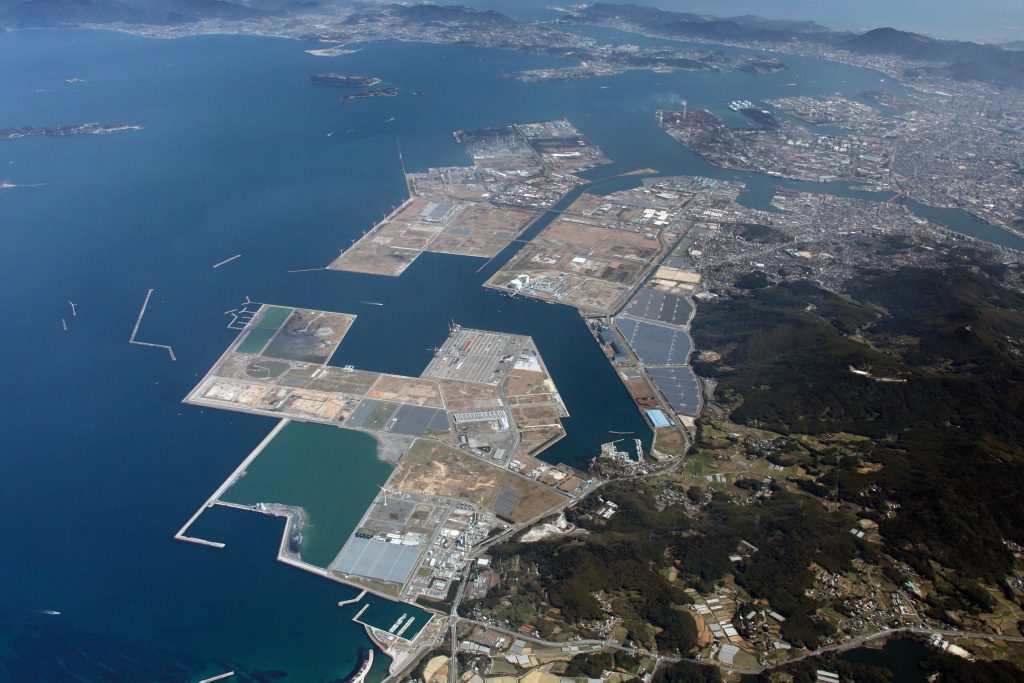
Kitakyushu Port is a major international commercial port and designated “International Strategic Port” by the Japanese government. It serves as a critical hub for trade in the Kyushu region, handling containers, bulk cargo, and automobiles. The port is managed by the **Kitakyushu Port Authority** and operates under the **Port and Harbor Act of Japan**. Key facilities include the **Hibikinada Container Terminal**, **Tobata Coal Terminal**, and **Kokura Wharf**.
Port Types
– **By Size**: Large Port (Annual Cargo Throughput: ~80 million metric tons).
– **By Geography**: Coastal Harbor (Facing Kanmon Strait).
– **By Use**: Commercial Port (Primary), Industrial Port (Supporting steel, chemical, and energy industries).
– **Additional Classification**: ISO 28000:2007-certified for supply chain security.
Long./Lat.
– **Main Port Area**: 33°54′ N / 130°48′ E (Dockyard Basin).
– **Hibikinada Terminal**: 33°56′ N / 130°49′ E.
– **Tobata Terminal**: 33°53′ N / 130°50′ E.
Time Zone
– **Standard Time**: Japan Standard Time (JST), **UTC+9**.
– **Daylight Saving**: Not observed.
– **Port Operations**: 24/7 with prior notice.
Port Location
Located in **Fukuoka Prefecture**, the port spans the cities of Kitakyushu and Shimonoseki. It connects the **Seto Inland Sea** and the **Sea of Japan** via the Kanmon Strait. Surrounding infrastructure includes:
– **Industrial Zones**: Tobata, Kokura, and Yahata.
– **Transport Links**: Kyushu Expressway, Kanmon Bridge (to Honshu), and JR Freight Lines.
Port Limits
Defined by the **Ministry of Land, Infrastructure, Transport and Tourism (MLIT)**:
– **Northern Boundary**: 33°58′ N / 130°48′ E.
– **Southern Boundary**: 33°50′ N / 130°48′ E.
– **Western Boundary**: 33°54′ N / 130°45′ E.
– **Eastern Boundary**: 33°54′ N / 130°51′ E.
– **Anchorage Areas**: Designated zones at Hibikinada (Radius: 2 NM).
Load Lines
– **Certification**: International Load Line Certificate (ILLC) under IMO regulations.
– **Applicable Zones**:
– Tropical (T): April–November.
– Summer (S): December–March.
– Winter North Atlantic (WNA): Not applicable (port outside WNA zone).
– **Minimum Freeboard**: As per vessel’s assigned freeboard marks.
Water Density
– **Average**: 1.025 g/cm³ (seawater).
– **Freshwater Influence**: 1.020 g/cm³ near river mouths (e.g., Murasaki River).
Charts and Books
– **Navigational Charts**:
– Admiralty Chart **JP 112** (Kitakyushu Ko and Approaches).
– JHA Chart **W127** (Kanmon Kaikyo).
– **Publications**:
– *Kitakyushu Port Entry Guide* (Kitakyushu Port Authority).
– *Japan Tide Tables* (Japan Coast Guard).
– **Electronic Navigation**: ECDIS-compliant charts available.
Port Restrictions
– **Maximum Dimensions**:
– **DWT**: 200,000 MT (Hibikinada Terminal).
– **Beam**: 50 meters (restricted by lock gates at Tobata).
– **Draft**: 16 meters (15 meters at Kokura Wharf).
– **LOA**: 300 meters (Hibikinada).
– **Special Restrictions**:
– LNG carriers require prior approval (ISPS Code).
– Night navigation restrictions for vessels > 10,000 GT.
Regulations
– **Legal Framework**:
– **Port Regulations Law** (Article 37: Safety Zones).
– **Marine Pollution Prevention Law** (Ballast Water Management).
– **Operational Rules**:
– **Mandatory AIS** for vessels > 300 GT.
– **VHF Channels**: 16 (Emergency), 12 (Port Control).
– **PSC Inspections**: Tokyo MOU compliance required.
Weather Condition
– **Climate Data** (Japan Meteorological Agency):
– **Typhoon Season**: June–October (average 2–3 typhoons/year).
– **Wind**: Prevailing NW (winter), SE (summer); gusts up to 30 knots during storms.
– **Wave Height**: ≤ 2 meters (protected by breakwaters).
– **Fog**: Occasional (March–May; visibility < 1 NM).
Tide and Currents
– **Tides** (MLIT Data):
– **Mean Range**: 2.5 meters (spring), 1.5 meters (neap).
– **Highest Recorded**: 3.1 meters (2018 typhoon).
– **Currents**:
– **Kanmon Strait**: 5 knots max (spring tide).
– **Eddies**: Near Hibikinada breakwater (caution advised).
Identification Cards
– **Crew Documentation**:
– **Seaman’s Book**: Accepted for shore leave.
– **Shore Pass**: Issued by immigration (valid 72 hours).
– **ISPS Compliance**: Crew lists must be submitted 24h pre-arrival.
Traffics
– **Air**:
– **Kitakyushu Airport (KKJ)**: 20 km from port; daily flights to Tokyo (Haneda), Osaka, Seoul.
– **Rail**:
– **JR Kitakyushu Station**: Shinkansen to Tokyo (5 hours), Fukuoka (20 minutes).
– **Freight Services**: Dedicated lines to Tobata Terminal.
– **Road**:
– **Highways**: Kyushu Expressway (Exit Kitakyushu-Moji).
– **Truck Capacity**: 500+ TEU/day (Hibikinada Terminal).
Holidays
– **National Holidays** (No Cargo Operations):
– January 1 (New Year), Golden Week (April 29–May 5), Obon (Mid-August).
– **Local Holidays**:
– Kitakyushu Port Festival (October 10; partial closures).
– **Emergency Cargo Work**: Possible with 48h notice (+30% surcharge).
Currency
– **Currency**: Japanese Yen (JPY).
– **Exchange Rate**: ~150 JPY/USD (Bank of Japan, 2023).
– **Seafarer Restrictions**: None (foreign exchange available at port facilities).
Main Cargo Handled
– **Exports**:
– Steel products (Yahata Steel Works), automobiles (Nissan, Toyota), machinery.
– **Imports**:
– Coal (Tobata Terminal: 15 million MT/year), LNG (Hibikinada), iron ore.
– Containers (Hibikinada: 500,000 TEU/year; routes to China, Korea, Southeast Asia).
2. Notification and Reports
General Information
All vessels calling at Kitakyushu Port must comply with:
– Japan’s Port Regulations Law (Article 22-26)
– ISPS Code requirements
– IMO FAL Convention standards
– MLIT Ordinance No. 28 (2021) on port entry procedures
Required notifications must be submitted to:
1. Kitakyushu Port Authority
2. Japan Coast Guard (Kitakyushu Coast Guard Office)
3. Kitakyushu Customs
4. Kitakyushu Quarantine Station
Arrival and Departure Checklists
Pre-Arrival (72-24 hours prior):
– Submit ETA through Japan’s NACCS system (Navigation and Airspace Control Communication System)
– Provide vessel particulars:
– IMO number
– Call sign
– Flag state
– Last 10 ports of call
– Crew/passenger lists
– Dangerous cargo declaration (if applicable)
– Request for tug/pilot services
Upon Arrival:
– Submit Notice of Readiness (NOR) to charterer/agent
– Complete Maritime Declaration of Health
– Submit crew list to immigration
– Customs declaration (Form C-1040)
Pre-Departure:
– Submit ETD (minimum 24 hours prior)
– Outbound cargo manifest
– Port clearance application
– Ballast water reporting (if applicable)
Documents and Certificates
Mandatory Documents:
1. Crew Documents:
– Crew list (4 copies)
– Passport/Seaman’s book copies
– Vaccination certificates
– SID (if applicable)
2. Ship Documents:
– Certificate of Registry
– International Tonnage Certificate
– Class certificate
– ISM Code DOC/SMC
– ISPS Certificate
– PSC inspection records (last 12 months)
3. Cargo Documents:
– Cargo manifest
– Dangerous goods declaration (if applicable)
– Stowage plan
– Bill of Lading
4. Safety/Environmental:
– IOPP Certificate
– Oil Record Book
– Garbage Management Plan
– Ballast Water Management Certificate
Vessel Traffic Services (VTS)
– VTS Area: Covers entire port limits and Kanmon Strait approaches
– Monitoring Methods:
– Radar (primary)
– AIS
– CCTV
– Services Provided:
– Traffic organization
– Navigational assistance
– Information service
– Contact:
– VHF Channel 12 (primary)
– VHF Channel 16 (emergency)
– Telephone: +81 93-662-0110 (Japan Coast Guard)
Emergency Co-ordination Centre
– Primary Center: Kitakyushu Maritime Disaster Prevention Center
– Address: 1-1 Higashida, Yahatahigashi-ku, Kitakyushu
– Emergency Tel: 118 (Japan Coast Guard emergency line)
– Secondary Tel: +81 93-662-0110
– Backup Center: Fukuoka Coast Guard Office
– Tel: +81 92-281-0110
Harbour Management Communications
– Kitakyushu Port Authority:
– Address: 2-1-1 Asano, Kokurakita-ku, Kitakyushu
– Main Tel: +81 93-511-8800
– Operations Dept: +81 93-511-8802
– Fax: +81 93-511-8801
– Port Operations Center:
– 24/7 Tel: +81 93-511-8811
Radio
– Primary Station: JMJ (Japan Coast Guard Radio)
– Frequencies:
– 2182 kHz (HF)
– 156.8 MHz (VHF Ch 16)
– Digital Communications:
– Email: Not publicly available (via agent)
– NACCS system for official communications
VHF
– Channel Allocation:
– Ch 06: Ship-ship communications
– Ch 09: Quarantine
– Ch 12: Port Control
– Ch 14: Pilot/Tugs
– Ch 16: Emergency/Distress
– Communication Procedures:
1. Initial contact on Ch 16
2. Switch to assigned working channel
3. Standard marine communication phrases required
4. Japanese/English bilingual operators available
Radars
– Port Radar System:
– Type: Furuno FAR-3000 series
– Coverage: 30 nautical miles
– Locations:
– Moji Headland (primary)
– Hibikinada Terminal
– Kokura Wharf
– Radar Services:
– Available 24/7
– Contact via VHF Ch 12
– Can provide radar guidance in poor visibility
Notices of Readiness
– Requirements for NOR Acceptance:
– Vessel physically ready in all respects
– All cargo spaces prepared
– Documentation complete
– Free pratique obtained (if required)
– Submission:
– To charterer/agent via email/telex
– Copy to terminal operator
– Time Recording:
– Laytime commences upon NOR acceptance
– Standard charter party terms apply
Immigration
– Procedures:
1. Submit crew list 24 hours before arrival
2. Passport control at first port of entry
3. Face-to-face inspection may be required
4. Shore passes issued for crew
– Restrictions:
– Crew changes require prior approval
– No shore leave for certain nationalities
– Contact:
– Kitakyushu Immigration Office
– Tel: +81 93-571-3171
Health
– Quarantine Procedures:
1. Submit Maritime Declaration of Health
2. Radio pratique may be granted for low-risk vessels
3. Physical inspection for high-risk vessels
– Health Facilities:
– Kitakyushu City Medical Center
– 24-hour medical assistance available
– Emergency Contacts:
– Quarantine Office: +81 93-531-2233
– Medical Emergency: 119
Customs
– Clearance Procedures:
1. Submit cargo declaration via NACCS
2. Provide crew effects declaration
3. Ship’s stores declaration
4. Possible physical inspection
– Special Requirements:
– Weapons declaration
– Cash over ¥1 million declaration
– Contact:
– Kitakyushu Customs
– Tel: +81 93-571-4146
Prior Declaration and Authorization
Required for:
1. Dangerous Goods:
– Class 1 (explosives): 72 hours notice
– Other classes: 48 hours notice
2. Special Cargo:
– Heavy lifts (>100 tons)
– Oversized cargo
– Project cargo
3. Special Operations:
– Hot work
– Tank cleaning
– Bunkering
Restricted Activities
– Prohibited:
– Discharging pollutants
– Unauthorized anchoring
– Fishing in port limits
– Restricted:
– Speed limits in Kanmon Strait (10 knots)
– Overtaking restrictions for large vessels
– Night navigation for certain vessel types
Incidents
– Reportable Incidents:
– Collisions
– Groundings
– Pollution incidents
– Personal injuries
– Equipment failures
– Reporting Procedure:
1. Immediate notification to Japan Coast Guard (118)
2. Formal report within 24 hours
3. Investigation may be required
Others
– Additional Requirements:
– Waste delivery receipts
– Bunker delivery notes
– Last port clearance certificate
– Special Notifications:
– Changes in ETA (>6 hours)
– Changes in cargo operations
– Changes in crew composition
3. Port Navigation
General Information
Kitakyushu Port’s navigation system complies with:
– Japan’s Port Regulations Law (Article 30-35)
– IMO Resolution A.857(20) on VTS guidelines
– MLIT Notice No. 412 (2022) on channel management
– IALA Recommendation O-139 on buoyage systems
Navigation aids and procedures are maintained by the Kitakyushu Port Authority and Japan Coast Guard. The port implements ISO 9001:2015 certified navigation safety management systems.
Pilot Station and Pilotage
– Pilot Boarding Areas:
1. Primary Station:
– Position: 33°54.5’N 130°48.2’E (1.5 NM northeast of Hibikinada Breakwater)
– Depth: 25m
– Protection: Sheltered by breakwater
2. Alternate Station:
– Position: 33°53.8’N 130°47.5’E
– Usage: Activated during NE winds > Beaufort 6
– Depth: 20m
– Pilotage Requirements:
– Mandatory for:
– Vessels > 500 GT
– LOA > 50m
– All tankers carrying hazardous cargo
– Optional for: Vessels < 500 GT with certified local knowledge
- Application Procedure:
1. Initial request via NACCS (72 hours pre-arrival)
2. Confirmation (24 hours pre-arrival)
3. Final ETA update (6 hours pre-arrival)
– Communication:
– Primary: VHF Ch 12 (Port Control)
– Secondary: VHF Ch 14 (Pilot Direct)
– Telephone: +81 93-511-8811 (24/7)
– Pilot Boat Specifications:
– Fleet: 3 vessels (Kitakyushu Pilot No.1-3)
– Dimensions: 18m LOA, 5m beam
– Bollard Pull: 15t
– Speed: 15 knots
– Identification:
– Day: Orange hull with “PILOT” in black
– Night: White all-round light + red masthead light
– Boarding Procedures:
– Ladder requirements:
– Height: 1m ± 0.3m above water
– Steps: Non-slip, width ≥ 400mm
– Handrails: Mandatory both sides
– Safety net required under ladder
– Illumination: Minimum 50 lux at night
– Pilot Transfer Restrictions:
– Max wave height: 2.0m
– Max wind speed: 15m/s
– Current: < 3 knots
Approaches and Channels
1. Kanmon Strait Approach:
– Length: 8 NM
– Width:
– Narrowest point: 500m (33°56’N 130°47’E)
– Recommended track: 300m wide
– Depth:
– Main channel: 30m
– Secondary channel: 20m
– Current:
– Spring tide: 5 knots max (flood), 4.5 knots (ebb)
– Neap tide: 3 knots average
– Special Regulations:
– One-way traffic for:
– Vessels > 200m LOA
– Tankers carrying Class A chemicals
– Speed limit: 10 knots
– Overtaking prohibited in narrow sections
2. Hibikinada Channel:
– Length: 3 NM
– Width:
– Entrance: 300m
– Inner channel: 250m
– Depth:
– Dredged depth: 16m
– Chart datum: -15.5m
– Markings:
– IALA Buoyage System (Region A)
– Lateral buoys every 500m
– 4 leading lights (bearing 145°T)
– Restrictions:
– Max draft: 15.5m
– Max air draft: 45m
3. Tobata Channel:
– Length: 2.5 NM
– Width: 200m (maintained)
– Depth: 12m (dredged)
– Current: 1-2 knots
– Special Notes:
– Strong cross-currents near turning basin
– No overtaking zones at:
– 33°53.2’N 130°49.5’E
– 33°52.8’N 130°50.1’E
Anchorages
1. Hibikinada Anchorage A:
– Position: 33°55.0’N 130°49.0’E to 33°55.5’N 130°49.5’E
– Area: 1.5 NM²
– Depth: 20-25m
– Bottom: Clay with shell
– Holding Power: Good (recommended for vessels > 20,000 GT)
– Restrictions:
– Max stay: 72 hours
– No anchoring in southern sector (cable area)
2. Tobata Anchorage B:
– Position: 33°53.0’N 130°50.0’E to 33°53.5’N 130°50.5’E
– Area: 1 NM²
– Depth: 15-18m
– Bottom: Sand over mud
– Holding Power: Fair (recommended for vessels < 20,000 GT)
- Special Marks:
- Yellow special buoys mark anchorage perimeter
- Prohibited zone near LNG terminal (33°53.2'N 130°50.2'E)
3. Emergency Anchorage E1:
– Position: 33°54.0’N 130°48.0’E
– Depth: 30m
– Usage: Pilot transfer/emergencies only
– Max stay: 6 hours
Navigation Aids
– Lighthouses:
1. Moji Ko Light (33°57.3’N 130°58.1’E)
– Structure: White concrete tower
– Height: 50m above MHWS
– Light Characteristics: Fl(3) W 20s
– Range: 20 NM
– Fog Signal: Diaphone (2 blasts/30s)
2. Hibikinada Breakwater Light (33°56.2’N 130°49.3’E)
– Structure: Green metal tower
– Height: 25m
– Light Characteristics: Q(9) G 15s
– Range: 10 NM
– Fog Signal: Horn (1 blast/45s)
– Buoyage System:
– Lateral Marks:
– Port side: Red can buoys (Fl R 4s)
– Starboard side: Green conical buoys (Fl G 4s)
– Cardinal Marks:
– North: Q(9) W
– East: Q(3) + Fl(3) W 10s
– Special Marks:
– Yellow spherical buoys for anchorage areas
– Light rhythm: Fl Y 5s
– DGPS Reference Station:
– Position: 33°54.8’N 130°48.5’E
– Coverage: 30 NM radius
– Accuracy: ±1m 95% of time
– Frequency: 300 kHz
Maximum Authorized Speed
– Kanmon Strait:
– General: 10 knots
– Tankers: 8 knots
– Vessels > 200m LOA: 6 knots
– Port Channels:
– Hibikinada: 8 knots
– Tobata: 6 knots
– Harbor Area:
– General: 6 knots
– Within 500m of berths: 4 knots
– Special Zones:
– LNG terminal approach: 4 knots
– Passenger terminal: 5 knots
Navigation Priority
1. Priority Order:
1. Japan Coast Guard vessels
2. Vessels in distress
3. Passenger ferries on schedule
4. Tankers with hazardous cargo
5. Vessels > 200m LOA
6. Other commercial vessels
2. Right of Way Rules:
– Outbound vessels have priority
– Deep draft vessels have priority in channels
– Overtaking prohibited in:
– Kanmon Strait narrows
– All bends in port channels
Weather Restrictions
– Wind Limits:
– Beaufort 6: Pilotage advisory
– Beaufort 7: Pilotage suspended
– Beaufort 9: Port closed
– Visibility Limits:
– < 1 NM: All navigation stopped
- 1-2 NM:
- Speed limit: 4 knots
- Radar navigation mandatory
- Current Restrictions:
– > 4 knots: Special approval required
– > 5 knots: Navigation prohibited
– Typhoon Procedures:
– Stage 1 (48h notice): Prepare for departure
– Stage 2 (24h notice): All vessels must depart
– Stage 3 (12h notice): Port closed
Night Entry or Departure
– Allowed for:
– Vessels < 250m LOA
- Vessels with certified bridge team
- Vessels with operational AIS/radar
- Requirements:
– Additional qualified lookout
– Engine room manned
– Tug escort (minimum 1 tug)
– Restrictions:
– No hazardous cargo operations 2200-0600
– No night entry for:
– Vessels > 50,000 DWT
– First-time callers
– Vessels with cargo > IMO Class 3
UKC (Under-Keel Clearance)
– Minimum Requirements:
– Open water: 10% of draft or 2m (whichever greater)
– Channels: 1.5m + 10% of draft
– Berthing: 1.0m + 5% of draft
– Tidal Considerations:
– Mean tidal range: 2.5m
– Highest astronomical tide: +3.1m
– Lowest astronomical tide: -0.2m
– Dynamic Factors:
– Squat allowance: 0.5m (channels), 0.3m (harbor)
– Heel allowance: 0.3m maximum
Bridges
1. Kanmon Bridge:
– Position: 33°57.6’N 130°57.8’E
– Clearance:
– MHWS: 61m
– Chart datum: 58m
– Passage Procedure:
– VHF Ch 12 notification 1 hour prior
– Speed limit: 8 knots
– No simultaneous passages > 200m LOA
– Restrictions:
– Air draft limit: 60m
– Daylight passage only for vessels > 50m air draft
2. Wakato Bridge:
– Position: 33°53.1’N 130°49.9’E
– Clearance:
– MHWS: 42m
– Chart datum: 40m
– Special Notes:
– Vertical clearance gauges on both sides
– No passage during maintenance (notified via NAVTEX)
Air Drafts Limit and Air Gap
– Kanmon Strait:
– Maximum air draft: 60m
– Minimum clearance: 1m at MHWS
– Port Area:
– Overhead power lines: 45m clearance
– Container cranes: 40m clearance (operational areas)
– Special zones near Hibikinada: 35m limit
– Air Gap Calculation:
– Required minimum: Air draft + 1m (day), +2m (night)
– Squat allowance: 0.5m for vessels > 150m LOA
Vessels Shifting
– Standard Procedure:
1. Submit shift plan 6h in advance
2. Port Control approval
3. Tug escort (minimum requirements):
– < 150m LOA: 1 tug
- 150-200m: 2 tugs
- > 200m: 3 tugs
4. Continuous VHF contact
– Restrictions:
– No shifting during:
– Cargo operations
– Strong currents (>3 knots)
– Night for hazardous cargo vessels
– Speed limit: 4 knots within port
Vessels Transiting
– Requirements:
– Transit plan submission (24h prior)
– Continuous AIS transmission
– Pilot mandatory for:
– Vessels > 10,000 GT
– First-time callers
– Hazardous cargo carriers
– Priority Rules:
– Outbound vessels have right of way
– Deep draft vessels have channel priority
– No overtaking in:
– Kanmon Strait
– All marked channel bends
Vessels Towing
– Regulations:
– Special permit required (72h notice)
– Maximum dimensions:
– Tow length: 200m
– Beam: 50m
– Draft: 12m
– Daylight operations only
– Equipment Requirements:
– Proper day shapes (black diamond)
– Emergency tow package
– Secondary tow line
– Escort Requirements:
– 2 tugs for tow length > 100m
– Japan Coast Guard escort for hazardous tows
Tugs and Working Boats
– Tug Fleet:
1. Kitakyushu Tug No.1
– Bollard pull: 60t
– Length: 32m
– Engines: 2 x 3,000 kW
2. Kitakyushu Tug No.2
– Bollard pull: 50t
– Length: 30m
– Engines: 2 x 2,500 kW
3. Kitakyushu Tug No.3
– Bollard pull: 40t
– Length: 28m
4. Kitakyushu Tug No.4
– Bollard pull: 30t
– Length: 25m
– Working Boats:
– 5 supply boats (20m length, 5t capacity)
– 2 garbage barges (30m³ capacity each)
– 1 oil spill response vessel (50t recovery capacity)
– 2 patrol boats (Japan Coast Guard)
Vessels in Special Operations
1. Bunkering:
– Designated areas:
– Hibikinada: 33°55.8’N 130°49.2’E
– Tobata: 33°53.5’N 130°50.3’E
– Requirements:
– Prior approval (24h notice)
– Stand-by tug
– Oil spill equipment ready
– No simultaneous cargo operations
2. Hot Work:
– Permit requirements:
– Gas-free certificate
– Fire watch posted
– Extinguishers ready
– Prohibited areas:
– Within 50m of fuel tanks
– During cargo operations
3. Underwater Operations:
– Requirements:
– Diver flag (Code Flag ‘A’)
– Safety zone: 50m radius
– VHF Ch 16 monitoring
– Notification: 24h prior to Japan Coast Guard
4. Pollution Control
Ballast and Deballast
– Regulatory Framework:
– Primary Legislation:
– Japan’s Act on the Prevention of Marine Pollution and Maritime Disaster (Article 10-4, revised 2022)
– IMO Ballast Water Management Convention (D-2 standard)
– MLIT Ordinance No. 529 (2021) – Port-Specific Requirements
– Certification:
– All BWM systems must have Japan ClassNK Type Approval
– USCG approval accepted for vessels calling from US ports
– Operational Procedures:
1. Pre-Arrival:
– Submit Ballast Water Reporting Form (MLIT Form BWR-1) 24h prior via NACCS system
– Required data:
– Ballast water volume (m³)
– Salinity levels
– Last 10 ports of ballast uptake
– Treatment system details
2. In-Port Operations:
– Prohibited Activities:
– Ballast exchange within 12 NM of coastline
– Deballasting without prior approval
– Mandatory Sampling:
– High-risk vessels (from invasive species zones)
– Random inspections (10% of visiting vessels)
3. Record Keeping:
– Ballast Water Record Book maintained for 3 years
– Treatment system maintenance logs
– Technical Requirements:
– Treatment Standards:
– ≥50μm organisms: <10 viable organisms/m³
- 10-50μm organisms: <10 viable organisms/mL
- Indicator microbes:
- Toxicogenic Vibrio cholerae: <1 cfu/100mL
- Escherichia coli: <250 cfu/100mL
- System Testing:
- Annual performance verification
- Calibration certificates required
- Restricted Zones:
– Absolute Prohibition Areas:
– Hibikinada aquaculture zones (1 NM radius)
– Tobata coal terminal basin
– Moji-ko fishing grounds
– Conditional Areas:
– Kanmon Strait (exchange only during slack tide)
– Passenger terminal area (nighttime restrictions)
– Penalties:
– Tiered Enforcement:
– Minor violations: ¥500,000 fine
– Major violations: ¥3 million fine + vessel detention
– Repeat offenses: Ban from Japanese ports (up to 1 year)
– Reporting:
– Incidents must be reported within 1h to Japan Coast Guard (Tel: 118)
Garbage Disposal
– Legal Basis:
– MARPOL Annex V (as implemented by Japan’s Cabinet Order No. 338)
– Kitakyushu City Waste Management Ordinance (Article 15-3)
– Facility Specifications:
1. Hibikinada Terminal:
– Processing Capacity: 10m³/day
– Equipment:
– 2 x 5m³ compactors (for Categories A-C)
– 1 x 200kg/hr incinerator (Categories D-E)
– Refrigerated storage for food waste
– Operating Hours: 0800-1700 (Mon-Sat)
2. Tobata Terminal:
– Processing Capacity: 5m³/day
– Specialized Handling:
– PCB waste containment unit
– Medical waste autoclave
– Emergency Collection: Available with 4h notice
– Service Details:
– Primary Contractor: Kitakyushu Environmental Services Co.
– Address: 2-5-1 Asano, Kokurakita-ku
– Business Hours Contact: +81 93-511-8820
– Emergency Contact: +81 90-5118-8200 (24/7)
– Fee Structure:
– General garbage (Categories A-C): ¥5,000/m³
– Plastics (Category D): ¥8,000/m³
– Hazardous waste (Category E): ¥15,000/m³
– After-hours surcharge: 30% additional
– Onboard Management:
– Segregation Requirements:
1. Category A: Plastics
2. Category B: Food waste
3. Category C: Domestic waste
4. Category D: Cooking oil
5. Category E: Hazardous materials
– Documentation:
– Waste Management Plan (Japanese/English)
– Garbage Record Book (MARPOL format)
– Placarding:
– Mandatory bilingual (Japanese/English) signs
– Standardized color-coding (per Japan MSA guidelines)
– Monitoring & Compliance:
– Inspection Frequency:
– 100% for vessels with prior violations
– 20% random checks for others
– Penalties:
– Improper disposal: ¥1 million fine
– False records: ¥2 million fine + possible detention
Waste Oil Disposal
– Reception Infrastructure:
1. Fixed Facilities:
– Hibikinada Oil Terminal:
– Storage Capacity: 2,000m³ (4 x 500m³ tanks)
– Transfer Rate: 100m³/hour
– Piping: 8-inch stainless steel with vapor recovery
– Monitoring: Continuous VOC detection system
– Moji Sludge Plant:
– Processing Capacity: 50m³/day
– Treatment: Centrifugal separation + thermal drying
2. Mobile Services:
– Barges:
– “KES Maru No.1”: 500m³ capacity, 50m³/hr pump rate
– “KES Maru No.2”: 500m³ capacity, equipped with heater
– Tank Trucks:
– 5 vehicles (20m³ each)
– Available within 2h notice
– Service Providers:
– Licensed Operators:
1. Kyushu Oil Waste Disposal Co. (Primary)
– Headquarters: 3-1 Higashida, Yahatahigashi-ku
– Operations Center: +81 93-662-0220
– Emergency Response: +81 90-6620-2200
– Accreditation: ISO 14001:2015 certified
2. Nippon Oil Recovery (Backup)
– Contact: +81 93-581-1122
– Operational Protocols:
1. Pre-Transfer Requirements:
– Notification: 48h advance notice
– Sample Analysis:
– Conducted by approved labs (JPY 15,000/test)
– Parameters: Flash point, water content, PCB levels
– Documentation:
– Waste Oil Manifest (MLIT Form OW-3)
– MARPOL Annex I records
2. Transfer Procedures:
– Continuous VOC monitoring
– Dedicated communication channel (VHF Ch 08)
– Emergency shutdown systems tested pre-transfer
3. Post-Transfer:
– Joint signing of transfer certificate
– Retain copies for 3 years
– Pricing Structure:
– Standard Services:
– Sludge: ¥30,000/m³ (min 1m³)
– Bilge water: ¥25,000/m³
– Oily rags: ¥10,000/100kg
– Premium Services:
– After-hours (2000-0600): +20% surcharge
– Emergency response: ¥100,000 base fee + volume charges
– Safety Measures:
– Required Equipment:
– Spark arrestors on all connections
– Oil spill kits (minimum 200L capacity)
– Fire extinguishers (2 x 10kg dry powder)
– Personnel:
– Certified waste handlers
– Minimum 2 operators per transfer
Sewage Reception
– Facility Capabilities:
1. Fixed Facilities:
– Passenger Terminal:
– Capacity: 200m³/day
– Pipe Network: 6-inch HDPE with backflow prevention
– Treatment: Membrane bioreactor (MBR) system
– Discharge Standard: <10mg/L BOD
- Hibikinada Cargo Terminal:
- Mobile Reception: 2 x 10m³ vacuum trucks
- Operating Hours: 0600-2200 daily
2. Barge Services:
– “Green Port No.1”:
– Capacity: 50m³
– Available with 12h notice
– Fee: ¥50,000 per transfer
– Regulatory Requirements:
– Discharge Restrictions:
– No discharge within 3 NM of coastline
– Zero discharge in Kanmon Strait
– Treatment Standards:
– Passenger ships: UV treatment (40mJ/cm² dose)
– Other vessels: At least maceration + chlorination
– Record Keeping:
– Sewage Record Book (MARPOL Annex IV)
– Retained for 1 year minimum
– Service Management:
– Provider: Kitakyushu Port Sanitation Dept.
– Office: Port Administration Building, 2nd Floor
– Contact: +81 93-511-8833 (0800-1700)
– Emergency: Not Available (use municipal services)
– Procedures:
1. Request submission (Port Form SW-2)
2. Pre-payment at Port Office
3. Scheduled service within 6h
– Fees:
– Standard discharge: ¥10,000 per event
– Large volume (>50m³): ¥150/m³
– Emergency service: ¥30,000 base fee
– Inspection Regime:
– Sampling Frequency:
– 10% of passenger ships
– 5% of cargo vessels
– Test Parameters:
– Fecal coliforms (<250 CFU/100mL)
- Total suspended solids (<50mg/L)
- Non-Compliance Penalties:
- First offense: ¥500,000 fine
- Repeat offenses: Vessel detention
5. Port Safety and Security
General Information
Kitakyushu Port maintains comprehensive safety and security systems certified to:
– ISO 28000:2007 (Supply Chain Security)
– ISPS Code (Level 1 Facility)
– Japan’s Port Regulations Law (Article 40-45, revised 2023)
Key infrastructure includes:
– 24/7 Port Control Center with AIS/radar monitoring
– 12.5km perimeter fencing with motion sensors
– 58 high-resolution CCTV cameras (4K with facial recognition)
– 3 layered security zones (outer, inner, restricted)
PSC (Port State Control)
– Inspection Authorities:
1. Japan Coast Guard (Kitakyushu Office)
– Address: 2-1-1 Asano, Kokurakita-ku
– Inspection Hotline: +81 93-571-4321
2. Moji Marine Office
– Specializes in chemical tankers and gas carriers
– Targeting Matrix:
– High Priority (100% inspection):
– Vessels with 3+ deficiencies in last 12 months
– Ships >25 years old
– Poor-performing flag states (Black/Grey list)
– Medium Priority (20% inspection):
– First-time visitors
– Vessels with past deficiencies
– Low Priority (5% random inspection)
– Inspection Process:
1. Initial document review (2 hours)
2. Physical inspection (average 4-6 hours)
3. Closing meeting with findings
– 2023 Statistics:
– Total inspections: 512 (Jan-Oct 2023)
– Detention rate: 3.8%
– Top deficiencies:
1. Fire doors (23%)
2. Lifeboat equipment (18%)
3. Oil record book (15%)
– Appeals Process:
– Submit to Moji Maritime Bureau within 7 days
– Re-inspection fee: ¥150,000
ISPS (International Ship and Port Facility Security)
– Security Level Protocols:
| Level | Access Control | Screening | Waterside Patrol |
|——-|—————-|———–|——————|
| 1 | ID+Biometric | 20% cargo | 4x daily |
| 2 | Escort+ID | 50% cargo | Hourly |
| 3 | Armed guards | 100% cargo| Continuous |
– Facility Security Measures:
– Access Control:
– 12 automated gates with palm vein authentication
– Visitor pre-registration (minimum 24h notice)
– Surveillance:
– Thermal cameras at all berths
– Underwater sonar at LNG terminal
– Cybersecurity:
– IEC 62443-3-3 certified network
– Monthly penetration testing
– Ship Security Requirements:
– Mandatory:
– SSR posted at all access points
– 3 security drills annually
– Automatic intrusion detection systems
– Recommended:
– Armed guards (high-risk cargo)
– Anti-drone systems
Emergency
– Emergency Contacts:
1. Maritime Emergencies:
– Japan Coast Guard: 118 (VHF Ch 16)
– MRCC Fukuoka: +81 92-844-0118
2. Medical Emergencies:
– Port Clinic: +81 93-511-8877
– Kitakyushu City Hospital: +81 93-951-1111
3. Pollution Incidents:
– 24h Hotline: +81 93-511-8899
– Response Equipment:
– Oil Spill:
– 2 x 50-ton skimmers (OWS-150 model)
– 5,000m containment boom
– Firefighting:
– 3 x fireboats (10,000L/min capacity)
– Foam stations every 200m
– SAR:
– 2 x 12m RHIBs (40 knot capability)
– Helicopter landing zone at Port HQ
– Emergency Procedures:
1. Immediate Actions:
– Sound general alarm
– Notify Port Control (VHF Ch 12/16)
– Activate emergency shutdown
2. Reporting:
– Initial verbal report within 15min
– Written report (MLIT Form EM-1) within 24h
3. Evacuation:
– Muster points at each terminal
– Emergency lighting (90min backup)
– ECC (Emergency Coordination Centre):
– Primary Center:
– Location: Port Admin Bldg 3F (33°53’12″N 130°48’45″E)
– Equipment:
– 6 workstations with AIS/radar feeds
– Satellite comms (Inmarsat Fleet One)
– Backup power (72h capacity)
– Secondary Center:
– Located at Japan Coast Guard HQ
– Activates during Level 3 emergencies
Ships Arrest
– Legal Framework:
– Primary Laws:
– Civil Execution Act (Articles 112-118)
– Maritime Code (Articles 842-850)
– Grounds for Arrest:
1. Maritime liens (crew wages, salvage)
2. Mortgage defaults
3. Pollution damage claims
– Arrest Procedure:
1. Plaintiff files petition at Fukuoka District Court
2. Court issues arrest warrant (typically within 24h)
3. Japan Coast Guard executes arrest:
– Posts notice on mast
– Places guards if necessary
4. Security deposit required for release
– 2023 Data:
– Total arrests: 7
– Average duration: 18 days
– Typical security amount: 20% claim value
Fire Precautions
– Tanker-Specific Measures:
1. Pre-transfer Checks:
– Gas-free certificate (<1% LEL)
- Bonding cables (10,000A capacity)
- Static accumulators grounded
2. During Operations:
- Fire patrols every 30 minutes
- Water curtains operational
- Tugs on standby (minimum 2)
- General Fire Safety:
– Hot Work Permits:
– Validity: 8 hours
– Required for:
– Welding
– Grinding
– Electrical work
– Extinguisher Requirements:
– 10kg dry powder every 50m
– Foam stations at hazardous areas
Inspections from Other Parties
– Common Inspections:
1. ClassNK:
– Annual surveys (2-3 days)
– Special surveys every 5 years
2. Oil Majors (SIRE):
– 300+ item checklist
– Average duration: 8 hours
3. P&I Clubs:
– Focus on crew welfare and safety
4. Flag State:
– Annual audits for non-Japanese flags
– Scheduling Requirements:
– Minimum notice: 24h (72h for SIRE)
– Business hours only (0800-1700)
– No simultaneous inspections allowed
Maritime Security Zones
– Designated Areas:
1. LNG Terminal:
– 500m radius exclusion zone
– No unauthorized vessels within 200m
2. Naval Facilities:
– 1km restricted area
– AIS mandatory transmission
3. Container Terminal:
– Access limited to port employees
– Vehicle screening 100%
– Enforcement:
– Japan Coast Guard patrols
– Automatic tracking system
– Penalties:
– First offense: ¥1 million fine
– Repeat offenses: Vessel detention
Police
– Kitakyushu Port Police Station:
– Address: 1-1 Higashida, Yahatahigashi-ku
– Jurisdiction: All port facilities
– Contacts:
– Emergency: 110
– General: +81 93-571-0110
– Immigration: +81 93-571-0115
– Resources:
– 24/7 patrol units
– K-9 narcotics detection
– Interrogation facilities
Flag
– Display Requirements:
1. National Flag:
– Size: Minimum 1m² per 100m LOA
– Position: Stern flagstaff
2. Courtesy Flag:
– Size: 1/2 national flag
– Position: Starboard spreader
3. Company Flag:
– Optional at foremast
– Protocol:
– Hoisted at 0800 local
– Lowered at sunset
– Half-mast during official mourning
Signals and Lights Display
– Day Signals:
1. Code Flags:
– “B”: Dangerous cargo
– “H”: Pilot onboard
– “Q”: Request free pratique
2. Shapes:
– Black ball: At anchor
– Cylinder: Constrained by draft
– Night Lights:
1. Navigation Lights:
– Side lights: 112.5° visibility
– Stern light: 135° visibility
2. Special Lights:
– All-round red: Not under command
– Flashing yellow: Towing operation
Stowaways and Refugees
– Prevention Measures:
1. Physical Security:
– 3m perimeter fencing
– Infrared sensors at all access points
– Random patrols (every 2 hours)
2. Documentation:
– Crew manifest verification
– Visitor logbooks
– Stowaway Procedures:
1. Discovery:
– Isolate individual
– Notify Japan Coast Guard immediately
2. Documentation:
– Complete IMO FAL Form 3
– Photograph evidence
3. Disembarkation:
– Immigration processing
– Deportation arranged
– 2023 Statistics:
– Interceptions: 9
– Average processing time: 7 days
Alcohol, Drugs and Prohibited Items
– Substance Policies:
1. Alcohol:
– BAC limit: 0.03% for duty personnel
– No consumption 4h before watch
2. Drugs:
– Zero tolerance policy
– Random testing (5% of crew)
3. Prohibited Items:
– Weapons (including replicas)
– Narcotics
– Counterfeit goods
– Enforcement:
– Port police inspections
– Canine units (weekly sweeps)
– Penalties:
– Alcohol violations: ¥500,000 fine
– Drug offenses: Criminal charges
Reporting of Security Breaches
– Reporting Channels:
1. Immediate Notification:
– VHF Ch 16/12
– Hotline: +81 93-511-8800
2. Follow-up Reports:
– MLIT Form SEC-1 (within 24h)
– ISPS Security Report
– Investigation Process:
1. Initial response (within 30min)
2. Evidence collection
3. Root cause analysis
4. Corrective actions
– Whistleblower Protection:
– Anonymous reporting available
– Anti-retaliation policies
Operation of Drones
– Regulations:
1. Permit Requirements:
– Application to Port Authority (Form DR-1)
– Minimum 72h notice
– Pilot certification (Japan MLIT Class 2)
2. Flight Restrictions:
– Max altitude: 50m
– Daylight only (1h after sunrise to 1h before sunset)
– No flights over vessels or facilities
– Approved Uses:
1. Hull inspections
2. Terminal surveys
3. Emergency response
– Prohibited Activities:
1. Photography of security zones
2. Cargo transport
3. Night operations
6. Cargo Operations
General Information
Kitakyushu Port is a major international hub handling:
– Annual throughput (2022): 87.3 million metric tons
– Vessel calls: 8,742 (2022 data)
– Operating certifications:
– ISO 9001:2015 (Quality Management)
– ISO 45001:2018 (Occupational Health and Safety)
– Green Port Certification (MLIT 2021)
Key operational features:
– 24/7 operations with central control tower
– Automated cargo tracking system (NACCS)
– Dedicated hazardous materials zone
Tanker Berths and Terminals
1. Hibikinada Oil Terminal (33°53’30″N 130°49’15″E):
– Berth Specifications:
| Berth | Length (m) | Depth (m) | Max Draft (m) | Loading Arms | Capacity |
|——-|————|———–|—————|————–|———-|
| T-1 | 300 | 16.0 | 15.5 | 4×16″ | 100,000DWT|
| T-2 | 350 | 18.0 | 17.8 | 2×12″+2×16″ | 150,000DWT|
| T-3 | 400 | 20.0 | 19.5 | 4×16″ | 300,000DWT|
– Technical Parameters:
– Max discharge rate: 5,000m³/hr (crude), 3,500m³/hr (products)
– Slop facilities: 2×1,000m³ tanks, 500m³/hr receiving capacity
– API range: 15°-45° (crude), 30°-60° (products)
– Temperature range: -10°C to 60°C
– Shore steam: 50 ton/hr at 10 bar
– Safety Systems:
– 2 fireboats (10,000L/min capacity)
– Foam monitors every 50m
– VOC detection system (0-100% LEL)
– Emergency shutdown within 30 seconds
2. Moji LPG Terminal (33°56’10″N 130°57’45″E):
– Berths: LPG-1 (250m), LPG-2 (200m)
– Depth: 14m (chart datum)
– Max draft: 13.5m
– Loading arms: 2×10″ cryogenic (-162°C capability)
– Discharge rate: 2,000m³/hr
– Special requirements:
– Gas-free certificate required
– Static bonding <10 ohms resistance
- No hot work within 50m
Container Berths and Terminals
1. Hibikinada Container Terminal:
– Berth Specifications:
| Berth | Length (m) | Depth (m) | Max Draft (m) | Cranes (SWL) | Productivity |
|——-|————|———–|—————|————–|————–|
| CT-1 | 300 | 16.0 | 15.5 | 2x50t | 35 moves/hr |
| CT-2 | 350 | 16.0 | 15.5 | 2x65t | 40 moves/hr |
| CT-3 | 300 | 16.0 | 15.5 | 2x50t | 35 moves/hr |
| CT-4 | 250 | 16.0 | 15.5 | 2x65t | 40 moves/hr |
– Equipment:
– 8 quay cranes (4x50t, 4x65t)
– 30 RTGs (40t SWL)
– 25 terminal trucks
– Wind limits: Beaufort 7 (max 15m/s)
– Special Features:
– Shore power: 6.6kV/60Hz (all berths)
– Reefer plugs: 500 (40ft) at 440V/60Hz
– Dangerous goods zone: 5,000m²
2. Tobata Terminal:
– Berths: CT-5 (200m), CT-6 (300m)
– Depth: 14m
– Max draft: 13.8m
– Cranes: 4x40t Panamax
– Productivity: 30 moves/hr
Dry Cargo Berths and Bulk Cargo Facilities
1. Wakamatsu Coal Terminal:
– Berths: C-1 (300m), C-2 (300m)
– Depth: 15m
– Max draft: 14.5m (salt water)
– Equipment:
– 2 unloaders (1,500t/hr each)
– 3 stackers (2,000t/hr)
– 2 reclaimers (1,800t/hr)
– Storage: 500,000t capacity
– Dust suppression: Water spray system
2. Kokura General Cargo Terminal:
– Berths: GC-1 (150m), GC-2 (150m), GC-3 (200m)
– Depth: 12m
– Max draft: 11.5m
– Equipment:
– 3x10t mobile cranes
– 2x50t mobile cranes
– 5 forklifts (3-15t capacity)
Passenger Berths and Terminals
1. Kitakyushu International Cruise Terminal:
– Berth: P-1 (350m)
– Depth: 10m
– Max draft: 9.5m
– Equipment:
– 2 passenger gangways (adjustable 5-15m)
– Baggage handling system (1,000 pieces/hr)
– Capacity: 4,000 passengers/day
– Security: Full body scanners (4 units)
Specialised Cargo Handling Facilities
1. Ro-Ro Terminal:
– Berths: RO-1 (200m), RO-2 (200m)
– Ramp capacity: 200t
– Daily throughput: 500 vehicles
– Special equipment:
– 2 tractor units
– 10 trailers
– Vehicle inspection system
2. Chemical Terminal:
– Berths: CH-1 (250m), CH-2 (200m)
– Dedicated pipelines for:
– Acids (3 lines)
– Alkalis (2 lines)
– Solvents (4 lines)
– Vapor recovery: 95% efficiency
– Safety:
– Emergency showers every 50m
– Neutralization tanks
Loading and Discharging Procedures
1. Pre-arrival:
– Submit cargo plan 72h prior via NACCS
– Safety meeting before operations (attendance mandatory)
– Equipment inspection (joint survey)
2. Operations:
– Continuous monitoring by:
– Terminal superintendent
– Ship’s officers
– Japan Coast Guard (random inspections)
– Hourly progress reports (Form KP-12)
3. Completion:
– Joint inspection of holds/tanks
– Documentation:
– Cargo operations log
– Time sheet
– Damage report (if any)
Loading and Discharging Rates
– Container Ships:
– Post-Panamax: 180-220 TEU/hr
– Panamax: 150-180 TEU/hr
– Feeder: 100-120 TEU/hr
– Tankers:
– Crude oil: 10,000-15,000m³/hr
– Products: 5,000-8,000m³/hr
– Chemicals: 1,000-3,000m³/hr
– Bulk Carriers:
– Coal: 3,000t/hr
– Grain: 1,500t/hr
– Iron ore: 2,500t/hr
– General Cargo:
– Breakbulk: 500-1,000t/day
– Project cargo: 200-500t/day
Ship to Ship Transfer
– Approved Area: 33°55’N 130°49’E (1.5NM offshore)
– Requirements:
– Minimum 2 tugs (5,000HP each)
– Prior approval from:
– Japan Coast Guard (72h notice)
– Port Authority (Form STS-1)
– Safety equipment:
– Oil spill boom (500m)
– Firefighting system (10,000L/min)
– Monitoring:
– Radar surveillance
– Patrol boat on standby
Cargo Gear
– Container Terminals:
– Shore cranes only (no ship’s gear permitted)
– Lashing: Performed by stevedores
– General Cargo:
– Vessel’s gear permitted (certification required)
– SWL must be clearly marked
– Heavy Lift:
– 2 floating cranes available:
– “Kitakyushu No.1”: 250t @ ¥1.5M/day
– “Kitakyushu No.2”: 150t @ ¥1M/day
Shore Cranes
1. Container Terminals:
– 12 quay cranes:
– 8x50t (35m outreach)
– 4x65t (45m outreach)
– 30 RTGs:
– 40t SWL
– 1-over-5 stacking
2. General Cargo:
– 8 mobile cranes:
– 3x10t (20m boom)
– 3x25t (30m boom)
– 2x50t (40m boom)
Floating Cranes
– Specifications:
| Name | Capacity | Boom Length | Daily Rate | Availability |
|—————–|———-|————-|————|————–|
| Kitakyushu No.1 | 250t | 60m | ¥1.5M | 48h notice |
| Kitakyushu No.2 | 150t | 50m | ¥1M | 24h notice |
– Certifications:
– ClassNK certified
– Annual load testing
Hoses
– Oil Terminals:
– Diameter: 16″ (standard), 12″ (available)
– Length: 10m sections (max 50m)
– Pressure: 10 bar working, 15 bar test
– Chemical Terminals:
– Dedicated hoses per product type
– Material: PTFE lined for corrosives
– LPG Terminal:
– Cryogenic hoses (-162°C rated)
– Vapor return lines mandatory
Specialised Cargo Operation
1. Dangerous Goods:
– Designated berths: D-1 to D-3
– Segregation per IMDG Code
– Emergency equipment:
– Spill kits (chemical specific)
– Decontamination showers
2. Radioactive Materials:
– Prior approval required (30 days)
– Special handling team
– Radiation monitoring during ops
3. Waste Handling:
– Licensed operators only
– Tracking from ship to disposal
Lightering and Lighterage
– Barge Fleet:
– 10 units (1,000t capacity each)
– Dimensions: 60m LOA, 15m beam
– Rates:
– Standard: ¥50,000 per 1,000t
– Emergency: +50% surcharge
– Operating Area:
– Within 3NM of port limits
– Daylight only (except emergencies)
Barge
– Availability:
– 20 barges (500-2,000t capacity)
– Operated by Kitakyushu Lighterage Co.
– Contact: +81 93-511-8850
– Types:
– Open hopper (bulk cargo)
– Tank barges (liquid cargo)
– Flat deck (project cargo)
Cargo Lashing
– Containers:
– Performed by stevedores
– Certified lashing materials
– Inspection before departure
– General Cargo:
– May be done by crew
– Must follow IMO CSS Code
– Heavy Lift:
– Specialized team required
– Engineering approval needed
Cleaning Procedures
1. Dry Bulk Residues:
– Vacuum systems available (500kg/hr)
– Waste disposal: ¥5,000/ton
2. Hold Cleaning:
– Licensed contractors only
– Water treatment before discharge
3. Deck Washings:
– Containment required
– Oil/water separators available
Opening/Closing Hatches
– Normally by stevedores
– Crew may operate with:
– Terminal supervision
– Safety briefing
– Hydraulic hatches: Special team required
Delay
– Average Waiting Times:
| Operation | Normal (hrs) | Peak Season (hrs) |
|————-|————–|——————-|
| Berthing | 12-24 | 24-48 |
| Bunkering | 6-12 | 12-24 |
| Customs | 2-4 | 4-8 |
– Mitigation:
– Priority berthing available (surcharge)
– Advanced scheduling recommended
Stevedore Companies
1. Kitakyushu Stevedoring Co.:
– Contact: +81 93-511-8840
– Gangs: 15-25 men per shift
– Specialization: All cargo types
2. Nippon Cargo Handlers:
– Contact: +81 93-581-2233
– Specialization: Dangerous goods
Working Hours
– Standard:
– Mon-Fri: 0800-1700
– Sat: 0800-1200
– Sun/Holidays: Closed
– Overtime Rates:
| Time Period | Rate Multiplier |
|———————|—————–|
| 1700-2200 (Weekday) | 1.5x |
| 2200-0800 (Weekday) | 2.0x |
| Weekend/Holiday | 2.5x |
Warehouses and Yards
– Covered Storage:
– Total: 50,000m²
– Height: 8-12m
– Floor load: 5-10t/m²
– Open Storage:
– Total: 450,000m²
– Paved surface
– Drainage system
– Refrigerated:
– Capacity: 5,000m²
– Temp range: -25°C to +15°C
– 24/7 monitoring
7. Port Services
General Information
Kitakyushu Port provides comprehensive port services certified under:
– ISO 9001:2015 (Service Quality Management)
– ISO 14001:2015 (Environmental Management)
– Green Port Certification (MLIT 2022)
Key service features:
– 24/7 operations with multilingual support (English/Japanese/Korean)
– Centralized service coordination through Port Operations Center
– Digital service request system (NACCS-Web)
Bunkering
1. Availability:
– 24/7 at all major berths (including anchorage)
– Delivery methods:
– Barge (primary)
– Truck (limited quantities)
2. Fuel Specifications:
| Fuel Type | Sulfur Content | Viscosity | Availability |
|———–|—————-|———–|————–|
| IFO 380 | 0.5% max | 380cSt | All berths |
| IFO 180 | 0.5% max | 180cSt | Main berths |
| MGO | 0.1% max | 2-6cSt | All berths |
| LNG | N/A | N/A | By request |
3. Order Procedures:
– Minimum notice: 24h (72h for LNG)
– Required documents:
– Bunker requisition form
– Fuel oil non-availability certificate (if applicable)
4. Quantity Requirements:
– Minimum: 50mt
– Maximum per barge: 3,000mt
5. Quality Control:
– Sampling per ISO 13739
– Mass flow meters on all barges
6. Approved Suppliers:
– Kyushu Bunkering Co. (+81 93-581-1122)
– Nippon Oil Supply (+81 93-662-0330)
– Bunker prices indexed to MOPS+premium
Lubricants
1. Available Products:
| Type | Grades Available | Packaging |
|——————–|—————————|——————-|
| Cylinder Oil | SAE 40, 50, 70 | 20L pails, bulk |
| System Oil | SAE 30, 40 | 200L drums, bulk |
| Gear Oil | SAE 80W90, 85W140 | 20L pails |
| Grease | NLGI 1, 2, 3 | 16kg kegs |
2. Delivery Options:
– Truck delivery: 2-4h lead time
– Barge delivery: 12h notice required
3. Special Orders:
– Synthetic lubricants: 72h notice
– Brand-specific requests: 1 week notice
4. Certifications:
– All products meet OEM specifications
– COC certificates available
Fresh Water
1. Supply Points:
– All berths equipped with DN100 connections
– Anchorage supply by barge
2. Technical Specifications:
– Pressure: 3-4 bar
– Flow rate: 50-100m³/hr
– Quality: Meets WHO Guidelines (test reports available)
3. Pricing:
– Standard rate: ¥500/m³
– After-hours (2000-0600): +20% surcharge
– Emergency supply: +50% surcharge
4. Order Procedure:
– Minimum notice: 6h
– Required equipment:
– Backflow preventer
– Approved hoses (available for rent)
Stores and Spare Parts
1. Delivery Regulations:
– Truck access:
| Berth Type | Direct Access | Security Clearance Required |
|——————|—————|——————————|
| Container | Yes | Yes |
| Oil Terminal | No | Yes |
| General Cargo | Yes | No |
– Barge delivery:
– Allowed during cargo ops with prior approval
– Safety zone: 50m from operations
2. Customs Procedures:
– Standard clearance: 2-4h
– Express service (¥20,000 fee): 1h
– Restricted items:
– Drugs/medicines (special permit)
– Radioactive materials (72h notice)
3. Equipment Handling:
– Forklifts available up to 10t capacity
– Crane service for heavy items (¥50,000/hr)
4. Spare Parts Availability:
– Engine parts: 70% common types (24h)
– Deck machinery: 60% common types (48h)
– Electrical: 50% common types (72h)
5. Major Suppliers:
– Kitakyushu Marine Supplies (+81 93-511-8860)
– 24/7 emergency service
– Bonded warehouse available
– Nippon Ship Spares (+81 93-662-0111)
– OEM parts sourcing
– Air freight coordination
Dunnage
1. Materials Available:
– Wood:
– Size: 100x10x10cm (standard)
– Treatment: ISPM 15 compliant
– Plastic:
– Size: 2x1m mats
– Load capacity: 5t/m²
2. Handling Procedures:
– Provided by licensed stevedores only
– Disposal:
– Wood: ¥10,000/ton
– Plastic: ¥15,000/ton
3. Environmental Compliance:
– All materials RoHS compliant
– Recycling program available
Ship Chandlers
1. Kitakyushu Marine Services:
– Address: 3-5 Asano, Kokurakita-ku
– Contact: +81 93-511-8870
– Services:
– Provisions (24h delivery)
– Bonded stores
– Helicopter transfers (¥500,000/hr)
– Medical supplies
2. Nippon Ship Supplies:
– Address: 2-8 Wakamatsu-cho
– Contact: +81 93-581-3344
– Specialties:
– Halal provisions
– Western food supplies
– Engine chemicals
3. Emergency Services:
– After-hours premium: 50%
– Minimum order: ¥100,000
Ship Husbandry
1. Services Offered:
– Hull cleaning (class-approved divers)
– Tank cleaning (certified teams)
– Waste management (IMO compliant)
– Accommodation services
2. Service Providers:
– Kyushu Marine Maintenance (+81 93-662-0440)
– 24/7 emergency response
– Confined space certified
– Nippon Marine Services (+81 93-511-8899)
– Eco-friendly cleaning products
– Hazardous waste handling
3. Regulatory Compliance:
– All services meet MLC 2006 standards
– Waste tracking manifests provided
Maintenance and Repairs
1. Deck Department:
– Steelwork (certified welders)
– Pipe repairs (up to 50mm diameter)
– Valve overhaul
2. Engine Department:
– Pump repairs
– Heat exchanger cleaning
– Medium engine overhauls
3. Electrical:
– Panel repairs
– Cable replacement
– Navigation equipment servicing
4. Limitations:
– No drydock-level structural repairs
– No class surveys
5. Certified Workshops:
– Kitakyushu Marine Engineering (+81 93-581-1125)
– Moji Ship Services (+81 93-662-0333)
Gangway and Deck Watchmen
1. Regulations:
– Minimum 2 watchmen at all times
– Must be licensed security personnel
2. Service Providers:
– Port Security Services (+81 93-511-8801)
– Rate: ¥5,000/man/shift
– Languages: Japanese/English
3. Equipment Requirements:
– Illuminated gangway (200 lux minimum)
– Visitor logbook
– CCTV coverage
Deratting
1. Service Requirements:
– Mandatory for vessels from high-risk areas
– 24h notice required
2. Certified Providers:
– Kitakyushu Pest Control (+81 93-581-1155)
– Methods: Fumigation/Trapping
– Certificate: IHR approved
3. Pricing:
– Small vessels (<5,000GT): ¥150,000
- Medium vessels (5,000-20,000GT): ¥300,000
- Large vessels (>20,000GT): ¥500,000
Surveying
1. Available Services:
– Cargo inspection (weight/quality)
– Condition surveys
– Bunker surveys
– Draft surveys
2. Approved Surveyors:
– ClassNK Kitakyushu (+81 93-571-2345)
– Japan Cargo Survey Association (+81 93-662-0222)
3. Response Time:
– Standard: 6h
– Emergency: 2h (+50% fee)
Fumigation
1. Regulations:
– Mandatory for grain/agricultural cargoes
– 48h advance notice
2. Safety Procedures:
– 50m exclusion zone
– Gas monitoring during treatment
3. Cost Structure:
– Hold volume <10,000m³: ¥300,000
- Hold volume 10,000-30,000m³: ¥500,000
- Hold volume >30,000m³: ¥800,000
Crewing and Repatriations
1. Crew Change Procedures:
– Immigration clearance: 4h
– Required documents:
– Passport
– CDC
– Company guarantee letter
2. Repatriation Services:
– Flight bookings
– Ground transportation
– Hotel arrangements
3. Service Providers:
– Kitakyushu Seafarer Services (+81 93-511-8880)
– Nippon Crewing (+81 93-662-0444)
Dry Docks
1. Facility Specifications:
| Dock Name | Length (m) | Width (m) | Depth (m) | Capacity (DWT) |
|———–|————|———–|———–|—————-|
| Dock 1 | 300 | 50 | 12 | 100,000 |
| Dock 2 | 200 | 35 | 10 | 50,000 |
| Dock 3 | 150 | 30 | 8 | 20,000 |
2. Services Offered:
– Hull painting
– Propeller polishing
– Rudder repairs
3. Scheduling:
– Minimum 1 month notice
– Priority booking available
Launch Service
1. Availability:
– 24/7 crew transfers
– Medical evacuation capability
2. Specifications:
– Capacity: 12 persons
– Speed: 20 knots
3. Pricing:
– Standard transfer: ¥20,000/trip
– Emergency: ¥50,000/trip
Certificates Issuing
1. Available Certificates:
– Port clearance
– Stores declaration
– Waste manifests
2. Processing Time:
– Standard: 2h
– Express (¥10,000 fee): 30min
Shore Electricity
1. Technical Specifications:
| Berth Type | Voltage | Frequency | Max Current |
|——————|———-|———–|————-|
| Container | 6.6kV | 60Hz | 1,000A |
| General Cargo | 440V | 60Hz | 500A |
| Oil Terminal | 440V | 60Hz | 300A |
2. Connection Requirements:
– IEC 60092-510 compliant cables
– Load management system
3. Pricing:
– Day rate (0800-2000): ¥50,000
– Night rate: ¥30,000
Phone Services
1. Onboard Phones:
– Installation: ¥10,000 (one-time)
– Call rates:
| Destination | Rate (¥/min) |
|————-|————–|
| Local | 200 |
| International| 500 |
2. Mobile Services:
– SIM cards:
| Package | Data | Validity | Price |
|———|——|———-|——-|
| Basic | 5GB | 7 days | 5,000 |
| Premium | Unlimited | 7 days | 8,000 |
Banks
1. Bank of Fukuoka (Port Branch):
– Address: Port Admin Bldg 1F
– Services:
– Currency exchange (20+ currencies)
– Wire transfers
– Crew cash advances
– Hours: 0900-1500 (Mon-Fri)
– ATM: 24/7 (max ¥200,000/day)
Consuls and Visa
1. Consular Offices:
– South Korea: +81 93-571-1001
– China: +81 93-571-1002
– Philippines: +81 93-571-1003
2. Visa Services:
– Transit visas: 24h processing
– Emergency visas: 48h processing
Mail
1. Postal Services:
– Location: Port Admin Bldg
– Services:
| Service | Max Weight | Delivery Time | Cost (¥) |
|————–|————|—————|———-|
| EMS | 30kg | 3-5 days | 2,000 |
| Surface Mail | 20kg | 1-3 months | 800 |
2. Courier Services:
– DHL/FedEx available (24h pickup)
Shore Leave
1. Regulations:
– Crew list endorsement required
– Valid passport/CDC
– Curfew: 2300-0500
2. Restricted Areas:
– Oil terminals
– Military zones
Medical and Ambulance
1. Port Clinic:
– 24/7 emergency: +81 93-511-8899
– Services:
– Trauma care
– Dental emergency
– COVID testing
2. Hospitals:
– Kitakyushu City Medical Center (+81 93-951-1111)
– 15min by ambulance
– English-speaking staff
Seaman’s Clubs
1. Kitakyushu Seafarers Center:
– Address: 2-10 Asano, Kokurakita-ku
– Facilities:
– Free WiFi
– Currency exchange
– Recreation rooms
– Chapel (multi-faith)
– Transport:
– Free shuttle service
– Operating hours: 0800-2200
Miscellaneous
1. Special Notices:
– Advance notice required for:
– Hazardous waste disposal (72h)
– Special cargo operations (48h)
– Port maps available at pilot station
2. Environmental Regulations:
– Zero discharge policy
– Strict garbage segregation