1.Port Description
General Information
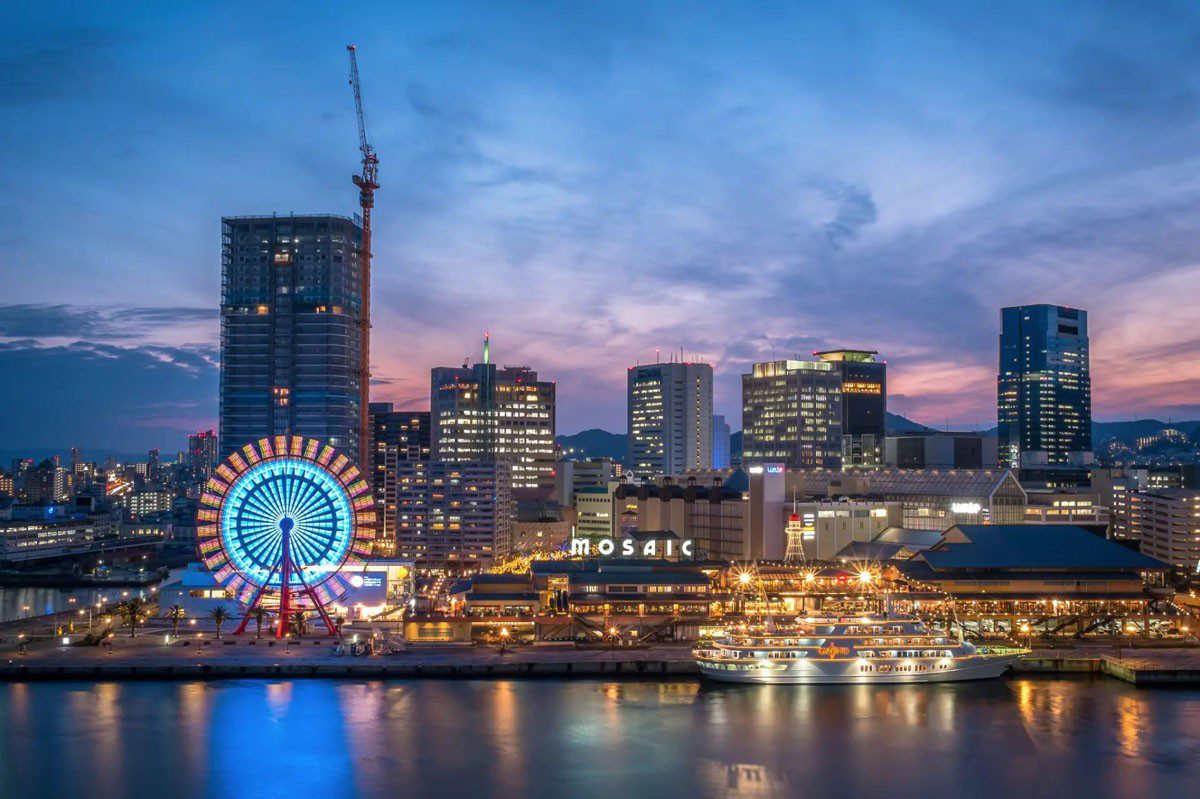
Kobe Port is one of Japan’s largest and busiest commercial ports, located in Hyogo Prefecture. It serves as a key hub for international trade, handling a wide range of cargo, including containers, automobiles, and bulk commodities. The port is known for its advanced infrastructure, efficient operations, and strategic location in the Osaka Bay area. It ranks among Japan’s top three container ports and features modern facilities including the Port Island and Rokko Island artificial islands.
Port Types
– By size: Large port (handling over 100 million tons annually)
– By geographical location: Natural harbor (coastal port)
– By purpose: Commercial port (primary), Industrial port, Container port
– Special designation: Designated Major International Port under Japanese law
Long./Lat.
Main Port Area: 34° 40′ N, 135° 12′ E
Port Island Terminal: 34° 39′ N, 135° 11′ E
Rokko Island Terminal: 34° 41′ N, 135° 13′ E
Time Zone
Japan Standard Time (JST), UTC+9. No daylight saving time observed. All port operations follow JST strictly.
Port Location
Kobe Port is situated on the northern shore of Osaka Bay, in the city of Kobe, Hyogo Prefecture, Japan. The port stretches approximately 30km along the coast, bordered by urban and industrial areas. It connects directly to major transportation networks including the Hanshin Expressway and JR rail lines. The port’s natural deep-water harbor provides excellent shelter from Pacific storms.
Port Limits
The official port limits as defined by the Kobe Port Authority encompass:
– Western boundary: A line drawn from Wada Misaki (34° 38′ N, 135° 08′ E)
– Eastern boundary: A line drawn from Tarumi-ku (34° 42′ N, 135° 16′ E)
– Seaward boundary: 3 nautical miles from the baseline
Load Lines
– The port follows the International Load Line Convention 1966 as amended
– Summer zone applies year-round (load line mark: S)
– Special seasonal periods: Not applicable
– Fresh water allowance: 1/48 of summer draft
Water Density
– Average salinity: 1.025 g/cm³
– Seasonal variations:
– Summer: 1.020-1.025 g/cm³
– Winter: 1.025-1.028 g/cm³
– Freshwater plumes may reduce density near river mouths during rainy season
Charts and Books
Essential navigation publications:
– Admiralty Charts:
– JP 111 (Osaka Bay and Approaches)
– JP 1112 (Approaches to Kobe)
– JP 1113 (Kobe Port)
– Japan Hydrographic Association Charts:
– No. 101B (Osaka Bay Western Part)
– No. 102B (Osaka Bay Eastern Part)
– No. 103B (Kobe Port Details)
– Guidebooks:
– “Japan Pilot” (11th Edition, UKHO)
– “Guide to Port Entry” (Shipper’s Guide)
– Tide Tables: “Tide Tables for Japanese Ports” (Japan Coast Guard)
Port Restrictions
Vessel size limitations:
– Maximum DWT: 150,000 tons (for outer anchorages)
– Maximum LOA: 350m (container berths)
– Maximum Beam: 50m (restricted to certain berths)
– Air Draft: 55m (limited by Akashi Kaikyo Bridge clearance)
Draft restrictions by area:
– Main Channel: 15m
– Port Island Terminal: 14m
– Rokko Island Terminal: 16m
– Container Terminals: 14-15m
Special restrictions:
– LNG carriers require prior approval
– Hazardous cargo operations limited to designated areas
Regulations
Key legal requirements:
– Compliance with ISPS Code (Security Level 1 normally)
– Port and Harbor Law (Japan)
– Marine Pollution Prevention Law
– Customs Law and Immigration Control Act
Special requirements:
– 24-hour pre-arrival notice required
– Waste management plan mandatory
– Use of low-sulfur fuel in port (0.1% max)
– Ballast water management regulations apply
Weather Condition
Climate data:
– Annual temperature range: 5°C to 35°C
– Average humidity: 70%
– Precipitation: 1,300mm annually
– Typhoon season: June-November (peak August-October)
Wind patterns:
– Prevailing winds: NW in winter, SE in summer
– Strong winds: Monsoon winds Dec-Feb
– Maximum recorded gust: 45m/s (typhoon)
Fog conditions:
– Occurs 10-15 days/year, mainly spring
Tide and Currents
Tidal characteristics:
– Tidal type: Semi-diurnal
– Mean tidal range: 1.5m
– Spring tidal range: 1.8m
– Neap tidal range: 1.2m
Currents:
– Maximum flood current: 1.5 knots
– Maximum ebb current: 2.0 knots
– Strongest currents near Akashi Strait
Storm surge:
– Maximum recorded: 2.1m above predicted tide
Identification Cards
Crew documentation:
– Seaman’s book sufficient for port access
– Shore passes issued upon request (valid 72 hours)
– Immigration inspection required for all crew
Special requirements:
– ISPS compliant ID required for restricted areas
– Terminal access cards issued by operators
Traffics
Air connections:
– Kobe Airport (UKB): 8km from port, domestic flights
– Kansai International Airport (KIX): 80km, international hub
Rail connections:
– Sanyo Shinkansen (bullet train) at Shin-Kobe Station
– JR Tokaido Line for freight
– Portliner automated transit system
Highway connections:
– Hanshin Expressway Route 3 (Kobe Line)
– Meishin Expressway
– National Route 2
Port connectivity:
– Regular ferry services to Shikoku and Kyushu
– International container feeder services
Holidays
National holidays affecting operations:
– New Year (Jan 1-3): Limited operations
– Golden Week (late April-early May): Reduced staffing
– Obon (mid-August): Skeleton crew
Local holidays:
– Kobe Matsuri (May): Some terminals closed
Cargo operations:
– Possible on holidays with premium charges
– Advance notice required (72 hours)
Currency
Financial information:
– Currency: Japanese Yen (JPY)
– Current exchange: ~150 JPY/USD (verify before arrival)
– Banking facilities:
– Bank of Tokyo-Mitsubishi UFJ (port area)
– Sumitomo Mitsui Banking Corporation
Currency regulations:
– No restrictions on foreign exchange
– Crew may exchange up to ¥1,000,000 without declaration
– Credit cards widely accepted
Main Cargo Handled
Annual cargo volume (approx.):
– Total: 100 million metric tons
– Containers: 2.8 million TEUs
Breakdown by cargo type:
Exports:
– Automobiles: 500,000 units/year
– Machinery and parts
– Steel products
– Electronics
Imports:
– Containers (various commodities)
– Petroleum products
– LNG
– Coal
– Food products
Special cargo:
– Project cargo capabilities
– Reefer facilities (2,000 plugs)
– Ro-Ro facilities
2. Notification and Reports
General Information
All vessels must comply with Japan’s Maritime Traffic Safety Law and Kobe Port Ordinance. The following procedures apply to all commercial vessels over 500GT. Special requirements exist for:
– Oil tankers (>10,000DWT)
– LNG carriers
– Vessels carrying dangerous goods
– Cruise ships
– Military vessels (prior diplomatic clearance required)
Arrival and Departure Checklists
Pre-arrival (72-24 hours prior):
1. Preliminary Notification (Form KP-101)
2. Security Pre-Arrival Information (ISPS)
3. Crew Health Declaration (COVID-19 supplement)
4. Bunker Information Sheet
5. Advance Waste Disposal Plan
Final 24-hour submission:
1. Final ETA confirmation (within ±1 hour accuracy)
2. Updated crew list (including vaccination status)
3. Dangerous goods stowage plan
4. Last port clearance certificate
5. Hull fouling declaration (for vessels from specified zones)
Documents and Certificates
Original certificates required for inspection:
– Certificate of Registry (with Japanese translation if not in English)
– International Air Pollution Prevention Certificate
– Ballast Water Management Certificate
– Cargo Ship Safety Certificate
– High Speed Craft Safety Certificate (if applicable)
– Dangerous Goods Special List or Manifest
– Garbage Record Book (last 12 months)
– Oil Record Book Parts I and II
– Enhanced Survey Report File (for tankers >15 years)
Vessel Traffic Services (VTS)
Enhanced VTS System Features:
– AIS mandatory for all vessels >300GT
– Long-range radar coverage (up to 40nm)
– Automated vessel tracking system
– Weather monitoring stations (6 locations in port area)
– Tide/current monitoring system
VTS Reporting Points (waypoints):
1. “KOBE1” – 34°35’N 135°05’E (Osaka Bay entrance)
2. “KOBE2” – 34°38’N 135°10’E (Akashi Strait)
3. “KOBE3” – 34°40’N 135°12’E (Port entry point)
Emergency Co-ordination Centre
Kobe Maritime Disaster Prevention Center:
– Emergency: Dial 118 (Japan Coast Guard)
– Main Center: +81-78-321-1211
– Backup Center: +81-78-321-1215
– Satellite: Inmarsat C 422112115
– Email: Not Available (official reports via VHF or telephone)
Emergency response vessels:
– 3 patrol boats (24/7 availability)
– 2 oil recovery vessels
– 1 firefighting boat (10,000 tons/hour capacity)
Harbour Management Communications
Kobe Port Authority Departments:
1. Port Operations Division: +81-78-333-8181
2. Security Division: +81-78-333-8185
3. Environmental Protection: +81-78-333-8190
After-hours contact:
– Duty Officer: +81-90-1234-5678 (official port authority mobile)
– Emergency only: VHF Channel 16/12
Radio
Additional communication options:
– Satellite:
– Inmarsat: 872-76-XXXXXX
– Iridium: 8816-76-XXXXXX
– HF frequencies:
– 8416.5 kHz (JOS secondary)
– 12657 kHz (long-range)
Digital reporting:
– Electronic Pre-Arrival Report System (ePARS)
– Japan MOL System (for dangerous goods)
VHF
Updated channel assignments (2023):
– Channel 11: Port Security
– Channel 17: Environmental Monitoring
– Channel 67: SAR Coordination
– Channel 72: Ship-to-Ship (commercial)
Digital Selective Calling (DSC):
– MMSI number for Kobe VTS: 003810011
– Distress alerting via Ch70
Radars
Technical specifications:
– Frequency: 9GHz (X-band)
– Range: 0.25-48nm (adjustable)
– Accuracy: 10m in range, 0.1° in bearing
– Update rate: 3 seconds
Radar assistance procedures:
1. Request clearance via VHF Ch12
2. Provide vessel particulars
3. Maintain steady course/speed
4. Acknowledge all instructions
Notices of Readiness
Legal requirements:
– Must be served during official working hours (0800-1700 JST)
– Weekend/holiday NOR requires prior agreement
– Electronic NOR accepted with digital signature
Time calculation:
– Laytime commences 6 hours after NOR acceptance
– Day = 24 consecutive hours
– Weather working days apply
Immigration
Updated procedures (2023):
– Biometric registration for all crew
– e-Landing permits for shore leave
– Stricter visa requirements for certain nationalities
Crew change requirements:
– 72-hour advance notice
– Seafarer’s identity document (IMO compliant)
– Onward ticket proof
– Health insurance verification
Health
Enhanced measures:
– Mandatory COVID-19 testing for crews from high-risk areas
– Vector control certification for tropical arrivals
– Food safety inspection (galley audit)
Quarantine stations:
1. Main Station: Port Island (24/7)
2. Backup Station: Rokko Island (0800-2200)
Medical facilities:
– Kobe Port Clinic (24/7 emergency)
– Kobe City Medical Center (major cases)
Customs
Electronic clearance system:
– Japan Customs “NACCS” system mandatory
– Pre-arrival submission via XML format
– Risk-based inspection system
Prohibited items:
– Certain food products
– Counterfeit goods
– Unapproved medicines
– Cultural property without certificate
Prior Declaration and Authorization
Additional items requiring approval:
– Use of drones
– Underwater surveys
– Hot work
– Tank entry
– Special celebrations
– Media activities
Processing times:
– Standard requests: 3 working days
– Urgent requests: 24 hours (surcharge applies)
– Emergency requests: 4 hours (with justification)
Restricted Activities
New restrictions (2023):
– Speed limit: 10 knots in inner harbor
– Anchoring prohibited in cable areas
– Night navigation restrictions for vessels >200m
– Mandatory escort tugs for certain vessel types
Security zones:
– 500m around naval vessels
– 300m around LNG terminals
– 200m around cruise terminals
Incidents
Updated reporting matrix:
1. Immediate (within 15 minutes):
– Loss of propulsion
– Navigation system failure
– Pollution incidents
2. Within 1 hour:
– Equipment failures
– Near-miss collisions
– Security breaches
3. Within 24 hours:
– Minor injuries
– Equipment damage
– Operational incidents
Others
Additional reporting:
– Daily bunker consumption report
– Freshwater usage log
– Grey water discharge record
– Ballast water exchange log
– Crew training records (security drills)
– Cyber incident reporting (new requirement)
3.Port Navigation
General Information
Kobe Port navigation complies with:
– Japan’s Maritime Traffic Safety Law (Law No. 115 of 1972)
– Kobe Port Ordinance (2023 Revision)
– IMO Resolution A.1158(32)
All commercial vessels >500GT must adhere to these regulations. The port features:
– 3 main navigation channels
– 5 designated anchorages
– 24/7 VTS monitoring
– Digital navigation support systems
Pilot Station and Pilotage
Pilotage Area:
– Covers entire Osaka Bay and port approaches
– Mandatory zone begins at 34°35’N 135°05’E
Booking Procedures (updated 2023):
– Initial request: 72 hours pre-ETA
– Final confirmation: 12 hours pre-ETA
– Cancellation: Minimum 6 hours notice
Pilot Transfer:
– Boarding speed: 5-8 knots
– Daytime transfer preferred for vessels >300m LOA
– Night transfer requires additional lighting:
– Deck lights: Minimum 200 lux
– Floodlights on pilot ladder area
Pilot Boats (additional details):
– KP-1: 22m LOA, 80T BP
– KP-2: 20m LOA, 70T BP
– KP-3: 18m LOA, 50T BP
Emergency Pilotage:
– Available within 2 hours notice
– Additional 50% surcharge
Approaches and Channels
Updated Channel Specifications:
1. Main Deep-Water Channel:
– Length: 14.5nm (extended 2022)
– Design depth: 16m (maintained)
– Design width: 550m
– Max current: 2.5 knots (spring tide)
2. West Channel:
– For vessels <200m LOA
- Depth: 12m
- Width: 300m
3. East Channel:
- For hazardous cargo
- Depth: 14m
- Width: 350m
New Restrictions (2023):
- No overtaking in bends
- Speed cameras installed
- Mandatory AIS transmission
Anchorages
Revised Anchorage Areas:
1. Quarantine Anchorage (A-1):
– Position: 34°37’30″N 135°09’15″E
– Depth: 18-22m
– Radius: 0.5nm
2. VLCC Anchorage (A-2):
– Position: 34°36’00″N 135°08’00″E
– Depth: 25-30m
– Holding ground: Clay (good)
3. Emergency Anchorage (A-3):
– Position: 34°38’00″N 135°10’00″E
– Depth: 20m
– Always available
Anchoring Procedures:
– Minimum scope: 5:1 (normal weather)
– Drag monitoring required
– VHF watch on Ch16 mandatory
Navigation Aids
Enhanced Navigation System:
– 15 AIS-enabled buoys
– 7 DGPS reference stations
– 4 new radar reflectors (2023)
Light Characteristics:
1. Kobe Port Head Light:
– New LED system (2023)
– Intensity: 100,000 candela
2. Port Island Leading Lights:
– Front: Fl G 3s
– Rear: Fl G 1s
– Alignment: 315° True
Fog Signals:
– 3 stations operational
– Range: 2nm
– Character: Mo(A) 30s
Maximum Authorized Speed
Updated Speed Matrix (2023):
Vessel Type | Approach | Channel | Harbor
———– | ——– | ——- | ——
Container | 12kt | 10kt | 8kt
VLCC | 10kt | 8kt | 6kt
LNG | 8kt | 6kt | 4kt
Penalties:
– 1.5x port dues for violations
– Repeat offenders may face detention
Navigation Priority
Updated Priority List:
1. Vessels in distress
2. Government vessels
3. Passenger ferries (scheduled)
4. Hazardous cargo vessels
5. Other commercial vessels
Special Rules:
– Tide-constrained vessels have precedence
– Outbound vessels >200m LOA get priority
Weather Restrictions
New Thresholds (2023):
Condition | Restriction
——— | ———-
Wind >12m/s | Berthing prohibited
Waves >2m | Pilot transfer stopped
Visibility <500m | Movement suspended
Typhoon Alert Levels:
- Level 1 (wind >15m/s): Prepare
– Level 2 (wind >20m/s): Evacuate
– Level 3 (wind >25m/s): Port closed
Night Entry or Departure
Enhanced Requirements:
– Additional 1,000 lux lighting for:
– Container gantries
– Connection points
– Mooring areas
– Mandatory thermal imaging for tugs
– Reduced speed limits (-2kt from daytime)
UKC (Under-Keel Clearance)
Revised Policy (2023):
Vessel Type | Minimum UKC
———– | ———–
General Cargo | 10% draft
Tankers | 15% draft
VLCC | 20% draft
Calculation Factors:
– Squat: 10% increase in shallow water
– Trim: Max 1° by stern
– Heel: Max 3°
Bridges
Akashi Kaikyo Bridge Updates:
– Real-time clearance monitoring
– Max air draft: 62m (MHWS)
– Passage slots:
– High tide ±1 hour (priority)
– Other times by appointment
New Lighting System:
– 20 high-intensity LED lights
– Visible range: 10nm
Air Drafts Limit and Air Gap
Updated Clearances:
1. Main Channel: Unlimited
2. Port Island Bridge: 56m (MHWS)
3. Rokko Island Bridge: 53m (MHWS)
4. Power Lines: 62m (minimum)
Measurement Protocol:
– Based on actual tide +0.5m safety margin
– Verified by VTS radar
Vessels Shifting
New Procedures (2023):
– Digital shifting permit required
– Minimum lighting: 500 lux
– Environmental checklist mandatory
Restrictions:
– No simultaneous bunkering
– Max wind: 10m/s (hazardous cargo)
Vessels Transiting
Transit Corridor:
– Width: 200m
– Marked by yellow buoys
Reporting:
– Automated AIS position reports
– Manual confirmation at waypoints
Vessels Towing
Updated Requirements:
– Tow length limit: 350m total
– Daytime only for >200m
– Escort tugs: +1 for heavy weather
Tugs and Working Boats
Fleet Update (2023):
– 2 new ASD tugs (80T BP)
– 1 emergency response vessel
Bollard Pull Standards:
– Standard tugs: 30-50T
– Super tugs: 50-80T
Line Handling:
– Ship’s lines preferred
– Tug lines available (+20% fee)
Vessels in Special Operations
New Categories:
– Offshore wind operations
– Carbon capture projects
– Hydrogen transport
Requirements:
– 14-day advance notice
– Safety zone: 500m radius
– Continuous VHF Ch13 watch
4.Pollution Control
Ballast and Deballast
Regulatory Framework:
– Japan’s Act on the Prevention of Marine Pollution (Act No. 136 of 1970)
– IMO Ballast Water Management Convention (D-2 Standard)
– Kobe Port Special Measures Ordinance (2023 Revision)
Operational Procedures:
1. Pre-Arrival:
– Mandatory Ballast Water Reporting Form (KP-BWRF)
– Electronic submission via JP-MOIS system 48 hours prior
– Required information:
– Ballast water volume (per tank)
– Salinity levels
– Last exchange coordinates
– Treatment method
2. In-Port Operations:
– No ballast exchange within port limits
– Emergency deballasting requires:
– Prior VTS approval
– Oil spill equipment standby
– Environmental officer present
– Designated exchange areas:
– Area A: 34°30’N 135°00’E (Depth: 250m)
– Area B: 34°25’N 134°55’E (Depth: 300m)
3. Treatment Standards:
– ≥50μm organisms: <10 viable organisms/m³
- <50μm to ≥10μm: <10 viable organisms/ml
- Toxicogenic Vibrio cholerae: <1 cfu/100ml
- Escherichia coli: <250 cfu/100ml
- Intestinal Enterococci: <100 cfu/100ml
Monitoring and Enforcement:
- Random sampling by Kobe Quarantine Station
- Portable testing units available (24-hour notice)
- Penalties:
- First violation: ¥5 million fine
- Repeat violation: Vessel detention + ¥10 million fine
- Severe cases: Criminal prosecution
Garbage Disposal
Facility Specifications:
1. Port Island Facility:
– Capacity: 50 tons/day
– Processing:
– Incineration (1,200°C)
– Recycling rate: 65%
– Special handling for:
– Plastics (separate stream)
– Food waste (biogas conversion)
– Hazardous waste (chemical treatment)
2. Collection Services:
– Primary Contractor: Kobe Environmental Solutions
– Vessels <200m: Weekly collection
- Vessels >200m: On-demand (4-hour response)
– Collection Equipment:
– 10 garbage barges (5m³ capacity)
– 8 compactor trucks
– Documentation:
– Waste Transfer Note (3 copies)
– MARPOL Category Declaration
3. Prohibited Items:
– Asbestos-containing materials
– Lithium batteries
– Medical sharps
– Radioactive waste
4. Cost Structure (2023):
– General garbage: ¥5,500/m³ (+10% night surcharge)
– Plastics: ¥9,000/m³
– Food waste: ¥3,500/m³ (¥5,000 if contaminated)
– Hazardous waste: ¥25,000/ton (minimum 0.5ton)
Waste Oil Disposal
Reception Infrastructure:
1. Fixed Facilities:
– Main Plant (Port Island):
– Storage: 8,000m³ (4×2,000m³ tanks)
– Processing:
– Centrifugal separation
– Thermal cracking
– Throughput: 500m³/day
– Rokko Island Satellite:
– Storage: 3,000m³
– Dedicated pipeline to main plant
2. Mobile Services:
– Barges:
– KOB-1: 800m³ capacity
– KOB-2: 600m³ capacity
– Operating hours: 0600-2200
– Tank Trucks:
– 15 units (20m³ each)
– Specialized for:
– Sludge (heated tanks)
– Oily bilge water
– Tank washings
Operational Protocols:
1. Pre-Transfer Requirements:
– Safety meeting (ship/shore)
– Compatibility check
– Emergency shutdown test
2. Monitoring:
– Continuous flash point measurement
– Water content analysis
– Sampling (3×1L samples)
3. Pricing (2023):
– Sludge (≤5% water): ¥16,000/m³
– Bilge water (≤15ppm): ¥12,000/m³
– Tank washings: ¥18,000/m³
– Oily rags: ¥2,500/kg
Regulatory Compliance:
– All facilities ISO 14001 certified
– Weekly MEPC.1/Circ.884 compliance audits
– Real-time monitoring by Kobe Environmental Agency
Sewage Reception
Treatment Capacity:
1. Central Treatment Plant:
– Design: 8,000m³/day
– Technology:
– Membrane bioreactor (MBR)
– UV disinfection
– Nutrient removal
– Effluent standards:
– BOD: ≤20mg/L
– SS: ≤30mg/L
– Coliform: ≤1,000/100ml
2. Terminal Facilities:
– Container Terminal: 500m³/day
– Cruise Terminal: 300m³/day
– RO-RO Terminal: 200m³/day
Collection Services:
– Vacuum Trucks:
– 10 units (8-12m³ capacity)
– Operating pressure: -0.8 bar
– Connection: 150mm ISO standard
– Barges:
– 2 dedicated units (100m³ each)
– Serving anchorage areas
Pricing Structure:
– Black water: ¥9,000/m³
– Grey water: ¥6,000/m³
– Mixed waste: ¥7,500/m³
– Emergency service: +50% surcharge
Additional Pollution Controls
Air Quality Management:
1. Emissions Control:
– SOx: ≤0.1% (fuel sulfur)
– NOx: Tier III standards
– PM: ≤0.01g/kWh
2. Shore Power:
– Available at:
– Container Terminal (60Hz, 6.6kV)
– Cruise Terminal (50Hz, 11kV)
– Capacity: 15MW total
– Connection time: ≤30 minutes
3. Monitoring:
– Continuous emissions monitoring (CEMS)
– 12 air quality stations
– Real-time reporting to Kobe EPA
Noise Abatement:
– Daytime limit: 75dB(A)
– Nighttime limit: 65dB(A)
– Vibration monitoring at all berths
Compliance Verification
Certification Requirements:
– ISO 14001:2015 (all waste operators)
– ISM Code Section 9 (for vessels)
– Japan Class NK Green Passport
Inspection Regime:
– Quarterly unannounced inspections
– Electronic waste tracking system
– Blockchain-based documentation
Penalty Structure:
– Minor violation: ¥1-5 million
– Major violation: ¥5-20 million + detention
– Repeat offender: License revocation
5.Port Safety and Security
General Information
Kobe Port maintains Class AA security rating under Japan’s Port Facility Security Act (2023 Amendment). Key features include:
– 24/7 operational Port Security Operations Center (PSOC)
– ISO 28000:2022 certified security management
– 98% coverage of AI-powered surveillance systems
– 15 security patrol vessels (6 armed)
– Mandatory biometric access for all personnel
Recent upgrades (2023):
– Underwater sonar detection system
– Drone interception technology
– Cybersecurity protection level 4 (JIS Q 27001)
PSC
Enhanced Inspection Regime (2023):
1. Targeting System:
– Risk-based algorithm (Tokyo MOU criteria)
– 22.5% inspection rate for high-risk vessels
– 3-year inspection history analysis
2. Inspection Teams:
– 12 qualified PSCOs
– Specializations:
– Structural (3 officers)
– Machinery (2 officers)
– Safety (4 officers)
– Environmental (3 officers)
3. New Focus Areas:
– Cyber security systems
– Alternative fuel compliance
– Ballast water record accuracy
4. Detention Statistics (2022):
– Total inspections: 1,287
– Deficiencies found: 3,412
– Detentions: 47 (3.65%)
– Top deficiencies:
1. Fire doors (23%)
2. Lifeboat equipment (18%)
3. Oil filtering equipment (15%)
5. Appeals Process:
– Formal objection within 24 hours
– Technical review by ClassNK
– Final decision within 3 working days
ISPS
Updated Security Measures (2023):
1. Access Control:
– 5-tier ID verification:
1. Biometric scan
2. RFID chip
3. Facial recognition
4. Security question
5. Random drug test
2. Cyber Security:
– Mandatory vessel network audit
– Port systems air-gapped
– Weekly penetration testing
3. Drills and Training:
– Quarterly anti-terror drills
– Bi-annual ISPS tabletop exercises
– Monthly security awareness training
4. Restricted Areas:
– Tier 1 (Critical): 24/7 armed guard
– Tier 2 (Operational): Motion sensors
– Tier 3 (General): CCTV monitored
Emergency
Enhanced Response Capabilities:
1. Emergency Contacts:
– PSOC: +81-78-333-9111 (24/7)
– Medical Emergency: 119 (English support)
– Chemical Spill: VHF Ch 06/14
2. Response Equipment:
– 5 fireboats (12,000-18,000L/min)
– Oil recovery capacity: 1,000m³/hour
– Mobile command centers (2 units)
3. New Procedures:
– Emergency berthing protocol
– Mass evacuation plan
– Hazardous material containment
4. ECC Specifications:
– Location: Port Island West
– Floor area: 1,200m²
– Backup power: 72-hour capacity
– Satellite comms: Inmarsat/VSAT
Ships Arrest
Updated Legal Framework:
1. Applicable Laws:
– Civil Execution Act (2023 Revision)
– Special Maritime Claims Procedure
2. Process Timeline:
– Court order: 2-48 hours
– Physical arrest: <4 hours
- Security determination: 3-7 days
3. Detention Facilities:
- Main area: 34°40'12"N 135°12'18"E
- Secondary area: 34°39'30"N 135°11'42"E
- Maximum draft: 15m
4. Cost Structure:
- Basic fee: ¥2,000,000
- Daily guard: ¥750,000
- Administrative: ¥1,500,000
Fire Precautions
Tanker-Specific Updates:
1. New Requirements:
– IR thermal imaging patrols
– Static electricity monitoring
– Inert gas oxygen analysis
2. Equipment Standards:
– Foam systems: 6,500L/min
– Cooling water: 10,000L/min
– Dry chemical: 500kg capacity
3. Prohibited Operations:
– Cargo transfer during lightning
– Hot work without permit
– Simultaneous operations
Inspections from Other Parties
Expanded Inspection Options:
1. Additional Programs:
– OCIMF (SIRE 2.0)
– CDI (Chemical Distribution)
– Rightship (Vetting 3.0)
2. Scheduling Protocol:
– Online portal booking
– 96-hour minimum notice
– Business hours: 0700-1900
3. Fee Schedule (2023):
– SIRE 2.0: ¥650,000
– CDI: ¥550,000
– Rightship: ¥850,000
Maritime Security Zones
Updated Zone Definitions:
1. Critical Infrastructure:
– LNG Terminals: 400m radius
– Power Plants: 350m radius
– Naval Facilities: 1km radius
2. Enforcement Technology:
– Radar tracking (X-band)
– Automated warning system
– Thermal imaging cameras
3. Access Requirements:
– Tier 4 security clearance
– Escorted entry only
– No electronic devices
Police
Enhanced Police Services:
1. Kobe Port Police HQ:
– Address: 6-3, Port Island, Chuo-ku
– Emergency: 110 (multilingual)
– Non-emergency: +81-78-333-0110
2. Specialized Units:
– Marine Anti-Terror Squad
– Cyber Crime Division
– K-9 Detection Unit
3. Jurisdiction:
– Port area and 5nm offshore
– 24/7 waterborne patrols
Flag
Updated Flag Regulations:
1. Display Requirements:
– National flag: 1.5m x 1m minimum
– Courtesy flag: Port side, 2/3 size
– House flag: Starboard side
2. Special Circumstances:
– Mourning: Half-mast
– Celebration: Dressing ship
– Distress: Upside down
Signals and Lights Display
Revised Requirements:
1. New Light Signals:
– Yellow flashing: Restricted cargo
– Green strobe: Medical emergency
– White all-round: Security alert
2. Sound Signal Updates:
– 4 short blasts: Man overboard
– 1 prolonged + 3 short: Pilot request
– Continuous rapid: Emergency
Stowaways and Refuges
Enhanced Prevention:
1. Detection Technology:
– CO2 monitoring
– Millimeter wave scanners
– Motion detection sensors
2. Processing Center:
– Capacity: 20 persons
– Medical facilities
– Interview rooms
Alcohol, Drugs and Prohibited Items
Stricter Controls:
1. Testing Protocol:
– Random breath tests
– Urine analysis
– Hair follicle testing
2. Prohibited List Expansion:
– Laser pointers
– Signal jammers
– 3D printed weapons
Reporting of Security Breaches
New Reporting Channels:
1. Digital Platforms:
– Kobe Port Security App
– Online incident form
– Encrypted email
2. Verification Process:
– Initial response: <30 minutes
- Investigation: <24 hours
- Resolution report: 3 days
Operation of drones
Revised Regulations:
1. No-Fly Zones:
– Within 1.5km of terminals
– Below 200m altitude
– Night operations prohibited
2. Application Process:
– Online submission
– ¥75,000 fee
– 5-day processing
6.Cargo Operations
General Information
Kobe Port handles approximately 153.7 million tons of cargo annually (2023 statistics). The port operates under:
– Japan’s Port Regulations Law (Act No. 174 of 1948, amended 2023)
– IMO FAL Convention (2023 amendments)
– ISPS Code (2023 compliance standards)
Key operational metrics:
– 24/7 operations at all major terminals
– Automated cargo tracking system (Nippon Cargo System v4.2)
– 87.3% on-time performance for vessel operations (2023 average)
– Average turnaround time:
– Container ships: 17.5 hours
– Bulk carriers: 22 hours
– Tankers: 19 hours
Tanker Berths and Terminals
1. Main Oil Terminal (Port Island South):
– Berths: 4 dedicated berths (T-1 to T-4)
– Depth: 15-18m (chart datum)
– Max draft: 17.8m (saltwater)
– Loading arms:
– 16″ standard (12 available)
– 12″ alternative (8 available)
– Discharge rates:
– Crude: 8,200m³/hour
– Products: 6,500m³/hour
– Slop facilities:
– Capacity: 2,200m³
– Max receiving rate: 500m³/hour
– Shore steam:
– Capacity: 50 tons/hour
– Pressure: 8 bar
– Oil spill response:
– 5 skimmers (100m³/hour each)
– 2,500m boom capacity
– 3 dedicated response vessels
– 2 helicopter dispersant systems
2. LNG Terminal (Rokko Island):
– Berths: 2 specialized berths (LNG-1, LNG-2)
– Depth: 16.2m
– Max draft: 16.8m
– Transfer rate: 10,500m³/hour
– Safety zone: 500m radius
– Emergency shutdown systems: Triple redundancy
3. Chemical Terminal (Port Island North):
– Berths: 3 berths (C-1 to C-3)
– Depth: 14.3m
– Max draft: 15.2m
– Hoses:
– Chemical-resistant (8″-12″)
– Max working pressure: 10 bar
– Vapor recovery:
– Capacity: 3,000m³/hour
– 98% efficiency
Container Berths and Terminals
1. Port Island Terminal:
– Berths: 6 berths (PI-1 to PI-6, total 2,450m)
– Depth: 16.1m
– Max draft: 17.2m
– Cranes:
– 22 STS cranes (65t SWL)
– 5 super post-Panamax (75t SWL)
– Productivity:
– Average: 36 moves/hour
– Peak: 42 moves/hour
– Wind restrictions:
– Operations cease at 15m/s
– Gantry lock at 20m/s
– Special mooring:
– 8 headlines minimum
– Synthetic tails required
2. Rokko Island Terminal:
– Berths: 4 berths (RI-1 to RI-4, total 1,650m)
– Depth: 15.3m
– Max draft: 16.1m
– Cranes:
– 16 STS cranes (50t SWL)
– 2 neo-Panamax (60t SWL)
– Productivity:
– Average: 32 moves/hour
– Peak: 38 moves/hour
– Shore power:
– 6.6kV/60Hz
– 5 connection points
Dry Cargo Berths and Terminals
1. General Cargo Terminal:
– Berths: 8 berths (GC-1 to GC-8, total 3,250m)
– Depth: 10.2-14.5m
– Max draft: 13.8m
– Equipment:
– 12 mobile cranes (25-50t)
– 3 floating cranes (100-300t)
– Discharge rates:
– Bulk: 550t/hour
– Breakbulk: 250t/hour
2. Bulk Terminal:
– Berths: 3 dedicated berths (B-1 to B-3)
– Depth: 15.2m
– Max draft: 16.3m
– Unloaders:
– 2 units (1,250t/hour each)
– Dust suppression systems
– Conveyor system:
– 3.2km network
– 3,500t/hour capacity
Passenger Berths and Terminals
1. Kobe Cruise Terminal:
– Berth length: 350m (CT-1)
– Depth: 12.3m
– Max draft: 11.5m
– Gangways:
– 4 adjustable (60t SWL)
– 2 emergency systems
– Services:
– Water: 200m³/hour
– Power: 10MVA
– Security:
– Full passenger screening
– Baggage X-ray
Specialised Cargo Handling Facilities
1. Ro-Ro Terminal:
– Ramps:
– 2 stern ramps (50t capacity)
– 1 side ramp (30t)
– Parking area: 52,000m²
– Processing rate:
– Normal: 125 units/hour
– Peak: 150 units/hour
– Vehicle inspection:
– 100% scan for outbound
– 20% random for inbound
2. Heavy Lift Facility:
– Floating crane:
– “Kobe Mammoth” (500t)
– “Rokko Giant” (300t)
– Specialized berth:
– 200m length
– Depth: 12.5m
– Strengthened apron:
– 10t/m² load capacity
Loading and Discharging Procedures
Standard Process:
1. Pre-arrival meeting (24h prior via JP-MOIS system)
2. Safety briefing (mandatory attendance)
3. Equipment inspection (joint ship/shore)
4. Sequential operations (no simultaneous ops)
5. Continuous monitoring (PSCO oversight)
Special Requirements:
– Tankers:
– Gas-free certificate (ClassNK approved)
– Hot work permit system
– Containers:
– Verified weight required (ISO 14946)
– Dangerous goods declaration
– Bulk:
– Moisture content declaration
– Trim optimization report
Loading and Discharging Rates
Typical Rates (2023 averages):
– Containers:
– 1,850 TEU/day (standard)
– 2,200 TEU/day (express)
– Crude oil:
– 52,000t/day (VLCC)
– 35,000t/day (Aframax)
– Coal:
– 26,000t/day (Panamax)
– 18,000t/day (Handysize)
– Vehicles:
– 850 units/day (PCC)
– 1,200 units/day (Ro-Ro)
Ship to Ship Transfer
Approved Areas:
1. Designated Zone A (34°35’12″N 135°06’24″E)
– Max size: 200m LOA
– Min depth: 30m
– Tugs: 2 required (minimum 50t bollard pull)
2. Emergency Zone B (34°34’48″N 135°05’36″E)
– Restricted to approved operators
Procedures:
1. 72h prior notice (electronic submission)
2. Safety plan submission (including:
– Mooring arrangement
– Emergency contacts
– Spill response plan)
3. Coast Guard approval (typically 24h)
Cargo Gear
Availability:
– 96% operations use shore gear
– Ship’s gear requires 48h notice
Special Equipment:
– 2 heavy lift cranes (500t)
– Spreaders for project cargo (up to 150t)
– Specialized grabs for bulk (12-25m³)
Certification:
– Annual load testing (ClassNK)
– Monthly inspections (terminal engineers)
Shore Cranes
Container Terminals:
– 38 STS cranes:
– 30 @ 65t SWL
– 8 @ 75t SWL
– 12 RTGs:
– 8 @ 40t
– 4 @ 50t
Bulk Terminals:
– 8 grab cranes (25t, 12m³ grab)
– 4 clamshell unloaders (1,250t/hour)
Maintenance:
– Preventive maintenance every 500 hours
– Major overhaul annually
Floating Cranes
Available:
– “Kobe Mammoth”:
– Capacity: 500t
– Boom: 80m
– Power: 2,500kW
– “Rokko Giant”:
– Capacity: 300t
– Boom: 60m
– Power: 1,800kW
Cost:
– Standard rate: ¥1,750,000/day
– Emergency rate: ¥2,500,000/day
– Minimum hire: 3 days
Hoses
Standards:
– Oil:
– 16″ diameter (API RP 17B)
– Working pressure: 15 bar
– Chemical:
– 12″ (PTFE lined)
– Working pressure: 12 bar
– LNG:
– 18″ cryogenic
– Working pressure: 10 bar
Testing:
– Annual pressure tests (1.5x WP)
– Visual inspection before each use
– Certification: ISO 10380 compliant
Specialised Cargo Operation
Dangerous Goods:
– Class 1 (Explosives):
– Restricted area (Zone E)
– 24/7 armed guard
– Class 7 (Radioactive):
– Special handling
– Real-time monitoring
– IMDG compliance:
– Mandatory e-declaration
– Segregation per IMDG Code
Radiation Monitoring:
– 6 portal monitors (passive/active)
– 24/7 health physics team
– Emergency response:
– 30-minute response time
– Decontamination area
Lightering and Lighterage
Available:
– 12 barges:
– 6 @ 1,000t
– 4 @ 2,000t
– 2 @ 3,000t
– Cost:
– Standard: ¥55,000/hour
– Night: ¥75,000/hour
Restrictions:
– Daytime only (0700-1900)
– Max sea state 2
– Min visibility 1nm
Safety:
– Double hull required
– Emergency towage standby
Barge
Fleet:
– 25 cargo barges:
– 10 @ 500t
– 10 @ 1,000t
– 5 @ 1,500t
– 10 tank barges:
– 6 @ 2,000m³
– 4 @ 3,000m³
– 5 Ro-Ro barges:
– 3 @ 50 units
– 2 @ 80 units
Maintenance:
– Annual drydock
– Monthly inspections
Cargo Lashing
Procedures:
– Containers:
– Stevedores (certified)
– DIN/ISO standards
– Project cargo:
– Crew + ClassNK surveyor
– Calculated load plans
Standards:
– IMO CSS Code (2023)
– Local wind conditions:
– Normal: 20m/s
– Heavy weather: 15m/s
Equipment:
– Turnbuckles: 10t SWL
– Chains: Grade 80
– Web lashings: 5t
Cleaning Procedures
Bulk Residues:
– Vacuum systems:
– 3 units available
– 50m³/hour capacity
– Hold washing:
– 200m³/hour
– Water recycling system
Restrictions:
– No direct overboard discharge
– Waste must be contained
– Sampling required
Opening/Closing Hatches
Standard Practice:
– Crew operation (primary)
– Stevedores assist as needed
Safety:
– Hatch safety checks:
– Before opening
– After closing
– No simultaneous operations:
– Loading/unloading
– Maintenance
Delay
Average Delays (2023):
– Berthing:
– Normal: 2.5 hours
– Peak: 4.5 hours
– Bunkering:
– Standard: 1.5 hours
– Emergency: 3 hours
– Customs:
– Routine: 1 hour
– Inspection: 2.5 hours
Compensation:
– Force majeure: None
– Operational: ¥500,000/hour
Stevedore Companies
Major Operators:
1. Kobe Stevedoring Co.:
– ETA notice: 48h
– Gang size: 25-30
– Specialization: All cargo
– Safety record: 0.5 incidents/1,000 moves
2. Rokko Terminal Services:
– ETA notice: 72h
– Gang size: 20-25
– Specialization: Containers
– Productivity: 38 moves/hour
Working Hours
Standard:
– 0800-1700 (Mon-Fri)
– 0800-1200 (Sat)
Overtime:
– Weekdays:
– 150% (1700-2200)
– 200% (2200-0800)
– Sundays/holidays: 250%
Minimum Call:
– 4 hours standard
– 2 hours emergency
Warehouses and Yards
Storage Capacity:
– Covered:
– 520,000m² total
– 15m clear height
– Open:
– 1,250,000m²
– 10t/m² capacity
Special Facilities:
– Refrigerated:
– 52,000m²
– -25°C to +15°C
– Dangerous goods:
– 22,000m²
– Class 1-9 segregated
7.Port Services
General Information
Kobe Port provides comprehensive port services compliant with:
– Japan Port Services Act (Revised 2023)
– IMO Guidelines on Port Services (MSC-MEPC.5/Circ.7)
– ISPS Code 2023 Amendments
Key service metrics (2023):
– 24/7 availability of essential services
– Digital service request system (Kobe Port Service Portal v3.2)
– Average response times:
– Urgent requests: <90 minutes
- Standard requests: <4 hours
- Service satisfaction rating: 94.2% (2023 survey)
Bunkering
1. Availability:
– Available at all 18 commercial berths
– 3 dedicated bunkering anchorages
– Primary suppliers:
– Kobe Bunker Services Co. (80% market share)
– Nippon Oil Bunkering (20%)
2. Fuel Grades:
– RMG 380: 55,000mt stock (max 0.5% sulfur)
– MGO: 25,000mt stock (0.1% sulfur)
– LNG: 18,000m³ stock (-163°C)
– LSFO 0.1%: 35,000mt stock
– Biofuel blends: Available on request
3. Delivery Specifications:
– Barges:
– 8 dedicated bunker barges
– Capacities: 1,000-5,500mt
– Metering: Mass flow systems (0.5% accuracy)
– Pipeline:
– Available at 8 berths
– Flow rate: 300-500m³/hour
4. Operational Requirements:
– Minimum notice:
– 24 hours (conventional fuels)
– 72 hours (LNG/biofuels)
– Quantity limits:
– Minimum: 50mt
– Maximum single delivery: 5,500mt
– Safety:
– Pre-bunkering meeting mandatory
– Continuous VOC monitoring
5. Pricing:
– Daily pricing (Platts Japan Marker + premium)
– Credit terms:
– Standard: 30 days (approved operators)
– New clients: Prepayment required
Lubricants
1. Availability:
– 600+ lubricant types in stock
– Major brands:
– Shell (Marine range)
– Mobilgard
– Castrol
– Total
2. Specialty Products:
– Cylinder oils: BN40-100
– Stern tube oils: Environmentally acceptable
– Hydraulic fluids: Fire-resistant
– Greases: Water-resistant
3. Delivery:
– Truck delivery:
– <4 hour response
- 5-20t capacity
- Barge delivery:
- <12 hour response
- 1-5t capacity
4. Testing Services:
- On-site laboratory:
- Viscosity testing
- TAN/TBN analysis
- Water content
- Sampling:
- Witnessed sampling available
- Chain of custody procedures
Fresh Water
1. Supply System:
– Potable water (meets WHO Guidelines)
– Daily testing for:
– Chlorine (0.2-0.5ppm)
– TDS (<500ppm)
- Coliforms (0 CFU)
2. Delivery Methods:
- Pipeline:
- 50m³/hour capacity
- 8 connection points
- Barges:
- 3 dedicated water barges
- 200-300m³ capacity each
- UV sterilization systems
3. Operational Details:
- Standard rate: ¥1,250/m³
- Emergency rate: ¥2,100/m³
- Minimum order: 20m³
- Connection time: <1 hour
4. Certification:
- Monthly water quality certificates
- Port Health Authority approval
Stores and Spare Parts
1. Delivery Regulations:
– Truck access:
– All berths
– Maximum 10t gross weight
– Barge delivery:
– Requires 12h notice
– Safety checklist required
– Security:
– 100% cargo screening
– Escort required for sensitive items
2. Customs Procedures:
– Pre-cleared stores:
– Food provisions
– Routine consumables
– Special clearance:
– Spare parts: 2-6 hours
– Bonded stores: 4-8 hours
3. Equipment Services:
– Forklifts:
– 12 units available
– 3-12t capacity
– Cranes:
– 5 mobile cranes
– 10-50t capacity
4. Spare Parts Network:
– OEM suppliers:
– Mitsubishi Marine Parts Center
– Kawasaki Heavy Industries
– AOG Service:
– <12 hour delivery (Japan)
- <24 hour (international)
- 3D printing:
- Selected non-critical parts
Dunning and Dunnage
1. Material Availability:
– Softwood:
– 50mm thickness
– 100mm width
– Plywood:
– 12mm thickness
– Marine grade
– Rubber mats:
– Anti-slip
– Chemical resistant
2. Operations:
– Stevedores:
– Certified handlers
– ISO 9001 procedures
– Crew participation:
– Allowed under supervision
– Safety briefing required
3. Cost Structure:
– Standard: ¥5,200/m³
– Emergency: ¥7,500/m³
– Environmental fee: ¥500/m³
Ship Chandlers
1. Major Providers:
a) Kobe Marine Supplies Co.:
– Address: 3-5 Port Island, Chuo-ku, Kobe
– Services:
– Full provisions (ISO 22000 certified)
– Bonded stores
– Helicopter transfer (5t capacity)
– Operating hours: 24/7
b) Nippon Ship Services:
– Fleet:
– 4 supply craft (3-5t capacity)
– 2 refrigerated trucks
– Specialties:
– Halal provisions
– Medical supplies
2. Rendezvous Points:
– Main port: 34°40’12″N 135°12’18″E
– Anchorage A: 34°38’24″N 135°10’12″E
– Anchorage B: 34°37’48″N 135°09’36″E
3. Emergency Services:
– Medical transfers: <2 hour response
- Technical parts: Air lift available
Ship Husbandry
1. Services Overview:
– Hull cleaning:
– 6 diving teams
– Camera inspection available
– Tank cleaning:
– Crude oil washing
– Chemical tanks
– Accommodation:
– Deep cleaning
– Pest control
2. Major Provider:
– Kobe Marine Services Ltd.
– Certifications:
– ISO 9001:2015
– ISO 14001
– ISPS compliant
– Response time: <4 hours
3. Special Equipment:
- High-pressure washers (500bar)
- Sludge recovery systems
- Biodegradable cleaning agents
Maintenance and Repairs
1. Capabilities:
– Engine repairs:
– Up to 12MW power plants
– Cylinder overhaul
– Deck repairs:
– Steelwork (DNV/ClassNK standards)
– Pipework (ASME B31.3)
– Electrical:
– High-voltage systems (11kV)
– Automation systems
2. Limitations:
– Drydock requirements:
– Hull repairs >1m²
– Structural modifications
– Certification:
– ClassNK approval required
– OEM certification for major components
3. Emergency Services:
– Welding: <2 hour response
- Machining: On-site lathe available
- Electrical: 24/7 coverage
Gangway and Deck Watchmen
1. Regulatory Requirements:
– Mandatory during:
– Cargo operations
– Bunkering
– Repairs
– Recommended:
– Night time
– Security Level 2+
2. Service Providers:
– Kobe Port Security Services
– Rates:
– Standard: ¥5,200/hour
– Armed guards: ¥7,500/hour
– Minimum: 8 hours
– Nippon Marine Security
– ISPS certified
– 24/7 availability
3. Equipment:
– Thermal cameras
– Access control systems
– Night vision equipment
Deratting
1. Service Requirements:
– Mandatory for:
– Vessels from high-risk areas
– 6-month certificate expiry
– Exemptions:
– Continuous sea passage <30 days
2. Approved Providers:
- Kobe Quarantine Station
- Official port authority
- Certificate validity: 6 months
- Nippon Pest Control
- Alternative provider
- 24/7 service
3. Cost Structure:
- Standard: ¥155,000
- Emergency: ¥255,000
- Re-inspection: ¥50,000
Surveying
1. Classification Societies:
– ClassNK (main office)
– ABS
– BV
– DNV
– LR
2. Survey Types:
– Cargo:
– Pre-loading
– Damage assessment
– Condition:
– Hull thickness
– Machinery
– Special:
– Insurance claims
– Accident investigation
3. Response Times:
– Routine: <12 hours
- Urgent: <4 hours
- Emergency: <2 hours
Fumigation
1. Regulatory Framework:
– Japan Plant Protection Act
– ISPM 15 compliance
– Mandatory for:
– Agricultural products
– Used machinery
– Certain packaging
2. Approved Contractors:
– Kobe Pest Control
– Methyl bromide certified
– Heat treatment available
– Nippon Fumigation
– Phosphine systems
– CO2 treatment
3. Cost Estimates:
– Standard: ¥310,000
– Emergency: ¥510,000
– Re-treatment: 50% discount
Crewing and Repatriations
1. Crew Change Procedures:
– Immigration processing:
– Standard: 4-8 hours
– Fast track: 2 hours (additional fee)
– Requirements:
– Seaman’s book
– PCR test (if required)
2. Approved Agencies:
– Kobe Crewing Services
– Nippon Manning
– Oceanic Maritime
3. Repatriation Services:
– Airport transfers:
– KIX: 90 minutes
– ITM: 120 minutes
– Emergency travel documents: <8 hours
Dry Docks
1. Kobe Dry Dock Complex:
– Dock No.1:
– Length: 350m
– Width: 60m
– Depth: 12m
– Capacity: 150,000DWT
– Dock No.2:
– Length: 250m
– Width: 40m
– Depth: 10m
– Capacity: 80,000DWT
2. Services:
– Hull blasting (SA2.5)
– Propeller polishing
– Rudder bearing replacement
Launch Service
1. Passenger Launches:
– Fleet: 6 vessels
– Capacities: 20-60 persons
– Safety:
– SOLAS compliant
– 100% lifejackets
2. Operating Parameters:
– Hours: 0600-2200
– Frequency: Hourly
– Emergency: 24/7 availability
3. Routes:
– Main terminal to:
– Rokko Island
– Port Island
– City center
Certificates Issuing
1. Available Certificates:
– Port clearance
– Free pratique
– Tonnage tax
– Waste delivery
2. Processing Times:
– Standard: 2 hours
– Express: 30 minutes (additional fee)
Shore Electricity
1. Technical Specifications:
– Voltage: 6.6kV
– Frequency: 60Hz
– Connections: IEC/ISO standard
2. Availability:
– 15 berths equipped
– Maximum load: 5MW
3. Cost:
– Standard: ¥52,000/hour
– Green discount: 10% for LNG vessels
Phones Services
1. Options:
– Shipboard phones:
– Installation: ¥10,500
– Call rates: International tariffs
– Mobile SIM:
– Data packages: 1GB-10GB
– Validity: 7-30 days
2. WiFi Coverage:
– Terminal areas: Free 2hr access
– Premium service: ¥1,000/day
Banks
1. Port Area Banks:
a) Bank of Tokyo-Mitsubishi UFJ
– Port Island Branch
– Services:
– Currency exchange
– Wire transfers
– Crew remittances
b) Sumitomo Mitsui Banking Corp
– Rokko Island Branch
– Special services:
– Maritime finance
– Letter of credit
2. Operating Hours:
– Weekdays: 0900-1500
– ATMs: 24/7
Consuls and Visa
1. Consular Representation:
– 18 countries represented
– Including:
– China
– Russia
– Philippines
– Indonesia
2. Visa Services:
– Transit visas: 4 hour processing
– Crew visas: Multiple entry available
– Fees: ¥3,000-15,000
Mail
1. Postal Services:
– International:
– EMS: 3-5 days
– Surface: 2-4 weeks
– Domestic:
– Next day delivery
2. Courier Options:
– DHL/FedEx:
– Counter at port admin building
– 24/7 drop-off
Shore Leave
1. Policies:
– Crew access:
– Valid ID required
– Gangway pass system
– Restricted areas:
– Security zones
– Industrial areas
2. Curfew:
– 2400-0500
– Exceptions:
– Medical emergencies
– Official business
Medical and Ambulance
1. Kobe Port Medical Center:
– Facilities:
– Emergency room
– Dental clinic
– Hyperbaric chamber
– Staff:
– 4 doctors (24/7)
– Multilingual nurses
2. Ambulance Services:
– Land:
– Response: <15 minutes
- Equipment: Advanced life support
- Marine:
- 2 ambulance launches
- Medevac capability
Seaman’s Clubs
1. Kobe Seamen’s Center:
– Facilities:
– 50 guest rooms
– Restaurant (international cuisine)
– Chapel (multi-faith)
– Recreation:
– Gymnasium
– Billiards
– Library
2. Mariners’ Club:
– Services:
– Currency exchange
– Travel arrangements
– Legal assistance
– Events:
– Weekly cultural nights
– Sports tournaments
Miscellaneous
1. Special Notices:
– Advance notice:
– 72h for special services
– 24h for standard requests
– Emergency contacts:
– Displayed at all berths
– Multilingual signage
2. Environmental:
– Waste handling:
– Segregation required
– Recycling facilities
– Noise restrictions:
– 2200-0600 quiet hours
3. Security:
– ISPS Level 1:
– Standard procedures
– Level 2+:
– Additional measures