
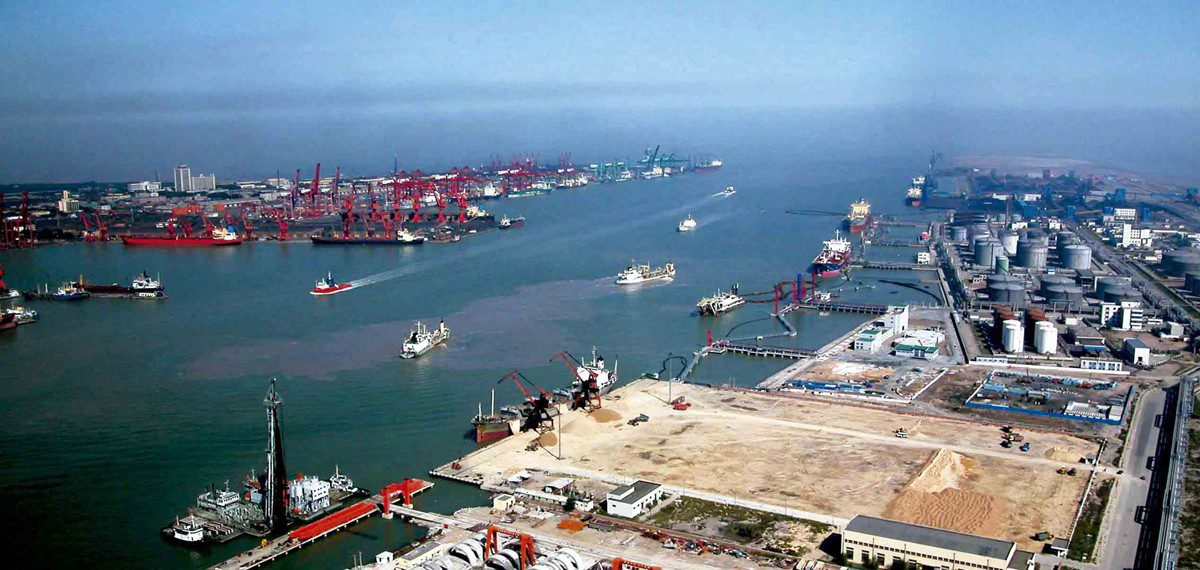
1.Port Description
General Information
Tianjin Port is the largest artificial deep-water port in northern China and the main maritime gateway to Beijing. It ranks among the world’s top 10 ports by cargo throughput. The port consists of multiple port areas including Beijiang, Nanjiang, Dongjiang, Dagukou, Gaoshaling, and Haihe River ports, with over 200 production berths. It serves as a crucial hub for the Bohai Economic Rim and the Belt and Road Initiative.
Port Types
– By size: Super large port (annual cargo throughput exceeding 500 million tons)
– By geography: Harbor (coastal port) with artificial breakwaters
– By function: Commercial port (primary), industrial port, container port
– Special classifications: Designated as a Smart Port Demonstration by MOT (Ministry of Transport of China)
Long./Lat.
Main Port Area: 38°59’N 117°47’E (Datum: WGS84)
Port Entrance: 38°56.5’N 117°58.5’E
Dagukou Area: 38°58’N 117°42’E
Haihe River Mouth: 38°57’N 117°46’E
Time Zone
China Standard Time (UTC+8) year-round, no daylight saving time observed. Port operates 24/7 with shift schedules.
Port Location
Located on the western shore of Bohai Bay, at the estuary of Haihe River, approximately 170 km southeast of Beijing. The port covers a total land area of 121 km² and water area of 336 km². It connects to 180 countries and 600+ ports globally.
Port Limits
The port limits extend from the shoreline to the following coordinates (per Tianjin MSA Notice 2021-12):
– Northwest boundary: 38°56.5’N 117°58.5’E
– Northeast boundary: 39°01.5’N 118°06.5’E
– Southern boundary: 38°52.0’N 118°06.0’E
– Western boundary: Along the coastline
Load Lines
Tianjin Port is in the Northern Seasonal Zone per IMO regulations:
– Summer: April 16 to October 15 (S mark)
– Winter: October 16 to April 15 (W mark)
– Tropical: Not applicable
– Freshwater allowance: 180mm (summer)
Water Density
Average seawater density:
– Outer port: 1.020-1.025 t/m³
– Inner port/Haihe River: 1.005-1.015 t/m³
– Seasonal variations: ±0.003 t/m³
Charts and Books
Official navigation publications:
– Chinese charts: 11701 (Approach), 11711-11713 (Port areas), 11721 (Dagukou), 11731 (Haihe)
– Admiralty charts: 1193 (Approach), 1194-1196 (Port plans)
– Required publications:
* China Coast Pilot Vol.3 (NP32)
* Tianjin Port Regulations (2022 edition)
* Tide Tables for Chinese Waters
– Electronic charts: ENC CN500118, CN500119
Port Restrictions
Current operational limits (per Tianjin Port Authority 2023):
– Maximum vessel size:
* Container: 240,000 DWT (24,000 TEU)
* Bulk carrier: 300,000 DWT
– Maximum dimensions:
* Length: 400m
* Beam: 80m (65m for locks)
* Air draft: 55m (restricted by Donghai Bridge)
– Draft restrictions:
* Main channel: 21.0m
* Beijiang: 19.5m
* Haihe River: 8.0m
– Special restrictions:
* LNG carriers require escort
* Night navigation restrictions for vessels >250m
Regulations
Key regulatory requirements:
1. Navigation:
– Mandatory pilotage (Tianjin MSA Order No.5)
– VTS coverage (CH16/08)
– Speed limit: 10 knots in inner port
2. Safety:
– ISPS Code compliance
– Pre-arrival declaration 24h before ETA
3. Environment:
– China MEPC regulations for emissions
– Mandatory use of low-sulfur fuel (<0.5%)
- Ballast water management compliance
4. Customs:
- Electronic manifest submission
- Strict dangerous goods declaration
Weather Condition
Climate characteristics (per China Meteorological Administration):
– Temperature:
* Annual average: 12.6°C
* January average: -4°C
* July average: 26°C
* Extreme range: -18°C to 39°C
– Precipitation:
* Annual: 550-600mm
* Rainy season: July-August
– Wind:
* Prevailing: NE (winter), SE (summer)
* Strong winds (>Beaufort 6): 60 days/year
* Typhoon influence: Rare (1-2 tropical storms/year)
– Visibility:
* Fog days: 15-20/year (mainly March-May)
* Haze: 30-50 days/year (winter)
Tide and Currents
Tidal characteristics:
– Type: Irregular semi-diurnal tide
– Datum: Huanghai Mean Sea Level
– Ranges:
* Mean: 2.5m
* Spring: 3.5m
* Neap: 1.8m
* Extreme: 4.7m
Current patterns:
– Flood tide: NW direction, 1.0-1.5 knots
– Ebb tide: SE direction, 1.5-2.0 knots
– Strong currents at:
* Haihe River mouth (2.5 knots)
* Dongjiang breakwater (2.0 knots)
– Tidal stream tables: Published in China Tide Tables
Identification Cards
Crew documentation requirements:
– Required documents:
* Seaman’s book (original)
* Passport (copy)
* Crew list (provided by agent)
– Shore passes:
* Issued by Frontier Inspection
* Valid for 24-72 hours
* Restricted to port area
– Special requirements:
* Biometric registration for first visitors
* No shore leave for certain nationalities
Traffics
Transport connections:
1. Air:
– Tianjin Binhai International Airport (ICAO: ZBTJ)
* Distance: 30km (45min drive)
* International flights: 20+ destinations
* Domestic flights: 100+ daily
2. Rail:
– Tianjin Port Railway Station
* Daily freight trains: 50+
* Direct connections to:
– Europe (China Railway Express)
– Central Asia
– Domestic major cities
3. Road:
– Expressways:
* Jingjin Expressway (to Beijing)
* Jinghu Expressway (to Shanghai)
* Tangjin Expressway (to Tangshan)
– Port access:
* 24/7 truck gates
* Appointment system for container trucks
Holidays
Official holidays affecting operations:
1. National holidays (no cargo work):
– Chinese New Year (7 days, Jan/Feb)
– National Day (Oct 1-7)
– Labor Day (May 1-3)
2. Other holidays (limited operations):
– Qingming Festival
– Dragon Boat Festival
– Mid-Autumn Festival
3. Working arrangements:
– Holiday operations require:
* Prior application
* Additional fees (200% labor cost)
* Minimum notice: 72 hours
Currency
Financial information:
– Official currency: Chinese Yuan (CNY/RMB)
– Exchange rates (2023 average):
* 1 USD = 7.0 CNY
* 1 EUR = 7.6 CNY
* 1 JPY = 0.05 CNY
– Restrictions:
* Seafarer exchange limit: 500 USD/day
* Must use authorized banks
* Declaration required for >5000 USD
– Payment methods:
* Port dues: Bank transfer only
* Cash accepted for small amounts
Main Cargo Handled
Annual cargo statistics (2022):
1. Container:
– Throughput: 21 million TEU
– Main routes:
* Intra-Asia: 45%
* Europe: 30%
* Americas: 15%
2. Dry bulk:
– Coal: 150 million tons
– Iron ore: 120 million tons
– Grain: 10 million tons
3. Liquid bulk:
– Crude oil: 80 million tons
– Chemicals: 15 million tons
– LNG: 5 million tons
4. Ro-Ro:
– Vehicles: 1.2 million units
– Construction equipment: 50,000 units
5. Breakbulk:
– Steel products: 20 million tons
– Project cargo: 5 million tons
2. Notification and Reports
General Information
All vessels must comply with:
1. China Maritime Code (Article 32-35)
2. Tianjin Port Regulations (2023 Edition)
3. IMO Resolution A.1157(32)
Required notifications:
– Pre-arrival: 24-48 hours before ETA
– Departure: 2 hours before ETD
– Amendments: Immediately for any changes
Arrival and Departure Checklists
Pre-arrival (24h prior):
1. Maritime Declaration of Health (IMO Form)
2. Crew List (4 copies, notarized)
3. Passenger List (if applicable)
4. Cargo Declaration (Customs Form HD01)
5. Ship’s Particulars (IMO Standard)
6. Last 10 Ports of Call (with dates)
7. Dangerous Goods Manifest (IMDG Format)
8. ETA Confirmation (Port Form TJ-ETA01)
Documents and Certificates
Original Certificates Required:
1. Ship’s Documents:
– Certificate of Registry (valid)
– IOPP Certificate (with supplements)
– Class Certificate (annual endorsement)
– Safety Management Certificate (DOC/SMC)
– International Load Line Certificate
– BWMC Certificate (D-2 standard)
2. Crew Documents:
– Seafarer’s Employment Agreements
– STCW Certificates (all crew)
– Medical Certificates (valid)
3. Cargo Documents:
– Bill of Lading (3 originals)
– Cargo Manifest (Customs approved)
– Dangerous Goods Declaration (if applicable)
4. Operational Records:
– Oil Record Book Part I & II
– Garbage Record Book
– Ballast Water Management Record
Vessel Traffic Services (VTS)
Tianjin VTS System (China MSA Approved):
– Coverage: 38°30’N-39°10’N, 117°30’E-118°20’E
– Mandatory Reporting Points:
1. TJRP1: 38°50’N 118°10’E (25nm from port)
2. TJRP2: 38°55’N 118°05’E (15nm from port)
3. TJRP3: 38°58’N 117°58’E (port entrance)
– Services Provided:
* Traffic organization
* Navigational assistance
* Emergency coordination
Emergency Co-ordination Centre
Tianjin Maritime Emergency Response:
– Primary Center:
* Address: No.1 Haibin Road, Tanggu
* 24h Contact: +86-22-12395
* VHF: CH16/CH70 (DSC)
– Secondary Centers:
1. Beijiang Terminal: +86-22-25706119
2. Dongjiang Terminal: +86-22-25708800
– SAR Capabilities:
* 6 patrol vessels
* 2 rescue helicopters
* Oil spill response team
Harbour Management Communications
Port Authority Contacts:
1. Port Control:
– Phone: +86-22-25707060 (24h)
– VHF: CH12 (primary), CH14 (secondary)
– Email: portcontrol@tianjinport.com
2. Operations Department:
– Day: +86-22-25702012
– Night: +86-22-25702013
3. Security Office:
– ISPS Complaints: +86-22-25705300
Radio
Tianjin Coastal Radio Station (XSV):
– Frequencies:
1. 500kHz (CW – Morse)
2. 2182kHz (RT – Voice)
3. 8364kHz (RT – Long Range)
– Digital Services:
1. NAVTEX: 518kHz (English)
2. DSC: 2187.5kHz
– Email: xsv@tianjinmsa.gov.cn
VHF
Channel Allocation (ITU Standard):
1. CH06: Port Operations
2. CH08: VTS Primary
3. CH12: Port Control
4. CH13: Pilot/Tug Coordination
5. CH16: Distress/Safety
6. CH70: DSC Calling
Communication Protocol:
1. Initial contact on CH16
2. Switch to assigned working channel
3. Continuous watch on CH16 when underway
Radars
Tianjin Port Radar Network:
1. Main Radar Station:
– Location: 38°59’12″N 117°46’30″E
– Range: 30nm (X-band), 50nm (S-band)
2. Secondary Stations:
– Beijiang: 39°01’15″N 117°42’18″E
– Dongjiang: 38°58’30″N 117°55’45″E
Radar Services:
– Available 24/7
– Contact via VHF CH08
– Provides:
* Position verification
* Traffic information
* Navigation warnings
Notices of Readiness
NOR Requirements:
1. Must be:
– In writing
– Signed by Master
– Time-stamped
2. Delivery Methods:
– Physical copy to:
* Terminal office
* Charterer’s agent
– Electronic submission via:
* Port EDI system
* Email to cargo@tianjinport.com
3. Validity Conditions:
– Vessel in port limits
– All cargo spaces ready
– Free pratique granted
Immigration
Tianjin Frontier Inspection Procedures:
1. Pre-arrival:
– Crew list submission (24h)
– Health declaration
2. On Arrival:
– Face verification
– Document check
– Biometric registration
3. Special Requirements:
– Visa restrictions apply
– Shore leave permits required
Health
Quarantine Procedures:
1. Required Documents:
– Maritime Declaration of Health
– Vaccination List
– Medical Logbook
2. Inspection Types:
– Radio pratique (clean bill)
– Document check only
– Full boarding inspection
3. Emergency Contacts:
– Quarantine Office: +86-22-12320
– Port Hospital: +86-22-25706666
Customs
Customs Clearance Process:
1. Pre-arrival:
– E-Manifest submission
– Cargo declaration
2. On Arrival:
– Document verification
– Possible cargo inspection
3. Allowances:
– Tobacco: 400 cigarettes/crew
– Alcohol: 1.5L spirits/crew
– Currency: 5000 USD equivalent
Prior Declaration and Authorization
Special Cargo Requirements:
1. Dangerous Goods:
– 72h prior notice
– IMDG Code compliance
– Special stowage plans
2. Oversized Cargo:
– 48h notice
– Stability calculations
– Route survey report
3. Crew Changes:
– 24h notice
– PCR tests (if required)
Restricted Activities
Prohibited Operations:
1. Navigation:
– Anchoring outside designated areas
– Speed >10 knots in inner port
– Night navigation for VLCCs
2. Cargo Operations:
– Open loading of coal
– Unauthorized hot work
– Discharging after sunset (certain cargoes)
Incidents
Reporting Requirements:
1. Immediate Notification:
– VHF CH16
– Phone: +86-22-12395
2. Written Reports (within 24h):
– To Tianjin MSA
– To Port Authority
– To Flag State
3. Reportable Incidents:
– All marine casualties
– Oil spills >1 ton
– Crew injuries/fatalities
– Navigation aid damage
Others
Additional Requirements:
1. Security:
– ISPS Level 1 compliance
– 24h gangway watch
– Restricted areas marked
2. Environmental:
– Ballast water reporting
– Garbage log maintenance
– Low sulfur fuel required
3. Operational:
– Tug assistance mandatory
– Daylight restrictions for special cargoes
– Continuous radio watch
3.Port Navigation
General Information
Tianjin Port navigation complies with:
1. China Maritime Traffic Safety Law (2021 Revision)
2. IMO Resolution A.1156(32)
3. Tianjin Port Regulations (2023 Edition)
All vessels must maintain continuous VHF watch on CH16 and comply with COLREGs.
Pilot Station and Pilotage
Pilot Boarding Areas:
1. Primary Station:
– Position: 38°56.5’N 117°58.5’E
– Depth: 15m
– Characteristics: Yellow buoy with “PILOT” marking
2. Alternate Station (bad weather):
– Position: 38°55.0’N 118°02.0’E
– Depth: 18m
Request Procedures:
– Minimum notice: 24 hours before ETA
– Contact methods:
* VHF: CH12 (working), CH16 (initial)
* Phone: +86-22-25706119 (24h)
* Email: pilot@tianjinport.com
Pilot Boat Specifications:
– Fleet: 6 vessels
– Dimensions: 30m LOA, 8m beam
– Power: 2000HP
– Identification: Yellow hull, blue superstructure
Boarding Requirements:
– SOLAS-compliant pilot ladder
– Illumination: 50 lux minimum at night
– Gangway height: 1-1.5m above water
Approaches and Channels
Main Navigation Channel:
– Total length: 44km
– Designed depth: 21.0m (CD)
– Width: 315m (straight), 400m (turning areas)
– Current: Max 2.5 knots (spring tide)
Branch Channels:
1. Beijiang Channel:
– Depth: 19.5m
– Width: 250m
2. Dongjiang Channel:
– Depth: 18.0m
– Width: 200m
3. Haihe River Channel:
– Depth: 8.0m
– Width: 100m
Special Notes:
– No anchoring in channel
– Speed limit: 10 knots
– VTS monitoring mandatory
Anchorages
Designated Areas:
1. No.1 Anchorage:
– Position: 38°58’N 118°06’E
– Area: 3.5nm²
– Depth: 15-18m
– Holding ground: Clay
2. No.2 Anchorage (Dangerous Cargo):
– Position: 38°52’N 118°10’E
– Area: 2.8nm²
– Depth: 12-15m
– Restrictions: No smoking
3. Emergency Anchorage:
– Position: 38°55’N 117°55’E
– Area: 1.5nm²
– Depth: 20m
Navigation Aids
Lighting System:
1. Dagukou Lighthouse:
– Position: 38°58’12″N 117°42’18″E
– Characteristics: Fl(3)W 15s
– Range: 18nm
2. Channel Buoys:
– IALA Region A system
– 56 lighted buoys (GPS synchronized)
– Spacing: 1.5-2.0km
Electronic Navigation:
– DGPS: TJGP (306kHz)
– AIS: Base station at 38°59’N 117°47’E
– Radar: 3 stations with 30nm range
Maximum Authorized Speed
Speed Limits:
1. Outer approaches: 12 knots
2. Main channel: 10 knots
3. Terminal areas: 6 knots
4. Special zones: 4 knots
Penalties:
– Exceeding speed: 5,000-50,000 CNY fine
– Creating excessive wash: Additional penalties
Navigation Priority
Traffic Hierarchy:
1. Emergency vessels
2. VLCCs (>200,000 DWT)
3. LNG carriers
4. Passenger ships
5. Other commercial vessels
Passing Rules:
– Overtaking prohibited in turns
– Crossing angle >30°
– VHF agreement required
Weather Restrictions
Operational Limits:
1. Wind:
– Beaufort 6: Reduced operations
– Beaufort 7: Port closure
2. Visibility:
– <1nm: Movement suspended
3. Current:
- >3 knots: Pilot discretion
4. Ice:
– >15cm thickness: Icebreaker escort
Night Entry or Departure
Conditions:
– Vessels <250m LOA
- Adequate lighting (100 lux on deck)
- Pilot approval
- VTS monitoring
Restrictions:
1. Prohibited for:
– VLCCs
– Vessels with dangerous cargo
2. Speed reduction: 20% of daytime limit
UKC (Under-Keel Clearance)
Minimum Requirements:
1. General cargo: 0.5m or 10% draft
2. Bulk carriers: 1.0m or 10% draft
3. Tankers: 1.5m or 10% draft
Calculation:
– Based on lowest astronomical tide
– Squat effect included
– Updated tidal data required
Bridges
Haihe River Bridges:
1. Donghai Bridge:
– Air draft: 28m (MHWS)
– Horizontal clearance: 120m
– Passage procedure:
* 24h notice
* Daylight only
* Tug escort
2. Secondary Bridges:
– Minimum clearance: 15m
– Advance notice: 12h
Air Drafts Limit and Air Gap
Clearance Data:
1. Port entrance: 55m (Donghai Bridge)
2. Terminals:
– Beijiang: 45m
– Dongjiang: 50m
3. Power lines:
– Minimum clearance: 30m
– Marked by spherical buoys
Vessels Shifting
Procedures:
1. Application:
– 12h notice to Port Control
– VTS approval required
2. Requirements:
– Minimum 2 tugs (>200m LOA)
– Daylight preferred
– Wind
– No shifting during tide change
– Maximum current: 2 knots
Vessels Transiting
Requirements:
1. Documentation:
– Transit plan
– VTS clearance
2. Operations:
– Continuous VHF watch
– Speed compliance
– No anchoring
Prohibited:
– Overtaking in turns
– Crossing at acute angles
Vessels Towing
Regulations:
1. Notification:
– 48h advance notice
– Tow plan submission
2. Equipment:
– Escort tugs (minimum 2)
– Daytime only
3. Limits:
– Maximum tow length: 300m
– Speed: 6 knots
Tugs and Working Boats
Tug Resources:
1. Fleet Composition:
– 6000HP: 12 units
– 4000HP: 15 units
– 2500HP: 5 units
2. Operations:
– Standard assist: 2 tugs
– VLCCs: 4 tugs
– Line handling: Ship’s lines preferred
Working Boats:
1. Patrol: 25 boats
2. Garbage collection: 12 vessels
3. Oil recovery: 6 units
Vessels in Special Operations
Regulations:
1. Dredging:
– NOTAM required
– Safety zone: 500m
2. Survey:
– Prior permission
– Escort vessel required
3. Construction:
– Night lighting
– AIS transponder mandatory
4.Pollution Control
Ballast and Deballast
1. Regulatory Framework:
– China Maritime Code (2020 Revision)
– IMO BWM Convention (D-2 Standard)
– Tianjin MSA Circular No. 2023-12
2. Operational Requirements:
– Mandatory ballast water reporting 24h before arrival
– Ballast water record book must be maintained
– Prohibited species monitoring required
3. Technical Standards:
– Treatment systems must meet IMO Type Approval
– Sampling ports required on all vessels >400GT
– Maximum residual oil content: 15ppm
4. Facilities:
– Ballast water reception at all 12 terminals
– Treatment capacity: 50,000m³/day total
– Emergency response barge (5,000m³ capacity)
5. Procedures:
– Pre-discharge testing required
– Minimum 3 samples per discharge
– Discharge rate ≤300m³/hour
6. Contacts:
– Ballast Water Office: +86-22-25706234
– Emergency Hotline: +86-22-12395
Garbage Disposal
1. Collection System:
– 24/7 service at all 45 berths
– Segregation into 5 categories:
* Plastics
* Food waste
* Domestic waste
* Operational waste
* Hazardous waste
2. Facilities:
– 12 garbage barges (50m³ capacity each)
– 3 shore reception stations
– Incineration capacity: 200t/day
3. Operational Details:
– Advance notice: 12 hours minimum
– No charge for MARPOL-compliant amounts
– Special handling for hazardous waste
4. Documentation:
– Garbage Record Book (Chinese/English)
– Waste transfer receipts required
5. Contacts:
– Garbage Collection Center: +86-22-25708855
– Operations: VHF CH14
Waste Oil Disposal
1. Reception Infrastructure:
– Dedicated oil barge (2,000m³ capacity)
– Shore tanks (10,000m³ total)
– Special berth: No.5 Sludge Wharf (Beijiang)
2. Service Specifications:
– Sludge removal: 100-500m³/h capacity
– Bilge water treatment: 50m³/h
– Oil content monitoring system
3. Service Providers:
– Tianjin Port Oil Services Co.:
* Tel: +86-22-25706677
* Fax: +86-22-25706678
* Email: oilservice@tianjinport.com
– COSCO Environmental Services:
* Tel: +86-22-25706688
4. Pricing Structure:
– Sludge: 500 CNY/m³ (min 5m³)
– Bilge water: 300 CNY/m³
– Emergency response: 10,000 CNY base fee
5. Compliance:
– IOPP Certificate verification
– Oil Record Book inspection
Sewage Reception
1. Treatment Facilities:
– 6 sewage boats (100m³ capacity each)
– 5 shore reception stations
– Biological treatment plant (500m³/day)
2. Operational Procedures:
– Minimum 6 hours advance notice
– No discharge within 12nm of coast
– Mandatory disinfection for black water
3. Service Details:
– Domestic sewage: 200 CNY/m³
– Black water: 300 CNY/m³
– No charge for compliant vessels
4. Documentation:
– International Sewage Certificate
– Discharge records
5. Contacts:
– Sanitation Department: +86-22-25708866
– Emergency: VHF CH16
Additional Pollution Control Measures
1. Air Quality Management:
– 0.1% sulfur fuel requirement (ECA zone)
– Shore power at 15 berths (6.6kV/60Hz)
– Voluntary speed reduction program
2. Cargo Residue Handling:
– Dedicated collection vehicles
– Hazardous material containers
– Special handling for toxic substances
3. Monitoring Systems:
– 24/7 water quality monitoring
– 8 air quality stations
– Drone surveillance (10km coverage)
4. Emergency Response:
– Oil spill equipment: 5,000m³ capacity
– Chemical spill team (24h standby)
– Firefighting foam stations
Compliance Verification
1. Required Documentation:
– IOPP Certificate (valid)
– Garbage Record Book (updated)
– Ballast Water Management Plan
2. Inspection Regime:
– Port State Control checks
– Random sampling (5% of vessels)
– Annual environmental audits
3. Penalty Structure:
– Minor violations: 10,000-50,000 CNY
– Major violations: 50,000-500,000 CNY
– Serious cases: Ship detention
4. Certification:
– ISO 14001:2015 certified
– Green Port Certification (Class AA)
Special Requirements
1. Hazardous Materials:
– Special berth assignment
– Additional safety measures
– Emergency plan submission
2. Cruise Ships:
– Enhanced sewage requirements
– Food waste processing
– Grey water treatment
3. Bulk Carriers:
– Dust suppression measures
– Cargo hold washing controls
– Residue management plans
5.Port Safety and Security
General Information
1. Certification:
– ISPS Code Compliant (since 2004)
– ISO 28000:2022 Certified
– China Class AA Security Port
2. Security Infrastructure:
– 58km perimeter fencing with motion sensors
– 214 CCTV cameras (4K resolution)
– 12 mobile patrol units
3. Operational Data:
– Average response time: 8 minutes
– Annual security drills: 48 exercises
– Security personnel: 320 certified officers
PSC
1. Inspection Authority:
– Tianjin Maritime Safety Administration
– 18 certified PSC officers (2024)
2. Inspection Criteria:
– Tokyo MOU (2023 checklist)
– China Special Inspection Items
3. Focus Areas:
– Structural integrity (ultrasonic testing)
– Life-saving equipment (100% verification)
– Fire protection systems (pressure tests)
– Pollution prevention (Oily Water Separators)
4. Statistics (2023):
– Total inspections: 1,823
– Detentions: 113 (6.2%)
– Average deficiencies per inspection: 2.8
5. Contact:
– PSC Office: +86-22-25706111
– Email: psc@tianjinmsa.gov.cn
ISPS
1. Security Levels:
– Level 1: Normal (Green)
– Level 2: Heightened (Yellow)
– Level 3: Emergency (Red)
2. Security Measures:
– Access control (Facial recognition + RFID)
– Restricted areas (200m automatic detection)
– 24/7 armed patrols (QBU-88 rifles)
3. Documentation:
– ISSC certificate (original required)
– Continuous Synopsis Record
– Security Pre-Arrival Form (TJ-SAF01)
4. Implementation:
– SSAS testing within 1 hour of arrival
– Security drills quarterly
– Automatic identification system (AIS) verification
Emergency
1. Emergency Contacts:
– MRCC Tianjin: +86-22-12395 (24/7)
– Port ECC: +86-22-25706666
– Medical Emergency: +86-22-25708899
2. Response Equipment:
– Fireboats: 5 vessels (10,000HP each)
– Oil spill response: 8,000m³ capacity
– Chemical spill: Level B suits available
3. Procedures:
– Immediate VHF CH16 report
– Follow port emergency plan (TJ-EMP 2023)
– Mandatory participation in annual drills
4. Coordination:
– Joint command system with local authorities
– Emergency berths: No.15 & No.23
– Evacuation routes clearly marked
Ships Arrest
1. Legal Framework:
– Maritime Code of China (Article 272)
– Supreme Court Provisions (No.15/2020)
2. Procedure:
– Court order submission (original)
– 72 hours minimum notice
– Security bond (120% claim value)
3. Practical Aspects:
– Designated arrest berths: No.8-10
– Average processing time: 3 working days
– Maximum detention period: 30 days
4. Statistics:
– 2023 arrests: 14 vessels
– Main reasons: Crew wages (60%), bunkers (25%)
Fire Precautions
1. Tanker Specific:
– Inert gas system (O2 <8%)
- Deck water spray (10L/min/m²)
- Bonding cables (10,000A capacity)
2. General Requirements:
- Hot work permits (Level 1-3)
- Smoking zones (50m from cargo)
- Fire patrols (hourly logs)
3. Equipment:
- Fire mains pressure: 7 bar
- International shore connection available
- Foam stations every 100m
Inspections from Other Parties
1. Types of Inspections:
– Flag State (annual)
– Classification Society (special surveys)
– Cargo Interests (pre-loading)
2. Procedures:
– 48 hours prior notice required
– Port escort mandatory (2 officers)
– Final report submission within 24h
3. Statistics:
– Average inspections/month: 45
– Most active societies: ABS, DNV, CCS
Maritime Security Zones
1. Designated Areas:
– Oil terminals (500m radius)
– LNG berths (800m radius)
– Military zones (1km no-entry)
2. Regulations:
– No photography (DSLR cameras prohibited)
– Speed limit 6 knots (enforced by radar)
– AIS transmission mandatory
3. Enforcement:
– Automatic tracking system
– 24/7 monitoring center
– Patrol boats (15 minute response)
Police
1. Port Police Station:
– Location: Main Administration Building
– Personnel: 50 officers (armed)
– Vehicles: 12 patrol cars
2. Services:
– 24/7 response capability
– Criminal investigations
– Crew dispute mediation
3. Contact:
– Emergency: 110 (China standard)
– Office: +86-22-25706222
– Email: portpolice@tianjin.gov.cn
Flag
1. Display Requirements:
– National flag (stern or mast)
– Size minimum 1.5m x 1.0m
– Proper illumination (50 lux)
2. Special Situations:
– Half-mast during memorials
– Additional company pennant
– Courtesy flags for foreign vessels
3. Enforcement:
– Daily visual checks
– Nighttime verification
Signals and Lights Display
1. Day Signals:
– Black shapes (cylinder, ball, diamond)
– Size requirements (minimum 0.6m)
2. Night Lights:
– COLREGs compliant
– Special port signals (TJ-2023)
– Backup power required
3. Verification:
– Pre-arrival checklist
– Port entry inspection
Stowaways and Refuges
1. Prevention Measures:
– Pre-departure searches (certified)
– Seal numbering system
– Infrared detectors
2. Handling Procedures:
– Immediate port police notification
– Medical examination
– Interview records
3. Facilities:
– Detention area (capacity 20)
– Repatriation arrangements (72h)
Alcohol, Drugs and Prohibited Items
1. Policies:
– BAC limit 0.05% (breathalyzer)
– Random testing (5% of crew)
– Zero tolerance for drugs
2. Prohibited Items:
– Weapons (including replicas)
– Explosives (all classes)
– Narcotics (UN 1961 list)
3. Enforcement:
– X-ray scanning
– Canine units
– Heavy penalties
Reporting of Security Breaches or Suspicious Behaviour
1. Reporting Channels:
– VHF CH16/12
– Telephone hotline: +86-22-25706222
– Mobile app: “Safe Tianjin Port”
2. Procedure:
– Immediate verbal report
– Written follow-up (TJ-SIR form)
– Evidence chain of custody
3. Response:
– First responders (15 minute)
– Investigation team
– Port-wide alerts
Operation of drones
1. Regulations:
– CAAC Part 107 rules apply
– No-fly zones (5km radius airport)
– Maximum altitude 120m AGL
2. Application:
– 72 hours advance notice
– Insurance (minimum 1M CNY)
– Operator license (CAAC)
3. Restrictions:
– Daylight only (VLOS)
– 500m from vessels
– No payload >5kg
Additional Security Measures
1. Cybersecurity:
– Network protection (Level 3)
– AIS encryption
– Operational technology safeguards
2. Cargo Screening:
– 100% container scanning
– Radiation detection
– Explosive trace detection
3. Crew Verification:
– Biometric matching
– Background checks
– Seafarer database cross-reference
6.Cargo Operations
General Information
1. Port Overview:
– Total area: 131 km² (land and water)
– Operating days: 365 days/year
– Vessels handled annually: ~30,000
2. Throughput (2023):
– Total cargo: 502 million tons
* Bulk: 320 million tons
* Containers: 21.7 million TEUs
* Liquid: 85 million tons
3. Digital Systems:
– Tianjin Port Smart System (TPSS)
– Automated gate system (95% automation)
– Blockchain-based documentation
Tanker Berths and Terminals
1. Infrastructure Details:
– Crude oil terminals: 12 berths
* Max depth: 22.5m
* Max DWT: 300,000
– Product terminals: 20 berths
* Max depth: 15m
* Max DWT: 80,000
2. Technical Specifications:
– Loading arms: 16″-24″ (API Std 1004)
– Emergency release systems: Yes
– Vapor recovery: Available at 8 berths
3. Operational Data:
– Average discharge rate:
* Crude: 10,000-15,000 m³/h
* Products: 5,000-8,000 m³/h
– Slop reception:
* Capacity: 2,000m³
* Rate: 500m³/h
4. Safety Systems:
– Oil spill response:
* 8 dedicated vessels
* 5,000m³ storage
– Firefighting:
* Foam monitors: 20 units
* Water capacity: 10,000m³/h
Container Berths and Terminals
1. Terminal Details:
– Tianjin Port Container Terminal (TPCT):
* 12 berths (350-400m each)
* Depth: 16-18m
– Euroasia International Container Terminal:
* 8 berths
* Depth: 15m
2. Equipment Inventory:
– Quay cranes:
* 132 total (32 super post-panamax)
* Max outreach: 26 rows
* SWL: 40-65 tons
– Yard equipment:
* RTGs: 350 units
* Straddle carriers: 120
3. Productivity:
– Average moves: 35-40/hour
– Vessel turnaround:
* 5,000 TEU: 24 hours
* 10,000 TEU: 36 hours
4. Special Features:
– Automated stacking cranes: 80 units
– Cold treatment facilities
– Dangerous goods zones
Dry Cargo Berths and Bulk Facilities
1. Bulk Terminals:
– Coal:
* 6 dedicated berths
* Max draft: 18.2m
* Unloading rate: 4,000t/h
– Iron ore:
* 4 berths
* Max draft: 21m
* Unloading rate: 7,500t/h
2. General Cargo:
– Steel products:
* 8 berths
* Max draft: 14m
* Handling: 15,000t/day
– Project cargo:
* 2 heavy lift berths
* Max SWL: 1,600t
3. Storage Capacity:
– Covered warehouses: 1.2 million m²
– Open yards: 8.5 million m²
– Special:
* Grain silos: 500,000t
* Ore stockpiles: 3 million t
Passenger Berths and Terminals
1. Cruise Facilities:
– International Terminal:
* Berth length: 360m
* Depth: 10.5m
* Gangways: 4 (50t capacity)
– Domestic Terminal:
* Berth length: 250m
* Depth: 8m
2. Services:
– Immigration: 24 channels
– Baggage: 8 scanners
– Parking: 1,200 spaces
3. Statistics:
– Annual passengers: 800,000
– Vessel calls: 120/year
Specialised Cargo Handling Facilities
1. Ro-Ro Operations:
– 4 dedicated berths
– Ramp capacity: 500t
– Annual volume: 300,000 units
2. Liquid Chemicals:
– 8 stainless steel berths
– Tank farm: 600,000m³
– Special handling for:
* Acids
* Alkalis
* Toxic substances
3. LNG Terminal:
– 3 cryogenic berths
– Storage: 640,000m³
– Peak sendout: 30 million m³/day
Loading and Discharging Procedures
1. Standard Process:
– Pre-operation meeting (mandatory)
– Equipment certification check
– Safety perimeter establishment
2. Documentation:
– Cargo manifest (electronic)
– Stowage plan (3D simulation)
– Dangerous goods:
* IMDG certificate
* MSDS (Chinese/English)
3. Quality Control:
– Sampling procedures
– Moisture content checks
– Weight verification
Loading and Discharging Rates
1. Container Terminals:
– Standard: 150-200 TEUs/hour
– Peak: 250 TEUs/hour
2. Bulk Terminals:
– Coal unloading: 8,000t/h
– Iron ore unloading: 7,500t/h
– Grain loading: 2,000t/h
3. Liquid Terminals:
– Crude loading: 15,000m³/h
– Products discharge: 8,000m³/h
– LNG transfer: 12,000m³/h
Ship to Ship Transfer
1. Designated Areas:
– Offshore zone (3nm from coast)
* Max size: 200,000 DWT
* Min distance: 500m from traffic lanes
– Inner port zone (approved berths)
2. Requirements:
– 72h prior notice
– STS plan (including:
* Mooring arrangement
* Emergency procedures)
– Port officer attendance
3. Equipment:
– Fenders: 8 units (min)
– Hoses: Certified for product
– Monitoring: AIS/radar
Cargo Gear
1. Shore-Based Equipment:
– Container cranes: 132
– Bulk unloaders: 28
– Heavy lift: 10
2. Ship’s Gear Requirements:
– Annual certification
– SWL markings
– Chinese standards compliance
3. Special Equipment:
– Magnet cranes: 12
– Clamshell grabs: 40
– Pneumatic unloaders: 8
Shore Cranes
1. Container Handling:
– Post-Panamax:
* Outreach: 22-26 rows
* Twin-lift capability
– Panamax:
* Outreach: 18 rows
2. Heavy Lift Capacity:
– Floating cranes:
* 1,600t (Zhenhua 30)
* 800t (2 units)
– Mobile cranes:
* 200-400t (Liebherr)
3. Maintenance:
– Daily inspections
– Annual load tests
– OEM servicing
Floating Cranes
1. Available Units:
– Zhenhua 30: 1,600t
* Boom length: 98m
* Working radius: 48m
– 800t cranes (2 units)
* For general heavy lifts
2. Operational Details:
– Advance booking: 7 days
– Minimum hire: 4 hours
– Weather limits: Beaufort 6
3. Cost Structure:
– 1,600t: CNY 120,000/hour
– 800t: CNY 80,000/hour
– Mob/demob: Additional
Hoses
1. Types Available:
– Oil: 16″-24″ (steel wire)
– Chemical: 6″-12″ (PTFE)
– LNG: Special cryogenic
2. Testing Regime:
– Hydrostatic: 1.5x WP
– Electrical continuity
– Visual inspection
3. Connection Standards:
– API RP 1004
– ISO 10380
– Flange standards
Specialised Cargo Operation
1. Dangerous Goods:
– Classification zones
– Segregation requirements
– Emergency protocols
2. Radioactive Materials:
– Special handling berth
– Radiation monitoring
– Security escort
3. Project Cargo:
– Route surveys
– Heavy lift planning
– Temporary storage
Lightering and Lighterage
1. Available Fleet:
– Barges: 50 (1,000-5,000t)
– Tugs: 20 (3,000-6,000HP)
2. Operational Parameters:
– Weather limits: Beaufort 4
– Daylight operations preferred
– Max transfer rate: 1,000t/h
3. Cost Examples:
– 1,000t barge: CNY 8,000/hour
– 5,000t barge: CNY 25,000/hour
– Tug assist: CNY 5,000/hour
Barge
1. Types Available:
– Container barges: 200 TEU
– Bulk barges: 5,000t
– Tank barges: 3,000m³
2. Operational Notes:
– Advance booking: 3 days
– Night operations: Limited
– Insurance requirements
3. Fleet Statistics:
– Total: 120 units
– Average age: 8 years
– Maintenance regime
Cargo Lashing
1. Standards Applied:
– CSC regulations
– IMO guidelines
– Chinese GB standards
2. Responsibility Matrix:
– Containers: Stevedores
– Breakbulk: Joint
– Project: Specialist teams
3. Equipment:
– Twistlocks
– Lashing rods
– Dunnage materials
Cleaning Procedures
1. Bulk Residue Handling:
– Vacuum systems: 10 units
– Manual cleaning teams
– Waste classification
2. Tank Cleaning:
– Crude oil tanks:
* Water washing
* Chemical cleaning
– Chemical tanks:
* Special procedures
* Gas-freeing
3. Environmental Compliance:
– Waste disposal tracking
– No overboard discharge
– Recycling programs
Opening/Closing Hatches
1. Standard Practice:
– Crew responsibility
– Stevedore assistance
– Safety observer
2. Equipment Requirements:
– Hatch covers: Certified
– Securing devices
– Warning signs
3. Weather Considerations:
– Rain protection
– Wind limits
– Emergency closure
Delay
1. Average Waiting Times:
– Tankers: 12-24 hours
– Containers: 6-12 hours
– Bulk: 8-18 hours
2. Contributing Factors:
– Weather (fog Nov-Mar)
– Tidal restrictions
– Customs clearance
3. Mitigation Measures:
– Priority berthing
– Advanced documentation
– 24/7 operations
Stevedore Companies
1. Major Operators:
– Tianjin Port Stevedoring Co.
* Workforce: 3,500
* Specialization: All cargo
– COSCO Shipping Ports
* Workforce: 1,200
* Specialization: Containers
2. Service Parameters:
– Minimum gang size: 15
– Advance notice: 48h
– Equipment provision
3. Performance Metrics:
– Productivity targets
– Safety records
– Training programs
Working Hours
1. Standard Schedule:
– Day shift: 0800-2000
– Night shift: 2000-0800
– Break times: Regulated
2. Overtime Provisions:
– Rates:
* 150% (2000-2400)
* 200% (0000-0800)
– Minimum call: 4 hours
3. Holiday Working:
– National holidays
– Special arrangements
– Premium rates
Warehouses and Yards
1. Storage Infrastructure:
– Covered warehouses:
* Total: 1.2 million m²
* Height: 10-15m
– Open yards:
* Paved: 6 million m²
* Unpaved: 2.5 million m²
2. Specialized Facilities:
– Refrigerated:
* Capacity: 50,000m²
* Temp range: -25°C to +15°C
– Dangerous goods:
* Zones 1-9
* Segregation
3. Inventory Management:
– RFID tracking
– Stock rotation
– Quality control
7.Port Services
General Information
1. Service Overview:
– 24/7 operations with 98% service availability
– Digital service platform (Tianjin Port E-Service)
– Multilingual support: English/Chinese/Russian/Japanese
– ISO 9001:2015 certified service management
Bunkering
1. Fuel Availability:
– RMG 380 (3.5% sulfur)
– DMA (0.1% sulfur)
– MGO (0.1% sulfur)
– LNG bunkering (limited availability)
2. Supply Details:
– Minimum order: 50mt
– Maximum delivery rate: 500mt/hour
– Advance notice: 24 hours
3. Providers:
– Sinopec Tianjin (primary)
* Contact: +86-22-25702222
* Barge capacity: 3,000mt
– COSCO Bunker (secondary)
* Contact: +86-22-25703333
4. Pricing (2024):
– RMG 380: $650/mt
– DMA: $750/mt
– MGO: $900/mt
Lubricants
1. Available Grades:
– Cylinder oils: BN40-100
– System oils: SAE 30-50
– Greases: NLGI 1-3
2. Suppliers:
– Shell Marine
– Total Lubmarine
– Sinopec Lubricants
3. Delivery:
– Standard orders: 12h notice
– Emergency delivery: 4h (30% surcharge)
4. Inventory:
– 200+ lubricant types in stock
– Special orders: 72h lead time
Fresh Water
1. Supply System:
– Potable water (WHO standards)
– Dual supply points at all berths
2. Delivery Capacity:
– Barge: 100mt/hour (max 5,000mt)
– Truck: 20mt/hour (max 200mt)
3. Cost Structure:
– Standard rate: CNY 50/mt
– After-hours surcharge: 20%
– Minimum charge: 100mt
Stores and Spare Parts
1. Delivery Regulations:
– Customs clearance: 2h standard
– Safety zones: 50m from operations
– Hazardous materials: special permits
2. Equipment:
– 50+ forklifts available
– 20 crane trucks (5-50t capacity)
3. Spare Parts Network:
– Local warehouses: 5,000 SKUs
– Beijing air logistics hub: 4h delivery
– Emergency parts: 24/7 service
Dunning and Dunnage
1. Materials Available:
– Wooden dunnage (standard)
– Plastic dunnage (on request)
– Steel dunnage (special order)
2. Operational Policy:
– Primary responsibility: Stevedores
– Crew assistance permitted
– Quality inspections mandatory
Ship Chandlers
1. Major Providers:
– Tianjin Marine Supplies Co.
* Address: Port Service Bldg #3
* 24/7 Contact: +86-22-25708877
* Helicopter service: Bell 429 (6 pax)
– COSCO Shipping Supplies
* Address: Terminal B Administration
* Contact: +86-22-25706655
2. Service Range:
– Provisions (all types)
– Bonded stores
– Technical supplies
Ship Husbandry
1. Services Offered:
– Hull cleaning (divers available)
– Tank cleaning (certified teams)
– Accommodation services
2. Certified Providers:
– Tianjin Port Services Ltd.
* ISO 14001 certified
* 50+ trained staff
– COSCO Ship Services
* OHSAS 18001 certified
Maintenance and Repairs
1. Capabilities:
– Engine repairs (up to MAN B&W 10S90ME-C)
– Deck machinery (cranes, winches)
– Electrical systems (up to 11kV)
2. Limitations:
– No drydock repairs
– No major steelwork
3. Emergency Services:
– 24/7 response team
– Welding/fabrication shop
Gangway and Deck Watchmen
1. Security Requirements:
– Minimum 2 watchmen
– 24/7 coverage
– Access control logs
2. Service Providers:
– Tianjin Port Security Co.
* Rate: CNY 200/hour
* Minimum: 8 hours
– COSCO Security Services
Deratting
1. Service Details:
– WHO certified exterminators
– 24h advance notice required
– Valid for 6 months
2. Pricing:
– Standard vessels: CNY 5,000-8,000
– Large vessels (>300m): CNY 12,000
Surveying
1. Available Services:
– Cargo inspection (SGS/BV)
– Condition surveys
– P&I correspondents (Thomas Miller)
2. Classification Societies:
– ABS: +86-22-25707711
– DNV: +86-22-25707722
– CCS: +86-22-25707733
Fumigation
1. Regulatory Requirements:
– Mandatory for grain/agricultural cargoes
– 48h advance notice
– PH3 gas monitoring
2. Service Providers:
– Tianjin Fumigation Co.
* Certified by China AQSIQ
* Rate: CNY 8,000-15,000
Crewing and Repatriations
1. Crew Change Services:
– Visa processing: 3 working days
– Airport transfers
– Hotel accommodations
2. Medical Repatriation:
– Air ambulance available
– 24h coordination
Dry Docks
1. Facility Specifications:
– Newport Dry Dock:
* Length: 420m
* Width: 80m
* Depth: 12m
– Auxiliary Docks:
* 3 units (200-300m length)
2. Maintenance Capabilities:
– VLCC repairs
– Container ship servicing
– Specialized coatings
Launch Service
1. Available Services:
– Pilot transfer
– Crew changes
– Technical personnel
2. Vessel Specifications:
– 10 launch boats (20-30 pax)
– Max speed: 25 knots
3. Operating Hours:
– 24/7 with 1h notice
Certificates Issuing
1. Document Services:
– Safety Equipment Certificates
– Load Line Certificates
– Deratting Certificates
2. Issuing Authorities:
– Tianjin MSA
– Classification societies
– Health quarantine
Shore Electricity
1. Technical Specifications:
– Voltage: 6.6kV/60Hz
– Connection: IEC/ISO standards
– Capacity: 5MVA per berth
2. Available Berths:
– Container Terminals: 12 berths
– Cruise Terminal: 2 berths
– General Cargo: 1 berth
Phones Services
1. Communication Options:
– Shipboard phones:
* Installation: CNY 500
* Usage: CNY 2/minute
– Mobile SIM cards:
* China Mobile: CNY 100 (1GB data)
2. Coverage:
– 5G network available
– Port-wide signal
Banks
1. Financial Services:
– Bank of China (Port Branch)
* Address: Port Admin Bldg
* Services: FX, wire transfers
– ICBC
* ATM available 24/7
2. Operating Hours:
– 0900-1700 (Mon-Fri)
– Limited weekend services
Consuls and Visa
1. Diplomatic Missions:
– Russian Consulate
– South Korean Consulate
– Japanese Consulate
2. Visa Services:
– 72h transit visa
– Crew visas (single/multiple)
Mail
1. Postal Services:
– China Post Office
* Location: Port Service Center
* Hours: 0800-2000
2. Courier Services:
– DHL/FedEx offices
– Document express: 24h
Shore Leave
1. Crew Policy:
– Allowed with valid ID
– Curfew: 2400-0500
– Restricted areas marked
2. Transportation:
– Taxis available
– Port shuttle bus
Medical and Ambulance
1. Facilities:
– Port Clinic (24/7)
* Doctors: 5 on duty
* Emergency: +86-22-25709999
– Tianjin Port Hospital
* Distance: 5km
* Specialties: Trauma, diving
2. Emergency Numbers:
– Ambulance: 120
– Medical evacuation: 12395
Seaman’s Clubs
1. Tianjin Seafarers Center:
– Facilities:
* Shopping (duty-free)
* Recreation (pool, gym)
* Religious services
– Contact:
* Tel: +86-22-25708888
* Hours: 0800-2300
Miscellaneous
1. Important Notices:
– All services require port approval
– Emergency unified number: 12395
– Customs clearance: electronic system
2. Special Services:
– Ship agency services
– Weather routing
– Technical consultancy


