The Meuse is at an all-time low
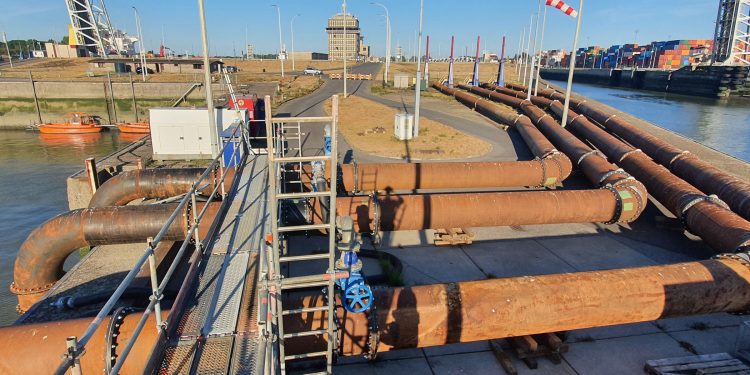
With an ongoing drought in Flanders, De Vlaamse Waterweg (The Flemish Waterway) and the Port of Antwerp-Bruges have decided to install four temporary pumps at the Berendrecht lock.
These will pump additional water across from the Scheldt to the docks if necessary.
Together, the pumps can pump 4 cubic m of Scheldt water into the docks per second, which equates to one Olympic swimming pool every 11 minutes.
Under normal circumstances, the water level in the docks is replenished by releasing water from the Scheldt into the docks through the drainage channels along the lock complex.
Because dock water is being pumped back into the Albert Canal during this period of drought, this method is no longer sufficient and additional solutions must be sought.
After the Port of Antwerp-Bruges conducted successful tests with mobile pumps in the spring of 2021, De Vlaamse Waterweg installed a temporary pumping facility at the Berendrecht lock this summer.
As of the start of last week, this facility is in operation, while the port expects that this installation will be needed at least until the end of September 2022.
Meanwhile, due to low water levels at the Albert Canal, De Vlaamse Waterweg is using water sparingly and aiming to work as efficiently as possible, for example by having ships pass through the locks in groups.
These measures are still currently insufficient and therefore, in addition to the fixed pump installations at the lock complexes on the Albert Canal in Olen, Ham, Hasselt and Diepenbeek, De Vlaamse Waterweg placed additional mobile pumps at the Wijnegem and Genk locks that pump water back to the upstream part of the canal.
The canal, which is the source for 40% of the drinking water in Flanders, connects the Port of Antwerp-Bruges with the hinterland along which many companies and industries are located.
However, canal water supply is normally supplied by the Meuse, which is now at an all-time low.