European ports are investing in alternative fuels and low-emissions tugs to reduce their environmental footprint
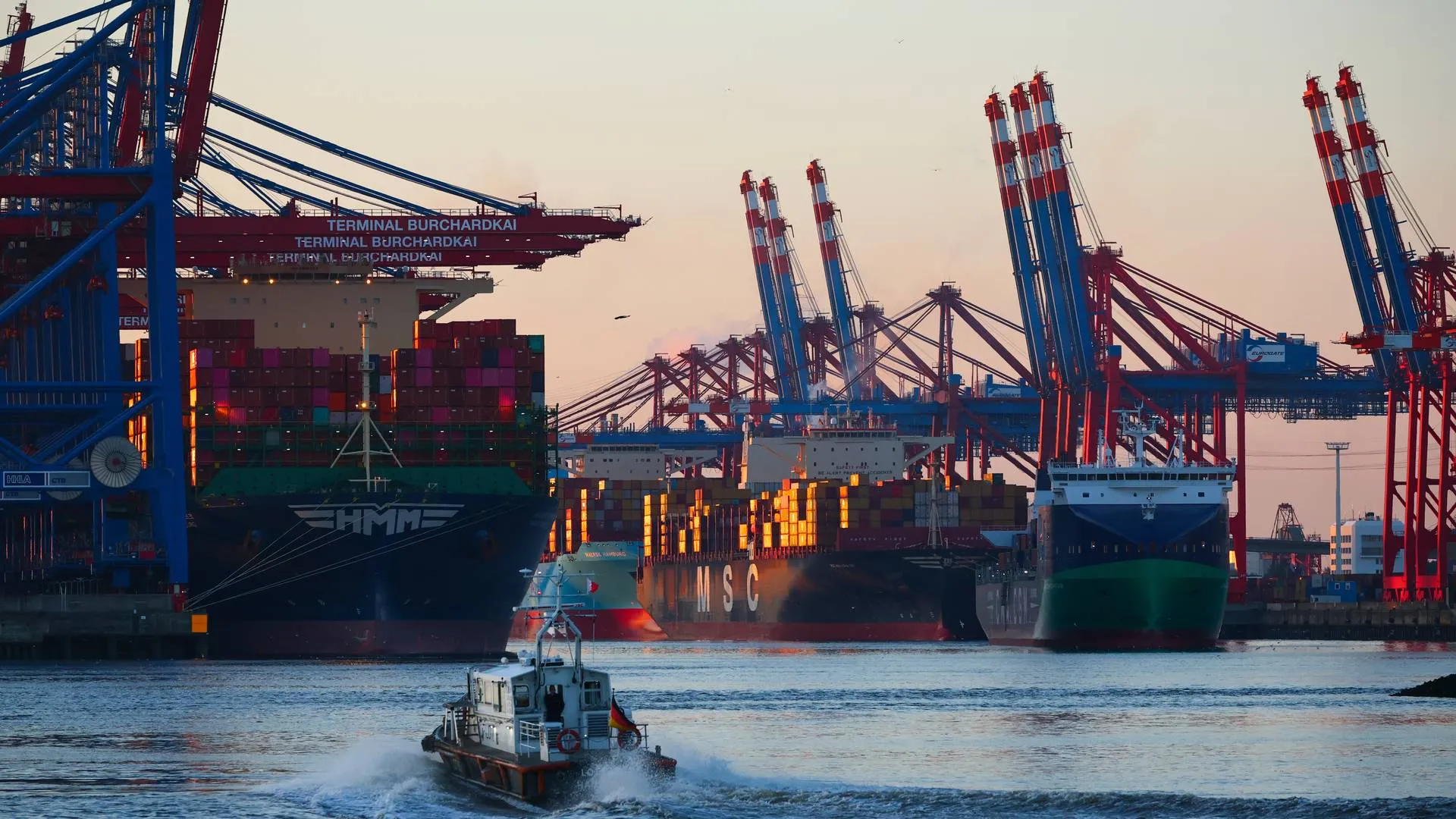
Ports in Europe are tackling the challenge of reducing their environmental footprint while increasing trade and ship calls. They are investing in bunkering facilities for alternative fuels, installing ship charging stations and are optimising port calls. Introducing tugboats with lower emissions, that use sustainable fuels or batteries, is helping port operators to reach their own green-port goals.
In April 2022, Antwerp and Bruges in Belgium completed the merger of their port companies to form what they are calling Europe’s largest export port, and one driven to become the greenest.
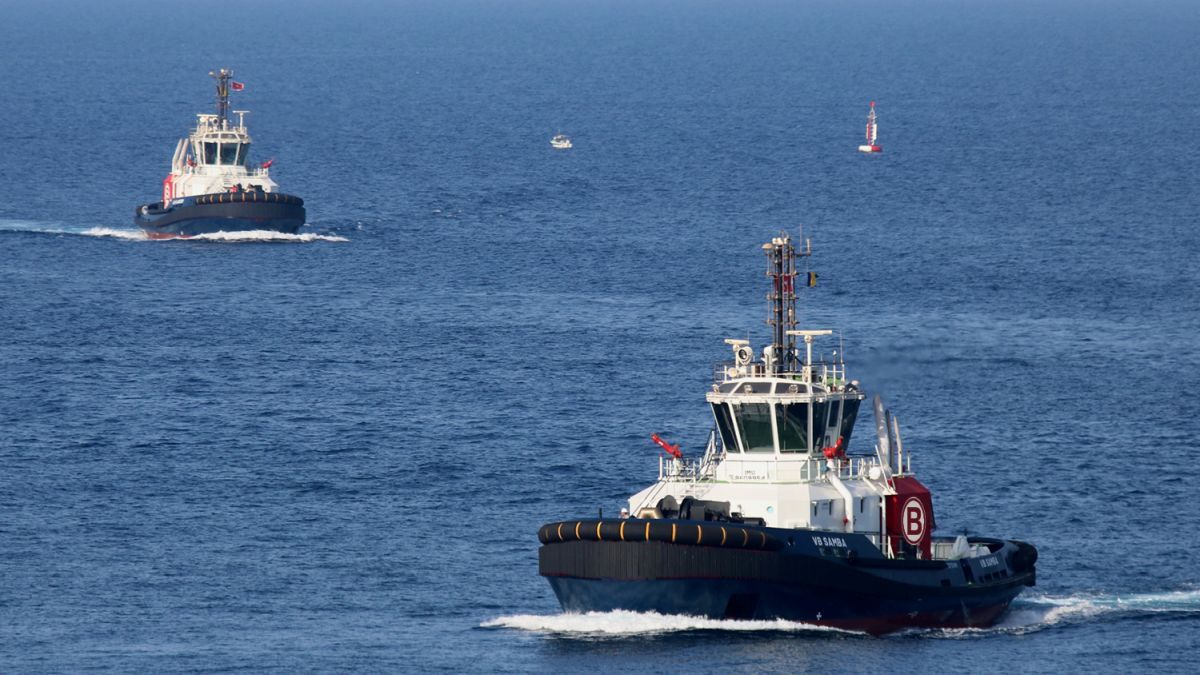
The newly created Port of Antwerp-Bruges (including Zeebrugge) will remain strong on roro, breakbulk, chemical and container traffic, while boosting LNG transhipment and developing bunkering infrastructure for alternative fuels such as hydrogen and methanol. Tugs in Zeebrugge, operated by Boluda Towage, have propulsion complying with IMO Tier III emissions, with exhaust treatment for removing NOx and particulate matter.
In Antwerp, the port operator has IMO Tier III tugs, is investigating powering port vessels on methanol and hydrogen, and is building refuelling and recharging stations to fulfil future demand.
Combined, the two port locations handle 289M tonnes of marine freight traffic annually with the largest share in containers followed by liquid bulk. In 2021, the ports handled 14.2M TEU of containers, which makes it the second largest in Europe.
“The unified port is the economic engine of Flanders and the largest export port, largest throughput port for vehicles, and the leading chemical hub in Europe,” says Port of Antwerp-Bruges president and Antwerp vice mayor Annick De Ridder. “At the same time, Port of Antwerp-Bruges has major ambitions to become the energy gateway to Europe as a green port.”
Port investments will raise container capacity with additional terminal space and a maritime logistics zone. The port operator will also focus on bolstering interconnectivity between the Antwerp and Bruges sites to achieve economies of scale.
The Port of Antwerp-Bruges will extend its pioneering project for the capture, storage and reuse of CO2 via Antwerp@C. The first 2.5M tonnes of CO2 will be captured from industry in the port by 2025. This CO2 will be stored and eventually reused as a raw material.
In addition, the unified port will take a leading role in the roll-out of the hydrogen economy, including the first hydrogen-powered harbour tug. By 2028, Port of Antwerp-Bruges plans to have the capacity to receive the first green hydrogen molecules.
It is expanding terminal capacity for existing and new hydrogen carriers at both port sites. A hydrogen pipeline between the two sites and towards the European hinterland will ensure the port area and, by extension, Belgium and a large part of Europe, can use this carrier for renewable energy.
In Sweden, the Gothenburg Port Authority aims to become the primary bunkering hub for renewable methanol in northern Europe. It intends to reduce shipping emissions by 70% within the port area.
As part of this, Gothenburg will offer ship-to-ship methanol bunkering. It gained acceptance from the Swedish Transport Agency for methanol operating regulations in April. A variety of other fuels will also be provided to lower emissions.
Gothenburg Port Authority chief executive Elvir Dzanic expects shipowners such as Stena Line, Maersk and X-Press Feeders to start routeing methanol-fuelled vessels to the port, which is the largest in Scandinavia. Port of Gothenburg is also setting up a supply chain, including onsite storage, to provide environmental methanol in the port by 2024.
In the UK, the Port of Dover unveiled its plans to become carbon net zero for scope 1 and 2 emissions by 2025 and carbon neutral, including scope 3, in 2030. It has identified opportunities to provide clean power to ships, including P&O Ferries’ new hybrid-propulsion vessels at berth.
The UK’s largest port for trade with the EU has installed 1.56 MW of solar panels, producing around 834 MWh of renewable energy per year. It intends to increase its generation and sourcing of renewable energy in the future. Port of Dover already ensures no waste goes to landfill by implementing waste reuse, recovery or recycling.
“We can and must lead the way by delivering a profound improvement in the overall carbon footprint of UK supply chains, which we can do much faster because of our geographic advantage,” says Port of Dover chief executive Doug Bannister.
He says the port intends to be the world’s first high-volume green shipping corridor. The port will be investing in alternative fuels, port electrification, offsetting and minimising carbon emissions in procurement and development projects, partnering with stakeholders in the community, supply chains, sister ports and shipowners.
The Port of Milford Haven, where Svitzer operates a fleet of tugs, has taken steps to reduce emissions. This Welsh port has upgraded its vehicles to be fully electric and has installed a hydrogen fuelling station.
In the Port of London, Svitzer is offering its carbon neutral EcoTow for escorting and manoeuvring ships into and out of terminals to more than 250 shipowners and operators using the PortsDirect platform.
This enables shipping companies to cut scope 3 carbon emissions from towage services, using Svitzer’s tugs fuelled with sustainably sourced biofuels. Up to 10 tugs working in the Thames Estuary and Medway River run on sustainable second-generation biofuels derived from hydrogenated vegetable oil.
In Singapore, the Maritime and Port Authority of Singapore (MPA) is working with partners – BW Group, BHP, Eastern Pacific Shipping, DNV, Ocean Network Express and Sembcorp Marine – to form the Global Centre for Maritime Decarbonisation. This centre will work with other companies on low or net-zero emissions projects and programmes, including knowledge sharing, data analytics, and green corridor development.
MPA and IMO have jointly launched NextGen Connect, a database which aims to bring industry stakeholders, academia and global research centres together to develop solutions on maritime decarbonisation for trials along specific shipping routes.
MPA assistant chief executive Kenneth Lim says Singapore has invested in green fuels bunkering. “LNG is a viable and clean transitional marine fuel.” Keppel Smit Towage and PSA Marine operate tugs powered by LNG fuel.
These investments are guided by Maritime Singapore Decarbonisation Blueprint 2050.
“The Port of Singapore will support the decarbonisation of international shipping through a multi-fuel transition, including ammonia bunkering,” says Mr Lim.
“We also have co-funded projects on the electrification of harbour vessels, bringing in researchers, technology partners, harbour craft operators and shipyards together to catalyse new solutions to be commercialised.”
Low and zero-emissions port concepts
Navtek Naval Technologies has developed the low-emissions electric port as a concept for reducing greenhouse gases. This Leeport concept is the first stage of a future zero-emissions electric port (Zeeport) design from the architects.
Both Leeport and Zeeport decouple economic development and emissions in ports. Navtek general manager Ferhat Acuner says the next steps are to further develop renewable energy generation in ports.
“The port will produce its own renewable energy combined with different renewable technologies, such as solar; wind, biomass and hydrogen storage.”
“Leeport is an integrated approach that encapsulates nature protection, water resource management, marine ecology, waste and air quality and strong stakeholder participation.”
Mr Acuner says these ports would need to employ zero-emissions vessels, such as those built to Navtek’s Zeetug designs to meet emissions targets.
Four of these zero-emissions tugs are being built at Navtek’s new shipyard in Turkey with progress made on the hulls for the first two.