A loaded bulk carrier, vessel A, was heading 022° in very restricted visibility. The Master and Chief Officer (CO) were in the wheelhouse with a helmsman and lookout. The engine was put on stand-by and the vessel speed was reduced from 13 to about 11 knots. The bridge team noticed a vessel (B) on the radar at a distance of about six nm on a near reciprocal course approaching at a speed of six knots.
The Master ordered a course alteration from 022° to 050°. The distance to vessel B was now 3 nm with a CPA of only 490m. Once on a heading of 050° the Master ordered ‘Steady’.
About this time the CO called vessel B on VHF radio and agreed to a port-to-port meeting, although the communication was hampered by language difficulties and ambiguous statements. Soon after the Master of vessel, A ordered a course of 060°.
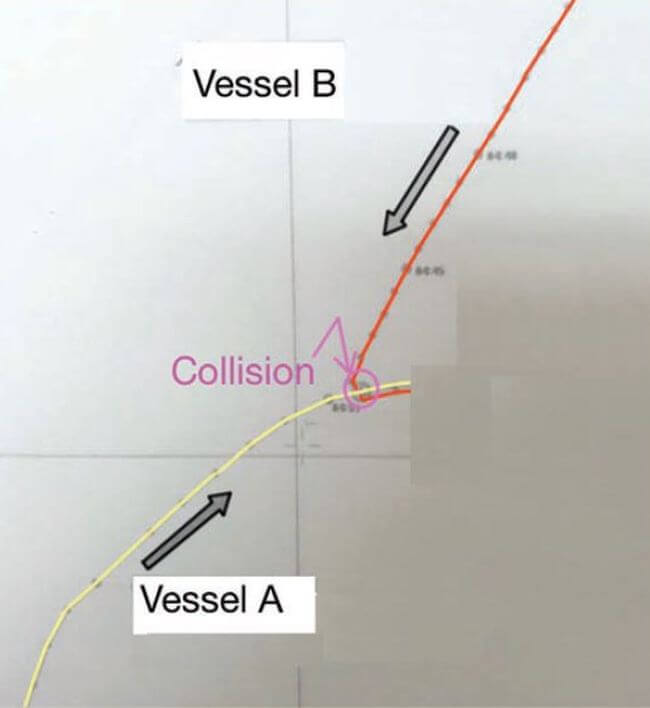 Image Credits:
A few minutes later vessel B started turning to port, instead of turning to starboard as was expected for a port-to-port passing. The Master on vessel A ordered 070° and then 080°. Shortly thereafter a green light was spotted ahead and they felt the vibration of an impact. The engine was stopped and the alarm sounded. Once the vessels disengaged, vessel B sank while vessel A had water ingress into its forepeak tank.
Since the vessels were close to shore the local coast guard rendered assistance to the crew of vessel B who had abandoned into a life raft.