Opening doors to welcome distant guests, planning deeply for the future——
Shandong: Linking domestic and international, accelerating the creation of a new highland for high-level opening up
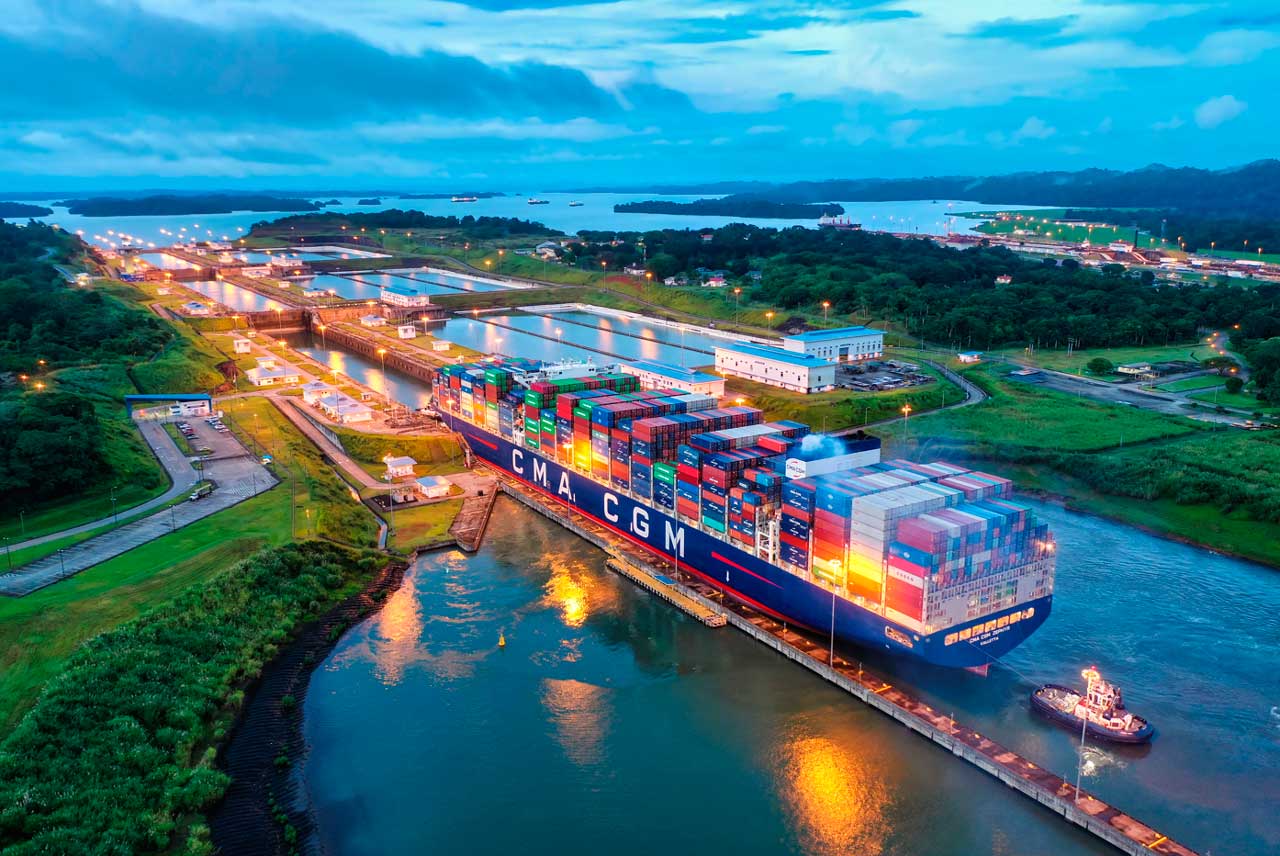
Opening doors to welcome distant guests, planning deeply for the future. From June 15 to 17, the 7th Qingdao Summit of Multinational Corporations was held. Also by the Jiaozhou Bay, at the Qingdao Port terminal of Shandong Port Group, tower cranes stand like a forest, container trucks shuttle back and forth, massive ships sound their horns as they enter the port, and cargo loading and unloading proceeds smoothly, presenting a bustling scene.
On the coast of the Yellow Sea, a thousand sails compete; above the blue, momentum surges. Since the first Qingdao Summit of Multinational Corporations was held in 2019, Shandong has continuously deepened reforms, proactively aligned with high-standard international economic and trade rules, comprehensively enhanced its level of opening up, and grown increasingly closer in communication and cooperation with multinational corporations. Its open economy has continuously reached new levels, and it is accelerating its transformation into a new highland for attracting foreign investment and deepening international cooperation.
Building high-energy platforms to promote deeper international cooperation
This summit received widespread attention and positive responses from global multinational corporations. A total of 425 enterprise guests participated, including 322 guests from multinational corporations outside China, representing 44 countries and regions across six continents, covering both developed economies and emerging market countries. With the theme “Multinational Corporations and China—Embracing the 15th Five-Year Plan for a New and Shared Future,” the summit was based on the important starting point of the 15th Five-Year Plan, closely focused on the core positioning of deepening cooperation between multinational corporations and China, and comprehensively built a high-energy platform for policy communication, industrial对接, and economic and trade cooperation.
This summit featured 29 main activities across three categories—opening ceremony and main forum, meetings and talks, and parallel forums—along with multiple supporting activities for industrial chain investment promotion. Each activity closely revolved around the main line of cultivating new quality productive forces, promoting the deep integration of trade, investment, and consumption.
“We innovated the industrial对接 model of the summit, shifting from ‘comprehensive coverage’ to ‘precise empowerment.’ Focusing on Shandong’s development ‘focal points’ and the ‘demand points’ of multinational corporations, we organized ‘one-on-one’ supply-demand对接 meetings, guiding multinational corporations to deeply participate in the intelligent and green upgrade of traditional industries with advanced technology and management experience,” said Wang Lei, Director of the Shandong Provincial Department of Commerce.
Over the years, the Qingdao Summit of Multinational Corporations, as a major high-energy platform for international exchange and cooperation meticulously built by Shandong Province, has effectively promoted policy dialogue, industrial对接, and project cooperation between the government, local enterprises, and multinational corporations.
Mutual benefit and shared path. The SCO Demonstration Area, also located on the coast of the Bohai Bay, has continuously supported international economic and trade cooperation in recent years. Previously, the “Export China·SCO Select” China (Shandong)—SCO Countries Import Commodities Procurement对接 Meeting was held in the SCO Demonstration Area in Qingdao, Shandong. The event attracted approximately 400 domestic and foreign guests, including local government economic and trade officials from SCO countries.
Zhang Yingying, Chairman of Qingdao Fulewei Machinery Technology Co., Ltd., deeply felt the driving effect of economic and trade cooperation in the SCO Demonstration Area. “We are a company producing plastic machinery and have actively embraced cross-border e-commerce in recent years. The increasing number of international economic and trade activities in the SCO Demonstration Area has injected confidence and momentum for enterprises to explore overseas markets,” Zhang said.
In addition to comprehensive international exchange and cooperation platforms like the Qingdao Summit of Multinational Corporations and the SCO Demonstration Area, Shandong also utilizes more targeted定向 exchange platforms, such as the 7th China-CEEC Local Leaders’ Meeting and the Shandong International Sister Cities Cooperation and Exchange Week, to achieve economic and trade connectivity, cultural exchange, and educational mutual learning with relevant countries.
Chen Baiwei, Director of the Foreign Affairs Office of the Shandong Provincial Committee, stated that this year marks the beginning of the 15th Five-Year Plan. Shandong will closely follow the main objectives of the 15th Five-Year Plan, further deepen exchanges and interactions with neighboring countries, countries involved in the Belt and Road Initiative, APEC members, and other countries and regions, and build a broad, multi-level, and high-quality pattern of foreign exchanges.
Innovating institutional opening up to shape new advantages in economic and trade cooperation
“We have built cooperation platforms to promote institutional innovation in trade, investment, and finance. Many cooperation projects have already been implemented,” said Lin Changhua, Deputy Director of the Management Committee of the SCO Demonstration Area. The Management Committee of the SCO Demonstration Area previously collaborated with the Qingdao Branch of the People’s Bank of China and the Cross-border Interbank Payment System (CIPS) to establish the CIPS SCO Cross-border Innovation Laboratory. It issued CIPS cross-border guarantees for enterprises in the demonstration area. By standardizing the message standards for guarantees between banks and between banks and enterprises, these guarantees are used for financing guarantees in scenarios such as cross-border engineering contracting, cross-border goods trade, and cross-border service trade, effectively promoting the development of cross-border RMB business among SCO countries.
Such innovations in institutional opening up are not uncommon in the SCO Demonstration Area. Han Xingang, Deputy Director of the Reform Office of the Qingdao Municipal Committee, said that the SCO Demonstration Area has cumulatively introduced 138 institutional innovation achievements, establishing an innovation coordination system of “logistics capacity expansion, trade quality improvement, science-industry linkage, and people-to-people connectivity,” comprehensively demonstrating the significant results of transitioning from “building platforms” to “using platforms.”
In Linyi City, the largest small commodity distribution base in northern China, the internationalization of Linyi Commercial City has been listed as a “key project,” actively promoting “Commercial City going global.”
To transform enterprises’ spontaneous exploration into systematic global outreach, Linyi issued a mobilization order for “Hundreds of Groups, Thousands of Enterprises·Commercial City Going Global,” set up a special fund of 80 million yuan, and introduced 22 support measures. Sun Baoan, President of the Linyi Wholesale Traders Association, introduced that in May this year, he led 50 enterprises to Uzbekistan to hold a high-quality product expo, and in July, he will organize 180 enterprises to go to Angola in Africa. “Previously, enterprises going global fought alone; now, with government support, the customer acquisition rate for enterprises is higher,” Sun said.
The continuous and deepening institutional opening up has also significantly optimized the business environment, strengthening the confidence of many foreign-funded enterprises to invest in Shandong.
At Asia Symbol (Shandong) Pulp and Paper Co., Ltd., located in the Rizhao Economic and Technological Development Zone in Shandong, production is orderly inside the factory, and transport trucks are constantly entering and exiting, presenting a busy scene. This foreign-funded enterprise has increased its capital in Shandong more than twenty times over the past 20 years, with a cumulative investment of nearly 30 billion yuan.
Wang Weiguo, Director and Deputy General Manager of the company, said: “Rizhao has unique geographical advantages and a good business environment. We are very confident in the company’s future development.”
Liu Xiaoning, Director of the Institute of International Economics and Politics at the Shandong Academy of Social Sciences, stated that as a major economic and open province, Shandong has both the capability and the responsibility to “take the lead” in promoting institutional opening up. Nowadays, more and more cities in Shandong are stepping onto the international “big stage” through institutional opening up.
Building an international logistics corridor to accelerate land-sea and domestic-international linkage
At the Jinan Dongjia Railway Freight Center, with the sound of a whistle, a Shandong China-Europe Railway Express train slowly departed from the station. In the first four months of this year, Jinan’s China-Europe Railway Express trains dispatched a total of 439 trains, a year-on-year increase of 64.4%. The “steel dragons” departing from the land of Qilu, galloping along the golden Eurasian corridor, have become a “stable increment” for Shandong’s opening up. Staff from the Market Operations Department of Shandong Hi-speed Qilu Eurasia Railway Express Operation Co., Ltd. stated that with the increase in routes and countries covered, Shandong is building an international logistics corridor connecting Japan and South Korea in the east and Europe and Asia in the west.
As the only outlet to the sea in the Yellow River Basin, Shandong leverages its advantages of numerous ports and a developed sea-rail intermodal transport network to build a land-sea corridor along the Yellow River, actively connecting provinces in the Yellow River Basin, helping to reduce costs and increase efficiency for logistics along the route, and striving to become an important node for smoothing the domestic and international dual circulation.
At the Rizhao Port of Shandong Port Group, accompanied by the roar of trains, a train满载 with coal from the Shanxi region slowly entered along the railway. Every day, bulk goods such as coal from Shanxi, Shaanxi, and other provinces along the Yellow River are loaded onto ships at Rizhao Port and then transported to major power plants, steel mills, and key enterprises along the southeastern coast. “To facilitate the transportation of goods from provinces along the Yellow River, we have moved the ‘outlet to the sea’ of Shandong Port to the ‘doorstep’ of enterprises in inland areas,” said Wang Wei, Chairman of Shandong Port Logistics Group. Currently, Shandong Port has established 56 inland ports domestically and opened 108 sea-rail intermodal train routes.
The land-sea linkage has achieved significant results, and Shandong continues to enrich the “capillaries” of its logistics corridors. Recently, a transport vehicle displaying a TIR sign,满载 with local building materials from Linyi, sped all the way to Kazakhstan. “Under the TIR system, it is possible to achieve ‘one declaration, one vehicle to the end, one certificate direct arrival,’ realizing ‘door-to-door’ and ‘point-to-point’ cross-border road transport,” said Xian Youtao, General Manager of Shandong Linmanou International Logistics Co., Ltd.
Currently, TIR international road transport has been launched in multiple cities including Jinan, Qingdao, and Linyi, not only improving cross-border logistics efficiency but also providing enterprises with more international trade opportunities. Xin Yang, Deputy Director of Jinan Customs, stated that in the first quarter of this year, the number of TIR export trips from Shandong increased by 46%.
In recent years, to further promote opening up towards higher levels, broader fields, and better structures, Shandong issued the “Implementation Opinions on Building a New Highland for High-Level Opening Up,” proposing to improve the systems and mechanisms for high-level opening up, comprehensively enhance the radiation-driven capacity of the international logistics corridor, strengthen the ability to gather global resources and factors, and consolidate and enhance its strategic position in the national opening up landscape.
“Opening up is a distinctive feature of Chinese-style modernization. Shandong has achieved remarkable results in stabilizing foreign trade, attracting foreign investment, promoting innovation, and strengthening corridors, fully demonstrating the responsibility of a major economic province to ‘shoulder the heavy load,’” said Hong Junjie, President of Shandong University of Finance and Economics. (Shao Luwen)
Source: Xinhua Daily Telegraph