In recent years, the Shenzhen Municipal Transport Bureau has anchored its goals on building an international comprehensive transport hub city, using the national comprehensive freight hub supply chain reinforcement and enhancement initiative as a lever. Focusing on infrastructure upgrades, multimodal transport innovation, and policy service optimization, it has driven the continuous leap in the capacity level of freight hubs, providing solid support for reducing costs and increasing efficiency in the real economy and for the high-quality development of foreign trade.
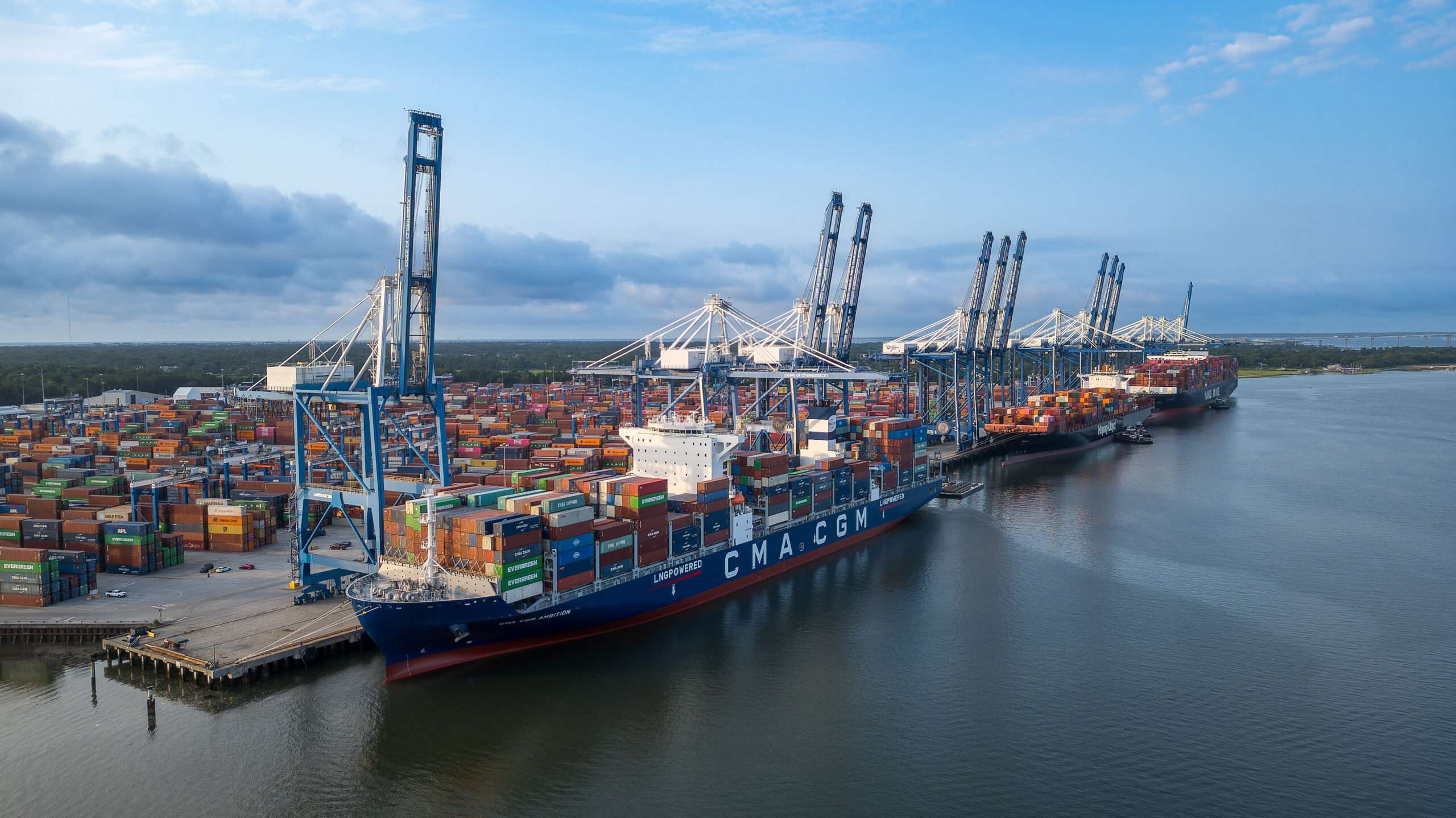
Data shows that in the first three quarters of 2025, Shenzhen Airport’s cargo and mail throughput reached 1.68 million tons, a year-on-year increase of 11.1%; the container throughput of Shenzhen Port reached 26.2 million TEUs, a year-on-year increase of 5.4%, steadily ranking fourth globally and third domestically.
Hub Quality Improvement and Corridor Capacity Expansion, Strengthening the Hardware Foundation of Logistics
Hard connectivity of infrastructure is the core support for reinforcing and enhancing the supply chain. Shenzhen focuses on key nodes such as the airport, seaport, and railway port, accelerates the construction of major projects, and weaves a dense logistics corridor network connecting the interior and exterior, using hardware upgrades to break transport bottlenecks.
The capacity expansion and upgrade of the airport hub have achieved significant results. The Shenzhen Airport East Area International Express Cargo Terminal No.1 and the South Area Domestic Transfer Warehouse have been successively completed and put into operation, bringing the total logistics facility area to 1.2 million square meters and significantly improving cargo handling efficiency.
Shenzhen Airport has cumulatively opened 43 international and regional routes, covering 5 continents, 27 countries and regions globally; its cargo and mail throughput in 2024 was 1.881 million tons, ranking first in China for domestic air cargo volume.
Shenzhen Airport innovatively established 7 off-site aviation pre-warehouses. The Jiangmen (Jianghai) pre-warehouse promotes the efficient operation of the “Bay Area cargo collection – Shenzhen cargo consolidation – global direct flights” model, facilitating the integration of logistics resources on both sides of the Pearl River Estuary.
The capacity level of the seaport hub is steadily improving. Shenzhen Port has built 75 berths of 10,000 tons or more, including 47 dedicated container berths, and has opened 275 international liner routes covering 12 major shipping areas across 6 continents.
The construction of the Yantian Port East Operation Area and the Shenshan-Xiaomo International Logistics Port is in full swing. Among them, Xiaomo Port’s export volume in October 2025 approached 17,000 vehicles, setting a new monthly record since the port opened. After the completion of its second phase, it will have an annual vehicle transport capacity of 1 million units, aiming to become a hub port for Ro-Ro foreign trade vehicles in South China.
The Pingyan Railway renovation project, as a core carrier for optimizing Shenzhen’s “highway-to-railway” transport structure, has entered a critical construction phase. Upon completion, it will achieve efficient connection between Yantian Port and the national railway network.
The Shenzhen International Comprehensive Logistics Hub Center innovates with the “logistics park above railway + stratified building ownership confirmation” model. Its main steel structure has been topped out. After completion, it will become Asia’s largest “highway-railway-sea” multimodal transport center.
Land corridor expansion has achieved new breakthroughs. The Pinghunan Logistics Hub launched the first “Trans-Caspian” rail-sea intermodal international freight train to Georgia, saving 20 days compared to traditional sea transport.
Cross-border freight transport using the Guangdong-Hong Kong-Macao Greater Bay Area’s own TIR (International Road Transport system) vehicles commenced, realizing “single declaration, one certificate throughout, direct vehicle transport”. The road transport time from Shenzhen to Almaty is only half that of rail and the freight cost is one-quarter that of air transport, filling the gap in Shenzhen’s international road transport.
Major transport projects such as the Shenzhen-Zhongshan Link, the Second Phase of the Yanjiang Expressway, and the Mawan Cross-Sea Tunnel have been completed and opened to traffic. The renovation and expansion project of the Jihé Expressway is progressing orderly. The comprehensive “ground + three-dimensional” transport network provides solid guarantee for the efficient operation of the hubs.
Model Innovation and Collaborative Empowerment, Activating Logistics Development Momentum
Shenzhen adheres to innovation-driven solutions for development challenges. Through the integration of multimodal transport, empowerment by smart logistics, and regional collaborative linkage, it promotes the transformation of freight hubs from “hardware upgrade” to “quality and efficiency improvement”, achieving dual enhancement in logistics efficiency and trade facilitation.
Multimodal transport models continue to innovate and break through. The sea-rail intermodal system is continuously improved. Shenzhen Port has cumulatively opened 27 inland ports, covering South China, Central China, and Southwest China. The export laden container volume via sea-rail intermodal transport at Yantian Port Area has seen positive growth for six consecutive years.
The “Chongqing-Shenzhen” and “Liling-Yantian Port” routes were selected as national典型案例 (typical cases) for rail-water intermodal transport, with transport efficiency improved by 60% and 77% respectively. The “Rong-Shen Port Scheduled Train” shortened the transport time from Chengdu to Yantian Port from 6 days to 2 days, reaching Hong Kong’s Kwai Ching Port Area in just 3 days.
The nation’s first China-Kyrgyzstan-Uzbekistan international rail-road intermodal freight train was successfully dispatched. Innovative customs clearance methods improved efficiency by over 30%, saving 2-3 days in time.
Urban logistics innovation is accelerating. A major breakthrough was achieved in rail logistics, with the nation’s first rail logistics station put into operation. The “air drone + ground station + underground unmanned vehicle + subway” air-rail intermodal network handles over 30,000 express parcels daily, saves 50% in drone cargo collection time, and reduces ground logistics vehicle mileage by over 1 million kilometers annually.
“High-speed rail + logistics” is steadily expanding, with freight lines opened to 14 cities, achieving a freight volume of 9,239 tons in 2024.
Smart logistics and policy optimization drive progress together. As the nation’s first “smart and remote” supervised international cargo terminal, Shenchang International Cargo Terminal, through integrated allocation and cross-border fast customs clearance models, has reduced the dwell time of import and export cargo in the warehouse by 82% and 33% respectively.
The “Guangdong-Hong Kong-Macao Greater Bay Area Combined Port” reform continues to deepen, with 49 routes cumulatively opened, covering 12 cities. In 2024, this model handled a container throughput of 405,800 TEUs, a year-on-year increase of 30.57%.
The departure port tax rebate policy was piloted at Yantian Port, allowing foreign trade enterprises to receive tax rebates 4 to 6 weeks earlier, directly driving a 15% growth in water-water transshipment business.
Regional coordination mechanisms demonstrate cooperative results. Shenzhen took the lead with Zhuhai and Ganzhou to establish a joint working mechanism with online and offline interaction, successfully passing the 2024 national performance evaluation for the implementation of the comprehensive freight hub supply chain reinforcement and enhancement initiative.
Based on their respective strengths, the three cities collaborate and divide labor: Shenzhen leverages its advantages in capital, technology, and market; Zhuhai strengthens its regional linkage function; and Ganzhou provides support relying on its inland hinterland resources, forming a favorable pattern of complementary advantages and coordinated development.
In the future, Shenzhen will continue to aim at building a world-class comprehensive freight hub system, continuously enhance its ability to allocate global logistics resources, provide more solid transport and logistics support for the integrated development of the Guangdong-Hong Kong-Macao Greater Bay Area and the Belt and Road Initiative, and play a greater role in building a new development pattern with domestic and international dual cycles reinforcing each other.