The decision comes just one day after the IMO began coordinating the phased movement of hundreds of merchant vessels and more than 11,000 seafarers trapped in the region following months of conflict.
IMO Secretary-General Arsenio Dominguez said the operation has been paused while the organization reassesses whether sufficient safety guarantees remain in place for participating vessels.
“Following the launch of the IMO’s evacuation plan, through which several vessels have already been successfully evacuated, I have decided to temporarily pause its implementation in order to reconfirm that the necessary safety guarantees continue to be in place for the ships on our evacuation list and all those in the region,” Dominguez said.
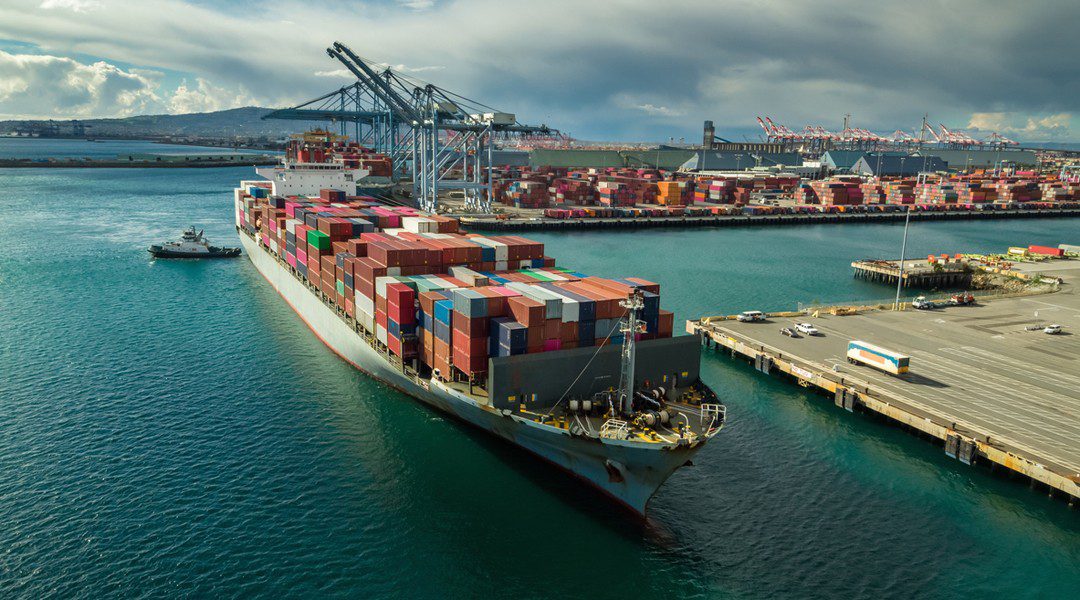
The decision follows Thursday’s attack on a Singapore-flagged containership after it transited the Strait of Hormuz. According to UK Maritime Trade Operations (UKMTO), the vessel was struck on its starboard side by an unknown projectile approximately 7.5 nautical miles southeast of Dahit, Oman, damaging the bridge. The ship’s master reported no casualties or environmental impact.
Dominguez emphasized that the attacked vessel was not participating in the IMO-led evacuation.
“I have been informed of an attack today in the Gulf of Oman on a vessel which passed through the Strait of Hormuz. This vessel did not transit under IMO’s evacuation framework,” he said.
“I have always reiterated that the safety of the seafarers remains paramount. Therefore, to ensure a coordinated approach and navigational safety, the evacuation plan will be paused until further clarity is obtained.”
The suspension has now been formally communicated to the industry through UK Maritime Trade Operations, which issued an advisory confirming that the IMO-supported vessel movement process is “paused until further notice.”
UKMTO said it will not notify vessels regarding inclusion in IMO planning batches while the suspension remains in effect and urged operators to continue monitoring IMO communications, coastal state guidance, Notices to Mariners, and the latest Joint Maritime Information Center (JMIC) security assessments before undertaking voyages.
Iran’s Persian Gulf Strait Authority (PGSA) appeared to reinforce its claim over Strait of Hormuz transit procedures Thursday, warning that ships using routes outside its designated framework would not be covered by “safe passage guarantees” or insurance-related protections.
“Any passage through routes outside the framework designated by PGSA will not be covered by safe passage guarantees and will not be entitled to insurance coverage or related liabilities,” PGSA said in a statement posted to X.
The agency added that any consequences from using unauthorized routes would fall on the “owner, operator, and vessel commander.”
The attack also drew concern from shipping industry groups that had supported the IMO’s phased reopening of the Strait.
“BIMCO is deeply concerned with the recent attack on a merchant ship transiting the Strait of Hormuz using the inshore traffic zone off Oman,” said Jakob Larsen, BIMCO’s Chief Safety & Security Officer.
Larsen described the incident as “a set-back in the plans to evacuate ships and resume transits through the Strait of Hormuz,” although he said some transits could still be expected to take place.
He added that the incident highlighted the need for greater clarity in the agreement between Washington and Tehran.
“The situation underscores the importance of clear and unambiguous agreements between the U.S. and Iran regarding a resumption of maritime traffic through the Strait. The wording of the U.S.-Iran MoU is currently not sufficiently clear,” Larsen said.
BIMCO urged shipowners to factor the latest developments into their voyage risk assessments and continue following the industry’s Best Management Practices for Maritime Security and scenario-specific guidance.
The latest assessment from the Joint Maritime Information Center, issued before the attack, had pointed to gradual improvements in the security environment. JMIC lowered the regional maritime security threat level to MODERATE following the U.S.-Iran memorandum of understanding and reported that commercial traffic through the Strait of Hormuz was increasing via both the southern Omani corridor and the northern Iranian-controlled route. At the same time, it cautioned that GNSS interference, IRGC hailing and surveillance activity, and the risk posed by drifting naval mines remained ongoing.
Earlier Thursday, Iran’s Islamic Revolutionary Guard Corps (IRGC) renewed radio broadcasts stating that vessels required Iranian permission to transit the Strait using designated routes. Following the attack, EOS Risk Group head Martin Kelly said the Singapore-flagged container ship had been struck after the repeated warnings, though no group has claimed responsibility for the incident.
The suspension marks a significant setback for the internationally coordinated effort to restore commercial shipping through one of the world’s most important maritime chokepoints. Under the plan launched this week, vessels were instructed to remain in place until contacted individually before transiting through a temporary corridor established in coordination with Oman.
The announcement also came on the International Day of the Seafarer, a global observance recognizing the world’s 1.8 million merchant mariners.
“Today marks the Day of the Seafarer, underlining the importance of ensuring that the continued evacuation of the thousands of seafarers stranded in the Persian Gulf can proceed without the risk of them becoming collateral victims in this geopolitical conflict,” Dominguez said.
The IMO said the evacuation operation will remain suspended until greater clarity is obtained on the security situation and it can confirm that the necessary safeguards remain in place for ships and crews awaiting evacuation.