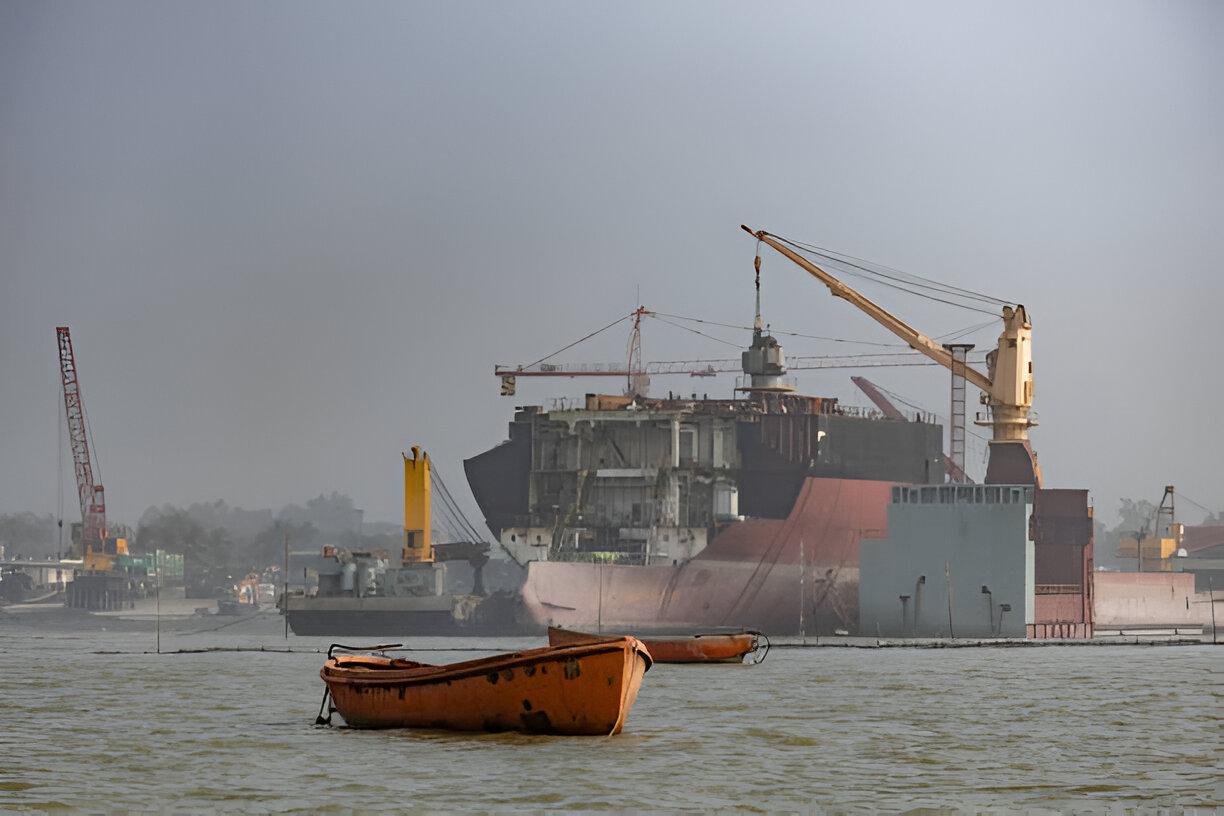
Meanwhile, “market conditions in Bangladesh remain subdued, with only a small number of financially capable buyers still active and willing to commit to new tonnage. Demand for smaller units is minimal, and although some appetite persists for mid- to large-sized vessels, overall purchasing activity remains soft and selective. Broader economic challenges across the country continue to weigh heavily on steel consumption, limiting the ability of local mills to absorb additional tonnage. Even during the winter season, which is traditionally associated with stronger steel demand, mills and end users have shown no significant increase in consumption, highlighting ongoing market weakness. More mills are shifting to cheaper sponge iron imports from India, reducing reliance on recycled steel. Similarly, the Pakistani market shows little change from previous weeks, with sentiment remaining subdued and most buyers hesitant to engage due to the lack of direction. Conditions have been stagnant for several weeks, and there are currently no strong indicators pointing to a near-term shift in demand or momentum. Finally, as noted in previous updates, the Turkish market continues to show no change, with conditions remaining exactly the same as in past weeks and no movement or fresh activity observed. There has been no improvement in sentiment or demand, and the market is simply following its usual routine, with nothing new emerging to indicate any shift in direction”, Best Oasis concluded.
In a separate report, shipbroker Intermodal commented that “last week saw limited activity across the Subcontinent. Nevertheless, notable progress was made in green recycling, with Pakistan’s first yard achieving HKC compliance and ongoing HKC yard upgrades in Bangladesh. Improving conditions in India’s steel market are providing support to ship recycling fundamentals. Buyers, however, remain largely on the sidelines, despite interest, particularly in the midsized segment. Persistent currency weakness continues to outweigh gains in steel prices and hinders recyclers’ ability to secure deals. Overall, activity at Alang has thinned considerably in recent months, reflecting a subdued outlook. Hopes for recovery are tied to a sustained strengthening in steel demand. On the trade front, India’s exports in October declined by 12% year-onyear, pressured by ongoing U.S. tariff measures. It was a subdued week for the Bangladesh ship recycling sector.
The market featured a small number of workable candidates, with few buyers able or willing to take on new tonnage. On the HKC front, progress continues as more yards achieve compliance. Meanwhile, the steel market remains sluggish, with weak demand reflecting broader economic challenges and a lack of public infrastructure investment. In Gadani, despite stagnant market, the week brought landmark news for Pakistan’s ship recycling sector, with the first domestic yard set to receive HKC approval. It is expected that several additional yards could achieve HKC compliance over the next two quarters, potentially enhancing the sector’s competitiveness. While this development provides a boost to sentiment, it is insufficient to drive meaningful market momentum, as buying interest remains poor. Meanwhile, in the steel market, subdued demand and competition from low-cost imports weighed on local prices.
The Turkish market remains on a standstill. By contrast, the steel sector is showing encouraging signs, as domestic scrap demand continues to rise. Notably, on a positive development for recyclers, local scrap price offers by mills are higher than those for imported material, reflecting a preference for local steel”, the shipbroker concluded.
Nikos Roussanoglou, Hellenic Shipping News Worldwide