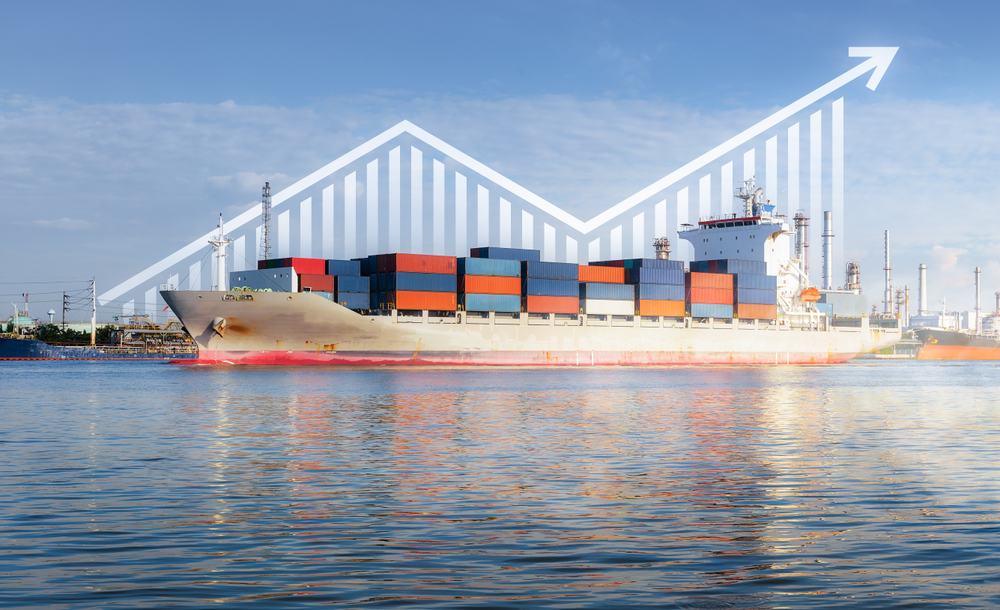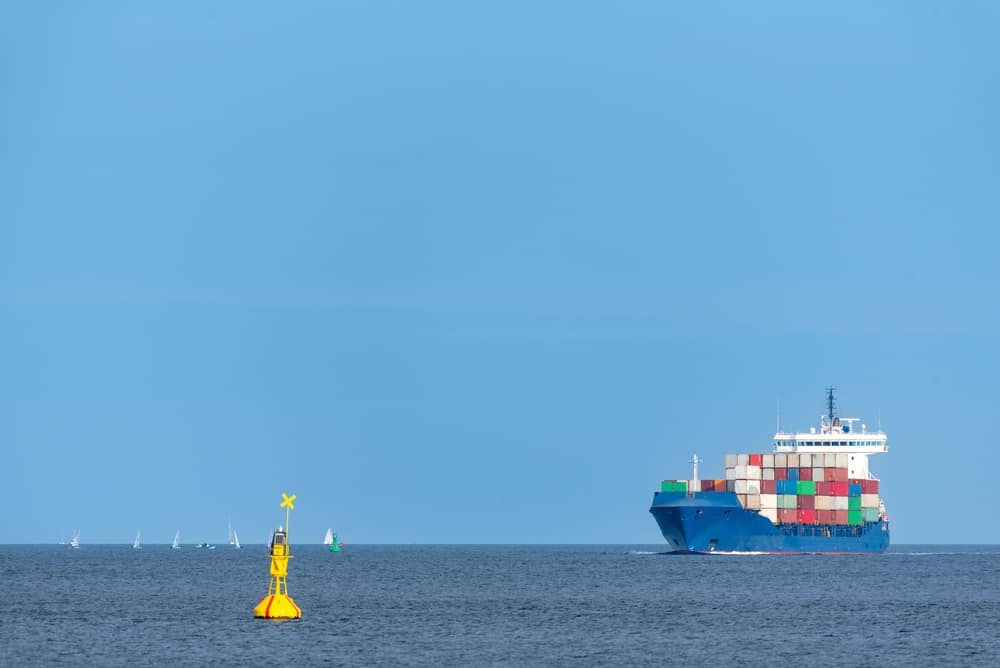
According to the Norwegian classification society DNV, LNG was chosen as an alternative fuel by 67% of new containership orders.
Thus, while containerships are leading the energy transition – accounting for 69% of global newbuilding orders in 2024 – shipping sees the most mature and realistic solution, which could serve as a bridge to zero-emission fuels, being “punished”.
According to Niels Rasmussen, chief shipping analyst at BIMCO, since none of the existing alternative-fueled ships will be recycled until 2030, the global fleet of containerships in this category will number 837 ships, with a total capacity of 10.9 million TEUs.
This number will correspond to more than one quarter of the total transport capacity that will be operating globally by the end of the decade.
As reported by BIMCO, by the end of August 2025 at least 534 containerships with the capability to use alternative fuels had been ordered, a percentage corresponding to 53% of the total order book.
It is noted that this specific sector is under the greatest commercial and environmental pressure for decarbonization – both from customers (cargo owners) and from EU regulatory frameworks.
and of the IMO.
BIMCO reports that alternative fuels are particularly popular in larger containerships, where 81% of new orders are for vessels over 8,000 TEUs, representing 85% of the new transport capacity.
According to the Lloyd’s List shipping review, European container line operators are leading in orders for alternative-fuel container ships, with the world’s third largest carrier, CMA CGM, being the first to introduce LNG dual-fuel containerships on the Asia-Europe trade, in 2020.
The French company has contracted for 176 newbuild vessels over the last eight years, which use either LNG or methanol as fuel, with 80 such vessels already in operation, including two methanol dual-fuel vessels.
CMA CGM represents approximately 24% of all dual-fuel container ships ordered to date.
The most recent new vessel order was submitted in early September 2025 for up to 10 22,000 TEU container ships, comprising six firm vessels and four options, at China’s Dalian Shipbuilding, all with LNG dual-fuel specifications.
CMA CGM is also proceeding with an upgrade of up to six existing 9,300 TEU container ships, which will be converted to methanol dual-fuel vessels at a Chinese shipyard, with the first one to be delivered in the first quarter of 2026.
Mediterranean Shipping Co, the world’s largest container operator, recently ordered six 22,000 TEU, gas-fueled containerships at two Chinese shipyards in July.
Meanwhile, Maersk – the world’s second largest shipping company and a pioneer in using methanol as fuel – has taken delivery of 15 newbuild dual-fuel container ships since 2023, while it has also ordered at least another 15.
The Danish shipping company is also reportedly planning to order another 12 LNG dual-fuel vessels, each with a capacity of 18,000 TEUs.
Maersk recently presented a program to upgrade its time-chartered fleet.
Under this program, approximately 200 vessels will be upgraded with the aim of improving fuel efficiency and cargo capacity, in an effort to reduce slot costs and emissions.
On the other hand, major Asian container shipping companies have been slower to order vessels using alternative fuels compared to their European counterparts.
The world’s fourth largest shipping company, Cosco, recently received the first of four conventional container ships scheduled to be upgraded for dual-fuel methanol operation.
The 20,000 TEU COSCO Shipping Libra arrived at Cosco Shipping Heavy Industry’s shipyard in Shanghai in June for its upgrade.
This conversion is part of a project agreed in December 2023 with engine designer Everllence for the upgrade of two 13,800 TEU and two 20,000 TEU container ships.
Cosco also retains option rights for a similar conversion of nine additional vessels.
Furthermore, in April it confirmed orders for 14 18,500 TEU methanol dual-fuel vessels, which were placed at two shipyards of the Cosco-Kawasaki Heavy Industries consortium in China for its subsidiary OOCL.