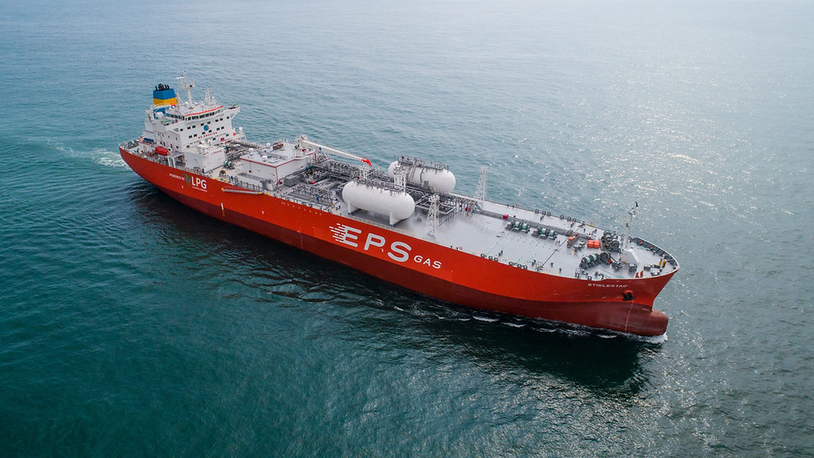
Recently, HJ Shipbuilding & Construction (HJ Heavy Industries), a South Korean mid-sized shipbuilder, obtained an Approval in Principle (AIP) certificate from the British classification society Lloyd’s Register (LR) for its developed 45,000 cubic meter /liquid ammonia carrier.
This vessel type has an overall length of 190 meters and a width of 30.6 meters, with a cargo tank capacity of 45,000 cubic meters. In addition to loading LPG such as propane and butane, it can also load various liquefied gases like ammonia and vinyl chloride monomer (VCM), enhancing transportation flexibility.
With this certification, HJ Shipbuilding & Construction has further enriched its portfolio of various natural gas carrier products that meet market demands, following the previously developed 38,000 cubic meter LPG carrier and the 88,000 cubic meter very large ammonia carrier (VLAC).
Ammonia, as a synthetic compound of nitrogen and hydrogen, has become one of the most promising alternative fuels for achieving the goal of zero-carbon shipping, attracting global shipowner attention. Its significant advantage lies in zero CO2 emissions during combustion. Compared to LNG, which needs to be cooled to minus 163 degrees Celsius, ammonia offers a stable supply and is easier to store, transport, and handle. This enables it to meet the increasingly stringent greenhouse gas emission requirements of the International Maritime Organization (IMO). Consequently, related research and development efforts are intensifying worldwide.
It is reported that to safely and efficiently transport LPG and liquid ammonia, HJ Shipbuilding & Construction applied technologies in the development of this vessel type such as a TYPE-A tank structure design using cryogenic steel, hull structure optimization, and enhanced safety control systems. Particularly considering that ammonia is a highly corrosive toxic substance, the company introduced leak detection and automatic ventilation control technology and adopted cryogenic steel that minimizes crack occurrence, significantly improving safety.
HJ Shipbuilding & Construction plans to use the AIP approval of this 45,000 cubic /liquid ammonia carrier as an opportunity to continuously expand the development of eco-friendly ship technologies, including LPG carriers, liquid ammonia carriers, liquid hydrogen carriers, and dual-fuel vessels such as methanol-powered ships.
A representative from HJ Shipbuilding & Construction stated: “Receiving design approval from the world-authoritative Lloyd’s Register reaffirms our company’s technological capabilities. We will secure a technological edge in the decarbonization and eco-friendly ship market through continuous research and development.”
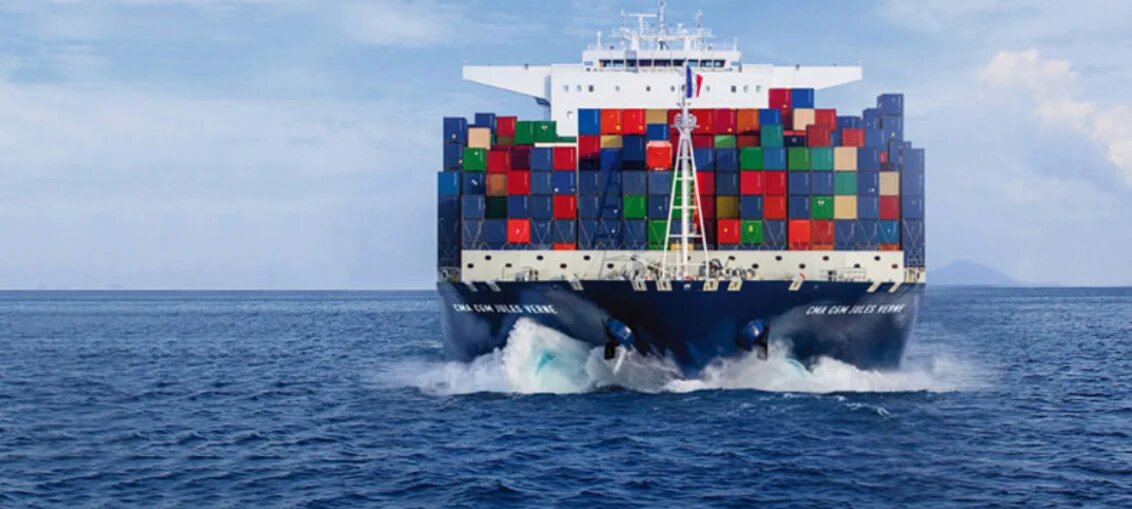
In recent years, HJ Shipbuilding & Construction has continuously developed related eco-friendly ship technologies, accelerating its efforts to secure technological capabilities for next-generation gas carriers. In 2022, HJ Shipbuilding & Construction received an order from Germany’s asset management company MPC Capital and its partners for six 5,500 TEU eco-friendly container ships. These container ships save 40% on fuel and feature a methanol-ready design. Their design emphasizes high efficiency, utilizes DNV’s environmental notation, and is built according to the Energy Efficiency Design Index (EEDI) Phase III and Tier III standards. This was also HJ Shipbuilding & Construction’s first order for conventional merchant ships since 2015. By May 2024, all six of these methanol-ready 5,500 TEU eco-friendly container ships had been successfully delivered, achieving great success in the eco-friendly ship market.
In February 2023, HJ Shipbuilding & Construction signed a contract with South Korea’s largest shipping company, HMM, to build two 9,000 TEU methanol-powered container ships, with a total cost of 316.7 billion Korean won (approximately $247 million). These are scheduled for delivery between 2025 and 2026. In 2023, HJ Shipbuilding & Construction also collaborated with Wärtsilä to successfully develop an 8,500 TEU eco-friendly container ship equipped with a Carbon Capture and Storage (CCS) system, dedicating efforts to secure eco-friendly ship technological capabilities that can achieve carbon neutrality ahead of schedule.
In 2024, HJ Shipbuilding & Construction successfully secured orders from several European shipowners for eight 7,900 TEU eco-friendly container ships, with a contract value of 1.2 trillion Korean won (approximately $890 million). These ships adopt the latest eco-friendly design and are equipped with state-of-the-art equipment, enabling 40% fuel savings. Simultaneously, these vessels also feature a methanol-ready design, utilize DNV’s environmental notation, and are built according to EEDI Phase III and Tier III standards.
Furthermore, HJ Shipbuilding & Construction has accumulated technological capabilities in LNG dual-fuel systems, ballast water-free ships, methanol-powered ships, and liquid hydrogen carrier development, which can contribute to achieving carbon neutrality ahead of schedule, laying the foundation for its ascent as a specialized builder of eco-friendly ships.