A preliminary brokerage analysis of China’s new port fee framework reveals the tanker market faces the highest exposure among major shipping segments
Analysts have focused on the framework’s inclusion of “vessels owned or operated by enterprises in which US entities or individuals hold 25% or more of the equity.”
According to Greece’s Xclusiv Shipbrokers, tankers owned by US-listed shipping companies account for about 12% of the global tanker fleet – the highest share compared with bulk carriers, container ships and gas carriers.
Taking into account the exemption for China-built vessels, Xclusiv estimates the share of tankers potentially subject to the new fees falls from 12% to roughly 9%.
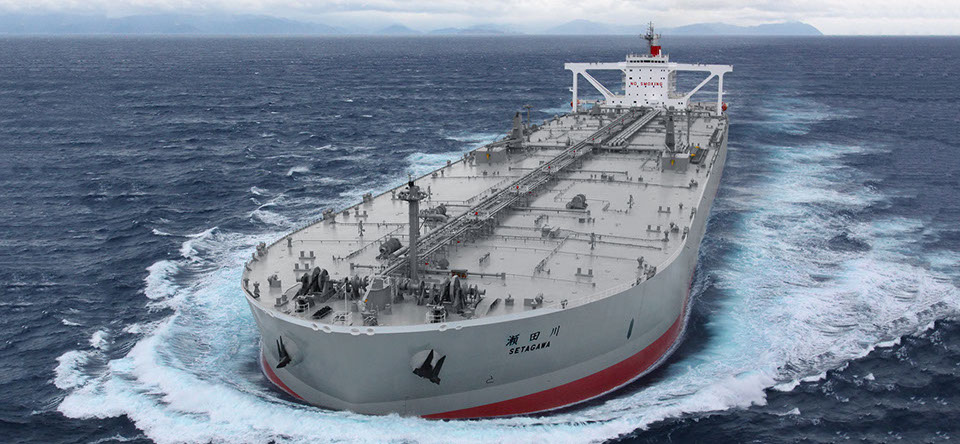
Within the crude segment, US-listed companies own around 13% of the global VLCC fleet, 20% of Suezmaxes, and 11% of Aframaxes.
Further analysis from Xclusiv shows 83% of these VLCCs, 80% of Suezmaxes, and 60% of Aframaxes owned by US-listed firms could still be exposed to the fees, as they are not built in China. In total fleet terms, this translates to 11% of active VLCCs, 16% of Suezmaxes, and around 7% of Aframaxes likely facing the new cost burden.
Significant market impact
Analysts believe if these crude carriers ultimately fall within the scope of China’s new port fee regime, the impact on seaborne trade could be meaningful.
“Additional costs would likely discourage US-linked vessels from calling at Chinese ports, forcing a reshuffle in loading and discharge patterns, tightening Pacific tonnage availability, extending voyage distances as ships reposition, and lifting tonne-mile demand and freight volatility,” Xclusiv Shipbrokers said.
“The tanker market’s relatively high exposure suggests potential implications for freight rates, asset values and future fleet investment strategies among US-listed owners,” the firm added.
China’s crude demand recovery
These findings gain further significance given China’s central role in global crude oil trade.
Citing data from the Signal Ocean Platform, Xclusiv Shipbrokers noted China has imported approximately 362M tonnes of crude oil year-to-date, excluding volumes from countries under international sanctions such as Venezuela, Russia and Iran.
For comparison, during the same period in 2024, China imported 336M tonnes – an 8% year-on-year increase in 2025.
“The figures underscore a continued recovery in Chinese crude demand, supported by resilient industrial activity and robust refining margins,” Xclusiv said.
Saudi Arabia has retained its position as China’s leading crude supplier, contributing 17% of total imports, followed by Iraq (14%) and Brazil (10%). Last year, Saudi Arabia also led with 17%, ahead of Iraq (15%) and Oman (9%).
“The diversification of supply sources highlights China’s strategic effort to balance its import mix between the Middle East and emerging producers in Latin America,” analysts highlighted.
Shifting to vessel types, VLCCs continue to dominate China’s crude inflows in 2025, carrying 91% of total seaborne volumes, followed by Aframaxes (6%) and Suezmaxes (2%).
“This structure underscores China’s ongoing reliance on longhaul shipments from the Middle East and the continued efficiency of the VLCC segment in meeting large-scale refinery demand,” Xclusiv added.