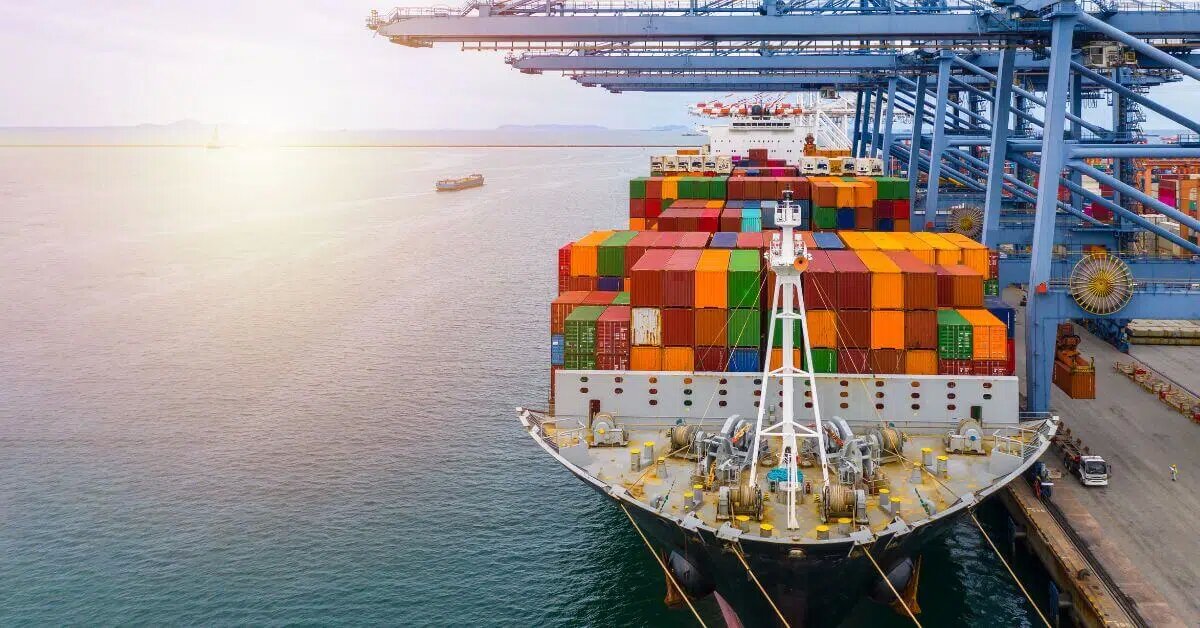
According to the latest report from the specialized consultancy Drewry, the global container terminal market is going through an unprecedented expansion phase, with a global volume that climbed in 2024 to 928 million TEU, marking a year-on-year increase of 7.2%.
According to Drewry, this data confirms that the reactivation of logistics chains continues to drive a wave of investment in infrastructure and capacity.
In fact, the major global terminal operators (GTO) exceeded that rate, with a growth of 7.7% in their equity-adjusted volumes, which allowed them to strengthen their relative weight in the market: they went from handling 48.9% of the total in 2023 to 49.2% in 2024.
Ranking
The ranking was again led by PSA International (present in Argentina through Exolgan), with 67.2 million TEU and a 7.3% increase. They were followed by China Merchants, DP World (which manages Terminales Río de la Plata, in the Port of Buenos Aires), Hutchison Ports (formerly Bactssa in Buenos Aires) and the bloc of integrated shipping lines—MSC (TiL and AGL), CMA CGM (CMA Terminals and Terminal Link) and Hapag-Lloyd (Hanseatic Global Terminals)—which consolidated their positions thanks to guaranteed volumes from their own operations and strategic acquisitions.
The map of the last five years does nothing but reflect how the extraordinary profits obtained during the pandemic were reinvested in port expansion. MSC added 14.1 million TEU to its equity-adjusted volume between 2019 and 2024, while CMA CGM added 4.6 million TEU. For its part, China Merchants grew 48% in that period (+19.7 million TEU), albeit with a more domestic than international bias.
The case of DP World shows another strategy: its equity-adjusted volumes remained stable, but the total throughput of its portfolio grew by more than 16 million TEU after monetizing assets like Jebel Ali and reinvesting in logistics and maritime expansion.
Projection
According to Drewry, in 2025 global capacity will grow by 4.8% -64 million additional TEU-, the biggest annual jump since the 2008 financial crisis. The driver is clear: post-pandemic port congestion accelerated the decision to expand berths, yards, and equipment.
On the other hand, greenfield projects are regaining prominence. Fourteen GTOs have ongoing initiatives and four of them —CMA CGM, Adani, MSC and AD Ports— will each add more than 3 million TEU by themselves by 2029. Vietnam, Egypt, India and Morocco are emerging as key destinations, while in mature markets the focus is on modernizing existing assets.
Demand and technology
The expansion is also explained by the convergence with two other vectors: the growing global fleet of container ships, which puts pressure on the demand for port services, and the incorporation of advanced technologies in terminal operations: yard automation, the use of artificial intelligence for planning, and the electrification of equipment are beginning to establish a new efficiency standard.
The result is a scenario of sustained expansion and greater concentration in the hands of large operators. For emerging economies, the message would be that the coming years will be marked by competition to attract port investments and to gain, strengthen, or not lose their place in the new global connectivity map.