An academic investigation from the University of New South Wales using ocean currents to optimize shipping routes is making waves in Australia.
To find more efficient routes for cargo ships, Associate Professor Shane Keating, a researcher in oceanography and applied mathematics at UNSW Sydney, has developed an algorithm using ocean models and AI.
“With better ocean forecasts, ships can use the power of the currents as they travel, reducing fuel use and cutting emissions,” said Keating.
His innovation will deliver ocean forecasts to the shipping industry under UNSW Sydney’s spinout company, Countercurrent.
The company is based on 15 years of research studying ocean currents with a focus on forecasting, satellite remote sensing, and data science.
“The algorithm is like a Google Maps for the Sea, giving the most efficient route in real time based on the behavior of ocean eddies,” stated Keating.
Keating is an expert in a type of ocean current called eddies, spinning circular currents that are the oceanic equivalent of atmospheric storms.
Eddies are found in every ocean basin and represent 90% of the ocean’s kinetic energy, but they are not well represented in existing ocean current forecasts.
By better incorporating ocean eddies into forecasts, Keating has argued that commercial ships can leverage these currents to find more efficient routes across the ocean.
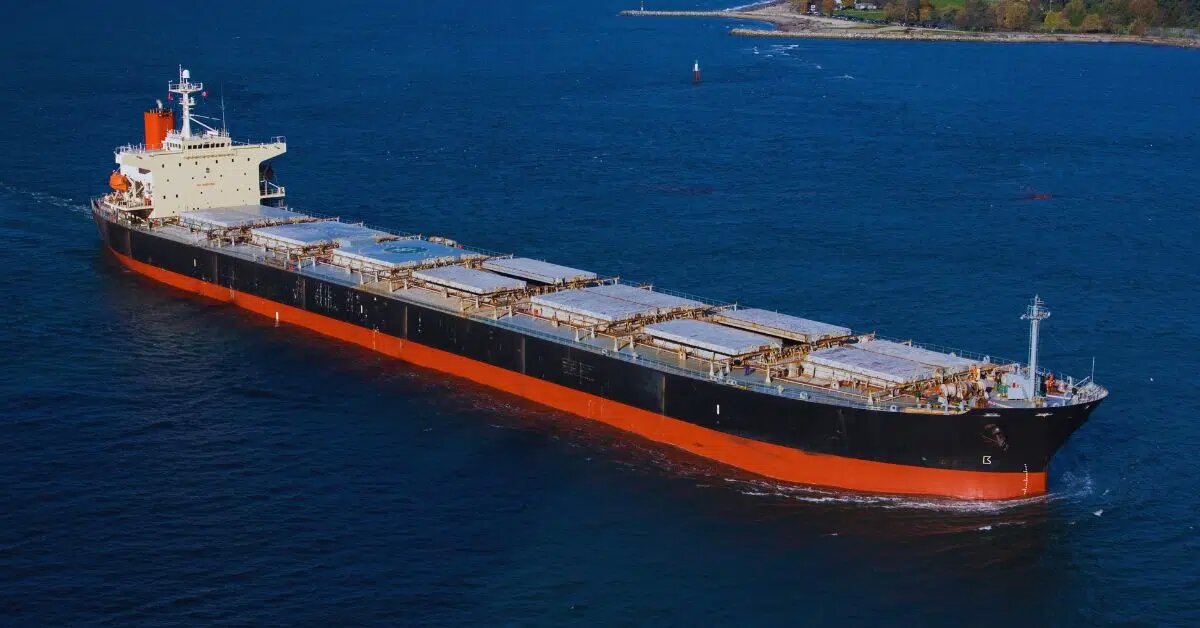
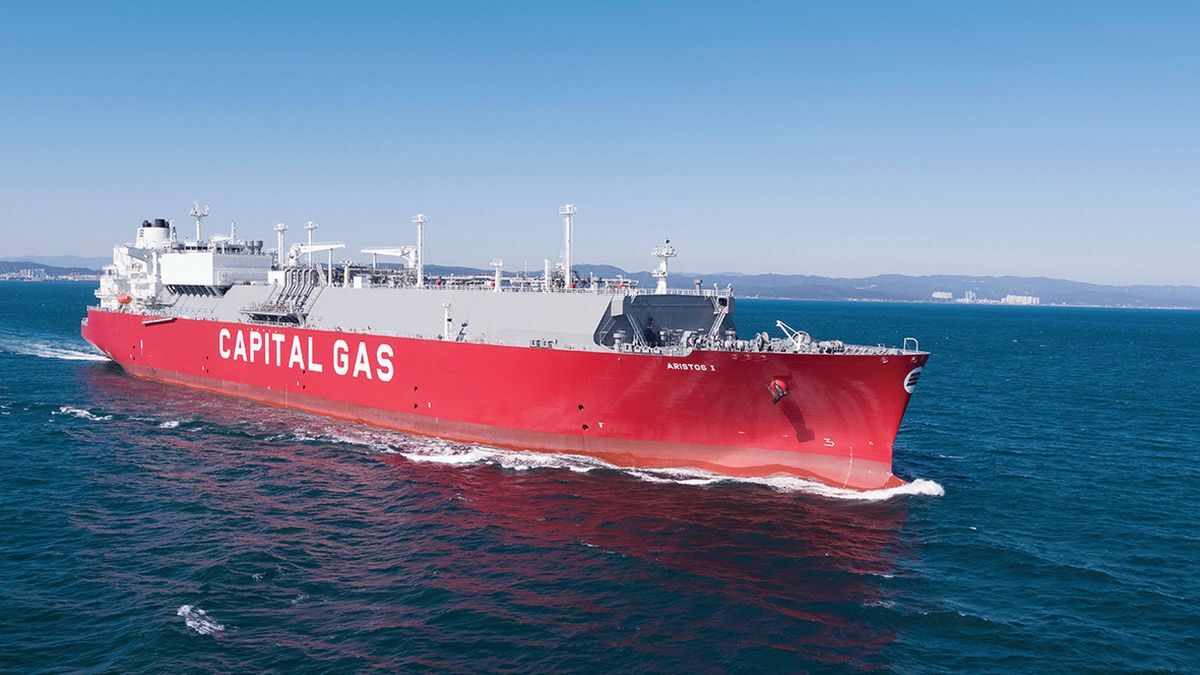
Most ships travel the shortest distance between two points on the Earth’s surface. It is known as a great circle route.
But that route, although it is the shortest distance, is not the most fuel-efficient route because ocean currents constantly move the ship from that perfect geometric line.
The ship has to use its engines and, therefore, burn more fuel to remain on the line.
By going with ocean currents, ships will travel slightly longer distances over the surface of the earth, but they will travel more efficiently because they are moving with ocean currents instead of against them.
One of the reasons this is possible is due to improved satellite technology, which now provides imagery that allows eddies to be tracked.
Keating began to see how satellites could be used to measure the ocean from space after completing his doctorate in astrophysics at the University of California in San Diego.
“In recent decades, satellite technology has completely revolutionized the way we look at the ocean,” he said.
“Before the satellite era, our picture of the ocean was of a giant bathtub of seawater with only a few large ocean currents, like the Gulf Stream and the East Australian Current.
“Thanks to satellites, we now know the ocean is highly turbulent and chaotic, like our atmosphere, and is filled with thousands of ocean eddies that can vary in diameter from ten to 300 kilometers and depths of up to 2,000 meters.”
Although the eddies spin slowly, with current speeds of up to two meters per second, the fact that seawater is 800 times denser than air means that each of these eddies has more momentum than a tropical cyclone.
The view of ocean currents got a major upgrade in December 2022 with the launch of the Surface Water and Ocean Topography (SWOT) satellite.
SWOT is a joint US and French satellite mission capable of mapping ocean currents with ten times the resolution of existing satellite technology.
Keating is a member of the SWOT satellite international science team and leads the Australian SWOT Working Group (AUSWOT), a consortium of researchers and stakeholders working to support the SWOT mission in the Asia-Pacific region.
Data collected from commercial vessels also plays an important role in helping to improve the understanding of ocean currents and how they might be changing in a warming world.
Having tested his technology on more than one hundred vessels, Keating has been able to demonstrate consistent fuel savings that he claimed are up to 20%.
He is now engaging with several shipping companies and shipbuilders to commercialize the technology and make it accessible to the industry at large quickly.
“It’s a mutual benefit for shipping companies,” Keating said. “They can save money and meet their emissions reduction targets right now, without any modification to the vessel or change in the vessel’s transit time.
“I hope that, in the next five years, this research will change the way ships cross the ocean so that shipping companies can meet their emissions targets.”
Starting with the Informa group in 2000 in Hong Kong, Sam Chambers became editor of Maritime Asia magazine, as well as East Asia Editor for the world’s oldest newspaper, Lloyd’s List.
In 2005 he pursued an independent career and wrote for a variety of titles including taking on the role of Asia editor for Seatrade magazine and China correspondent for Supply Chain Asia. His work has also appeared in The Economist, The New York Times, The Sunday Times and the International Herald Tribune.
June 13, 2025
June 12, 2025
June 12, 2025
June 12, 2025
June 11, 2025