More ports are laying the foundation for alternative fuel bunkering ahead of expected global rules and tightening regional regulations. But potential supply bottlenecks could hamper wider global adoption.
Many ports across Europe, Asia, the US and the Middle East are vying for a seat at the alternative fuel table, pushing ahead with green bunkering infrastructure to help ships cut emissions.
The pace of development seems to have quickened, and as of August some ports are moving faster than many expected.
Methanol bunkering gathers pace
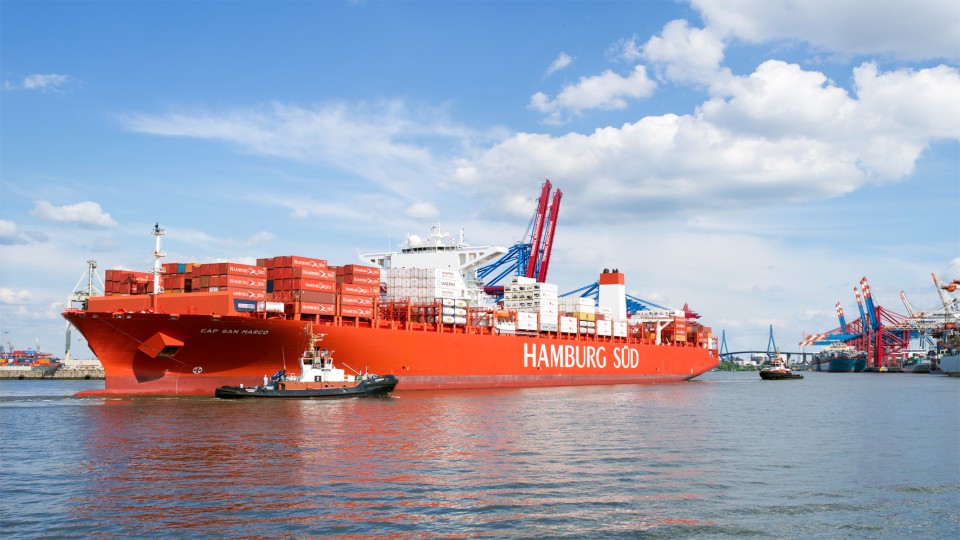
Two German ports are stepping up their preparations. Hamburg Port Authority has introduced safety and operational guidelines for ship-to-ship methanol bunkering of container ships at Waltershof. The move follows similar steps taken by the ports of Bremen and Bremerhaven earlier this year, underlining a coordinated shift towards preparing for methanol as a marine fuel.
On the other side of the world, methanol has been bunkered in Qingdao Port on China’s Yellow Sea coast, while Golden Island’s bunker vessel has arrived to launch bio-methanol trials in Singapore.
Even in the US, South Louisiana has gone out to tender for a methanol bunkering barge, a sign that certain American ports are also gearing up for the methanol wave.
LBM availability improves
Liquefied biomethane (LBM) is appearing in new locations. Barcelona has hosted a ship-to-ship delivery of 838 mt to TUI Cruises’ Mein Schiff Relax, while in Algeciras, Axpo has supplied 1,788 mt to a container ship. These quantities suggest ports are stress-testing larger LBM transfers before tighter global regional emission targets make them unavoidable.
LBM has also become available in Germany’s Elbe port, while Seaspan Energy plans to offer LBM bunkering for vessels calling at all ports along the US West Coast.
Biofuels hold steady
Liquid biofuels keep their place in the mix, and are being bunkered in more and more locations. Brittany Ferries’ Pelican has been regularly bunkered with B25 at the Port of Poole in the UK, while Reykjavík hosted a one-off but symbolic 100 mt delivery of B100 to a Virgin Voyages cruise ship.
Shore power spreads its reach
Not all the action is about fuels. Ports are also investing in shore power, which is steadily becoming standard for cruise and container terminals around the world.
Oman’s Sohar port is building a facility for its container terminal, Antwerp-Bruges has broken ground on a system for cruise ships at Zeebrugge, and Moerdijk in the Netherlands is moving ahead with an inland vessel charging station. In Bilbao, a contract worth over €11 million ($12.81 million) has been awarded to install solar plants that will feed its onshore power supply.
Ammonia and hydrogen find footholds
Ammonia and hydrogen are starting to make inroads. Egypt’s Suez Canal Economic Zone has partnered with Japan’s Itochu to develop ammonia bunkering infrastructure in Sokhna and East Port Said.
China’s Dalian port has piloted green ammonia bunkering, a milestone that puts the fuel firmly on the map. And in Indonesia, French and German companies are exploring whether hybrid hydrogen and battery-powered ferries can be deployed across the country’s islands.
The missing molecule barriers
Enthusiasm on the waterfront does not guarantee molecules in the tanks.
Feedstock availability, production capacity and costs remain the hard limits to scaling green molecules of methanol, biomethane, ammonia and hydrogen. Even where infrastructure is in place, securing consistent cargoes can be difficult.
For instance, shipping firm Norden recently noted that its dry bulk and tanker vessels call at a wide range of ports, which makes biofuel bunkering “quite challenging” on a global scale. Other low- and zero-emission fuels are even less available than biofuels and are projected to trade at higher price premiums, which could further limit adoption.
So for now, ports may be taking the right steps, but without steady supply the risk is clear: even the fastest movers could end up with empty jetties.