The profiteering of drug smuggling and trafficking, as well as the lag in regional law enforcement, have prompted drug traffickers to take risks. In recent years, there has been a surge in drug smuggling through ships and containers, which are often hidden in ships’ holds, containers or attached to ship hulls. Depending on the country of jurisdiction over the case, the discovery of drugs on board may result in detention, fines or criminal prosecution against the crew. Ships and crew are at risk of becoming victims of drug smuggling cases at sea, which has a significant negative impact on the reputation of the shipping industry and the careers of crew members. According to the association Brazil Tongdai, drug smuggling cases at sea in Brazil are on the rise. In view of the frequent occurrence of drug smuggling cases at sea, the association recommends that members engaged in this route be more vigilant and prevent risks.
1. The global drug problem
The United Nations Office on Drugs and Crime (UNODC) estimates that global drug consumption has increased by more than 30% over the past decade, with about 18 million people worldwide using cocaine for a long time. North America (mainly the United States), Western and Central Europe (Spain, the Netherlands and the United Kingdom) and Oceania (especially Australia) are high rates of cocaine use, with significant increases in Asia and Africa. In the face of growing demand, the cultivation and production of drugs also began to develop widely in South America. Thanks to the improvement of experimental equipment and the optimization of production and processing, cocaine production has reached the highest level ever. Colombia has become the world’s largest producer and supplier of cocaine, while Bolivia and Peru are second and third, respectively.
Although Brazil is not a major drug producer, it has a wide unguarded border with the three major drug producers mentioned above and is the second largest cocaine consumer after the United States. When it comes to transporting drugs to North American and Asian markets, Brazil’s Amazon and many ports along the East China Sea coast, as well as a large network of airports, have become transit hubs for these three countries and the European, African and Asian markets. Brazil is second only to Colombia in terms of the number of cocaine seized, which also demonstrates its importance as a key transit point in the global market. According to information released by the Brazilian Federal Police, customs authorities and the media, the number of incidents of cocaine seizures on port facilities and foreign ships has increased significantly. In some cases, drugs were not discovered until the ship arrived at the port of destination.
The global spread of cocaine not only harms public health, but also hinders law enforcement. At the same time, cocaine poses a significant threat to international maritime trade, safe ship operations, and the personal safety of seafarers. Crew members may face criminal charges under foreign jurisdiction and may even face the death penalty if they constitute a drug offence.
2. Maritime drug trafficking routes
According to the United Nations Office on Drugs and Crime (UNODC), cocaine trafficking routes in the Americas are mainly from Colombia through the Pacific Ocean or the Panama Canal to the United States; Or by land transport, from Central America to Mexico, and then smuggled into the United States through the southwestern border of the United States. The second largest trafficking route is from drug-producing countries, mainly Colombia, directly to Europe.
Although most drugs destined for Asian markets are carried by drug dealers by plane, cocaine entering China is mainly smuggled by sea, such as across the Pacific Ocean from Colombia or bypassing the Cape of Good Hope from Brazil. Given the lucrative profits of cocaine trafficking, global drug cartels have used the Internet and information technology to hack into digital logistics systems, exploiting loopholes in maritime commercial routes to transport large quantities of drugs to all corners of the world.
3. Containers contain drugs
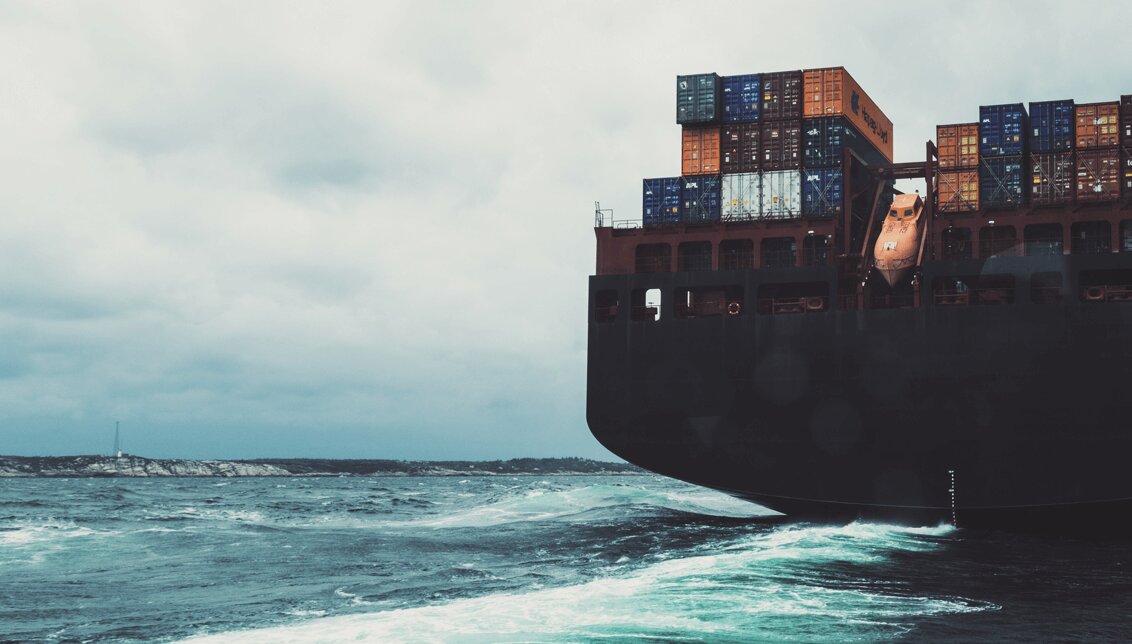
According to the latest data disclosed by the United Nations Conference on Trade and Development (UNCTAD), container ports around the world handle more than 81,100 million standard containers (TEUs) each year, but less than 2% of containers are inspected. There is no doubt that transporting drugs via container ships is by far the most favored method of smuggling by drug cartels.
In Brazil, the most common method of drug smuggling using containers (rip on/rip off) is that drug traffickers bribe transport workers or port workers at the loading and unloading ports, and after changing or replacing the original lead seals, they mix cocaine into the goods at the loading port without the knowledge of the shipper, consignee and carrier, and then take it out unknowingly at the port of discharge. Drugs are often hidden or mixed into legal cargo transportation, usually involving cargo owners, packers or port workers. Drugs may also be hidden in the corner posts, crossbars, floor plates of dry containers, as well as in the ventilation chambers and insulated walls and doors of reefers.
The port of Santos, Brazil, is the busiest port in Latin America. In recent years, the number of cocaine seized in the port of Santos has increased significantly. According to reports, the number of drugs seized in containers rose from 1,672 kilograms in 2013 to 27 metric tons in 2019. During the same period, the total amount of drugs seized in Brazil rose from 2,183 kilograms to 57 metric tons. In 2021 (the first week ending April), at least 10 cases of containerized drug smuggling occurred in the port of Santos, with a total of approximately 4,250 kilograms of cocaine seized.
Some ports in southern Brazil, such as Itajai/Navegantes, Rio Grande, São Francisco do Sul and Paranaguá, are also frequent ports for cocaine smuggling using containers. Paranaguá, Brazil’s second largest container port, had eight container drug smuggling incidents as of the first week of April 2021, with a total of more than 1,211 kilograms of cocaine seized. In northern Brazil, cocaine is smuggled through borders adjacent to Colombia and Peru, such as from the port of Manaus to other ports along the Amazon and in the far north of Brazil, especially container terminals such as Vila do Conde (Barcarena), Pecem, Suape and Salvador.
4. Concealment of drugs on board
While more and more cases of smuggled drugs being transported in containers in Brazil have been detected, the number of cases of drugs found on dry bulk ships docked at grain terminals has also increased significantly. Drugs can be hidden in all types of merchant ship dry compartments, hulls, etc. in a variety of ways, so it is important to guard against drug smuggling in Brazil.
Drug traffickers, with the assistance of stevedores, officials and contractors, or in conspiracy with the crew, can hide drugs in hard-to-find corners of the ship, such as in any cargo (groceries, solid bulk cargo and vehicles), in food, spare parts and in any cabin, cargo hold, oil tank, engine room and crew living area on deck or adsorbed on the hull. When the ship arrives at the port of destination, these port workers or crew members can leave with the drugs through the gangway, or throw them into the sea at a specific location to wait for criminals to pick them up by boat.
In cases of drug smuggling using containers, carriers are rarely held accountable because carriers are usually not responsible for packing or lead sealing. In contrast, cases of drugs found on board often tend to shift the problem of crime to an innocent third party, usually the crew. Even without evidence that the captain and crew acquiesced or knew about the smuggling, drug smuggling cases can seriously interfere with the ship’s operations.
In some ports in South America, there is a new and bold smuggling method, when the ship is at anchorage or berthing for loading and unloading operations, drug dealers arrange for trained divers to dive to the bottom of the ship, place waterproof bags containing drugs on the surface of the hull below the surface of the ship or ship facilities (such as submarine valves, stern shafts, rudders and thrusters, etc.), and then send divers to retrieve the drugs after arriving at the destination port.
5. Drug trafficking in Brazil
In Brazil, offences related to drug use are punishable by warnings, community service for up to 10 months, and participation in anti-drug education courses and programs. Drug trafficking offences are punishable by imprisonment for 5-15 years, as well as fines and social reform. Foreign offences (including legal residents and visiting seafarers) are subject to deportation. As for the ship transporting drugs, it may be detained and searched during a criminal investigation by the authorities. The captain and crew may be questioned, charged and detained as witnesses, but have the right to apply for legal assistance. Goods, vehicles and containers involved in drug smuggling may be seized as evidence and even confiscated and confiscated.
The issue of allocation of responsibility between shipowners and charterers regarding the transport of drugs by ships is usually resolved by incorporating clearly agreed anti-drug clauses into the charterparty. The suspension clause in the charterparty solves the problem of time loss caused by the discovery of drugs. Without clear contract terms, disputes can easily arise between shipowners and charterers. When the captain or crew member has conspiracy or drugs are found in their personal belongings, the shipowner is usually responsible. However, if the drugs are found inside the cargo or container, the renter may be liable.
However, charterparties rarely provide for drugs to be found outside the vessel (e.g., below the surface of the hull), as this method of smuggling has occurred recently. Given that the vessel travels to the port where drugs are illegally cultivated and trafficked on the direction of the charter, the charterer tends to be liable in this case. In addition, the charterer has a contractual duty of utmost care to prevent drugs not on the cargo list from being loaded onto the ship.
6. Ship precautionary measures
Brazilian ports generally comply with Security Level 1, which is the minimum security measures, as defined by the International Code for the Security of Ships and Port Facilities. However, captains and crew should be aware that even at Security Level 1, no port in the world is considered absolutely safe and can completely eliminate the smuggling of drugs by merchant ships by criminals, given the globalization of maritime transport and the complexity of drug smuggling by maritime transport. We therefore strongly recommend that ships bound for Brazil ensure that the Vessel Security Plan is fully implemented on board and that crew members are trained on drug prevention awareness. Captains and crew can take precautions to enhance security on board, including:
1. Understand the port security level, CCTV coverage, local communication channels, etc.
2. Maintain good lighting of deck areas and access passages when entering ports or anchorages at night;
3. Suspicious activities on and near the ship should be recorded, preferably photographed or photographed with a mobile phone, reported to the ship’s security personnel, and then notified the port security officer and port authorities;
4. Refusing to board the ship without confirming the identity information and the purpose of the visit;
5. Record the list of visiting vessels (including stevedores and other port workers) and ensure that visitors wear protective protective equipment;
6. If there is a suspicion that the items carried by visitors and port workers are carried by them, arrange baggage inspection at the entrance and exit points;
7. When suspicious items are found, take photos or videos, and notify other personnel to witness, do not approach or open the package without permission, and arrange at least two crew members to guard the suspicious items before the port security guards and police arrive at the scene.
8. Lock living areas and deck storage rooms and non-operational holds, keeping an eye on the activities of stevedores, suppliers and service providers, and any visitors;
9. Maintain continuous duty of shore gangways, put away and properly place seaside boarding ladders, and arrange regular patrols on the deck and entry and exit areas;
10. Check the voids of loaded goods, general cargo and vehicles as much as possible, as well as the inside and voids of empty containers;
11. Check the integrity of the seals and external structure of the fully loaded container as much as possible;
12. Pay attention to the cargo hold, make sure that the surface of the cargo is intact and that no other substances are mixed into the cargo hold;
13. Take photos of the surface condition of the goods immediately after loading and before closing the cabin to record that no other substances are put into the cargo; After loading the solid bulk cargo, it is best to arrange for an independent inspector to seal the cabin. arrange independent inspections of cargo holds that have not been sealed at the port of discharge;
14. Record and monitor the activity of barges moored beside vessels or nearby small boats and work boats, check for diver bubbles, and illuminate suspicious boats and underwater activity with searchlights;
15. Conduct a full search of the vessel before leaving the port or when moving in the harbor, and if there are suspicious signs that drugs may be hidden at the bottom of the vessel, it is recommended to arrange an underwater inspection and invite port security guards and charterers to participate;
In addition, according to Brazil Tongdai, there are not many security companies in Brazil that are currently recognized by the Federal Police, Maritime and Port Authorities, and only agents in the most developed ports have such services. Moreover, such services may cause misunderstandings among Brazilian authorities about the ship’s intention to hire third-party security personnel. Therefore, at this stage, the fight against drug trafficking and smuggling is mainly through the federal police and customs authorities, which are also the functions of the State.