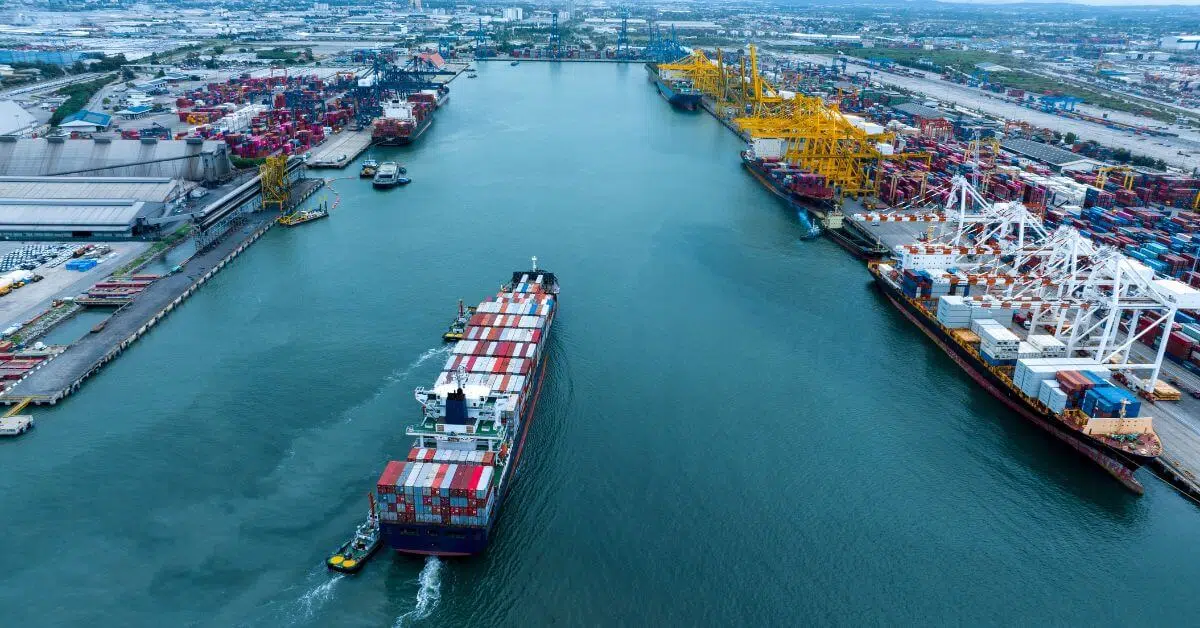
Recently, Danish tugboat operator Svitzer announced the signing of a Letter of Intent with India’s Cochin Shipyard to develop and build a new generation of electric tugboats in India.
Svitzer stated that this cooperation marks a significant step forward in its electrification roadmap, while also strengthening India’s role as a global maritime manufacturing hub. The Letter of Intent reflects Svitzer’s long-term commitment to “Make in India” and plans to bring “one of the most advanced, environmentally friendly tugboat designs” to market, supporting India’s green port and green towage goals.
According to the Letter of Intent, the two parties will build new TRAnsverse series electric tugboats at Cochin Shipyard. These will be used to support Svitzer’s global fleet renewal and market expansion, while also providing opportunities to deploy locally built solutions for operations in Indian ports and terminals.
Svitzer CEO Kasper Nilaus said: “With this Letter of Intent, we are taking a decisive step on our electrification journey. India’s shipbuilding ecosystem and Cochin Shipyard’s excellent track record make Cochin Shipyard the ideal partner to advance the construction of TRAnsverse tugboats and our sustainability goals. By combining Svitzer’s nearly 200 years of tugboat experience with India’s engineering and manufacturing strength, we hope to provide cleaner, safer, and more efficient port operations for customers in India and globally.”
Madhu S Nair, Chairman and Managing Director of Cochin Shipyard, pointed out that this cooperation will showcase Cochin Shipyard’s world-class capabilities, deepen the local supply chain system, and accelerate the provision of green, high-performance tugboats for Indian and global ports.
It is understood that Svitzer is a globally leading provider of tugboat and maritime services, operating a fleet of over 450 tugboats. It serves approximately 2,000 customers across 141 ports and 40 terminals in 37 countries and regions worldwide. In the first half of last year, Svitzer was spun off from the Danish shipping and logistics giant Maersk and incorporated into the new company Svitzer Group A/S.
Cochin Shipyard is India’s largest state-owned shipbuilding and repair yard and a pioneer in India’s high-tech green shipbuilding industry. In recent years, Cochin Shipyard has been focusing on the research and development of alternative fuel vessels, including hydrogen fuel cell ferries and ammonia-powered ships. Clarksons data shows that Cochin Shipyard currently has a total orderbook of 17 vessels, totaling 96,900 deadweight tons, with deliveries scheduled up to 2027. Among these, 7 vessels feature battery hybrid propulsion, including two 730 TEU container ships, two wind farm Commissioning Service Operation Vessels (CSOV), two Service Operation Vessels (SOV), and one general cargo ship.
Previously, in October of this year, Cochin Shipyard also signed a Letter of Intent with France’s CMA CGM to build six 1700 TEU dual-fuel LNG-powered feeder container ships for CMA CGM. These new vessels will be delivered between 2029 and 2031 and will fly the Indian flag.