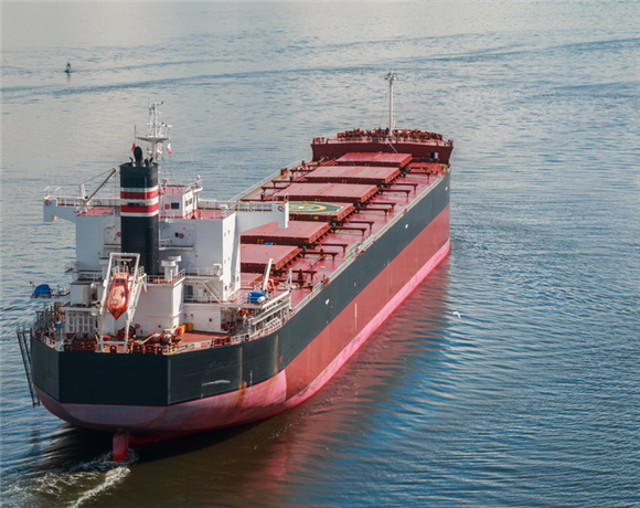
Global shipping is once again facing its structural paradox: the efficiency promised by the large alliances versus the reality of saturated ports and fragile logistics chains.
The latest report from Drewry, one of the leading consultancies in port and shipping analysis, reveals that vessel waiting times in Europe increased in October to an average of 1.9 days, and that schedule reliability on the Asia–Europe route fell to 39%, after five months of improvement.
This data summarizes a fundamental problem: the shipping industry has perfected planning and technology, but still does not master the physical and structural imponderables that determine its punctuality.
Gemini and the search for 80%
The Gemini Cooperation, which groups Maersk and Hapag-Lloyd, has been presented as the new-generation model: less dispersion of services, digital integration and direct control over the logistics network.
Its goal —to bring schedule reliability above 80%— aims to be a qualitative leap from the current average, which is around half that figure.
In a presentation to investors, the CEO of Maersk, Vincent Clerc, stated that the group “has already started conversations with customers to charge a premium for on-time arrivals,” although he acknowledged that they first needed to demonstrate a sustained improvement in reliability.
The proposition is provocative (or a sign of the times?): to turn punctuality, which was historically an implicit obligation of the service, into a differentiated product subject to a premium fee.
Structural congestion and ports with no margin
Drewry warns that the main European ports —Rotterdam, Antwerp, Hamburg and Valencia— have waiting times higher than those of Chinese ports, a trend change that reflects the bottleneck in the Old Continent’s logistics system.
With rigid infrastructure and little spare capacity, delays push the dominoes: a single vessel off-schedule in a port creates mismatches in subsequent berthings and chain congestion.
The causes are multiple and known to the industry: port strikes, bad weather, construction works, technical failures or accidents. Most are beyond the control of the shipping lines, but the financial impact accumulates.
According to the consultancy, the lack of predictability generates logistical overcosts, longer dwell times, inefficient use of terminals, and increased costs for subsequent land transport, a cocktail that erodes the competitiveness of the entire chain.
Feeder vessels, the most vulnerable
The report points out that feeder vessels are now the most exposed to delays, especially in Northern Europe. The short port calls, limited berthing windows, and dependence on connections with large container carriers exacerbate the mismatches and increase costs for regional operators.
Despite these difficulties, Gemini shows better punctuality levels than the other alliances (2M, Ocean Alliance and THE Alliance), and also cancels fewer voyages.
However, Drewry nuances that “80% reliability remains a theoretical goal under current port saturation conditions.”
A New Fee for Compliance?
Maersk’s proposal to charge a premium for punctuality reopened a deep debate: Should customers pay more for a standard that should be inherent to the service?
“Shippers, forwarders, and ports should be cautious about promises of total reliability. Absolute punctuality is a commercial ideal, not a technical guarantee,” the consultant emphasizes.
In other words, while shipping lines compete to offer digital precision and predictive management, the physical infrastructure—ports, canals, hinterlands—remains the real limit. In that context, total efficiency is a desirable horizon. But unlikely.
The Underlying Challenge
Drewry’s analysis synthesizes a reality that goes beyond the current situation: global maritime transport, even in its most technological era, remains conditioned by a logistical system that does not grow at the pace of trade.
The increase in ship capacity, the consolidation of alliances, market concentration, and the integration of operators have enabled economies of scale, but have also made supply chains more vulnerable to specific disruptions.
The consultant concludes that delays, even if they can be reduced, “will not disappear completely.” The question is not whether shipping lines will be able to eliminate delays, but to what extent the global system can absorb them without collapsing its structural efficiency.