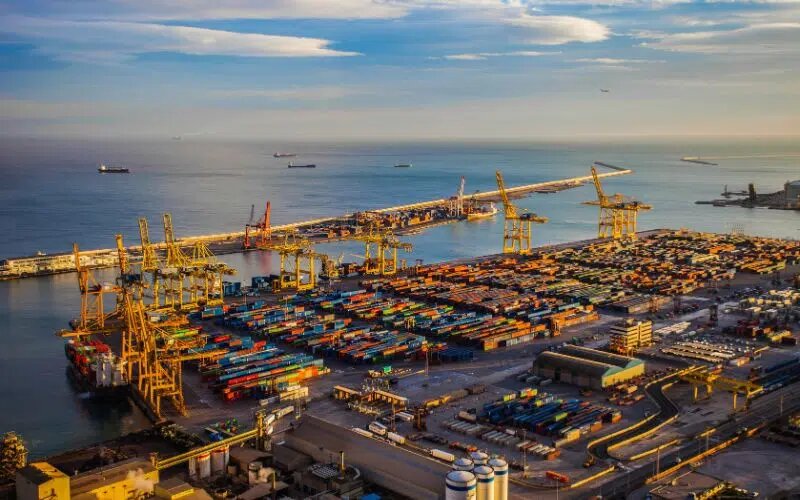
The ambitious project includes widening the turning basin from 480 to 600 meters, enhancing the Elbe approach, and creating additional terminal yards. These improvements will provide vessels with a larger water surface for turning maneuvers, ensuring better navigational safety and operational efficiency for current and future vessel sizes.
Hamburg Port Authority (HPA) will complete the infrastructure works by the mid-2030s. In addition to the public investment, Eurogate has committed at least €700 million to expand the existing container terminal, with completion planned within two years after receiving the newly developed land.
“Today, we are laying the groundwork to ensure that Hamburg is well prepared to meet the challenges of tomorrow,” said Hamburg’s Minister for Economic Affairs, Senator Dr. Melanie Leonhard. “This infrastructure will help ensure that large vessels will be handled reliably and efficiently in the Port of Hamburg. It also strengthens Hamburg’s service capacity and reinforces its role as a key hub on major international shipping routes.”
Jens Meier, CEO of Hamburg Port Authority, described the project as “a vital investment in [the port’s] long-term competitiveness” that lays “the groundwork for the next steps towards a climate-neutral port.”
The expansion represents a significant step toward decarbonization, with plans to automate and electrify terminal processes. Tom Eckelmann, Managing Director of EUROKAI and Chairman of EUROGATE, confirmed they are “initiating the transition from manual operations to an automated terminal concept” with a goal of “achieving decarbonisation through complete electrification of throughput equipment.”
The future terminal areas will remain in public ownership and be leased to EUROGATE under market-based conditions. The site will be fully integrated into the road and rail network, enabling the implementation of an operating concept using electrically powered, autonomously guided vehicles—a significant step toward achieving climate neutrality by 2040.