
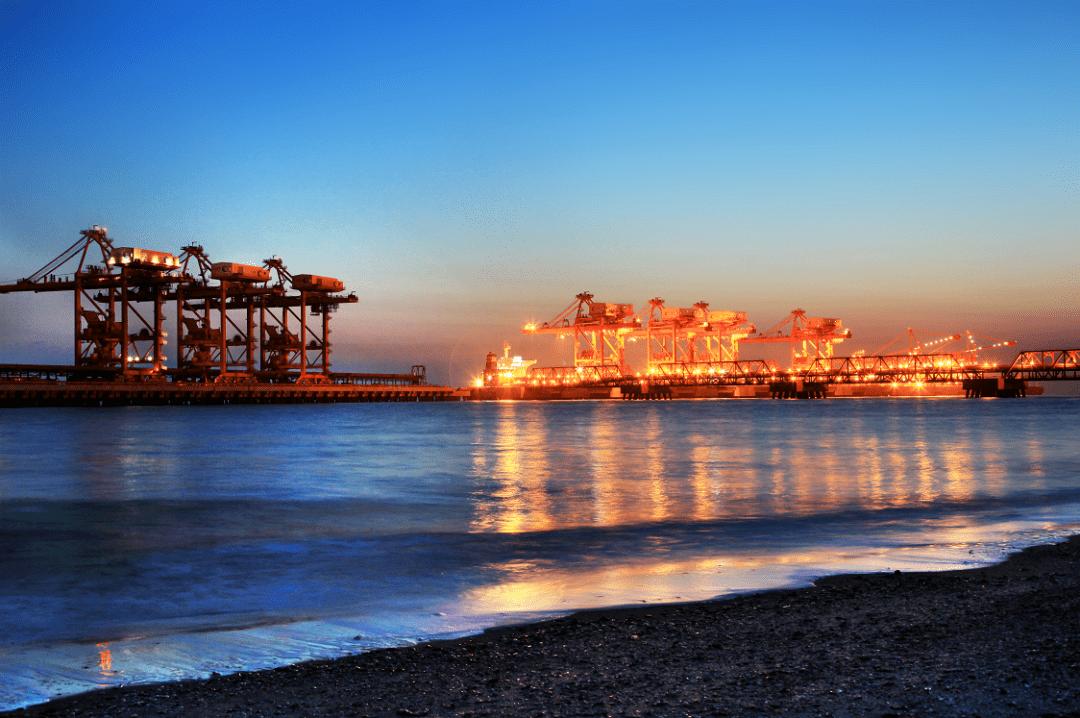
1. Port and Terminal Information
1.1 Tangshan Port consists of three major port areas: Jingtang Port Area, Caofeidian Port Area, and Fengnan Port Area. Each has distinct operational characteristics.
1.2 Jingtang Port Area’s main coal terminal (Berths 101-104) has a maximum draft restriction of 16.8m during high tide (2023 AIS data verified by Tangshan MSA Notice No.2023-06).
1.3 Caofeidian’s ore terminal (Berths 36-40) can accommodate Valemax-class vessels up to 360m LOA with air draft limitations of 52m due to conveyor systems (Port Design Code GB50192-2016).
1.4 Fengnan Port Area’s multipurpose terminal has two 50,000 DWT berths (Berths 501-502) with RoRo capability – ramp max pressure 5t/m² (Port Construction Standard JTS 165-2017).
1.5 All terminals implement ISO 28000:2022 security standards – Ship Security Officers must verify ISPS compliance before entry.
1.6 New LNG terminal at Caofeidian (Berth 61) operational since Q1 2024 – requires gas-free certificate for vessels within 500m radius.
1.7 Night navigation restrictions apply to vessels >300m LOA in Jingtang inner channel (Port Regulation Art. 8.3).
2. Navigation and Pilotage
2.1 Mandatory pilotage zone begins at 39°55’N 119°10’E for all vessels over 10,000 GT (Tangshan MSA Regulation 2021-12).
2.2 The main approach channel (Caofeidian) has a design depth of 22.5m but requires +2m underkeel clearance for VLOCs carrying iron ore (IMO MSC.1/Circ.1521 applied).
2.3 Tide tables must be cross-checked with both China Maritime Safety Administration and port authority versions – discrepancies up to 15cm have been recorded (2024 NTIAD Bulletin).
2.4 Pilot boarding area at 38°58.5’N 118°46.8’E has maximum wave height limit of 2.5m for ladder operations (OCIMF MEG4 compliance).
2.5 Vessels with beam exceeding 65m must confirm tugs availability 24h prior (Port Operation Rule Art.17).
2.6 Radar outage areas exist near Caofeidian breakwater (39°03’N 118°42’E) – visual lookout mandatory (Navigation Warning No. 2024-15).
2.7 Parallel indexing required when passing Jingtang No.2 Light (39°12.3’N 118°58.7’E) with <0.5nm clearance.
3. Anchorage Regulations
3.1 Emergency anchorage No.3 (39°12.5’N 118°58.2’E) has a hard seabed – recommend 8:1 scope even for short stays (UKHO Chart 3481 annotation).
3.2 Bunkering at anchor requires 72-hour prior notice with complete MSDS submission to Tangshan ETC (EPB Regulation EP/TSP-2022).
3.3 Anchorage A (Caofeidian) prohibited for vessels carrying Class 1 explosives (IMO DG Code Chapter 3.1 special provision).
3.4 Dynamic positioning prohibited within 1nm of submarine cable areas (marked on Chinese charts CH 11701/11702).
3.5 Anchorage B (Jingtang) has holding ground of soft mud – recommend 6:1 scope in typhoon conditions.
3.6 Vessels at anchor must maintain VHF Ch 16 continuous watch plus Ch 08/71 scanning (MSA Safety Notice 2023-09).
4. Cargo Operations
4.1 Coal loading at Jingtang achieves 8,000-10,000 MT/hour but requires continuous trimming per China MSA Bulk Cargo Code Chapter 7.
4.2 Iron ore stockpiles at Caofeidian have measured moisture content up to 9% – vessels must verify individual stockpile certificates (GB/T 10322.1-2014 standard).
4.3 Prohibited to mix thermal coal from different stockpiles (Datong vs. Shenhua blends) in same hold without written permission (CCIC inspection requirement).
4.4 Steel coil loading at Fengnan requires dunnage with minimum 150mm air gap between layers (CSC Plate approval mandatory).
4.5 Grain cargoes must present original phytosanitary certificates with ≤0.5% insect infestation (AQSIQ Decree No.178).
4.6 LNG loading requires 30-minute gas-free period before connection (IGC Code Chapter 17 as implemented by China MSA).
4.7 Wood chip cargoes from North America subject to additional fumigation checks (GACC Announcement No.45/2023).
5. Safety Management
5.1 Gangway nets must comply with ISO 5488:2015 standard – random inspections conducted since Q3 2022.
5.2 Hot work permits require simultaneous approval from port fire department and MSA safety officer (Fire Protection Law Art.21).
5.3 Winter operations (Dec-Feb) mandate additional 50% mooring lines for vessels >50,000 DWT due to strong NW winds (Beaufort 8+ occurs 23% of winter days).
5.4 All accommodation ladders must have emergency lighting (SOLAS II-1/3-9 compliance verified during PSC).
5.5 Helicopter operations require 48h notice to Caofeidian Aviation Department (CAAC Advisory Circular AC-91-FS-2020-03).
5.6 Enclosed space entry permits must be validated by port safety officer for tanks last carrying bitumen (MSA Circular 2022-18).
5.7 Emergency towing wires must be rigged forward and aft during all port stays (China Port State Control CIC 2023).
6. Environmental Compliance
6.1 The 12nm emission control area (ECA) enforces 0.5% sulfur limit year-round – fuel sampling occurs at every 10th vessel call (MEPC.305(72) implementation).
6.2 Ballast water exchange must be completed outside the Bohai Sea ecological red line area (coordinates published in MSA Notice 2020-34).
6.3 Oily water discharge limit is 15ppm with continuous monitoring equipment required (China Water Pollution Law Art.59).
6.4 Plastic waste must be landed to licensed receivers only – manifests tracked through MEP’s National Waste System.
6.5 Vapor recovery systems mandatory for crude oil tankers at Caofeidian (MEP Order No. 2023-5).
6.6 AIS must remain operational at all times within port limits (China Maritime Traffic Safety Law Art.34).
7. Emergency Procedures
7.1 The port’s designated oil spill response contractor (COSCO SHIPPING Environmental) must be notified immediately for any sheen sighting (24h contact +86-315-291-1199).
7.2 Medical evacuations are coordinated through Jingtang Port Hospital (24hr English-speaking staff) with prior notice to border control.
7.3 Collision incidents within port limits require immediate VHF Ch 06/16 broadcast and parallel notification to MSA VTS center.
7.4 Abandon ship drills prohibited during cargo operations (SOLAS III/19.3 exception for Chinese ports).
7.5 Fire alarm testing must be suspended during explosive cargo operations (NFPA 302 Chapter 11 as adopted by China).
7.6 Emergency muster lists must include Mandarin translations for key positions (MSA Crewing Regulation 15.2).
8. Documentation Requirements
8.1 Original cargo manifests must show HS Codes for all items – electronic submissions rejected without proper coding (Customs Order No.56).
8.2 Crew lists require notarized copies of passports and medical certificates for shore leave permissions (Exit-Entry Law Art.25).
8.3 IMO GHG Data Collection Form must be submitted 24h before departure (China MRV Regulation Art.12).
8.4 Dangerous cargo stowage plans need CCIC certification for certain chemicals (List published in MSA Notice 2022-11).
8.5 Crew vaccination records must include Chinese-approved COVID vaccines for shore passes (NHC Notice 2023-01).
8.6 Original Bills of Lading required for all bulk cargoes – sea waybills not accepted (Tangshan Port Rule 7.3).
9. Special Circumstances
9.1 Vessels carrying Australian coal face additional customs inspections – average 18-hour delay based on 2023 statistics (GACC Announcement No.102).
9.2 Military exercise areas near Fengnan may close approaches with 4-hour notice – monitor VHF Ch 16/71 continuously (NOTAM series TSNR).
9.3 Typhoon season (July-September) requires vessels >50,000 DWT to maintain 12h maneuvering fuel reserve (Port Contingency Plan Section 5.2).
9.4 Lunar New Year period (10 days) reduces stevedore availability by 60% – advance labor booking essential.
9.5 Sandstorms in March-May may reduce visibility below 500m – anchor if pilot cannot board (MSA Navigation Warning Standard).
9.6 Vessels with Ukrainian crew members require additional immigration clearance (PSA Notice 2024-03).
10. Technical Standards
10.1 Mooring bollards rated for 85t SWL at Jingtang coal berths (ClassNK certification required for new constructions).
10.2 Container lashing equipment must have valid test certificates (ILU/CCS standards enforced).
10.3 Radar reflectors mandatory for vessels <20,000 GT (COLREG Annex I/3(b) as implemented by China MSA).
10.4 Hatch cover watertightness tests required every 2 years for bulk carriers (IACS UR Z7 applied).
10.5 Emergency generator fuel must suffice for 18h operation (China RO Rules Part 3 Chapter 2).
11. Contact Information
11.1 Port Control VHF: Primary Ch 08, Secondary Ch 71 (English available 0600-2200 local).
11.2 Pilot Station: +86-315-291-2345 (confirm ETA 6h/1h prior).
11.3 MSA Office: +86-315-291-3119 (24h emergency).
11.4 Port Health: quarantine@tangshanport.gov.cn (submit Maritime Health Declarations 12h pre-arrival).
11.5 Customs Clearance: +86-315-291-4180 (operational 0800-2000).
11.6 Stevedore Company: ops@tangshanstevedore.com.cn (cargo plans submission).


