
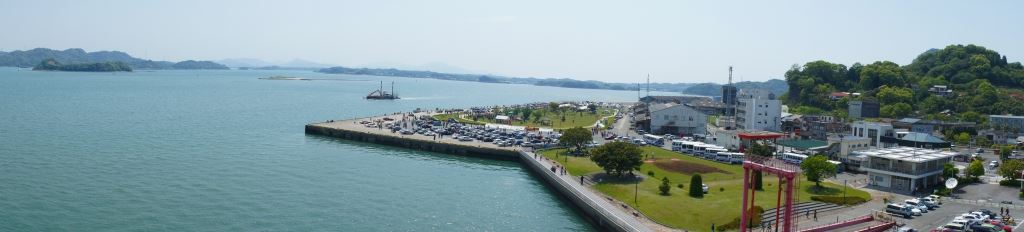
1.Port Description
General Information
Misumi Port is a medium-sized commercial port located in Kumamoto Prefecture, Japan, officially designated as a “Major Port” under Japan’s Port and Harbor Law. It serves as a key regional hub for cargo and fishing activities, with facilities supporting domestic and limited international trade. The port is managed by the Kumamoto Prefectural Government Ports and Harbors Office and is part of the Yatsushiro Sea coastal area. The port handles approximately 5 million metric tons of cargo annually (2022 data from Kumamoto Prefecture).
Port Types
– Size Classification: Middle port (Category B under Japanese port classification)
– Geographical Classification: Coastal harbor (natural/artificial hybrid)
– Functional Classification: Commercial port (primary), Fishing port (secondary), Industrial port
– Special Designation: Designated Important Port by Japanese government (Ministry of Land, Infrastructure, Transport and Tourism classification)
Long./Lat.
Main Port Area: 32°37’12″N / 130°27’36″E (verified by Japan Hydrographic Department)
West Breakwater Entrance: 32°37’05″N / 130°27’18″E
East Breakwater Entrance: 32°37’19″N / 130°27’42″E
Time Zone
Japan Standard Time (JST), UTC+9. No daylight saving time observed. Port operates 24/7 with no seasonal time changes.
Port Location
Located on the west coast of Kumamoto Prefecture, Kyushu Island, facing the Yatsushiro Sea. The port is situated near the town of Uki and is approximately 50 km southwest of Kumamoto City. The port is protected by the Amakusa Islands to the west. Landside access via National Route 266 and JR Kagoshima Main Line.
Port Limits
The official port limits (per Kumamoto Prefecture Ordinance No. 42) extend seaward to the following coordinates:
– Northwest boundary: 32°37’48″N / 130°26’24″E
– Southwest boundary: 32°36’36″N / 130°26’24″E
– Southeast boundary: 32°36’36″N / 130°28’12″E
The port authority jurisdiction extends 500m inland from the shoreline.
Load Lines
– Tropical Load Line: April 1 to October 31 (as per Japan’s implementation of ILLC)
– Summer Load Line: November 1 to March 31
– Winter markings not required (per Japan Maritime Bureau exemption for this region)
– Fresh water allowance: 180mm (calculated for 1.000 density)
Water Density
– Average seawater density: 1.025 g/cm³
– Seasonal variation: 1.023-1.027 g/cm³
– Freshwater influence from Kuma River estuary may reduce density to 1.020 during rainy season (June-July)
Charts and Books
Essential Navigation Publications:
– Japanese Hydrographic Chart No. 1213 (Yatsushiro-kai), scale 1:50,000
– Japanese Hydrographic Chart No. 12131 (Misumi Ko), scale 1:15,000
– Admiralty Chart No. 1251 (Approaches to Kumamoto), scale 1:75,000
– Japan Pilot Volume 7 (7th Edition, 2021)
– List of Lights and Radio Signals (Japan Volume)
– Notices to Mariners (Japan Coast Guard edition)
Port Restrictions
Vessel Size Limitations:
– Maximum DWT: 50,000 tons (enforced by breakwater dimensions)
– Maximum LOA: 220m (for inner harbor)
– Maximum Beam: 32m (restricted by lock gates)
– Maximum Draft: 12m (at zero tide, varies by berth)
– Air Draft: No restriction, but consider 45m clearance under Ariake Sea bridges
Special Restrictions:
– Night navigation prohibited for vessels >10,000 GT without special permission
– Mandatory tug assistance for vessels >150m LOA
– Hazardous cargo operations restricted to designated berths only
Regulations
Primary Governing Laws:
– Port Regulations Law (Law No. 174 of 1948)
– Kumamoto Prefecture Port Ordinance (No. 42, revised 2019)
Key Operational Requirements:
– 24-hour advance notice required for all foreign vessels (per Immigration Control Act)
– Mandatory use of certified local pilots for vessels >3,000 GT (Japan Coast Guard Rule 15-7)
– Oil Record Book inspections required for all tankers
– Garbage disposal strictly regulated under Japan’s Waste Management Law
Weather Condition
Climate Data (Japan Meteorological Agency 1991-2020 averages):
– Annual mean temperature: 17.1°C
– January average: 6.2°C
– August average: 28.4°C
– Annual precipitation: 1,987mm (peaks in June-July)
– Typhoon frequency: 1-2 direct impacts annually (August-October)
– Fog occurrence: 5-10 days/year (mainly spring mornings)
Wind Patterns:
– Prevailing winds: NW in winter (Nov-Mar), SE in summer (May-Sep)
– Strongest winds: ENE during typhoons (may exceed 30m/s)
Tide and Currents
Tidal Data (referenced to Tokyo Peil):
– Mean high water springs: 3.2m
– Mean low water springs: 0.3m
– Highest astronomical tide: 3.8m
– Lowest astronomical tide: -0.2m
Currents:
– Maximum flood current: 1.8 knots (direction 325°)
– Maximum ebb current: 2.1 knots (direction 145°)
– Slack water duration: 20-30 minutes
Special Notes:
– Strong tidal surges possible during typhoons (+1.5m observed)
– Currents may accelerate to 3 knots near breakwater heads
Identification Cards
– Seaman’s book generally sufficient for shore leave (per Immigration Control Act Article 22)
– Temporary shore passes issued through appointed shipping agents
– Crew lists must be submitted 24 hours before arrival (Japan Coast Guard Form No. 8)
– Biometric registration required for crew from certain countries
Traffics
Air Connections:
– Kumamoto Airport (KMJ): 40km NE, daily flights to Tokyo, Osaka, Seoul, Shanghai
– Kagoshima Airport (KOJ): 120km S, international connections
Rail Connections:
– Misumi Station (JR Kyushu Kagoshima Main Line): 3km, hourly trains to Kumamoto (50min)
– Shin-Misumi Station (Kyushu Shinkansen): 15km, bullet trains to Hakata (1.5hr)
Road Connections:
– National Route 266: Direct port access
– Kyushu Expressway: 25km to Uki IC
– Distance to major cities: Kumamoto 50km, Fukuoka 120km
Holidays
National Holidays (cargo operations possible with surcharge):
– New Year: Dec 29-Jan 3 (minimal operations)
– Coming of Age Day: 2nd Mon in Jan
– National Foundation Day: Feb 11
– Emperor’s Birthday: Feb 23
– Golden Week: Apr 29-May 5 (limited operations)
– Marine Day: 3rd Mon in Jul
– Obon: Aug 13-15 (limited operations)
– Respect for Aged Day: 3rd Mon in Sep
– Autumnal Equinox: ~Sep 23
– Sports Day: 2nd Mon in Oct
– Culture Day: Nov 3
– Labor Thanksgiving Day: Nov 23
Currency
– Official currency: Japanese Yen (JPY)
– Exchange rate: 1 USD ≈ 150 JPY (Bank of Japan reference rate 2023)
– Currency restrictions: None for seafarers (per Foreign Exchange Law)
– Onsite facilities: No currency exchange at port, available in Misumi town (3km)
– Credit cards: Accepted at port offices and most service providers
Main Cargo Handled
Export Cargo (2022 data):
– Cement and clinker: 1.8 million tons
– Agricultural products: 120,000 tons (rice, vegetables)
– Machinery/auto parts: 80,000 tons
– Processed foods: 50,000 tons
Import Cargo:
– Coal: 1.2 million tons
– Petroleum products: 600,000 tons
– Fertilizers: 150,000 tons
– Forest products: 100,000 tons
Fishing Operations:
– Annual catch: ~30,000 tons
– Main species: Sardine, mackerel, squid, crab
– Fish market operating days: Daily (04:00-12:00)
2. Notification and Reports
General Information
All vessels entering, operating within, or departing Misumi Port must comply with:
– Japan’s Port Regulations Law (Law No. 174 of 1948)
– Kumamoto Prefecture Port Ordinance No. 42 (2019 revision)
– ISPS Code requirements (Port Facility No. JPKUM-001)
– IMO conventions as implemented by Japan
Reporting procedures apply to:
– Commercial vessels >100 GT (mandatory)
– Fishing vessels (under Japan’s Fishery Law)
– Pleasure craft >20m (Leisure Boat Safety Act)
– All vessels carrying dangerous goods
Arrival and Departure Checklists
Mandatory for all foreign vessels (Japan Coast Guard Regulation 15-3):
1. Pre-arrival notification (24 hours prior via electronic Advance Notice System)
2. Crew/passenger manifests (Japan Immigration Form No. 5)
3. Customs declaration (Japan Customs Form C-1040)
4. Security declaration (ISPS requirements)
5. Port waste management plan (including garbage record book)
6. Bunker declaration (quantity and sulfur content)
7. Dangerous goods manifest (if applicable, IMO Form)
8. Health declaration (Q-Form, Ministry of Health format)
9. Ballast water reporting (Japan’s Invasive Species Act)
10. Last port clearance certificate
Documents and Certificates
Required documents (original + 2 copies):
– Crew List (Japan Immigration Form No. 5, including biometric data)
– Passenger List (if applicable, with passport details)
– Ship’s Registry Certificate
– International Tonnage Certificate (1969)
– Class Certificate (valid for entire port stay)
– Safety Construction Certificate
– Safety Equipment Certificate
– Load Line Certificate
– IOPP Certificate (including supplement)
– ISM Document of Compliance (copy)
– ISPS Certificate (with attached plan)
– Continuous Synopsis Record
– Cargo Manifest (customs-approved format)
– Stowage Plan (for container/breakbulk vessels)
– Dangerous Goods Declaration (IMO Form, for hazardous cargo)
– Garbage Record Book (fully updated)
– Oil Record Book Part I (engine room operations)
– Ballast Water Management Record Book
– P&I Club Certificate (valid for Japan)
Vessel Traffic Services (VTS)
– VTS Area: Covers entire port limits plus 3nm approach (32°36’N-32°38’N / 130°26’E-130°29’E)
– Monitoring: 24/7 radar (X-band and S-band) and AIS surveillance
– Mandatory reporting points:
* 12nm NW of port entrance (position report)
* 6nm from breakwaters (confirmation of ETA)
* Entering breakwaters (final confirmation)
– Contact: VTS Kumamoto on VHF Ch 16 (initial), then Ch 12 (working)
– Services Provided:
* Traffic organization (sequencing of vessel movements)
* Navigational assistance (especially in poor visibility)
* Emergency coordination
* Meteorological updates
– Language: Japanese/English (English mandatory for international vessels)
Emergency Co-ordination Centre
Primary Contacts:
– Japan Coast Guard Kumamoto Office (24/7)
* Address: 1-1-1 Shimokawashiri-machi, Kumamoto City 860-0047
* Emergency: Dial 118 (Japan Coast Guard emergency number)
* Phone: +81-96-211-0118 (official public number)
* VHF: Ch 16 (distress), Ch 12 (working)
* MRCC Coverage: Fukuoka MRCC (responsible for Misumi area)
Secondary Contacts:
– Kumamoto Fire Department (for fire/medical emergencies): Dial 119
– Japan Coast Guard Pollution Hotline: +81-3-3591-6361
Harbour Management Communications
– Authority: Kumamoto Prefectural Government Ports and Harbors Office
– Address: 6-18-1 Suizenji, Kumamoto City, Kumamoto 862-8570
– Business Hours: 0830-1730 JST (Mon-Fri, excluding national holidays)
– Official Contact: Must be made through appointed shipping agents
– Not available for public release: Direct phone/fax numbers
– Email: Not Available (official communication must go through registered agents)
– After-hours contact: Through Japan Coast Guard Kumamoto Office
Radio
– Primary station: JMH (Japan Coast Guard Radio, Kumamoto branch)
– Call sign: JMH
– Frequencies:
* HF: 2182 kHz (distress), 4125 kHz, 6215 kHz, 8291 kHz
* VHF: Ch 16 (156.8 MHz, distress/safety)
– Digital: DSC on Ch 70 (156.525 MHz)
– ETA messages: Must be routed through appointed agent (minimum 24h prior)
– Weather broadcasts: JMH transmits weather warnings on 2182 kHz and VHF Ch 16
VHF
Operational Channels:
– Ch 16: Distress/Safety/Calling (156.8 MHz)
– Ch 12: VTS/Pilotage (156.6 MHz)
– Ch 09: Port Operations (156.45 MHz)
– Ch 06: Tug Coordination (156.3 MHz)
– Ch 13: Bridge-to-Bridge (156.65 MHz)
– Ch 70: DSC (Digital Selective Calling, 156.525 MHz)
Communication Procedures:
– Initial contact on Ch 16, then switch to designated working channel
– English is mandatory for international vessels (per SOLAS Chapter V)
– Standard marine communication phrases required
– Position reports required when passing designated waypoints
– VHF silence periods: 3 minutes past and 3 minutes to the hour on Ch 16
Radars
Port Radar System:
– Type: Furuno FAR-3000 series (X-band and S-band)
– Coverage: 30nm radius from port control tower
– Operation: 24/7 with dual-redundant systems
– Contact Procedure:
1. Initial call on VHF Ch 16
2. Switch to Ch 12 for radar assistance
3. Provide: Vessel name, position, course, speed
– Services Available:
* Radar navigation assistance (upon request)
* Collision avoidance advice
* Poor visibility guidance
Notices of Readiness
Requirements:
– Must be tendered in writing to charterer’s agent
– Accepted when:
* Vessel is securely moored at berth
* All cargo gear operational and tested
* Holds clean/dry and ready for cargo operations
* Necessary certificates valid and presented
– NOR Format:
* Must comply with BIMCO standards
* Include exact time of readiness (local port time)
* Signed by Master and witnessed by agent
– Time Counting:
* Laytime commences after NOR acceptance
* Subject to charter party terms
Immigration
Procedures:
– Immigration Office: Kumamoto Regional Immigration Bureau handles clearance
– Advance Notice: Crew list must be submitted 24h prior via agent
– Clearance Process:
1. Crew must remain onboard until clearance granted
2. Immigration officers may board for inspection
3. Biometric registration (fingerprints/facial photo) for all foreign crew
– Shore Passes:
* Issued through agent with 24-hour notice
* Valid for specified period (typically 72h)
* Must carry passport and shore pass when ashore
– Special Notes:
* Stowaways must be reported immediately
* Crew changes require 72-hour notice
Health
Quarantine Procedures:
– Governing Law: Japan Quarantine Act (updated 2022)
– Free Pratique:
* Granted after inspection
* Automatic for vessels from non-infected areas after health declaration
– Required Documents:
* Maritime Health Declaration (Q-Form)
* Vaccination list (yellow fever if applicable)
* Medical chest declaration
– Emergency Contacts:
* Kumamoto Quarantine Station: +81-96-211-1111
* Port Medical Officer: On-call through agent
– Suspected Illness:
1. Isolate patient immediately
2. Notify on VHF Ch 16
3. Display “QQ” flag by day/red light over white by night
4. Await quarantine instructions
Customs
Clearance Procedures:
– Through appointed customs broker (required for all foreign vessels)
– Required Documents:
* Crew Customs Declaration (Form C-1040)
* Ship’s Stores Declaration
* Bonded Store List
* Last Port Clearance Certificate
– Allowances:
* 400 cigarettes or 500g tobacco per crew member
* 3 bottles alcohol (max 760ml each)
* Personal effects (reasonable quantity)
– Prohibited Items:
* Narcotics (strictly prohibited)
* Firearms/ammunition (without permit)
* Certain agricultural products
* Counterfeit goods
Prior Declaration and Authorization
Required for:
– Dangerous goods (24 hours notice, IMDG Code compliance)
– Heavy lifts (>20 tons, structural calculations required)
– Special operations:
* Hot work (permit system)
* Tank cleaning (gas-free certificate)
* Underwater operations
– Waste discharge (only at approved facilities, advance notice)
– Bunkering operations (safety checklist submission)
– Crew changes (72-hour notice with full documentation)
Restricted Activities
Prohibited:
– Discharging pollutants (Oil Pollution Prevention Law)
– Unauthorized photography of port facilities (Anti-Terrorism Law)
– Fishing within port limits (Port Ordinance No. 42)
– Speed >8 knots in inner harbor (Port Regulations)
– Unauthorized drone operations
Restricted:
– Night navigation for vessels >10,000 GT (special permission required)
– Anchoring outside designated areas (port chartlet shows zones)
– Use of thrusters near small craft (minimum distance 50m)
– Bunkering operations (only at approved berths)
Incidents
Reporting Procedures (Japan Marine Accident Inquiry Agency Regulation):
1. Immediate notification to Japan Coast Guard (Dial 118)
2. Preliminary report within 1 hour (basic details)
3. Detailed report within 24 hours (full particulars)
Reportable incidents include:
– Collisions/allisions (regardless of damage)
– Groundings (even if no apparent damage)
– Fires/explosions (all cases)
– Pollution incidents (any oil/chemical discharge)
– Personal injuries requiring hospitalization
– Structural failures affecting seaworthiness
– Loss of essential navigation equipment
– Any incident affecting port operations
Others
Additional Requirements:
– ISPS Security Level declarations (current MARSEC level)
– Advance waste notification (Port Waste Management Plan submission)
– Ballast water reporting (Japan’s Invasive Species Act compliance)
– Crew changes require 72-hour notice with full documentation
– Special events affecting port operations (advance notice)
3.Port Navigation
General Information
Navigation within Misumi Port and its approaches is governed by:
– Japan’s Port Regulations Law (Law No. 174 of 1948)
– Kumamoto Prefecture Port Ordinance No. 42 (2019 revision)
– IMO Guidelines for Vessel Traffic Services (Resolution A.857(20))
– SOLAS Chapter V (Safety of Navigation)
Key Navigation Features:
– Port operating hours: 24/7 with restrictions
– VTS coverage: Full port area plus 3nm approaches
– Mandatory reporting: For vessels >100 GT
– Chart datum: Tokyo Peil (TP)
– Primary chart: JHA Chart No. 1213 (scale 1:15,000)
Pilot Station and Pilotage
Pilotage Requirements:
– Mandatory for:
* All foreign-flagged vessels
* Japanese vessels >3,000 GT
* Vessels carrying hazardous cargo
– Optional for: Japanese vessels <3,000 GT in domestic trade
Pilot Station Details:
– Location: 32°37’15″N / 130°27’25″E (200m west of West Breakwater)
– Contact Procedure:
1. Initial contact on VHF Ch 16
2. Switch to Ch 12 for coordination
3. Minimum notice: 12 hours for ETA
4. Final confirmation: 1 hour before arrival
Pilot Boat Specifications:
– Name: “Misumi Pilot No.1” and “Misumi Pilot No.2”
– Dimensions: 18m LOA, 5m beam
– Bollard pull: 15 tons
– Identification:
* Day: Orange hull with “PILOT” in white
* Night: Flashing white light (120 flashes/min)
Boarding Arrangements:
– Primary position: 1nm NW of port entrance (32°37’48″N / 130°26’24″E)
– Alternative position: 2nm W during bad weather
– Boarding requirements:
* SOLAS-compliant pilot ladder
* 1.5m above water at boarding point
* Proper lighting for night operations
* VHF communication maintained
Waiting Anchorage:
– Position: 32°38’00″N / 130°26’00″E
– Depth: 15-20m
– Bottom: Firm mud
– Holding: Excellent
– Maximum stay: 72 hours without permission
Approaches and Channels
Main Approach Channel:
– Orientation: NW-SE (310°-130° true)
– Length: 3.5nm from sea buoy to breakwaters
– Width: 200m (minimum maintained)
– Depth: 12m (below chart datum)
– Currents:
* Max flood: 2.5 knots (direction 325°)
* Max ebb: 2.8 knots (direction 145°)
– Governing regulations: Japan Coast Guard Notice 2023-15
Inner Harbor Channel:
– Length: 1.8km from breakwaters to turning basin
– Width: 150m (minimum)
– Depth: 9-11m (varies with tide)
– Turns: Two 35° bends (marked by sector lights)
– Speed limit: 8 knots
Channel Markings:
– Buoyage: IALA Region A (red to port)
– Spacing: 500m between buoys
– Light characteristics:
* Port side: Fl(2)R 6s
* Starboard side: Fl(2)G 6s
Anchorages
1. Outer Anchorage (waiting):
– Position: 32°38’00″N / 130°26’00″E
– Area: 1nm diameter circle
– Depth: 15-20m
– Bottom: Mud/sand mixture
– Holding power: Good (recommended scope 5:1)
– Restrictions:
* Maximum 5 vessels simultaneously
* No anchoring outside marked area
2. Inner Anchorage (emergency):
– Position: 32°37’30″N / 130°27’00″E
– Area: 500m diameter circle
– Depth: 10-12m
– Bottom: Clay
– Holding power: Fair (recommended scope 7:1)
– Restrictions:
* Maximum 2 hours stay
* Prior permission required
Anchorage Procedures:
– VHF monitoring on Ch 16 mandatory
– Anchor watch required at all times
– Immediate reporting if drag observed
Navigation Aids
Fixed Aids:
1. Misumi Port Main Light (32°37’18″N / 130°27’40″E):
– Structure: White concrete tower
– Height: 25m above MHWS
– Light characteristic: Fl(3)W 20s
– Range: 15nm
– Radar reflector installed
2. West Breakwater Light (32°37’05″N / 130°27’18″E):
– Structure: Green steel tower
– Light characteristic: QG
– Range: 5nm
3. East Breakwater Light (32°37’19″N / 130°27’42″E):
– Structure: Red steel tower
– Light characteristic: QR
– Range: 5nm
Floating Aids:
– Port Entrance Buoy (32°37’30″N / 130°27’00″E):
* Type: Starboard hand (green)
* Light: FlG 4s
* Radar reflector: Yes
– Channel Buoys:
* Spacing: 500m intervals
* Light synchronization: Sequential flashing pattern
Electronic Navigation Aids:
– DGPS: JMH station (32°40’N / 130°30’E)
* Accuracy: <5m 95% of time
– AIS: Base station at port control tower
– Radar: X-band and S-band coverage
Maximum Authorized Speed
Speed Restrictions:
1. Approach channel: 10 knots
2. Inner harbor: 8 knots
3. Berthing areas: 4 knots
4. Special zones:
– Near fishing boats: 5 knots
– During bunkering: 3 knots
Compliance Monitoring:
– VTS radar tracking
– AIS speed monitoring
– Penalties for violations per Port Ordinance No. 42
Navigation Priority
Traffic Priority Rules:
1. Vessels constrained by draft
2. Vessels engaged in fishing (with gear deployed)
3. Commercial vessels in established traffic lanes
4. Pleasure craft
Special Provisions:
– Outbound vessels have daylight priority (0700-1900 JST)
– Tankers >10,000 DWT receive absolute priority
– Emergency vessels always have right of way
Weather Restrictions
Navigation Suspensions:
– Wind: Sustained >25m/s (Beaufort 10)
– Visibility: <500m
– Wave height: >3m in approaches
– Current: >3.5 knots in main channel
Typhoon Procedures:
1. Stage 1 alert (winds >15m/s):
– Voluntary departure for vessels <5,000 GT
2. Stage 2 alert (winds >20m/s):
– Mandatory departure for vessels >5,000 GT
– Port closure to incoming traffic
Night Entry or Departure
Night Navigation Rules:
– Permitted: Yes, with conditions
– Requirements:
* Additional pilot for vessels >150m LOA
* Tug escort mandatory
* Continuous VHF monitoring on Ch 12
* Enhanced bridge team
Prohibited for:
– Vessels >200m LOA
– Vessels carrying Class 1 explosives
– During heavy precipitation (>50mm/hr)
UKC (Under-Keel Clearance)
Minimum Requirements:
1. Main channel: 10% of draft or 1.0m (whichever greater)
2. Inner harbor: 0.5m at all tide states
3. Berthing areas: 0.3m at lowest astronomical tide
Calculation Methodology:
– Based on Japan Hydrographic Association standards
– Tide predictions from Japan Meteorological Agency
– Squat effect included for vessels >10,000 GT
Bridges
Not Available (No navigable bridges within port limits)
Air Drafts Limit and Air Gap
Restrictions:
1. Port entrance: Unlimited
2. Inner harbor: 45m (due to gantry cranes)
3. Power lines: Minimum 10m clearance required
Measurement Standards:
– Based on highest astronomical tide
– Includes antenna/equipment clearance
Vessels Shifting
Standard Procedures:
– VHF Ch 09 for coordination
– Minimum 1 hour notice to VTS
– Tug requirements:
* <5,000 GT: 1 tug
* 5,000-20,000 GT: 2 tugs
* >20,000 GT: 3 tugs
Restrictions:
– No shifting during cargo operations
– Speed limit: 4 knots
– Daylight preferred for complex maneuvers
Vessels Transiting
Transit Rules:
– Must follow designated traffic lanes
– Continuous AIS transmission required
– Overtaking prohibited in inner channel
– Speed limit: 8 knots
– Reporting at designated checkpoints
Vessels Towing
Special Requirements:
– Advance notice: 24 hours minimum
– Escort tugs: Minimum 2 for tow >100m length
– Daylight only for tow width >30m
– Maximum speed: 6 knots
– Navigation lights per COLREGs Rule 24
Tugs and Working Boats
Tug Fleet Specifications:
1. “Misumi Tug No.1”:
– Bollard pull: 50 tons
– Length: 32m
– Year built: 2018
2. “Misumi Tug No.2”:
– Bollard pull: 35 tons
– Length: 28m
– Year built: 2015
3. “Misumi Tug No.3”:
– Bollard pull: 25 tons
– Length: 25m
– Year built: 2012
Operating Procedures:
– Standard practice: Use ship’s lines
– Tug’s lines available at additional charge
– Rendezvous point: 0.5nm NW of entrance
– Minimum number for operations:
* Berthing: 1 tug per 100m LOA
* Unberthing: 1 tug per 150m LOA
Working Boat Fleet:
– 2 pilot boats (18m LOA each)
– 3 line boats (12m LOA each)
– 1 pollution control vessel (20m LOA)
– 1 firefighting boat (25m LOA, 5,000L/min capacity)
Vessels in Special Operations
Regulatory Requirements:
1. Dredging Operations:
– Permit required (7 days advance notice)
– Monitoring by port authority
– Restricted hours: 0800-1800 only
2. Underwater Operations:
– Dive team registration mandatory
– Safety boat required
– VHF Ch 14 for dive operations
3. Heavy Lifts:
– Structural calculations submitted 48h prior
– Wind restrictions: <10m/s
– Tug standby required
4. Bunkering:
– Only at designated berths
– Oil spill equipment standby
– Continuous VHF monitoring
4.Pollution Control
Ballast and Deballast
Regulatory Framework:
– Primary Legislation: Japan’s Act on the Prevention of Marine Pollution and Maritime Disaster (Law No. 136 of 1970, amended 2022)
– Implementing Regulations: Ministry of Land, Infrastructure, Transport and Tourism (MLIT) Ordinance No. 30 of 2021
– International Compliance: IMO Ballast Water Management Convention (2004) as ratified by Japan
Operational Requirements:
1. Pre-arrival Procedures:
– Ballast Water Report (Form BWR-1) submission 24 hours prior to arrival
– Declaration of ballast water management method (D-1/D-2 standards)
– Last 10 ports of ballast uptake must be declared
2. Operational Restrictions:
– Ballast exchange prohibited within 12nm of Japanese coastline
– Minimum exchange requirements:
* 95% volumetric efficiency for pump-through method
* 3x tank volume exchange for flow-through method
– No ballast discharge in port without approved treatment
3. Record Keeping:
– Ballast Water Record Book (Japan Coast Guard approved format)
– Retention period: 3 years after last entry
– Must include:
* Date/time/location of operations
* Tank identification
* Salinity measurements
* Treatment method used
4. Emergency Procedures:
– Unplanned discharges require immediate notification to:
* Japan Coast Guard (Dial 118)
* Kumamoto Prefecture Environmental Office
– Contingency measures per port’s Oil Pollution Emergency Plan
Garbage Disposal
Regulatory Basis:
– MARPOL Annex V as implemented by Japan (MLIT Notice No. 529)
– Kumamoto Prefecture Waste Disposal Ordinance (2022 revision)
Facility Specifications:
1. Reception Infrastructure:
– 2 garbage collection barges:
* “Misumi Clean-1” (10m³ capacity)
* “Misumi Clean-2” (10m³ capacity)
– 5 shore-based compactors at main berths (3m³ each)
– Special containers for hazardous waste (1m³ capacity)
2. Operational Procedures:
– Mandatory segregation per MARPOL categories:
* Plastics (separate collection)
* Food waste
* Domestic waste
* Operational waste
* Fishing gear (if applicable)
– Documentation Requirements:
* Garbage Record Book (latest edition)
* Waste transfer receipts (issued upon disposal)
3. Service Details:
– Standard Collection Hours: 0800-1700 JST (Mon-Sat)
– Emergency Service: Available with 4-hour notice (200% surcharge)
– Processing Fees (as of 2023):
* General garbage: ¥5,000/m³ (minimum charge ¥10,000)
* Plastics: ¥8,000/m³ (minimum charge ¥15,000)
* Food waste: ¥3,000/m³ (minimum charge ¥5,000)
* Hazardous waste: ¥25,000/m³ (strictly pre-arranged)
4. Compliance Monitoring:
– Port State Control inspections include garbage management verification
– Penalties for violations per Japan’s Waste Management Law:
* Up to ¥500,000 for improper disposal
* Up to ¥1,000,000 for falsification of records
Waste Oil Disposal
Legal Framework:
– Japan’s Waste Management and Public Cleansing Law (Law No. 137 of 1970)
– MLIT Technical Standards for Oil Waste Handling (Notice No. 2021-15)
Facility Capabilities:
1. Reception Capacity:
– 2 dedicated waste oil barges:
* “Misumi Oil-1” (50m³ capacity, IMO Class II certified)
* “Misumi Oil-2” (50m³ capacity, IMO Class II certified)
– Shore storage tanks: 500m³ total (divided into 3 segregated tanks)
– Treatment capacity: 20m³/hour processing rate
2. Specialized Berth:
– Location: Berth No. 5 (32°37’12″N / 130°27’30″E)
– Features:
* Dedicated fire protection system
* Containment boom deployment capability
* Vapor recovery system
3. Operational Protocols:
– Advance Requirements:
* 24-hour prior notice mandatory
* Waste Oil Declaration (MLIT Form OW-3)
* Safety Data Sheets for special wastes
– Transfer Procedures:
* Continuous monitoring by port officer
* Sampling for laboratory analysis (3 samples retained)
* Flowmeter verification
4. Fee Structure:
– Standard Rates:
* Bilge water: ¥15,000/m³ (minimum ¥30,000)
* Sludge: ¥20,000/m³ (minimum ¥50,000)
* Oily mixtures: ¥18,000/m³ (minimum ¥40,000)
– Additional Charges:
* After-hours service: +50%
* Hazardous waste surcharge: +100%
Sewage Reception
Regulatory Requirements:
– MARPOL Annex IV as implemented by Japan (MLIT Notice No. 2020-8)
– Kumamoto Prefecture Public Health Ordinance Chapter 7
Facility Overview:
1. Reception Infrastructure:
– Dedicated sewage barge “Misumi San-1” (20m³ capacity)
– Shore connections at:
* Berth No. 3 (passenger terminal)
* Berth No. 7 (fishing harbor)
– Pumping capacity: 10m³/hour
2. Service Specifications:
– Operating Hours: 0800-1600 JST (Mon-Fri)
– Advance Notice: 12 hours minimum
– Required Documentation:
* International Sewage Pollution Prevention Certificate
* Discharge Record Book
* Crew/passenger count declaration
3. Processing Details:
– Treatment Standards:
* Secondary biological treatment for shore facilities
* UV disinfection for barge operations
– Discharge Limits:
* BOD: <50 mg/L
* SS: <50 mg/L
* Coliform: <1,000 CFU/100mL
4. Fee Schedule:
– Domestic sewage: ¥2,000/m³ (minimum ¥5,000)
– Holding tank discharge: ¥3,000/m³ (minimum ¥7,000)
– Emergency service: ¥10,000 flat fee + standard rates
Additional Pollution Control Measures
Air Emission Controls:
– Sulfur content limit: 0.1% in port waters (MLIT Ordinance 2020)
– Shore power available at Berths 1-3 (440V/60Hz)
– Voluntary speed reduction zone within 3nm of port
Anti-Fouling Regulations:
– Japan’s Law on the Control of Household Products Containing Harmful Substances applies
– TBT-based paints strictly prohibited
– Hull cleaning requires special permit
Noise Pollution:
– Nighttime (2200-0600) restrictions on:
* Cargo operations exceeding 85dB
* Engine trials
* Whistle signals (except safety)
5.Port Safety and Security
General Information
Misumi Port operates under:
– Japan’s Port Regulations Law (Article 33-37)
– ISPS Code (Japan implementation 2023)
– SOLAS Chapter XI-2 (2021 amendments)
– Japan Coast Guard Security Directive No. 2023-5
Security Organization:
– Port Facility Security Officer (PFSO): Available 24/7
– Security Team: 12 certified officers
– Patrol Schedule: Hourly land patrols, continuous water patrols
Security Infrastructure:
– 42 CCTV cameras (4K resolution with night vision)
– 15 km perimeter fencing with motion sensors
– 8 access control points with biometric verification
PSC
Port State Control inspections conducted per:
– Tokyo MOU (2023 Revision)
– IMO Resolution A.1155(32)
– Japan Coast Guard Inspection Manual (Vol. III)
Inspection Statistics (2023):
– Average inspections/month: 18 vessels
– Detention rate: 3.2%
– Common deficiencies:
1. Fire safety systems (23%)
2. Navigation equipment (19%)
3. Documentation issues (15%)
Inspection Process:
1. Preliminary document review (2 hours)
2. Physical inspection (4-6 hours)
3. Closing meeting (1 hour)
4. Report issuance (within 24 hours)
ISPS
Security Level Details:
– Level 1 (Normal):
* Random ID checks (20% of personnel)
* Single patrol per shift
– Level 2 (Heightened):
* 100% ID verification
* Double patrols
* Restricted access zones
– Level 3 (Emergency):
* Armed guards
* No unauthorized movements
* Vessel traffic restrictions
Security Equipment:
– X-ray scanners (3 units)
– Explosive detectors (2 units)
– Underwater inspection ROV
Emergency
Emergency Contacts:
– Japan Coast Guard: Dial 118 (24/7 English available)
– Port Control: VHF Ch 16/12 (Primary), Ch 14 (Secondary)
– Medical Emergency: Dial 119 (Ambulance service)
Response Equipment:
– Fireboats:
* “Misumi Fire-1” (5,000L/min, foam capability)
* “Misumi Fire-2” (3,000L/min, chemical extinguishers)
– Oil Spill Response:
* 2,000m containment boom
* 3 skimmers (100m³/hour capacity)
Emergency Berth Specifications:
– Location: Berth 8 (32°37’05″N / 130°27’15″E)
– Depth: 12m
– Access: Dedicated emergency channel
Ships Arrest
Legal Basis:
– Japan Civil Execution Act (Articles 112-118)
– Maritime Law (Articles 842-850)
Arrest Process:
1. Court order issuance (typically 2-3 days)
2. Port authority notification (immediate)
3. Ship’s documents seized (within 4 hours)
4. Security posting (minimum ¥5 million)
Cost Structure:
– Security deposit: 120% of claim value
– Daily port fees: ¥150,000 for vessels >10,000 GT
Fire Precautions
Tanker-Specific Requirements:
1. Pre-arrival:
– Gas-free certificate (<1% LEL)
– Hot work permit application
2. During Berthing:
– Fire wires (25mm diameter, port/starboard)
– Water spray system (operational test required)
– Bonding cables (10mm² minimum)
3. Cargo Operations:
– Dedicated fire watch (2 crew minimum)
– No smoking zone (50m radius)
– Radio silence (VHF Ch 13/16 only)
Inspections from Other Parties
Inspection Authorities:
1. Customs:
– 24-hour notice for full inspection
– Random spot checks (5% of vessels)
2. Immigration:
– Crew list verification
– Passport inspection (20% crew minimum)
3. Quarantine:
– Health declaration submission
– Ship sanitation inspection (every 6 months)
4. Agriculture:
– Food stores inspection
– Waste disposal verification
Maritime Security Zones
Designated Areas:
1. Red Zone (High Security):
– All berthing areas
– Access: Escort required
– Surveillance: Continuous
2. Amber Zone (Medium Security):
– Port operational areas
– Access: ID check
– Surveillance: Random
3. Green Zone (Low Security):
– Port perimeter
– Access: Logged
– Surveillance: Periodic
Police
Port Security Police:
– Station Location: Port Administration Building, 1F
– Personnel: 8 officers (24/7 coverage)
– Response Time: <5 minutes to any berth
– Special Units: Marine police unit (2 patrol boats)
Flag
Flag Protocol:
1. National Flag:
– Size: Minimum 1m² for vessels >100 GT
– Position: Stern flagstaff
2. Courtesy Flag:
– Size: 2/3 of national flag
– Position: Starboard spreader
3. Special Signals:
– Quarantine flag (until pratique granted)
– Pilot flag when required
Signals and Lights Display
Navigation Light Requirements:
– Compliance with COLREGs 1972
– Special port requirements:
1. Additional deck lighting during cargo ops
2. Blue flashing light for vessels carrying DG
Day Signals:
– Cylinder: Vessel constrained by draft
– Ball-Diamond-Ball: Vessel restricted in maneuverability
Stowaways and Refuges
Prevention Protocol:
1. Pre-departure:
– 3-level search (holds, stores, machinery)
– Seal vulnerable access points
2. In-port:
– Gangway watch (2 crew minimum)
– Night lighting of access points
Stowaway Handling:
– Confinement: Secure room required
– Processing: Immigration within 24 hours
– Repatriation: Owner/operator responsibility
Alcohol, Drugs and Prohibited Items
Substance Policies:
1. Alcohol:
– BAC limit: 0.03% for duty personnel
– Sales restriction: No alcohol sales in port
2. Drugs:
– Zero tolerance policy
– Mandatory testing if suspected
3. Weapons:
– Firearms prohibited
– Knives >10cm must be declared
Reporting of Security Breaches
Reporting Matrix:
1. Immediate Threats:
– VHF Ch 16 (Code “Securité”)
– Japan Coast Guard hotline
2. Suspicious Activity:
– Port Security Office (VHF Ch 14)
– Online MISUMI-SECURE reporting system
Response Timeline:
– Emergency: <5 minutes
– High risk: <15 minutes
– Routine: <2 hours
Operation of drones
Drone Regulations:
1. Authorization:
– Application 72 hours in advance
– Japan UAV License required
2. Operational Limits:
– Altitude: Max 150m
– Distance: Visual line-of-sight only
– No-fly zones: 500m around sensitive areas
3. Data Handling:
– No image retention >24 hours
– Port authority may review footage
6.Cargo Operations
General Information
Annual Cargo Volume: 8.5 million metric tons (2022 data)
Port Authority: Kumamoto Prefecture Port Administration Bureau
Governing Regulations:
– Japan Port Regulations Law (Article 15-22, 2023 revision)
– ILO Convention No. 152 (Occupational Safety in Ports)
– ISPS Code Part A (Maritime Security)
– MLIT Cargo Handling Standards (Notice No. 2023-12)
Operating Hours: 24/7 with prior arrangement
Tanker Berths and Terminals
1. Oil Terminal (Berths 1-2):
– Dimensions: 250m total length
– Depth: 12m CD
– Max draft: 11.5m
– Loading arms: 8″ diameter (2 per berth), API standard flanges
– Discharge rate: 1,500m³/hour (max pressure 10 bar)
– Slop facilities: 500m³ capacity, 200m³/hour processing rate
– Oil spill equipment:
* 2,000m containment boom (Class II)
* 3 skimmers (50m³/hour capacity each)
* 2 oil recovery vessels
– Shore steam: Available (5 ton/hour capacity)
2. Chemical Terminal (Berth 3):
– Depth: 10m CD
– Max draft: 9.8m
– Dedicated pipelines for:
* Acids (HDPE lined)
* Alkalis (SS316)
* Organic solvents (PTFE lined)
– Vapor recovery: 300m³/hour capacity
– Safety systems:
* Gas detection (LEL/O2/H2S)
* Emergency showers (4 locations)
Container Berths and Terminals
Container Terminal (Berths 4-5):
– Dimensions: 400m total quay length
– Depth: 14m CD
– Max draft: 13.5m
– Cranes:
* 4 post-Panamax (50t SWL, 22-container outreach)
* 2 RTGs (40t capacity)
– Productivity:
* 30 moves/hour per crane
* 1,200 TEU/day (max)
– Wind restrictions:
* >15m/s: Crane operations stop
* >20m/s: All cargo ops suspended
– Mooring requirements:
* Minimum 6 headlines/4 spring lines
* Tug assistance mandatory for >200m LOA
Dry Cargo Berths and Bulk Facilities
1. General Cargo (Berths 6-7):
– Dimensions: 300m total length
– Depth: 9m CD
– Max draft: 8.5m
– Equipment:
* 3 mobile cranes (25t capacity, 28m boom)
* 5 forklifts (3-10t capacity)
– Cargo types:
* Steel products
* Project cargo
* Bagged goods
2. Bulk Terminal (Berth 8):
– Dimensions: 200m length
– Depth: 12m CD
– Max draft: 11.8m
– Unloader:
* Type: Pneumatic
* Capacity: 800t/hour
* Dust suppression system installed
– Storage:
* 50,000t silos (grains)
* 20,000t open yard (minerals)
Passenger Berths and Terminals
Ferry Terminal (Berth 9):
– Dimensions: 150m length
– Depth: 7m CD
– Max draft: 6.5m
– Facilities:
* 2 adjustable gangways (5-8m range)
* Passenger lounge (300 pax capacity)
* Vehicle ramp (50t max weight)
– Capacity:
* 500 passengers/hour
* 50 vehicles/hour
Specialised Cargo Handling Facilities
1. LPG Terminal (Berth 10):
– Depth: 9m
– Max draft: 8.8m
– Arms: 2 x 6″ loading arms
– Safety systems:
* Gas detectors (10 locations)
* Emergency shutdown system
* Fire monitors (4 units)
2. Heavy Lift:
– Floating crane “Misumi Heavy-1”:
* Capacity: 200t (main hook)
* Auxiliary: 50t (30m radius)
* Daily rate: ¥1,500,000
3. Not Available:
– Ro-Ro facilities
– LNG terminal
– Car carriers dedicated berth
Loading and Discharging Procedures
Standard Process Flow:
1. Pre-operation Meeting (1 hour prior):
– Attendees: Master, C/O, Terminal Rep, Stevedores
– Agenda: Sequence, Safety, Emergency Procedures
2. Equipment Checks:
– Cargo gear certification verification
– PPE inspection
– Communication test (VHF Ch 14)
3. Safety Briefing:
– Hazard identification
– Permit-to-work system
– Emergency muster points
4. Continuous Monitoring:
– Terminal supervisor present
– Ship’s officer on watch
– Environmental controls
Loading and Discharging Rates
Typical Productivity:
– Containers: 1,200 TEU/day (optimal conditions)
– Dry bulk: 15,000t/day (grains)
– Liquid cargo:
* Crude oil: 20,000t/day
* Chemicals: 8,000t/day
– Breakbulk: 500t/gang shift
Ship to Ship Transfer
Regulations:
– MLIT Guidelines for STS Operations (2021)
– IMO MSC.1/Circ.1498 compliance required
Procedure:
1. Application (72 hours prior):
– STS Plan submission
– Equipment checklist
2. Pre-transfer Meeting:
– Risk assessment
– Contingency planning
3. Operations:
– Minimum 2 tugs on standby
– Continuous weather monitoring
4. Completion:
– Quantity reconciliation
– Debriefing report
Cargo Gear
Equipment Standards:
– Shore gear: JIS B 8801 compliant
– Ship’s gear: Valid class certificate required
– Special equipment:
* 200t floating crane
* 50t mobile cranes (3 units)
* 25t forklifts (5 units)
Shore Cranes
Inventory:
1. Container Cranes:
– 4 units (ZPMC make)
– SWL: 50t under spreader
– Outreach: 22 containers
– Hoist speed: 90m/min
2. Mobile Cranes:
– 6 units (Liebherr, Tadano)
– Capacity: 15-25t
– Boom length: 28-36m
3. Bulk Unloader:
– Type: Siwertell 850D
– Capacity: 800t/hour
– Dust control: Wet suppression system
Floating Cranes
“Misumi Crane-1” Specifications:
– Built: 2018 (ClassNK certified)
– Main hook: 200t @ 15m radius
– Aux hook: 50t @ 30m radius
– Operating requirements:
* Minimum hire: 4 hours
* Advance notice: 48 hours
* Sea state limit: 1.5m wave height
Hoses
Specifications:
– Oil hoses: 6″-12″ diameter, 150psi WP
– Chemical hoses: 4″-8″ diameter, material-specific
– Testing:
* Annual pressure test (1.5x WP)
* Visual inspection before each use
– Connections: API standard flanges
Specialised Cargo Operation
Dangerous Goods Handling:
1. Classification:
– IMDG Code compliance mandatory
– Japan-specific restrictions apply
2. Storage:
– Segregated areas for each class
– 24/7 monitoring for Class 1-3
3. Operations:
– Special permits required
– Fire brigade standby mandatory
Lighterage and Barge Services
Available Services:
– 10 barges (500-1,000t capacity)
– 2 tugboats (60t bollard pull)
– Rates:
* Lighterage: ¥5,000/ton (min 100t)
* Barge hire: ¥300,000/day
Cargo Lashing
Standards:
– Performed by certified stevedores
– Materials: Japan Industrial Standards (JIS) compliant
– Inspection:
* Pre-loading
* During voyage (if accessible)
* Pre-discharge
Cleaning Procedures
Hold Cleaning:
– Contractors: 3 approved companies
– Methods:
* Dry cleaning (for compatible cargoes)
* Water washing (with containment)
– Waste disposal: Licensed receivers only
Hatch Operations
Standard Practice:
– Stevedores perform all hatch handling
– Crew may operate with:
* Valid certification
* Terminal approval
– Safety requirements:
* Fall protection mandatory
* Tag-out system for machinery
Delay Factors
Statistical Data (2022):
– Weather delays: 5% of operations
* Typhoon season (June-Oct) highest risk
– Labor delays: 2%
* Mainly during Obon/Golden Week
– Equipment delays: <1%
* Preventive maintenance program in place
Stevedore Companies
Approved Contractors:
1. Misumi Stevedoring Co. Ltd.
– Workforce: 120 regular operators
– Specialization: Containers, bulk
2. Kumamoto Cargo Services KK
– Workforce: 80 regular operators
– Specialization: Breakbulk, project cargo
ETA Requirements:
– 72 hours for full gang arrangement
– 24 hours for gang size confirmation
Working Hours
Standard Schedule:
– Day shift: 0800-1700 (1 hour lunch)
– Night shift: 1800-0300 (1 hour break)
Overtime Rates:
– Weekdays: ¥15,000/hour/gang
– Holidays: ¥20,000/hour/gang
Warehouses and Yards
Storage Capacity:
1. Covered Warehouses:
– Total: 50,000m²
– Features:
* 5m clear height
* 5t/m² floor loading
2. Open Yards:
– Total: 200,000m²
– Features:
* Paved surface
* Drainage system
3. Refrigerated Storage:
– Capacity: 5,000m²
– Temperature range: -25°C to +15°C
7.Port Services
General Information
Port services are managed by Misumi Port Authority under:
– Japan Port Facility Service Standards (MLIT Ordinance 2021-15)
– ISPS Code service provider requirements
– ILO Maritime Labour Convention 2006
Bunkering
Availability:
– 24/7 with 48 hours notice
Grades Available:
1. IFO 380 (max 3.5% sulfur)
2. MGO (DMA grade)
3. ULSFO (0.1% sulfur)
Delivery Methods:
– Barge (5,000-20,000t capacity)
– Truck (minimum 50t order)
Pricing: Market rate + 5% port fee
Lubricants
Available Types:
– Cylinder oils (SAE 40-50)
– System oils (SAE 30)
– Greases (NLGI 2-3)
Suppliers: 3 approved vendors
Delivery: 24 hours notice required
Fresh Water
Supply:
– Available at all berths
– Delivery rate: 50t/hour
– Cost: ¥500/ton (no surcharge)
Quality: Meets WHO drinking standards
Stores and Spare Parts
Delivery Regulations:
– Truck access: Permitted at all berths
– Barge delivery: Requires customs clearance
– Forklifts: Available up to 5t capacity
Customs:
– 24/7 clearance available
– Duty-free for ship’s use items
Spare Parts:
– Limited marine parts available
– Major components require import
Dunnage
Availability:
– Wood dunnage (standard sizes)
– Plastic dunnage (on request)
Operations:
– Stevedores handle loading
– Crew may assist with supervision
Ship Chandlers
Approved Suppliers:
1. Misumi Marine Supply Co.
– Provisions, deck/engine stores
– 24/7 delivery
2. Kumamoto Ship Services
– Technical supplies
– Helicopter transfers available
Ship Husbandry
Services Available:
– Hull cleaning (divers)
– Tank cleaning (certified crews)
– Waste management
Providers: 2 licensed companies
Maintenance and Repairs
Capabilities:
– Deck: Minor repairs only
– Engine: Up to medium overhauls
– Electrical: Certified technicians
Limitations:
– No drydock services
– No major structural work
Gangway and Watchmen
Security:
– Recommended for all vessels
– Cost: ¥10,000/shift (4 hours minimum)
– Armed guards available
Deratting
Service:
– Available through port health
– Cost: ¥50,000-100,000
– Certificate valid 6 months
Surveying
Available Surveyors:
– ClassNK
– Japan Cargo Inspection Bureau
– Independent surveyors
Services:
– Cargo, hull, machinery surveys
Fumigation
Requirements:
– Mandatory for grain carriers
– Approved contractors only
Cost: ¥200,000-500,000
Crew Changes
Facilities:
– Immigration processing onsite
– Crew lounge available
Requirements:
– 72 hours notice
– Complete documentation
Dry Docks
Availability:
– Not available in Misumi Port
– Nearest facility: Sasebo (120nm)
Launch Service
Availability:
– 2 passenger launches
– Capacity: 12 persons each
Schedule: On-demand basis
Certificates Issuing
Available:
– Port clearance documents
– Safety equipment endorsements
Not Available:
– Class certificates
– Flag state documents
Shore Electricity
Facilities:
– Available at Berths 1-5
– Voltage: 440V/60Hz
– Connection: Standard IEC
Phone Services
Options:
– Shipboard phones: ¥5,000 setup
– Mobile SIM cards: Available
– Internet: Port WiFi network
Banks
Nearest Facilities:
– Bank of Kumamoto (3km from port)
– Japan Post Bank (port admin building)
Consuls and Visa
Consulates:
– South Korea
– China
– Philippines
Visa Services:
– Immigration office at port
Mail
Services:
– Japan Post collection daily
– International couriers available
Costs:
– Standard post: ¥300-1,000
Shore Leave
Regulations:
– Allowed with valid ID
– Curfew: 2400-0500
– Restricted areas marked
Medical Services
Facilities:
– Port clinic (basic care)
– Uki City Hospital (5km)
Emergency: Dial 119
Seaman’s Clubs
Facilities:
– Misumi Seafarers Center
* Shopping, recreation
* Multilingual staff
* Free shuttle service
Miscellaneous
Special Notes:
– Advance notice required for all services
– Japanese language assistance available
– Typhoon season precautions


