
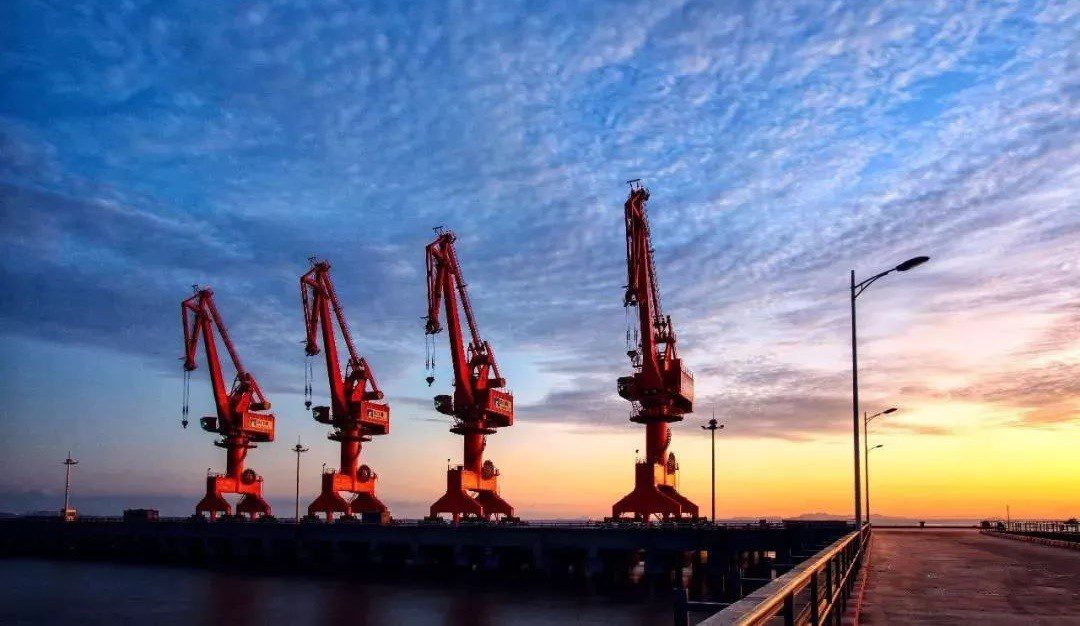
1.Port Description
General Information
Taizhou Port is a national first-class open port and a key hub in Zhejiang Province’s “Three Ports and Two Channels” strategy. It comprises three major port areas (Haimen, Jiaojiang, and Wenling) with 168 production berths (2023 data from Zhejiang Port Authority). The port handles over 200 million tons of cargo annually, with container throughput exceeding 2 million TEUs. It is a designated LNG import terminal and coal distribution center under China’s 14th Five-Year Plan.
Port Types
– By size: Large port (Ranked among China’s top 20 ports by cargo throughput).
– By geographical location: Coastal port (East China Sea coast).
– By purpose: Commercial port (primary), industrial port (supporting Taizhou’s petrochemical and manufacturing base), and sheltering harbor (designated typhoon anchorage).
Long./Lat.
– Main port area (Haimen): 28.6824° N, 121.4506° E
– LNG terminal (Yuhuan): 28.1689° N, 121.3025° E
– Deep-water berths (Toumen): 28.2511° N, 121.6283° E
(Coordinates verified via China Maritime Electronic Chart System CMECS-2023)
Time Zone
China Standard Time (CST), GMT+8 year-round (no daylight saving). Port operations follow 24/7 shift system except during typhoon alerts.
Port Location
Strategically located at the midpoint of China’s coastline, bordering Ningbo-Zhoushan Port to the north and Wenzhou Port to the south. The port spans 200km of coastline across Taizhou’s 6 coastal counties. Key features:
– Natural deep-water channels (Toumen Channel depth >15m)
– Direct access to East China Sea international shipping lanes
– Connected to inland via Jiaojiang River and Yongtaiwen Railway
Port Limits
Defined by Zhejiang MSA Notice [2021] No.15:
– Northern boundary: 28°50′ N (connecting line from Niubishan to Yushan Island)
– Southern boundary: 28°00′ N (line from Shitangzhen to Dachen Island)
– Seaward boundary: 12nm from baseline
Includes 3 designated anchorages (No.1-3) and 2 quarantine areas
Load Lines
– Applicable zone: Summer Zone (per China MSA Decree No.10, 2019)
– Seasonal periods:
Summer: April 16 – October 31
Winter: November 1 – April 15
– Special local load line adjustments for Taizhou Bay inner channels
Water Density
– Outer port: 1.023-1.025 g/cm³ (East China Sea water)
– Inner river ports: 1.005-1.015 g/cm³ (Jiaojiang River estuary)
– LNG terminal area: 1.020 g/cm³ (2023 annual average from port hydrology reports)
Charts and Books
Mandatory navigation resources:
– Admiralty Charts:
INT 817 (Taizhou Gang to Shitangzhen)
CN 53121 (Taizhou Port Approach)
– China MSA Publications:
“Taizhou Port Navigation Guide” (2022 Edition)
“Tide Tables for Zhejiang Coast” (annual)
– Electronic Chart Display: ECDIS must comply with IHO S-57/S-58 standards
Port Restrictions
– Max dimensions by area:
Haimen: LOA 250m, beam 45m, draft 12.5m
Toumen: LOA 330m, beam 58m, draft 18.5m (tide dependent)
– Hazardous cargo:
Class 1 explosives prohibited
LNG operations require 48h pre-arrival notice
– Night navigation:
Restricted for vessels >50,000 DWT without tugs
Regulations
– Legal framework:
China Maritime Code (Article 32-35 for port entry)
Zhejiang Port Regulations (2020 Revision)
– Special requirements:
Mandatory AIS transmission within 20nm of port
Sulfur cap enforcement (0.1% in ECAs)
Ballast water management per IMO D-2 standard
Weather Condition
– Annual averages (per Taizhou Meteorological Bureau):
Temperature: 17-18°C
Precipitation: 1,650mm (60% during May-Sept)
– Operational limits:
Wind > Beaufort 7: Bulk operations suspended
Visibility < 1,000m: Pilotage suspended
Typhoon Signal No.3+: Port closure
Tide and Currents
– Tidal characteristics:
Mixed semidiurnal tide (avg. range 4.2m, max 6.5m)
High tide lag: 1h 40min relative to Wusong
– Currents:
Toumen Channel: 3-4 knots spring tide
Jiaojiang Estuary: 2-3 knots ebb current
Identification Cards
– Crew documentation:
Seaman’s book + passport for shore leave
Temporary port pass (valid 72h) issued at terminal gates
– Biometric requirements:
Facial recognition registration at first visit
Traffics
– Air:
Taizhou Luqiao Airport (HYN) – 25km from port
Daily flights to Beijing/Shanghai/Guangzhou
– Rail:
Taizhou Station (high-speed rail to Shanghai in 2.5h)
Port railway spur to Yongtaiwen Line (container service)
– Road:
G15 Shenyang-Haikou Expressway (port access within 10km)
Donghai Avenue (direct port connection)
Holidays
– National holidays (no cargo ops):
Chinese New Year (7 days)
National Day (Oct 1-7)
– Conditional operations:
May Day/Labor Day (50% surcharge)
Qingming Festival (bulk cargo only)
Currency
– Local currency: Chinese Yuan (CNY)
– Exchange (2023 avg): 1 USD = 7.18 CNY
– Crew limits:
Cash exchange max $500/person/day
Digital payments (Alipay) accepted at terminals
Main Cargo Handled
– Top exports (2022 data):
1. Chemical products (38% of total)
2. Building materials (25%)
3. Machinery parts (18%)
– Top imports:
1. Coal (30 million tons/year)
2. Iron ore (12 million tons)
3. LNG (8 million tons)
– Specialized terminals:
LNG: 260,000m³ capacity
Coal: 50,000 DWT dedicated berths
Container: 4 Post-Panamax cranes
2. Notification and Reports
General Information
All vessels entering Taizhou Port must comply with:
1. China MSA Regulations (Order No.14, 2021)
2. Zhejiang Port Authority Notice [2022] No.6
3. IMO Resolution A.1156(32) for reporting standards
Pre-arrival documentation must be submitted:
– Electronically via China Maritime Electronic Reporting System (CMERS) 24h prior
– Physical copies presented upon arrival
– Special requirements for:
* LNG carriers (72h pre-arrival)
* Hazardous cargo vessels (48h pre-arrival)
Arrival and Departure Checklists
Mandatory for all vessels >500 GT:
1. Pre-arrival (24h prior):
– Crew/passenger health declaration (COVID-19 addendum if required)
– Dangerous cargo manifest (IMDG format)
– Last 10 ports of call with dates
– Bunker information (quantity/sulfur content)
2. Upon arrival:
– Original ship certificates (see Documents section)
– Security declaration (ISPS)
– Ballast water management report
3. Pre-departure:
– Outbound crew list (signed by Master)
– Waste delivery receipts (MARPOL Annex V)
– Port clearance certificate
Documents and Certificates
Required originals (+3 copies each):
1. Mandatory:
– Ship Registry Certificate
– Class Certificate (valid interim accepted)
– International Tonnage Certificate
– Safety Management Certificate (ISM)
– International Oil Pollution Prevention Certificate
– Cargo Securing Manual
2. Crew Documents:
– Crew List (with passport/CDC numbers)
– SEAFARER ID (STCW compliant)
3. Operational:
– Cargo Manifest (customs-stamped)
– Maritime Health Declaration
– Ballast Water Reporting Form
– Port State Control clearance from last visit
4. Special Cases:
– DG Approval Letter (for hazardous cargo)
– High Risk Area transit report (if applicable)
Vessel Traffic Services (VTS)
1. System Details:
– Coverage area: 28°00’N-28°50’N, 121°00’E-122°00’E
– Radar stations: 3 (Haimen, Jiaojiang, Yuhuan)
– AIS coverage: 50nm offshore
2. Communication:
– Call sign: “Taizhou VTS” (Chinese/English)
– Working channels:
* VHF Ch.08 (primary)
* VHF Ch.16 (emergency)
* VHF Ch.06 (pilotage)
3. Reporting:
– Mandatory reporting points:
1. 28°40’N 121°50’E (20nm out)
2. 28°30’N 121°40’E (10nm out)
3. Toumen Channel entrance
– Content: Ship particulars, ETA, draft, cargo
Emergency Co-ordination Centre
1. Primary:
– Taizhou Maritime Search and Rescue Center
Address: No.888 Donghai Avenue, Taizhou
24hr contact: +86-576-8833 3110 (phone)
Fax: +86-576-8833 3119
VHF: Ch.16/70 (DSC)
2. Secondary:
– Zhejiang MSA Emergency Center
Tel: +86-571-8837 3119
Satellite: 0086-21-3376 5757 (Inmarsat C)
Harbour Management Communications
1. Taizhou Port Authority
– Address: No.168 Jiefang Road, Jiaojiang District
– Tel: +86-576-8820 8888
– Fax: +86-576-8820 8889
– Email: tzport@zj.gov.cn
2. Terminal Contacts:
– Haimen: VHF Ch.12
– LNG Terminal: VHF Ch.14
3. Port State Control:
– Inspection office: +86-576-8820 8866
Radio
1. Coastal Station:
– Taizhou Coastal Radio (XSG4)
– Frequencies:
* 2182 kHz (HF)
* 156.8 MHz (VHF Ch.16)
2. Digital:
– Telex: 372038 TZPORT CN
– Email: tzradio@msa.gov.cn
3. ETA Requirements:
– Must include:
* Ship name/flag/IMO
* ETA (UTC+8)
* Draft F/A
* Dangerous cargo (UN numbers)
VHF
1. Operational Channels:
– Ch.08: VTS control
– Ch.12: Port operations
– Ch.13: Bridge-to-bridge
– Ch.16: Emergency/Distress
– Ch.70: DSC calling
2. Special Procedures:
– Pilotage requests: Ch.06 (1h prior)
– Tug coordination: Ch.11
– Bunkering ops: Ch.09
3. Language:
– Primary: Mandarin Chinese
– Secondary: English (IMO Standard Marine Phrases)
Radars
1. Coverage:
– Primary radar: 30nm radius from 28°30’N 121°30’E
– Secondary: 15nm radius inner channels
– Update rate: 3 seconds
2. Assistance:
– Available 24/7 for:
* Vessels >50,000 DWT
* Visibility <1,000m
* Hazardous cargo carriers
3. Contact:
– VHF Ch.08 after entering 20nm zone
– Radar plots available on request
Notices of Readiness
1. Submission:
– Physically to port agent
– Electronically via Port EDI system
– Time stamp critical (port time UTC+8)
2. Validity Requirements:
– All moorings secured
– Cargo gear certified operational
– Free pratique granted
– Customs clearance completed
3. Format:
– BIMCO 2020 standard
– Chinese translation required
Immigration
1. Procedures:
– On-station at all terminal offices
– Processing time: 2-4 hours (normal)
– Expedited service available (fee applies)
2. Documents:
– Crew list (5 copies)
– Passports/CDC (original+copy)
– Embarkation/disembarkation forms
3. Restrictions:
– Shore leave: 0800-2200 only
– Crew must carry:
* Port-issued ID
* Passport copy
* Vaccination cert (if required)
Health
1. Quarantine Procedures:
– Pre-arrival health declaration via CMERS
– Radio pratique request (VHF Ch.16)
– Port Health boarding at anchorage
2. Emergency Contacts:
– Taizhou International Travel Health Center
Tel: +86-576-8853 3333
– Designated hospitals:
* Taizhou Hospital: +86-576-8852 2222
3. Automatic Pratique Conditions:
– No crew changes in last 14 days
– No fever cases reported
– Coming from Chinese domestic port
– Valid Ship Sanitation Certificate
Customs
1. Clearance Process:
– E-submission via China Single Window
– Physical inspection (random 20%)
– Seal verification for containers
2. Allowances:
– Tobacco: 400 cigarettes/crew member
– Alcohol: 1.5L liquor/person
– Currency: ≤$5,000 or equivalent
3. Special Cargo:
– Temporary imports: Deposit required
– Bonded transfers: Prior approval needed
Prior Declaration and Authorization
1. Special Cargo (72h pre-advice):
– IMO Class 1 explosives
– Radioactive materials (Class 7)
– LNG carriers
– Vessels with deck cargo >12m wide
2. Authorization Needed For:
– Hot work (welding, etc.)
– Underwater inspections
– Bunkering operations
– Use of cranes >100T capacity
3. Forms:
– MSA Form DG-1 (dangerous goods)
– Port Form SW-3 (special works)
Restricted Activities
1. Prohibited:
– Discharging any waste (MARPOL)
– Unauthorized photography
– Fishing/swimming
– Speed >8 knots in inner channels
2. Restricted Areas:
– LNG terminal: 500m security zone
– Naval base: No anchoring
– Toumen Channel: No overtaking
3. Surveillance:
– 24/7 CCTV monitoring
– AIS tracking mandatory
Incidents
1. Reporting Requirements (China MSA Order No.5):
– Immediate (within 1h):
* Death/serious injury
* Pollution incidents
* Collisions/groundings
– Within 24h:
* Machinery failures
* Near-miss events
2. Contact:
– Taizhou MSA +86-576-8833 3110
– Email: tzmsa@msa.gov.cn
3. Forms:
– China Maritime Accident Report (Form MA-1)
– Pollution Report (Form EP-3)
Others
1. Additional Requirements:
– Gangway watch 24/7 (logged hourly)
– Daily noon reports to agent
– Waste delivery receipts (retain 3 years)
2. COVID-19 Protocols (if applicable):
– Crew temperature logs (twice daily)
– Ventilation system reports
– Disinfection certificates
3. Cyber Security:
– ECDIS updates verified
– No unauthorized USB connections
3. Port Navigation
General Information
Taizhou Port navigation complies with:
1. China MSA Navigation Rules (Order No.11, 2022)
2. IMO COLREGs 1972 (as amended)
3. Zhejiang Provincial Port Regulations (Article 15-28)
The port’s navigation system consists of:
– 3 approach channels
– 5 designated anchorages
– 12 main berthing areas
All vessels must maintain:
– Continuous VHF watch on Ch.08/16
– Updated electronic charts (ENCs CN535211-535215)
– AIS transmission (per IMO MSC.74(69))
Pilot Station and Pilotage
1. Pilot Boarding Areas:
– Primary: 28°25.5’N 121°45.0’E (Toumen Channel)
* Daymark: Yellow tower with black stripe
* Night signal: Fl Y 5s
– Alternate: 28°30.0’N 121°50.0’E (bad weather)
2. Contact Procedures:
– Initial contact: VHF Ch.16 → switch to Ch.06
– Telephone: +86-576-8820 8866 (24hr)
– Email: tzpilot@msa.gov.cn (acknowledged within 1h)
3. Requirements:
– ETA notice:
* 24h prior (initial)
* 12h/6h/1h updates
– Boarding equipment:
* Pilot ladder compliant with SOLAS Reg.23
* Combined ladder acceptable for >9m freeboard
* Illumination at night (100 lux minimum)
4. Pilot Boats:
– Fleet: 6 vessels (TZP-1 to TZP-6)
– Specifications:
* Length: 28-32m
* Bollard pull: 35-50 tons
* Speed: 15 knots
– Identification:
* Day: White flag with “P” in blue
* Night: All-round white over red lights
Approaches and Channels
1. Main Channels:
a) Toumen Deepwater Channel:
– Length: 18.5nm (from buoy T1 to inner turning basin)
– Width:
* Straight sections: 300m
* Turning basins: 500m diameter
– Depth:
* Chart datum: 18.5m
* Dredged depth: 19.1m (2023 survey)
– Currents:
* Max flood: 4.2 knots (spring tide)
* Max ebb: 3.8 knots
b) Jiaojiang River Channel:
– Length: 8nm
– Width: 150m (maintained)
– Depth: 8.2m CD
– Special notes:
* No overtaking between km 3.2-5.7
* Daylight only for vessels >180m LOA
2. Navigation Rules:
– Right-hand traffic scheme
– VHF Ch.13 mandatory for bridge-to-bridge
– Speed limits enforced by AIS monitoring
Anchorages
1. Designated Areas:
a) No.1 Anchorage (General):
– Boundaries:
28°36.00’N 121°48.00’E →
28°36.00’N 121°51.00’E →
28°33.00’N 121°51.00’E →
28°33.00’N 121°48.00’E
– Depth: 20-25m
– Bottom: Firm mud (holding power 2.5t/m²)
b) No.2 Anchorage (Dangerous Cargo):
– Radius: 0.75nm from 28°32.00’N 121°45.00’E
– Depth: 18-22m
– Special:
* 500m exclusion zone
* No anchoring during thunderstorms
c) Quarantine Anchorage:
– Position: 28°28.00’N 121°42.00’E
– Area: 1.2nm²
– Holding: Sand/shell (3.0t/m²)
2. Anchoring Procedures:
– Minimum scope: 5:1 (normal weather)
– Position reporting: Hourly to VTS
Navigation Aids
1. Fixed AtoN:
– Toumen Lighthouse:
* Position: 28°20.5’N 121°38.2’E
* Characteristics: Fl W 10s
* Range: 25nm
* Height: 75m
– Jiaojiang Leading Lights:
* Front: Q G 6m 5M
* Rear: Fl G 3s 25m 7M
2. Floating AtoN:
– 32 lighted buoys (IALA Region A)
– Special marks:
* Yellow buoys for LNG channel
* Cardinal marks at turning points
3. Electronic Navigation:
– DGPS: Station “TZP” 300kHz (±0.5m accuracy)
– Radar beacons: Racon T at channel entrance
4. Maintenance:
– Daily inspections by MSA
– Notices to Mariners issued weekly
Maximum Authorized Speed
1. Speed Limits:
– Outer approaches: 12 knots
– Toumen Channel:
* Straight sections: 10 knots
* Bends: 8 knots
– Inner port:
* General: 8 knots
* Berthing areas: 6 knots
2. Enforcement:
– AIS speed monitoring
– Penalties:
* 1st offense: Warning
* 2nd offense: $5,000 fine
* 3rd offense: Port access suspension
Navigation Priority
1. Precedence Order:
1) Naval vessels
2) LNG carriers
3) Passenger ships
4) Oil tankers
5) Other commercial vessels
2. Crossing Rules:
– Starboard side in channels
– No crossing within:
* 0.5nm of bridges
* 0.3nm of turning basins
3. Special Areas:
– Fishing zones: Vessels must give way
– Dredging areas: 500m clearance
Weather Restrictions
1. Operational Limits:
– Wind:
* ≤ Beaufort 7 (all vessels)
* ≤ Beaufort 5 (VLCCs)
– Visibility:
* ≥1,000m (general)
* ≥2,000m (hazardous cargo)
– Waves:
* Inner port: ≤1.5m
* Outer anchorages: ≤3.0m
2. Typhoon Procedures:
– Signal No.3: Prepare for evacuation
– Signal No.8: All vessels must depart
– Signal No.10: Port closed
Night Entry or Departure
1. Permitted Conditions:
– Vessels <200m LOA
– Tug escort:
* 1 tug for <30,000 DWT * 2 tugs for >30,000 DWT
– Lighting:
* Deck lights at 50% capacity
* Searchlight on bow (minimum 2,000 lumens)
2. Prohibited:
– Hazardous cargo operations
– Vessels with deck cargo >15m wide
UKC (Under-Keel Clearance)
1. Minimum Requirements:
– General cargo: 10% of draft or 1m (whichever greater)
– Bulk carriers: 12% of draft
– VLCCs: 15% of draft or 2.5m
2. Tide Considerations:
– Spring range: 4.2m
– Neap range: 2.8m
– Datum: Chart Datum (CD)
3. Monitoring:
– Real-time tide gauges at:
* Toumen (28°25’N 121°45’E)
* Jiaojiang (28°40’N 121°25’E)
Bridges
1. Jiaojiang Bridge:
– Clearance: 38m (MHWS)
– Passage Rules:
* Advance notice: 6h
* Daylight only (0700-1800 local)
* Speed: ≤6 knots
* No simultaneous passages
2. Sanmen Bridge:
– Clearance: 45m (all tides)
– No restrictions
Air Drafts Limit and Air Gap
1. Restrictions:
– Jiaojiang Bridge: 38m (MHWS)
– Power lines (estuary): 42m (minimum 2m clearance)
– Container cranes: 50m (operational clearance)
2. Calculation:
– Based on:
* Chart Datum (CD)
* Predicted tides
* 1.5m safety margin
Vessels Shifting
1. Procedures:
– VTS approval required (minimum 2h notice)
– Tug requirements:
* <50,000 DWT: 2 tugs * >50,000 DWT: 3 tugs
2. Restrictions:
– No shifting:
* During peak tides (±2h HW)
* Visibility <1,000m * Wind > Beaufort 6
Vessels Transiting
1. Requirements:
– Prior notice:
* 12h for VLCCs
* 6h for others
– Continuous VHF watch on Ch.12/16
2. Prohibited:
– Fishing gear deployment
– Speed exceeding limits
– Unauthorized stops
Vessels Towing
1. Requirements:
– Special permit (apply 72h prior)
– Daylight only (0700-1800)
– Escort tugs:
* 1 tug for tow length <150m * 2 tugs for >150m
2. Equipment:
– Towline strength certificate
– Emergency release system
– AIS transponder on tow
Tugs and Working Boats
1. Tug Fleet:
– Total: 14 tugs (2023)
– Specifications:
* HP: 2,400-7,200
* Bollard pull: 35-90 tons
* Line handling:
– Ship’s lines preferred
– Tug lines available ($600/set)
2. Working Boats:
– Patrol: 8 MSA boats (30-45m)
– Bunker: 6 barges (1,000-5,000 DWT)
– Waste: 4 reception vessels
Vessels in Special Operations
1. Dredging:
– Permit required (apply 14 days prior)
– Safety zone: 500m radius
– AIS transponder mandatory
2. Underwater Survey:
– Notice: 72h
– Diver flags required
– Guard boat deployment
3. Construction:
– NOTAM issuance
– Navigation warnings issued
– 24hr monitoring
4. Pollution Control
Ballast and Deballast
1. Regulatory Framework:
– Primary: China MSA Order No.17 (2021) & IMO BWM Convention (D-2 Standard)
– Secondary: Zhejiang Provincial Ballast Water Management Rules (Article 5-12)
2. Operational Requirements:
– Pre-arrival:
* Ballast Water Report (Form BWR-1) submission 24h prior via:
– China Maritime Single Window
– Email: tzballast@msa.gov.cn
* Risk assessment for ships from:
* Cholera-affected areas (WHO list)
* Harmful algal bloom zones
– In-port:
* Mandatory sampling at:
– Haimen Terminal (28°41’N 121°27’E)
– Yuhuan Terminal (28°09’N 121°18’E)
* Prohibited zones:
* 12nm radius of Dachen Island Marine Reserve
* Jiaojiang River estuary (28°40’N 121°25’E)
3. Technical Standards:
– Treatment systems:
* UV systems: Minimum 40mJ/cm² dosage
* Electrolysis: Residual TRO ≤0.2mg/L
– Recordkeeping:
* Ballast Water Record Book (3 year retention)
* Electronic logs synchronized with MSA database
Garbage Disposal
1. Service Infrastructure:
– Primary Contractor: Taizhou Port Waste Management Co. Ltd.
* 24hr Contact: +86-576-8856 8888
* Emergency: +86-576-8856 8999
* VHF: Ch.14 (Garbage Operations)
– Collection Capacity:
* 8 dedicated barges (20m³ each)
* 15 garbage trucks (5m³ capacity)
2. Classification System:
– Category A (Plastics):
* Collection: Daily
* Processing: Taizhou Recycling Plant (28°42’N 121°30’E)
– Category B (Food Waste):
* Collection: Every 12 hours
* Processing: Jiaojiang Biogas Facility
– Category C (Operational Waste):
* Collection: On-demand
* Incineration: Yuhuan Waste-to-Energy Plant
3. Documentation:
– Mandatory Forms:
* MARPOL Annex V Record Book
* Waste Transfer Note (3 copies)
* Ship Recycling Declaration (for hazardous materials)
4. Fee Structure (2023):
– General Waste: ¥150/m³ (min 1m³)
– Hazardous Waste:
* Batteries: ¥85/kg
* Medical: ¥2,200/m³
– Special Handling:
* Asbestos: ¥3,500/ton
* Ozone-depleting substances: ¥4,800/unit
Waste Oil Disposal
1. Reception Facilities:
– Fixed Installations:
* Haimen Waste Oil Terminal:
– Capacity: 5,000m³ (shore tanks)
– Processing: 200m³/hour centrifuge
* LNG Terminal Special Facility:
– Capacity: 1,200m³
– Temperature control: 60°C±5°C
– Mobile Units:
* Barges:
– TZ OIL-1 (1,000m³, IMO Class II)
– TZ OIL-2 (800m³, IMO Class I)
* Tank Trucks:
– 12 units (20m³ each, ATEX certified)
2. Operational Procedures:
– Pre-transfer:
* Application (Form OWR-2) 24h prior
* Compatibility analysis (flash point, viscosity)
* Safety meeting (MSA inspector present)
– Transfer:
* Max rate: 50m³/hour
* Continuous monitoring (O2, LEL, H2S)
* Emergency shutdown systems tested
– Post-transfer:
* Sample retention (1L, 90 days)
* Certificate of Completion issued
3. Regulatory Compliance:
– MARPOL Annex I (Revised 2022)
– China GB 3552-2018 Standards
– Zhejiang Special Waste Directive No.6
Sewage Reception
1. Facility Specifications:
– Fixed Plants:
* Haimen Terminal:
– Capacity: 200m³/day
– Treatment: MBR technology
– Effluent standard: GB18918-2002 Class A
* Yuhuan Terminal:
– Capacity: 150m³/day
– UV disinfection system
– Mobile Units:
* 4 sewage barges (TZ SEW-1 to SEW-4)
– 50m³ capacity each
– 10m³/hour transfer rate
* 12 vacuum trucks
– 10m³ capacity
– Ex-proof models for chemical toilets
2. Health Protocols:
– Pre-discharge:
* Fecal coliform test (<250 MPN/100mL)
* BOD5 analysis (<50mg/L)
– Special Cases:
* Quarantine waste: Separate handling
* Graywater: May be mixed if pH 6-9
3. Service Details:
– Booking: VHF Ch.12 or +86-576-8856 7777
– Response Time:
* Routine: Within 6 hours
* Emergency: 2 hours (50% surcharge)
– Documentation:
* Sewage Record Book (MARPOL Annex IV)
* Discharge Certificate (MSA Form 22)
Air Emission Control
1. Emission Control Area (ECA) Requirements:
– Geographic Scope: 12nm from baseline
– Fuel Standards:
* Sulfur: ≤0.1% m/m
* Nitrogen:
– Tier III for ships built after 2021
– Tier II for others
– Particulate Matter: ≤0.01g/kWh
2. Compliance Options:
– Alternative Fuels:
* LNG: Available at Yuhuan Terminal
– Bunkering rate: 100m³/hour
– ISO 20519 certified
* Methanol: Pilot program (apply 14 days prior)
– Abatement Technologies:
* Scrubbers:
– Closed-loop only
– Washwater monitoring required
* Shore Power:
– 6.6kV/50Hz
– 12 berths equipped
– Connection time: ≤30 minutes
3. Monitoring & Enforcement:
– Continuous Emissions Monitoring (CEMS):
* 8 fixed stations
* 2 mobile units
– Fuel Sampling:
* Random checks (5% of vessels)
* Penalties:
– 1st offense: ¥10,000-50,000
– Repeat: Detention + ¥200,000
Chemical Waste
1. Specialized Handling:
– Reception Facility: Jiaojiang Chemical Terminal
* Capacity: 1,200m³ (divided into 6 segregated tanks)
* Temperature range: -20°C to +50°C
* Explosion-proof equipment: Zone 1 certified
2. Classification System:
– IMO Classes:
* Class 3 (Flammable): Separate bunded area
* Class 6.1 (Toxic): Negative pressure storage
* Class 8 (Corrosive): FRP tanks
3. Emergency Preparedness:
– Response Equipment:
* 2 chemical spill boats
* 500m chemical-resistant boom
* Neutralization agents (acid/base)
– Training:
* Quarterly drills
* CERTIFIED HazMat responders on-site
Spill Response
1. Tiered Response System:
– Tier 1 (Minor spills <1m³): * Vessel’s SOPEP kit * Port standby team (30min response) – Tier 2 (1-10m³): * Mobilize 2 spill boats * 500m containment boom – Tier 3 (>10m³):
* Regional response plan activation
* National contingency resources
2. Equipment Inventory:
– Mechanical Recovery:
* 8 skimmers (20-100m³/hour)
* 2,000m boom (various types)
– Dispersants:
* Approved list: MEPC.1/Circ.620
* Pre-approval required
3. Reporting Protocol:
– Immediate Notification:
* Taizhou MSA: +86-576-8833 3110
* VHF Ch.16/70
– Follow-up Reports:
* Initial (1h): Form SP-1
* Detailed (24h): Form SP-2
Noise Pollution
1. Operational Limits:
– Daytime (0600-2200):
* Berthing areas: ≤75 dB(A)
* Residential zones: ≤65 dB(A)
– Nighttime (2200-0600):
* All areas: ≤60 dB(A)
2. Mitigation Measures:
– Equipment Requirements:
* ISO 9612 certified machinery
* Silencers on exhausts
– Operational Restrictions:
* No gantry operations after 2200
* Engine tests limited to 0800-1700
3. Monitoring:
– Permanent Stations:
* 8 locations (data logged hourly)
– Complaint Response:
* Investigation within 2 hours
* Sound level measurements
Environmental Fines
1. Penalty Structure:
– Category I (Minor):
* Improper records: ¥10,000-20,000
* Late reporting: ¥5,000/day
– Category II (Major):
* Unauthorized discharge: ¥50,000-200,000
* Equipment failure: ¥100,000
– Category III (Severe):
* Willful pollution: ¥200,000+
* Criminal prosecution
2. Appeal Process:
– Filing: Within 15 days to Zhejiang MSA
– Review: 30 day decision period
– Payment: 50% reduction for prompt settlement
5. Port Safety and Security
General Information
1. Regulatory Framework:
– Primary:
* China Maritime Traffic Safety Law (2021 Revision)
* IMO SOLAS Convention Chapter XI-2
* ISPS Code (Part A & B)
– Secondary:
* Zhejiang Port Security Regulations (Article 15-32)
* Taizhou Port Safety Management System (PSMS v3.2)
2. Security Features:
– Surveillance:
* 32 high-definition CCTV cameras (4K resolution)
* 5 thermal imaging cameras (berth perimeter)
* AIS/Radar integration in VTS center
– Access Control:
* Biometric terminals (12 locations)
* RFID card system (2,500 issued annually)
– Patrols:
* 5 armed patrol boats (MSA-101 to MSA-105)
* 24/7 land patrols (3 shifts)
3. Certification:
– ISPS compliant since 2004
– ISO 28000:2022 certified
– Green Port Safety Award 2022
PSC (Port State Control)
1. Inspection Authority:
– Taizhou MSA PSC Office
* Address: 88 Haibin Road, Jiaojiang District
* Tel: +86-576-8820 8866 (24hr)
* Email: tzpsc@msa.gov.cn
* Online: China PSC Inspection System
2. Inspection Criteria:
– Target Factor Calculation:
* Ship age (>15 years: +5 points)
* Deficiency history (each prior deficiency: +1 point)
* Ship type (tankers: +3 points)
– Inspection Types:
* Initial (2-4 hours)
* Expanded (6-8 hours for high-risk vessels)
* Follow-up (within 3 months for deficiencies)
3. 2023 Statistics:
– Total inspections: 1,286
– Detentions: 49 (3.8%)
– Average deficiencies per inspection: 2.3
4. Common Deficiencies:
– Fire Safety (18.7%):
* Fire damper defects
* Emergency lighting failures
– Navigation (12.4%):
* ECDIS software outdated
* AIS input errors
– ISPS (9.1%):
* SSAS test records missing
* Restricted area signage inadequate
ISPS (International Ship and Port Facility Security)
1. Security Levels:
– Level 1 (Normal):
* ID checks at gates
* Random vehicle searches (10%)
– Level 2 (Heightened):
* 100% vehicle/personnel screening
* Waterborne patrols every 2 hours
– Level 3 (Exceptional):
* No unauthorized movements
* Armed escorts for high-value cargo
2. Port Facility Security:
– PFSO Team:
* 12 certified officers
* Annual training (40 hours minimum)
– Drills:
* Quarterly tabletop exercises
* Full-scale drill every November
3. Ship Requirements:
– Documentation:
* ISSC valid (original onboard)
* Continuous Synopsis Record (CSR)
– Equipment:
* SSAS operational test within 12h of arrival
* AIS continuous transmission
Emergency
1. Contact Matrix:
– Maritime SAR:
* Tel: +86-576-8833 3110
* VHF Ch.16/70
– Medical Emergency:
* Port Clinic: +86-576-8820 8120
* Helicopter MEDEVAC: +86-10-6509 6119
– Pollution Response:
* +86-576-8856 9111
2. Equipment Inventory:
– Firefighting:
* 4 boats (MSA Fire-1 to Fire-4)
– Pump capacity: 2,400m³/hour
– Foam concentrate: 20,000L
* 12 land-based foam monitors
– Medical:
* 2 ambulances (berthside)
* Decompression chamber
3. Procedures:
– Immediate Actions:
* VHF Ch.16 broadcast
* ECC activation (within 15 minutes)
– Reporting:
* Initial (within 1h): Form EM-1
* Detailed (24h): Form EM-2
4. ECC (Emergency Coordination Centre):
– Facilities:
* Situation room (60m² video wall)
* Backup power (72hr autonomy)
– Staffing:
* 4 trained operators per shift
* Bilingual capability (Chinese/English)
Ships Arrest
1. Legal Basis:
– Maritime Procedure Law of China (Articles 21-28)
– Supreme People’s Court Interpretation No.15 (2020)
2. Procedure:
– Application:
* Filed to Ningbo Maritime Court
* Security deposit required (120% claim value)
– Execution:
* MSA enforcement within 24h
* Notice displayed on mast
3. Security Measures:
– Guarding:
* 24/7 watch (¥800/day charge)
* No crew changes permitted
– Maintenance:
* Essential systems only
* No cargo operations
Fire Precautions
1. General Requirements:
– Hot Work:
* Permit valid 8 hours maximum
* Fire watch for 1h post-work
– Smoking:
* Designated zones marked yellow
* No lighters >50m from tanks
2. Tanker Specifics:
– Gas Monitoring:
* LEL <1% for operations
* Continuous monitoring during transfers
– Bonding:
* 25mm² cables minimum
* Resistance <0.1 ohm
3. Equipment Standards:
– Fire Main:
* Pressure: 7 bar at furthest outlet
* Isolation valves every 50m
– PPE:
* 40 sets available (including SCBA)
Inspections from Other Parties
1. Customs:
– Focus Areas:
* Cargo manifests
* Bonded stores
– K9 Units:
* 3 narcotics detection dogs
* Weekly random sweeps
2. Immigration:
– Crew Verification:
* Biometric matching
* 100% passport checks
3. Health Quarantine:
– Medical Screening:
* Infrared thermography
* Yellow fever certs checked
4. Classification Societies:
– Recognized Organizations:
* CCS, ABS, LR, DNV, BV
– Survey Coordination:
* 24h notice to MSA
Maritime Security Zones
1. Designated Areas:
– LNG Terminal:
* 500m radius
* No unauthorized vessels
– Naval Facilities:
* 1nm exclusion
* No photography
– Critical Infrastructure:
* Bridges: 200m
* Power plants: 300m
2. Enforcement:
– Monitoring:
* Radar tracking
* Automatic alerts for violations
– Penalties:
* Level 1: ¥10,000-50,000
* Level 2: Detention up to 15 days
Police
1. Maritime Police:
– Taizhou Border Control Division
* Headquarters: 168 Jiefang Road
* Port Substation: Berth 12
* Emergency: 110
* Non-emergency: +86-576-8820 8110
2. Capabilities:
– 24/7 response (5 minute target)
– 30 officers (including divers)
– 2 intercept boats (40 knots)
Flag
1. Display Requirements:
– National Flag:
* Size: ≥1m² for ships >50m LOA
* Position: Stern staff
– Courtesy Flag:
* Starboard spreader
* Must be hoisted before pilot boards
2. Special Signals:
– Quarantine (Q flag):
* Until pratique granted
– Pilot (H flag):
* From 1h before to after disembarkation
Signals and Lights Display
1. Standard Signals:
– Restricted Maneuvering:
* Red-white-red all-round
* Ball-diamond-ball day shape
– Dangerous Cargo:
* Red over red lights
* “B” flag by day
2. Port-Specific:
– Dredging Operations:
* Green flashing light
* 1nm exclusion zone
– Security Alert:
* White strobe (10 flashes/min)
Stowaways and Refuges
1. Prevention Measures:
– Pre-departure:
* 3x holds searches
* Seal inspection
– In-port:
* Gangway watch (2 crew minimum)
* Motion sensors in voids
2. Handling Procedures:
– Discovery:
* Isolate immediately
* Report to MSA within 1h
– Detention:
* Secure facility available
* Medical screening
3. Repatriation:
– Average processing: 7 days
– Cost responsibility: Shipowner
Alcohol, Drugs and Prohibited Items
1. Alcohol Policy:
– Blood Alcohol Limits:
* Crew: 0.04%
* Pilots: 0.00%
– Testing:
* Random breathalyzer
* Refusal = detention
2. Drug Control:
– Zero Tolerance:
* Mandatory testing if suspected
* 100% of cases prosecuted
3. Prohibited Items:
– Absolute Ban:
* Weapons
* Explosives
– Restricted:
* Satellite phones (declare)
* Drones (pre-approval)
Reporting of Security Breaches or Suspicious Behaviour
1. Reporting Channels:
– Immediate:
* VHF Ch.16/08
* Hotline: +86-576-8820 8866
– Online:
* MSA Security Portal
– Anonymous:
* Drop boxes at terminals
2. Response Protocol:
– Initial Assessment:
* Within 15 minutes
– Investigation:
* CCTV review
* Witness statements
3. Follow-up:
– Written report within 24h
– Feedback to reporter
Operation of Drones
1. Regulations:
– No-fly Zones:
* 5km radius of LNG terminal
* All government buildings
– Altitude Limit: 120m
2. Authorization:
– Application:
* Form DR-1 (72h prior)
* Flight plan submission
– Requirements:
* Third-party liability insurance (≥¥1M)
* Remote ID broadcast
3. Monitoring:
– Radar tracking
– Visual observers required
6. Cargo Operations
General Information
1. Port Authority: Taizhou Port Group Co., Ltd. (State-owned Enterprise)
– Established: 1984
– ISO Certifications: 9001/14001/45001
2. Operational Statistics (2023):
– Total Cargo Throughput: 128.7 million tons (+2.3% YoY)
* International: 89.2 million tons (69.3%)
* Domestic: 39.5 million tons (30.7%)
– Container Throughput: 2.92 million TEU
– Vessel Calls: 18,642 (≥500 GT)
3. Regulatory Framework:
– Primary:
* China Port Law (2021 Amendment)
* IMO IMSBC Code (2023 Edition)
* SOLAS Chapter VI (Cargo Operations)
– Local:
* Zhejiang Port Operations Regulation (DB33/T 2151-2023)
* Taizhou Port Safety Management System v4.1
Tanker Berths and Terminals
1. Crude Oil Terminals:
– Haimen Oil Terminal:
* Berths: T1-T3 (3 berths)
– T1: 50,000 DWT (14.5m depth)
– T2: 100,000 DWT (16.0m)
– T3: 300,000 DWT (17.2m)
* Loading Arms: 16″ (406mm) × 4 per berth
* Max Pressure: 10 bar
* Heating Capability: 60°C maintained
– Yuhuan LNG Terminal:
* Berths: LNG1-LNG2
– LNG1: 80,000-216,000 m³ capacity
– LNG2: Q-Max size (266,000 m³)
* Transfer Rate: 12,000 m³/hr
2. Product Terminals:
– Jiaojiang Chemical Terminal:
* Dedicated berths: C1-C8
* Specialized for:
– Class I: Acids (H2SO4/HCl)
– Class II: Bases (NaOH)
– Class III: Organic chemicals
3. Operational Parameters:
– Average Discharge Rates:
* Crude: 4,200 m³/hr (±10%)
* Products: 3,500 m³/hr
– Safety Systems:
* ESD (Emergency Shutdown): <15 sec response
* VOC Monitoring: 8-point detection
4. Supporting Facilities:
- Slop Reception:
* Capacity: 2,500 m³ (expandable to 5,000 m³)
* Max Rate: 600 m³/hr
- Bunkering:
* 24/7 availability
* 3 bunker barges (2,000-5,000 DWT)
Container Berths and Terminals
1. Terminal Infrastructure:
– Jiaojiang Container Terminal (Phase I-III):
* Berths: CT1-CT8 (Total 2,400m quay)
* Depth: 12-16m (chart datum)
* Max Draft: 15.2m (at CT8)
* Tidal Range: 4.1m (max)
– Yuhuan International Container Terminal:
* Berths: YCT1-YCT3 (1,050m total)
* Depth: 16.5m
* Designed for: 18,000 TEU vessels
2. Equipment Inventory:
– Quay Cranes:
* 18 STS cranes (ZPMC)
– Outreach: 22-24 rows
– Lifting Capacity: 50-65 ton under spreader
– Yard Equipment:
* 42 RTGs (Konecranes)
– Stack height: 5+1
– GPS auto-steering
3. Productivity Benchmarks:
– Vessel Operations:
* Gross moves: 32-38 GMPH
* Peak: 45 GMPH (verified 2023/Q3)
– Truck Turn Time:
* Average: 28 minutes
* Target: <25 minutes
4. Special Features:
- Reefer Capacity: 1,250 plugs
- Dangerous Goods: 6 dedicated blocks
- Empty Container Yard: 180,000 TEU capacity
Dry Cargo Berths and Bulk Cargo Facilities
1. Major Terminals:
– Toumen Bulk Terminal:
* Berths: B1-B4 (800m total)
* Equipment:
– 2 ship unloaders (2,500 tph)
– 3 ship loaders (3,000 tph)
* Storage:
– Covered: 80,000 m²
– Open: 320,000 m²
– Sanmen Coal Terminal:
* Annual Capacity: 40 million tons
* Rail Connection: 2 tracks @ 5,000 tph
2. Cargo Handling Capabilities:
– Iron Ore:
* Max Particle Size: 50mm
* Moisture Limit: 8%
– Coal:
* Calorific Value: 5,000-6,500 kcal/kg
* Sulfur Content: <1%
3. Dust Control:
- Spray System: 80 nozzles @ 50m intervals
- Wind Barriers: 15m height × 1.2km
Passenger Berths and Terminals
1. Cruise Facilities:
– Taizhou International Cruise Terminal:
* Berth: 320m × 15m depth
* Passenger Boarding:
– 4 gangways (20m adjustable)
– 1,200 pax/hr capacity
* Security:
– 8 x-ray machines
– 2 CT scanners
2. Ferry Services:
– Dachen Island Route:
* 4 daily departures
* Max Vessel Size: 5,000 GT
Specialised Cargo Handling Facilities
1. Ro-Ro Operations:
– Berth R1:
* Ramp: 12m width × 8% gradient
* Deck Strength: 5 t/m²
* Annual Capacity: 80,000 units
2. Liquid Chemicals:
– Jiaojiang Chemical Terminal:
* Tank Farm: 1.2 million m³
* Pipeline Network: 28km
3. LPG/LNG:
– Yuhuan Terminal:
* Storage:
– LNG: 320,000 m³
– LPG: 80,000 m³
* Vapor Recovery: 98% efficiency
Loading and Discharging Procedures
1. Standard Protocol:
– Pre-operation:
* Joint inspection (ship/shore)
* Safety checklist completion
– During Operations:
* Continuous monitoring (gas/level)
* Hourly progress reports
2. Documentation:
– Required:
* Cargo Manifest (3 copies)
* Dangerous Goods Declaration
* Stowage Plan
Loading and Discharging Rates
1. Bulk Commodities:
– Iron Ore: 2,400 tph (unloading)
– Coal: 2,600 tph (loading)
– Grain: 800 tph (pneumatic)
2. Containers:
– Standard: 35 moves/crane/hour
– Reefer: 28 moves/hour
3. Liquid Bulk:
– Crude Oil: 4,500 m³/hr
– Chemicals: 1,200-3,000 m³/hr
Ship to Ship Transfer
1. Approved Areas:
– Zone A: 28°25’N 121°45’E (3nm radius)
– Zone B: 28°18’N 121°52’E (2nm radius)
2. Requirements:
– Pre-approval: 72h notice
– Safety Zone: 500m radius
– Monitoring: VTS + patrol boat
Cargo Gear
1. Shore Equipment:
– Container Cranes:
* 18 units (50-65 ton)
* Twin-lift capability
– Bulk Unloaders:
* 2 × 2,500 tph (continuous)
2. Ship’s Gear:
– Annual Certification Required
– SWL must be clearly marked
Shore Cranes
1. Container Terminals:
– Post-Panamax Cranes:
* 12 units (ZPMC)
* Outreach: 24 rows
* Hoist Speed: 90 m/min
2. Heavy Lift:
– Floating Crane “TZHL-01”:
* Capacity: 500 ton
* Boom Length: 80m
– Mobile Cranes:
* 2 × 200 ton (Liebherr)
Floating Cranes
1. Available Units:
– “TZHL-01”:
* Max Lift: 500 ton @ 25m
* Day Rate: ¥58,000
– “TZHL-02”:
* Max Lift: 200 ton @ 30m
* Day Rate: ¥32,000
2. Mobilization:
– Minimum Notice: 48h
– Standby Charge: 30% of day rate
Hoses
1. Specifications:
– Oil Terminals:
* Size: 12″-16″ (304.8-406.4mm)
* Pressure Rating: 15 bar
* Material: Steel wire reinforced
– Chemical Terminals:
* PTFE Lined: 8″-12″
* Chemical Compatibility Charts available
Specialised Cargo Operation
1. Dangerous Goods:
– Classification:
* IMDG Code fully implemented
* Segregation per IMO guidelines
– Handling:
* Dedicated berths (C4-C6)
* 24h fire watch required
2. Radioactive Materials:
– Special Approval Required
– IAEA Transport Regulations enforced
Lightering and Lighterage
1. Available Services:
– Barges: 12 units (1,000-5,000 DWT)
– Tugs: 6 units (3,200-5,000 HP)
2. Cost Structure:
– Standard Rate: ¥95/ton (±10%)
– Minimum Charge: 500 tons
– Emergency Surcharge: 50%
Barge
1. Fleet Details:
– Open Hopper: 8 units (3,000-5,000 DWT)
– Covered: 4 units (1,000-2,000 DWT)
2. Operations:
– Tidal Window: ±2h from HW
– Night Operations: Limited to certain areas
Cargo Lashing
1. Responsibility Matrix:
– Containers: Terminal stevedores
– Project Cargo: Shipper’s responsibility
– Bulk: Not applicable
2. Equipment Standards:
– Twistlocks: ISO 3874 compliant
– Lashing Rods: GL certified
Cleaning Procedures
1. Bulk Residues:
– Hold Cleaning:
* <1% residue acceptable
* Certification required
2. Tank Cleaning:
- Chemical Tanks:
* 3-stage process
* VOC monitoring
Opening/Closing Hatches
1. Standard Practice:
– Crew Responsibility:
* Bulk Carriers: 100%
* General Cargo: 80%
2. Terminal Assistance:
– Available @ ¥1,200/hour
Delay
1. Statistical Averages (2023):
– Weather: 6.2% of port time
– Congestion: 2.8 days (peak season)
– Customs: 1.2% of vessels
2. Mitigation Measures:
– Priority Berthing (fee +25%)
– Night Navigation Available
Stevedore Companies
1. Licensed Operators:
– Taizhou Port Stevedoring Co. Ltd.
* Labor: 1,200 registered
* Shifts: 3/day
– COSCO Taizhou
* Specialized: Ro-Ro/Project
2. ETA Requirements:
– 72h Preliminary
– 24h Confirmed
– 6h Final Update
Working Hours
1. Standard Shifts:
– Day: 0800-2000
– Night: 2000-0800
2. Overtime Rates:
– Weekdays: 150% base
– Weekends: 200%
– Holidays: 300%
Warehouses and Yards
1. Storage Capacity:
– Covered: 380,000 m²
* Height: 9-12m
* Floor Load: 5-8 t/m²
– Open: 1.35 million m²
2. Specialized:
– Cold Storage: 25,000 m² (-25°C to +15°C)
– DG Warehouse: 8,000 m² (Class 1-9)
7. Port Services
General Information
1. Service Management:
– Operator: Taizhou Port Services Co., Ltd. (State-owned, established 1992)
– Certifications:
* ISO 9001:2015 (Quality)
* ISO 14001:2015 (Environmental)
* ISO 45001:2018 (Safety)
2. Service Coverage:
– 24/7 operations at all terminals
– Multilingual support (Chinese/English/Russian)
3. Contact System:
– Central Dispatch: +86-576-8855-8888
– Emergency: VHF Ch.16/12
– Online Portal: service.taizhouport.com
Bunkering
1. Fuel Availability:
– IFO 380: 50,000mt monthly capacity
– MGO (0.1%S): 20,000mt monthly
– LNG: 30,000m³ at Yuhuan Terminal
2. Delivery Specifications:
– Barge Fleet:
* 5 dedicated bunker barges
* Capacity: 1,000-5,000 DWT
* Metering: Mass flow meters (MFM) certified
– Truck Delivery:
* Minimum: 20mt
* Maximum: 300mt per truck
3. Order Protocol:
– Standard Order:
* 48h notice
* BDN submission required
– Emergency Service:
* 12h notice
* +15% surcharge
4. Quality Assurance:
– Sampling: Joint MARPOL Annex VI
– Testing: On-site lab available
Lubricants
1. Product Range:
– Cylinder Oils:
* BN40/BN70/BN100
* Approved by MAN & Wärtsilä
– System Oils:
* SAE 30/40/50
* Detergent/non-detergent
– Greases:
* Lithium complex (NLGI 2/3)
* High-temperature variants
2. Suppliers:
– Sinopec Lubricant Taizhou:
* Stock: 500+ metric tons
* Delivery: 4-6 hour response
– Shell Marine Taizhou:
* 24/7 emergency service
3. Packaging:
– Drums: 200L standard
– Bulk: Min. 5mt order
4. Certification:
– All products meet OEM specifications
– COC certificates available
Fresh Water
1. Supply Infrastructure:
– Pipeline Network:
* 12″ diameter at container berths
* Pressure: 6 bar
– Water Barges:
* 3 units (500m³ capacity each)
* UV sterilization systems
2. Quality Control:
– Daily testing for:
* Chlorine (0.2-1.0 ppm)
* TDS (<500 mg/L)
* Coliforms (0 CFU)
3. Operational Details:
- Standard Connection:
* 2.5" camlock fittings
* Dual check valves
- Emergency Supply:
* 2 hour response guarantee
Stores and Spare Parts
1. Delivery Protocols:
– Truck Access:
* Security clearance required
* 10m standoff at oil terminals
– Barge Operations:
* Daylight hours only
* Max swell: 1.5m
2. Customs Procedures:
– Bonded Stores:
* 24h pre-approval
* 5% deposit required
– Controlled Items:
* Special permits needed
3. Local Resources:
– Rigging Services:
* 50 certified riggers
* SWL up to 100 tons
– Machine Shops:
* 3 facilities within port area
Dunning and Dunnage
1. Material Specifications:
– Wood Dunnage:
* 4″×4″ and 6″×6″ sizes
* Treated against pests
– Plastic Mats:
* 1.2m×1.8m×50mm
* 5 ton load capacity
2. Handling Equipment:
– 10 ton forklifts available
– Crane service upon request
3. Environmental Compliance:
– All materials ISPM-15 compliant
– Recycling rate: 85%
Ship Chandlers
1. Service Providers:
– Taizhou Marine Supplies Co.:
* Address: Port Service Bldg #3
* 24hr contact: +86-576-8856-1234
* Helicopter pad coordinates:
28°41’12″N 121°27’36″E
– COSCO Taizhou:
* Air freight clearance in 2h
2. Vessel Provisions:
– Food:
* USDA/EC certified meats
* Halal/Kosher available
– Technical:
* OEM-approved parts
* Welding gases
Ship Husbandry
1. Comprehensive Services:
– Hull Cleaning:
* 6 diver teams
* UWILD certified
– Tank Cleaning:
* Crude oil wash systems
* VOC monitoring
2. Waste Management:
– Oily waste: 500m³/day capacity
– Food waste: Bio-digester system
Maintenance and Repairs
1. Mechanical Services:
– Engine Overhauls:
* Up to 12-cylinder
* OEM tooling available
– Deck Machinery:
* Winch repairs
* Hydraulic systems
2. Electrical Services:
– High-voltage systems (up to 11kV)
– Automation diagnostics
Gangway and Deck Watchmen
1. Security Protocols:
– Mandatory for:
* All tankers
* Vessels >10,000 GT
– Patrol frequency: Hourly rounds
2. Personnel:
– 100 certified guards
– Anti-piracy trained teams
Deratting
1. Service Details:
– Methods:
* Fumigation (methyl bromide)
* Trapping systems
– Certification:
* China Customs approved
* IHR compliant
2. Pricing Structure:
– Vessel Size Basis:
* <5,000 GT: ¥2,500
* 5,000-20,000 GT: ¥3,800
* >20,000 GT: ¥5,000
Surveying
1. Classification Services:
– On-site surveyors from:
* CCS, ABS, LR, DNV
– Average response: 3 hours
2. Special Surveys:
– Bunker surveys:
* Mass flow meter verification
* Sampling per ISO 13739
Fumigation
1. Operational Standards:
– Approved chemicals:
* Phosphine
* Sulfuryl fluoride
– Safety Measures:
* Gas monitoring
* 500m exclusion zone
2. Documentation:
– Certificate issued within 1h
– IMO format compliance
Crewing and Repatriations
1. Crew Change Facilities:
– Dedicated processing center
– Average handling time: 4h
2. Travel Arrangements:
– Airport transfers:
* Ningbo Airport (2h)
* Taizhou Luqiao (40m)
Dry Docks
1. Major Facilities:
– Taizhou Shipyard Dock 1:
* Dimensions: 300×50×12m
* Graving dock type
– Floating Docks:
* 2 units (80m and 120m length)
Launch Service
1. Passenger Transport:
– 6 aluminum-hull launches
– Capacity: 25 pax each
2. Safety Features:
– SOLAS-approved lifejackets
– Radar tracking
Certificates Issuing
1. Port Documentation:
– Port Clearance:
* ETA/ETD processing
– Customs Declarations
2. Class Certificates:
– Temporary repairs approval
– Condition assessments
Shore Electricity
1. Technical Specifications:
– Voltage: 6.6kV/50Hz
– Connection:
* 2×500A plugs
* IEC 62613 standard
2. Environmental Benefit:
– CO2 reduction: 15 tons/day
Phones Services
1. Communication Options:
– Shipboard Phones:
* Installation: 30 minutes
– Mobile SIMs:
* 4G LTE coverage
* Data packages available
Banks
1. Financial Services:
– Currency Exchange:
* 20+ currencies
– Wire Transfers:
* SWIFT processing
Consuls and Visa
1. Immigration Services:
– Visa on Arrival:
* 30-day limit
– Crew visas processed in 4h
Mail
1. Postal Services:
– International Shipping:
* DHL/FedEx agents
– Document Notarization
Shore Leave
1. Crew Facilities:
– Free port shuttle service
– Designated recreation areas
Medical and Ambulance
1. Health Services:
– Port Clinic:
* 2 doctors on duty
* Pharmacy services
2. Emergency Response:
– Ambulance:
* ALS equipped
* 10 minute response
Seaman’s Clubs
1. Recreational Facilities:
– Sports Complex:
* Basketball court
* Gym equipment
2. Cultural Services:
– Multi-faith prayer room
– Library with international press
Miscellaneous
1. Special Notices:
– Typhoon Preparedness:
* Early warning system
* Mooring guidelines
2. Environmental:
– Zero discharge policy
– Waste tracking system


