Port Esbjerg says environmental responsibility should be measured by more than its own emissions, arguing that ports also help shipowners cut their footprint through infrastructure and resource recovery. Its latest ESG report outlines how shore power, waste recovery and transparent reporting are reshaping the role of port operators in maritime decarbonisation.
Port Esbjerg is making the case that maritime decarbonisation should not be judged solely by the emissions produced within a port’s own operations. The Danish port argues that environmental responsibility has several dimensions. While Scope 1 and Scope 2 emissions remain a key measure, the report also draws attention to the environmental gains enabled through infrastructure, operational services and partnerships that help shipowners reduce emissions during port calls.
“Ports are no longer only places where cargo moves and vessels call. They are becoming active parts of the green transition — and that brings both opportunity and responsibility. At Port Esbjerg, our role is not defined only by how we manage our own emissions, but also by how we help create the conditions for sustainable solutions across shipping, offshore energy, and the wider community,” Dennis Jul Pedersen, CEO of the Port of Esbjerg, said.
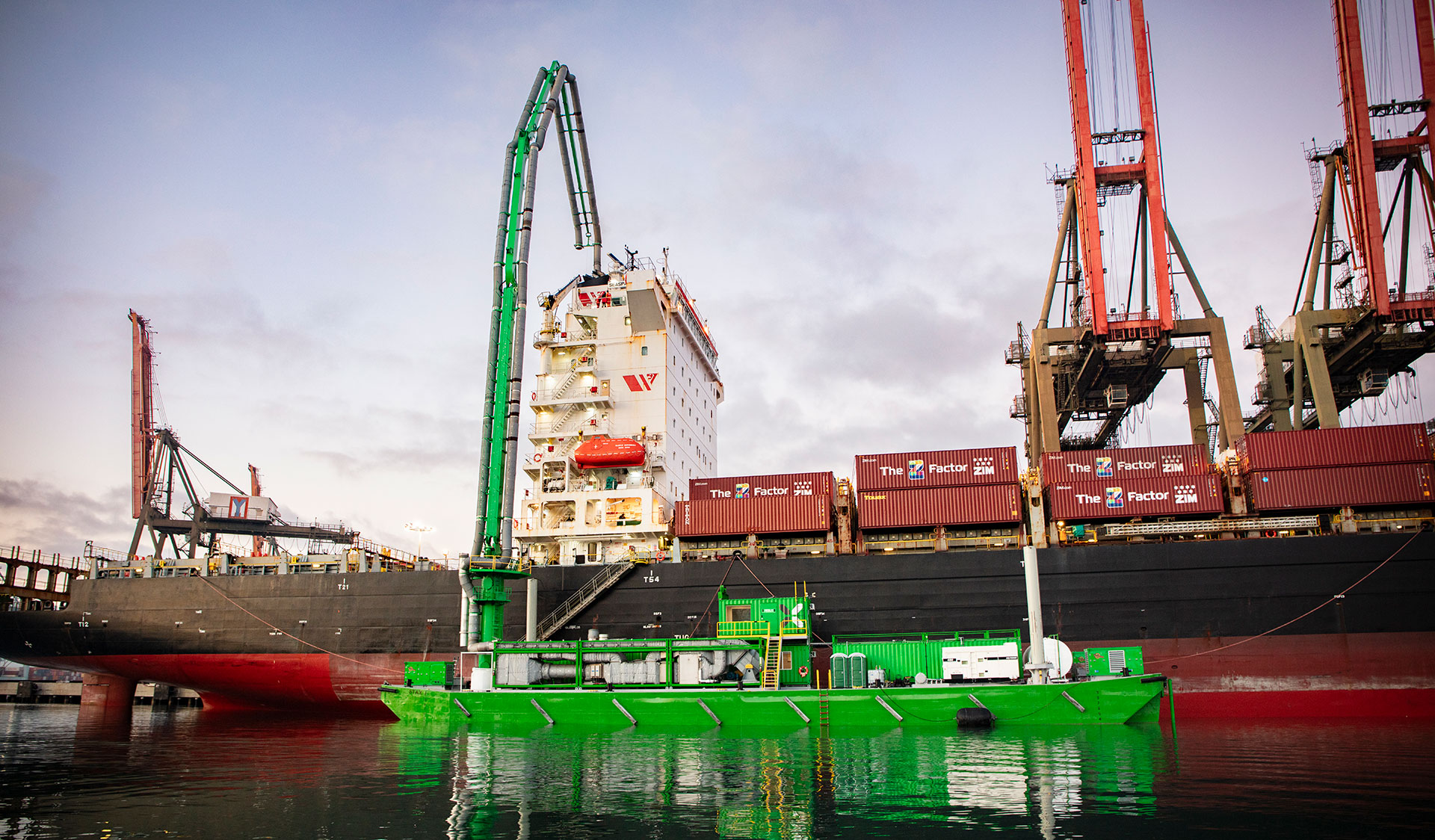
One example is onshore power supply (OPS). During 2025, Port Esbjerg delivered 1,740 MWh of electricity to berthed vessels, avoiding an estimated 386 tonnes of CO₂ emissions by allowing ships to switch off auxiliary engines while alongside. Those avoided emissions are reported separately from the port’s own carbon footprint to provide a clearer picture of where the environmental benefit occurs.
The report also draws attention to waste management as part of the decarbonisation picture. More than 99% of ship waste collected at the port entered recovery streams during 2025. Through recycling and waste-to-energy processes, the recovered material generated about 2,300 MWh of electricity and district heating, enough to supply around 575 Danish households for a year.
“Our environmental responsibility begins with our own operations, but it does not end there,” the report states.
That principle has implications for shipowners as well as port authorities. As operators seek lower emissions across the voyage, ports are taking a larger role by providing shore power, supporting circular waste systems and preparing infrastructure for alternative fuels.
Port Esbjerg also makes a distinction between emissions it controls and those generated by tenants, terminal operators and visiting vessels. By separating direct emissions from enabled environmental benefits, the port aims to give shipowners and other stakeholders a more transparent account of where progress is taking place and how infrastructure contributes to wider decarbonisation efforts.