Two years into the Red Sea crisis, a dramatic game of “resuming navigation” is playing out in Ismailia, Egypt. The Suez Canal Authority (SCA) unilaterally announced that Maersk would resume sailing the Red Sea in early December. However, just hours later, Maersk issued a clarification stating that the company currently has “no timeline for resuming navigation.” Behind this information reversal lies the Suez Canal’s urgent expectation for shipping companies to return, as well as the continued caution exercised by the carriers themselves.
The “Temperature Difference” Behind High-Level Handshakes
On November 25, the Suez Canal Authority (SCA) and the global shipping giant A.P. Moller-Maersk (Maersk) signed a landmark strategic partnership agreement in Ismailia. However, this high-level meeting intended to showcase cooperation caused significant market turbulence due to one statement.
In its official press release, the SCA prominently declared that, as a precursor to a full resumption of operations, Maersk vessels would resume transit through the Suez Canal in early December this year. SCA Chairman Adm. Ossama Rabiee further interpreted this as a signal of the global supply chain returning to normal and specifically mentioned the role of the Sharm El-Sheikh summit in promoting the regional peace process.
Rabiee revealed that the easing situation is directly reflected in the data. Navigation statistics for October and November this year both show signs of recovery: 1,136 vessels transited in October, with a net tonnage of 47.1 million tons and revenue of $372.9 million, a significant increase from $322.1 million in the same period last year. In November, 1,156 vessels transited, with a net tonnage of 48.5 million tons and revenue of $383.4 million, showing month-on-month growth as well.
However, before enthusiasm in the capital markets could ignite, it was doused by a “bucket of cold water” from Maersk.
A Maersk media spokesperson stated in a declaration sent to Shipping Circle Focus that there is currently no timeline for resuming navigation: “Connecting Asia and Europe via the Bab el-Mandeb Strait and the Red Sea is the fastest, most sustainable, and most efficient way for us to serve our customers. Maersk hopes this route can be restored as soon as possible. As progress is made on the Gaza ceasefire, we are closely monitoring the situation in the region and conducting ongoing in-depth security assessments. The situation in the Red Sea is gradually stabilizing, and the prospect of this globally vital trade route resuming free passage is encouraging. We hope the situation continues to develop positively.”
“The safety of our crew, assets, and customer cargo is always our top priority. Once the relevant conditions can ensure the safety and reliability of the maritime network, we will initiate operational plans to resume normal routes via the Suez Canal. In this process, we will make every effort to ensure the predictability and stability of vessel schedules.”
The Canal’s Anxiety and the Shipping Companies’ “Testing”
This “misinformation” incident reveals the Suez Canal Authority’s eagerness for the resumption of Red Sea navigation. In 2023, Suez Canal revenue reached a record high of $10.2 billion, but constrained by the Red Sea crisis, this figure dropped to $3.9 billion in 2024. The Suez Canal Authority previously projected that revenue in 2025 is expected to reach $4.2 billion, indicating some recovery.
Previously, the Suez Canal Authority had introduced toll reduction plans to encourage shipping companies to resume routes via the canal. In early November, the Suez Canal Authority again held a closed-door meeting in Cairo, inviting representatives from 20 international shipping companies and agencies to discuss the latest security situation and future route planning for the Red Sea and Bab el-Mandeb Strait region. Meeting minutes from that time showed that major carriers like CMA CGM, Hapag-Lloyd, MSC, Evergreen Marine, and COSCO Shipping all sent positive signals. CMA CGM planned to further increase voyages via the Suez Canal, MSC anticipated that “southbound voyages would resume rapidly in the near future,” Evergreen Marine stated it would “resume the route immediately once the security situation is fully stabilized,” while COSCO Shipping judged that, as the regional situation gradually stabilizes, more shipping companies would successively return to the Suez Canal.
In early November, after the Houthis clearly signaled a cessation of Red Sea operations, market expectations for shipping companies resuming Red Sea navigation increased again. Reports indicated that CMA CGM’s container ships “Benjamin Franklin,” “Helium,” and “Jules Verne” had all transited the Suez Canal.
Following CMA CGM, Israeli shipping company Zim Integrated Shipping Services (Zim) also stated that it is developing operational plans to resume navigation through the Suez Canal and expects to restore transit on this route once the security situation stabilizes. Company CEO Eli Glickman said in an earnings call that, although the current ceasefire agreement in Gaza represents positive progress, confirming the durability of the ceasefire is needed before fully resuming navigation through the Suez Canal. The company is closely monitoring the situation and believes the possibility of resuming navigation in the near future is increasing. He emphasized: “Once the security situation stabilizes, we will be ready to take action to support this transition.”
However, data shows that the resumption of Red Sea navigation remains less than ideal. Data from Clarksons Research as of November 13 shows that ship traffic in the Red Sea region remains far below “normal” levels; measured by gross tonnage, the average daily traffic of ships in the Gulf of Aden in early November was about 65% lower than the 2023 average. Clarksons Research expects that ships will not return to the Red Sea region on a large scale in the short term. Most shipping companies remain cautious about resuming navigation and may only consider it after the Red Sea region shows signs of long-term stability and the current situation has substantially improved.
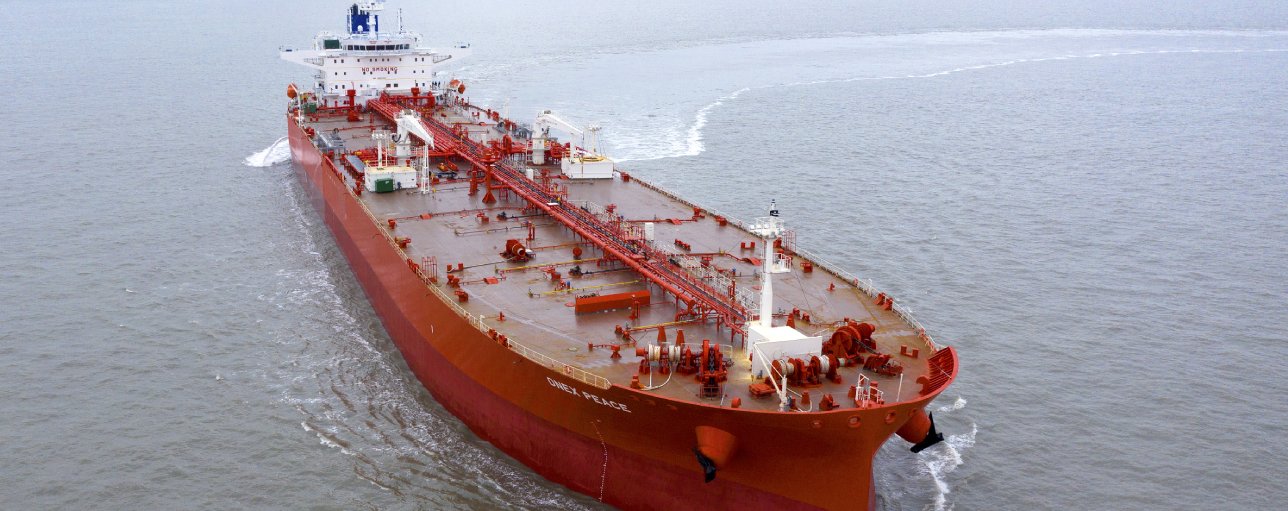
Furthermore, resumption trends will vary across different ship type markets. High-frequency data from Clarksons Research shows a significant recent increase in tanker traffic, but container ship traffic remains low, with average daily traffic about 90% lower than the 2023 average, consistent with the year-to-date trend. It is expected that the large-scale resumption of container ships will occur later than that of bulk carriers and tankers. Recently, several leading liner companies have reiterated that they will continue to choose the detour via the Cape of Good Hope.
Meanwhile, data from COSCO Shipping Technology’s ship-visualization platform shows that, as of November 26, the container ship capacity on Europe-Mediterranean routes still taking detours remains close to 4 million TEU, almost unchanged from the end of October.
Core Logic: Resuming Navigation Could Become a Freight Rate “Killer”
Market observers believe that even if Red Sea security risks ease, shipping companies are still hesitant to return. The biggest concern is no longer the geopolitical situation, but the “price impact of capacity returning.”
Analysis data from Xeneta shows that, so far, due to the tense Red Sea situation, approximately 2 million TEU of global container shipping capacity has been forced to detour via the Cape of Good Hope. John McCown estimates that this crisis has reduced global shipping capacity by 8%. If the Red Sea suddenly becomes passable again, this capacity would be “released” in the short term, potentially further depressing freight rates and exacerbating the industry’s supply-demand imbalance.
Peter Sand, Chief Analyst at Xeneta, emphasized that global shipping companies need to prepare for a potentially larger oversupply in 2026. “Even without changes in the Red Sea situation, shipping companies have already entered the loss zone, and global freight rates are expected to fall by up to 25% in 2026.” He further stated that shipping companies should develop contingency plans to cope with potential significant market fluctuations following a restoration of the Red Sea situation.
From a professional perspective, the Suez Canal Authority’s “resumption declaration” is a迫切愿景 under eased geopolitical tensions; whereas Maersk’s “cool denial” is a realistic choice based on commercial rationality and market dynamics.
For shipping companies, resuming Red Sea navigation is a double-edged sword: it can shorten voyage times and reduce fuel costs, but it could also instantly release a vast amount of currently constrained capacity, thereby “puncturing” the current freight rates. Until the security situation becomes completely clear, this “tug-of-war” surrounding the Suez Canal is destined to continue. For the global supply chain, a true return still requires time, and the next market shock might be quietly brewing the moment shipping routes are fully restored.