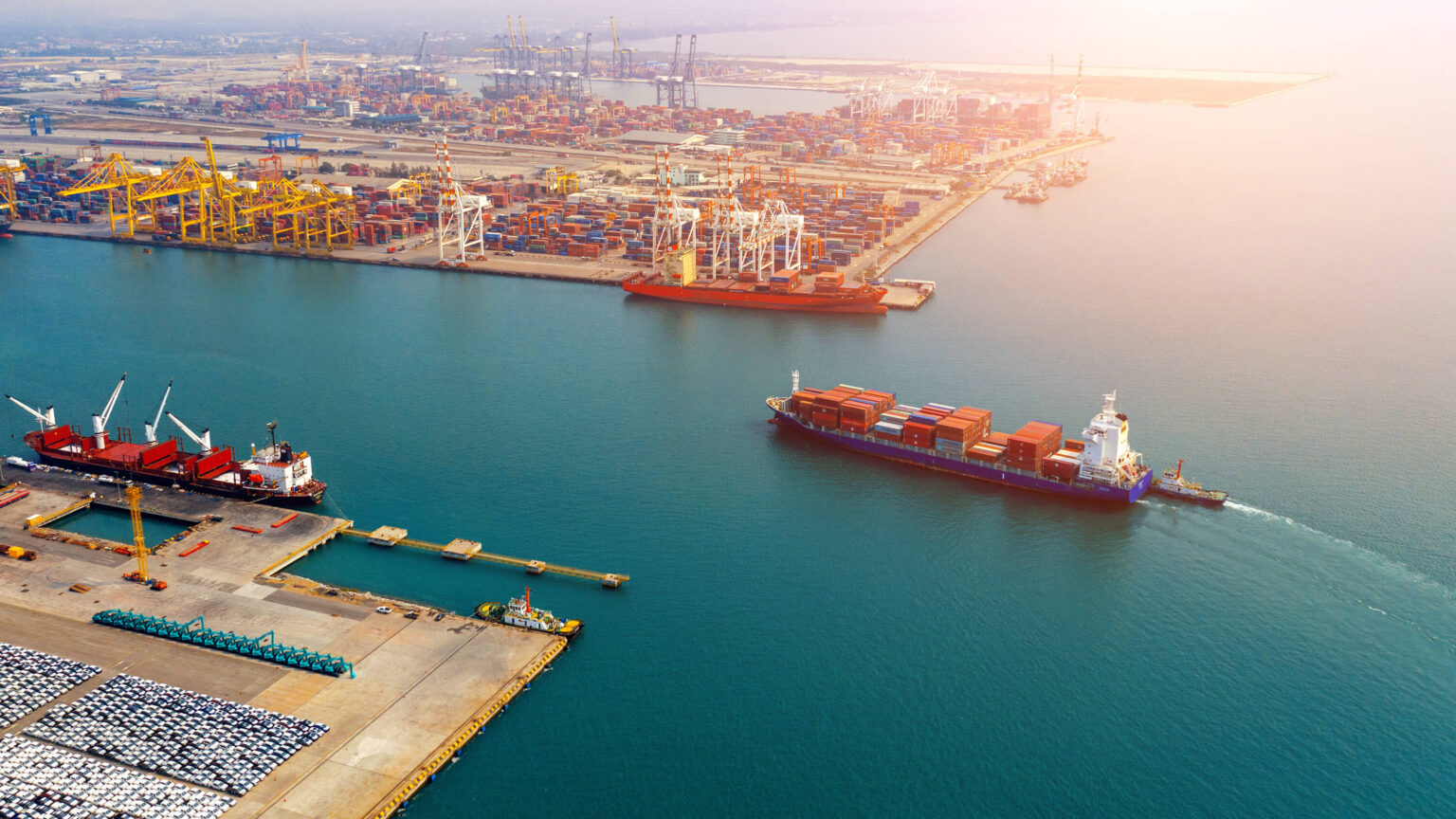
After nine years, the Gunsan Shipyard in North Jeolla Province, South Korea, has finally found a new owner. The shipyard was completely shut down in 2017; in October 2022, it gradually resumed shipbuilding operations, primarily focusing on the construction of hull blocks. With the completion of this acquisition, the shipyard will truly achieve a full-scale restart and will be equipped with the capability to build complete vessels.
On June 26, JE Ocean Heavy Industries and HD Hyundai Heavy Industries formally signed the “Agreement on the Acquisition of Gunsan Shipyard Assets and Business Cooperation,” with the transaction valued at 780 billion won (approximately $508 million). JE Ocean Heavy Industries is a joint venture established by the South Korean private equity firm Ecoprime Marine Pacific and HJ Heavy Industries specifically to operate the Gunsan Shipyard. Ecoprime Marine Pacific is also the largest shareholder of HJ Heavy Industries.
Under the agreement, HD Hyundai Heavy Industries will transfer all relevant tangible assets of the Gunsan Shipyard (including factory buildings, employee dormitories, technical training centers, and other supporting facilities) to JE Ocean Heavy Industries, with the transfer of asset ownership scheduled to be completed on December 31, 2026.
Upon completion of the transfer, JE Ocean Heavy Industries will renovate the Gunsan Shipyard’s existing shipbuilding processes, operational workflows, and equipment, and complete the infrastructure necessary for full-scale shipbuilding.
As early as March 2026, HD Hyundai Heavy Industries and Ecoprime Marine Pacific had signed a Memorandum of Understanding (MoU) regarding the acquisition of the Gunsan Shipyard’s assets. Subsequently, both parties conducted on-site inspections and due diligence at the Gunsan Shipyard, ultimately leading to the formalization of this acquisition agreement.
HD Hyundai Heavy Industries stated that the sale of the Gunsan Shipyard is aimed at divesting non-core assets and improving overall operational efficiency. Even after the sale of the Gunsan Shipyard is complete, HD Hyundai Heavy Industries will continue to provide services such as hull section outsourcing, raw material procurement agency services, and technical support related to automation and smart shipyards.
Previously, Ecoprime Marine Pacific had announced a specific roadmap for the future development of the Gunsan Shipyard, planning to integrate HJ Heavy Industries’ accumulated ship design capabilities, eco-friendly ship technology, and global business network into the shipyard’s operations. In the future, the Gunsan Shipyard will no longer be limited to building ship sections; it plans to launch the shipbuilding process in phases starting in 2027, with the goal of delivering its first complete vessel in 2028.
Ecoprime Marine Pacific plans to build a world-class shipbuilding group through the joint operation of the Gunsan Shipyard and HJ Heavy Industries. HJ Heavy Industries’ Yeongdo Shipyard will be responsible for building eco-friendly and specialty vessels, while the Gunsan Shipyard, leveraging its production capacity advantages, will primarily build large commercial vessels such as VLCCs and serve as an MRO base for large naval vessels.
According to records, Qunshan Shipyard was once the youngest shipyard under HD Hyundai Heavy Industries. Established during the peak of the global shipbuilding market prior to the global financial crisis, it had a total investment of 1.2 trillion won.
Construction began in early 2008, and the shipyard officially began operations at the end of 2009. The shipyard covers an area of 1.8 million square meters and features what was then the world’s largest 1-million-ton dry dock (700 meters long) and a 1,650-ton gantry crane, capable of simultaneously constructing four large vessels. At the time, Gunsan Shipyard was one of the largest single-site shipyards in the world.
At its peak, Qunshan Shipyard employed more than 6,000 workers and could build about 20 ships annually. However, this prosperity was short-lived. Affected by the ongoing slump in the global shipbuilding market, orders for bulk carriers and container ships—the shipyard’s main products—shrank significantly. Ultimately, the shipyard was forced to suspend operations in 2017. Although production resumed in October 2022, it has still been unable to build complete vessels or secure orders for complete vessels in the nearly four years since.
A representative from JE Ocean Heavy Industries stated, “This acquisition will mark a major turning point, not only because it will provide the company with shipyard land and equipment, but also because it will revitalize the economy of North Jeolla Province as a whole. The company will make thorough preparations to ensure that new orders are secured smoothly and that all processes proceed without a hitch.”