On June 23, the first national-level seafarer assessment center in northern China—the Tianjin Maritime Safety Administration Seafarer Assessment Center—was officially inaugurated, marking a significant step in enhancing the soft power of international shipping and supporting the high-quality development of China’s seafarer workforce.
It is understood that the Tianjin Maritime Safety Administration Seafarer Assessment Center is the first national-level seafarer assessment center in northern China. It is equipped with internationally advanced hardware and software facilities, including a 360° panoramic navigation simulator, an automated engine room, a very large crude carrier simulator, and a dual-fuel engine simulator. The center comprises 17 comprehensive assessment rooms across three major categories—navigation, marine engineering, and marine electrical and electronic engineering—and 280 computer-based testing stations.
Multiple national firsts, assessment facilities leading domestically
As the first national-level seafarer assessment center in northern China, the center has achieved, for the first time domestically, intelligent assessment for eight major subjects: electronic charts, voyage planning, route design, cargo stowage and securing calculations, radar and navigation instruments, GMDSS, maritime meteorology, and engine simulators. It boasts the highest proportion of intelligent assessment items, with an assessment intelligence level that is domestically leading and internationally first-class.
The most noteworthy feature is the nation’s first “real-time linkage” system between the bridge and the engine room. This system can simulate the entire process of a captain issuing commands, followed by the coordinated cooperation of deck and engine department seafarers to integrally operate various equipment including the ship, machinery, electrical systems, and communications. The scenarios covered range from voyage planning to emergency response, upgrading examinations from “single-person operation” to “team collaboration,” truly realizing “assessment mirrors practice, practice mirrors assessment.”
Another highlight of the center is the nationally pioneering physical simulation automated engine room. Through deep software-hardware synergy, over 1,000 fault points are pre-set. Using a modular assessment process of “sub-system, sub-task, sub-step” for practical troubleshooting, examinees can identify problems in real-time, solve them, and verify answers, enabling precise assessment of fault diagnosis and troubleshooting capabilities. Furthermore, the entire engine room can operate without oil or water, highly replicating the operational effects of a ship’s propulsion system while creating a green training scenario with zero pollution, low energy consumption, and high safety. It is estimated that this will save over 200 tons of fuel annually, marking a key step in promoting the transformation of seafarer training towards intelligence, green practices, and high efficiency.
Additionally, the internationally leading 360° panoramic navigation simulator can simulate over 150 ports and more than 200 ship types globally, highly replicating any complex waterway, extreme weather, and sea conditions. It is also equipped with a DP system, OSV module, and bridge wing operating system, laying the foundation for China to independently conduct related training and examination assessments in the future.
Reducing human intervention, upholding the bottom line of fairness and justice
To ensure the fairness, scientific rigor, and authority of examination and assessment results, the Tianjin Maritime Safety Administration Seafarer Assessment Center fully utilizes intelligent technological means, striving to reduce human intervention factors and effectively safeguard the fundamental bottom line of fairness and justice in seafarer examinations.
According to reports, the center has innovatively established the first domestic intelligent assessment system for navigation instruments, the first domestic intelligent assessment system for electronic charts, and an internationally advanced intelligent assessment system for cargo stowage and securing. These systems can track and record seafarer operational behavior throughout the process and automatically generate objective scoring results, improving assessment efficiency while avoiding subjective bias in manual scoring.
“We have also built an intelligent seafarer examination management system and an assessment scoring system, achieving full-task linkage and full-process control over examination scheduling, organization, examiner assignment, and scoring,” introduced Li Zhiqing, Director of the Seafarer Division of Tianjin Maritime Safety Administration.
Aligning with shipping development, reserving space for upgrades and optimization
The Tianjin Maritime Safety Administration Seafarer Assessment Center is based in Tianjin, radiating to northern China. It primarily focuses on competency assessments for management-level seafarers on sea-going ships, such as captains and chief engineers, while also accommodating competency assessments for operational-level seafarers.
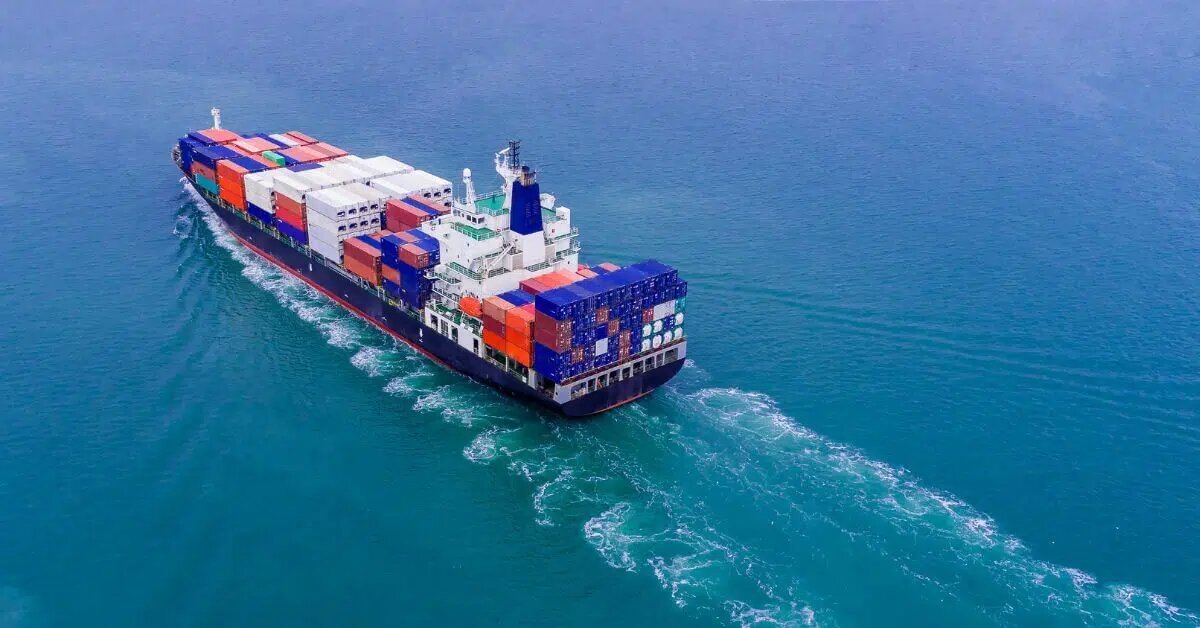
The assessment scenarios at the center not only cover conventional ship types like bulk carriers and container ships but also innovatively introduce new energy ship types such as LNG, LPG, and dual-fuel vessels, laying the groundwork for future examinations and assessments of specialized ships.
“Based on thorough research, we have deeply considered the future trend towards specialization and large-scale development of ships. We have not only made forward-looking configurations for foreseeable seafarer training and assessment projects but also reserved interfaces for related software and ship model research and development platforms. This allows us to precisely align with shipping development needs, cultivating and reserving high-quality, versatile seafarer talents for new types of ships like intelligent ships and green ships,” Li Zhiqing stated.
In the next step, the Tianjin Maritime Safety Administration will follow the development direction of “high intelligence, deep integration, and assessment collaboration,” striving to create a new benchmark for seafarer assessment that is domestically leading and internationally first-class. It will focus on enhancing the service level of high-end shipping, empowering the construction of Tianjin’s Northern International Shipping Core Area to improve and upgrade, and providing solid support for the high-quality development of China’s seafarer workforce.
Statement: This article is reproduced for the purpose of conveying more information. If there are errors in the source attribution or infringement upon your legitimate rights and interests, please contact this website with the relevant credentials, and we will promptly correct or delete it. Thank you.