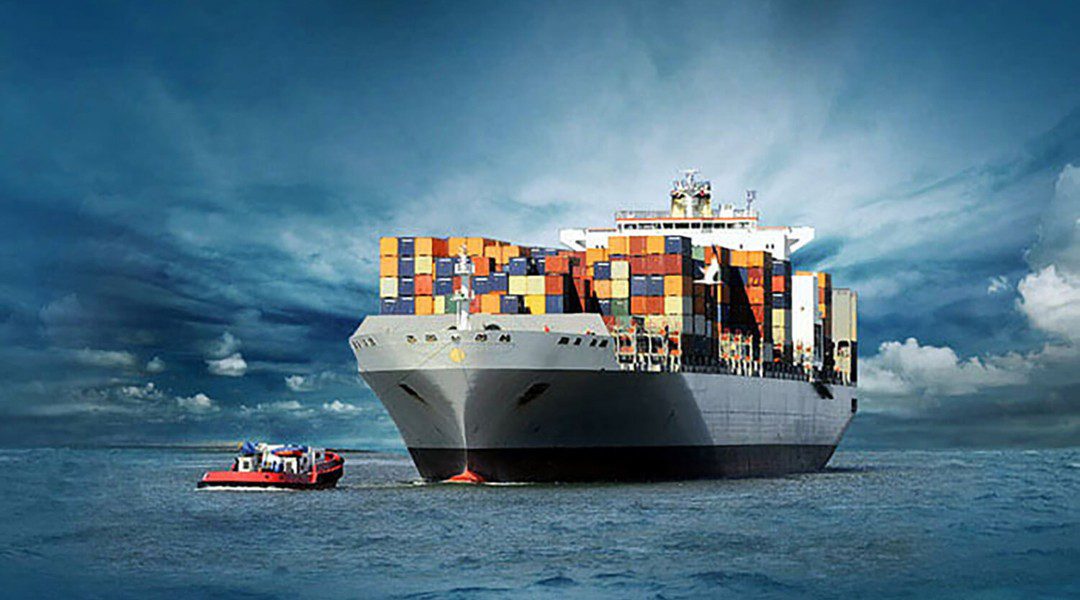
On July 22, the Port of Rotterdam released its operational data for the first half of 2025, reporting a container throughput of 7 million TEUs, surpassing the 6.91 million TEUs handled by the Port of Antwerp-Bruges during the same period, thus maintaining its position as Europe’s largest container port.
Specifically, in the first half of 2025, the Port of Rotterdam’s total cargo throughput declined by 4.1% to 211 million tons. The largest decreases were seen in dry bulk (-8.9%) and liquid bulk (-5.3%). Container throughput increased by 2.7% year-on-year, reaching 7 million TEUs.
In short, on July 16, the Port of Antwerp-Bruges released its first-half 2025 data, showing a container throughput of 6.91 million TEUs, up 3.7% year-on-year. This confirms that the Port of Rotterdam remains Europe’s largest container port.
The Port of Rotterdam noted that the growth in container throughput, measured in TEUs, can be attributed to the recovery of European consumption. Imports from Asia increased by 8.4%, while throughput to and from North America grew by 9.1%. The primary reason was an increase in shipping routes following the alliance restructuring in February this year.
However, when measured by weight, container throughput also declined by 1.0% to 66.5 million tons. This reduction can be explained by the fact that more empty containers were transported. The volume of laden export containers decreased by 5%, which can be attributed to the persistently weak competitive position of European industry.
Busy Container Handling
The Port of Rotterdam pointed out that it faced exceptional congestion in handling container flows this year. This was due to various factors, including the need to deploy new sailing schedules (phased service introductions and withdrawals) due to alliance restructuring, high vessel call volumes, operational disruptions, and challenging weather conditions early in the year, all of which led to increased waiting times on the landside of terminal operations. Consequently, inland transport, particularly in the road haulage sector, experienced longer-than-usual delays.
The Port of Rotterdam stated that port congestion has been brought under control: the number of large container ships waiting is very limited. Since the beginning of the year, schedule reliability has improved, and dwell times at terminals have decreased. In the first half of the year, Rhine water levels and U.S. import tariffs on exports from Europe and China had no significant negative impact on container throughput.
Boudewijn Siemons, CEO of the Port of Rotterdam, said, “In recent months, we as a port have faced economic uncertainty, lagging investments, and supply chain disruptions.”
“During these turbulent times, as a port, we must ensure the security of supply for Europe’s energy, food, and other essential materials. It is also crucial for the port industry to remain competitive so as not to weaken Europe’s strategic autonomy.”
Security and Resilience
Recently, security conditions worldwide have deteriorated. The Port of Rotterdam is also enhancing its “wartime preparedness” and aims to support defense logistics when necessary. Such support requires the port’s space, mooring, and transshipment capabilities to move vessels and cargo inland via rail, road, and waterways. Exercises may also be conducted more frequently in the port.