/Agencia Reuters
The de facto closure of the Strait of Hormuz due to the military conflict with Iran has caused a shift in crude oil export routes and maritime trade toward the eastern coast of the United Arab Emirates (UAE), turning the Middle Eastern country into a new logistics hub of the Persian Gulf.
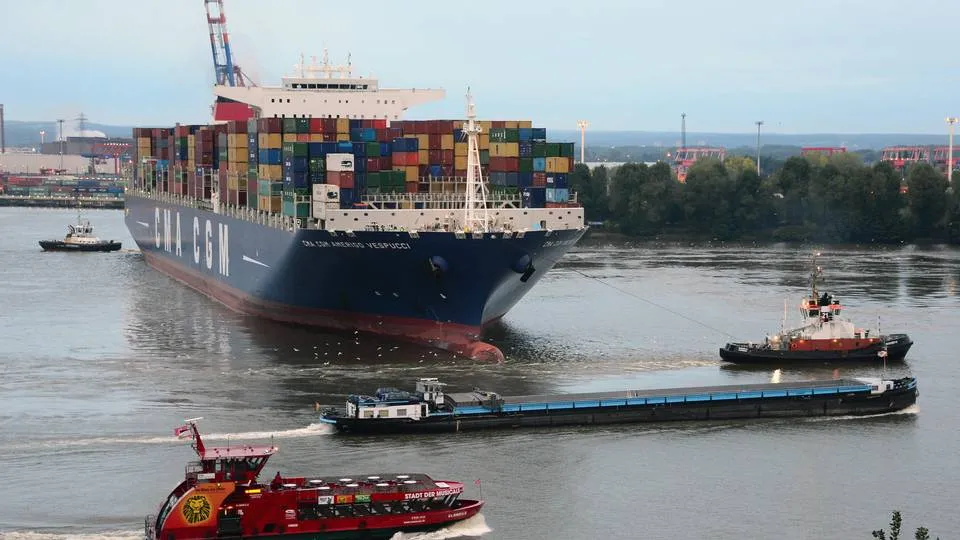
The ports of Fujairah and Khor Fakkan have become the region’s economic lifeline, recording increases of up to 38% in hydrocarbon shipments and a 25-fold rise in the volume of containers processed, given the impossibility of navigating the area’s traditional routes.
The paralysis of transit through Hormuz has generated an immediate impact on global supply, with an estimated loss of 12 million barrels of oil per day. This situation has driven up demand for crude oil from alternative suppliers such as Norway and the United States.
While Norwegian oil company Equinor reports its highest profits in three years and unprecedented interest from clients in Asia and Australia, construction of the Texas GulfLink project has accelerated in Texas, destined to become the first major deepwater export terminal in the U.S. capable of fully loading supertankers.
In the United Arab Emirates, strategic infrastructure has helped mitigate the blockade. The Abu Dhabi Crude Oil Pipeline is operating near its maximum capacity, transporting up to 1.8 million barrels per day directly to the Port of Fujairah in the Gulf of Oman.
Meanwhile, the port facility of Khor Fakkan has gone from handling 2,000 containers per week to 50,000, assuming the role of gateway for essential supplies, from food to medical materials, which previously entered through the now-blocked terminals on the western coast.
Despite its critical importance, this new commercial architecture faces growing security risks. Recently, drone attacks attributed to Iran struck the Fujairah Oil Industry Zone, causing fires at storage facilities.
Simultaneously, Iran’s Revolutionary Guard has issued maps suggesting an expansion of its control zone toward the eastern coastline of the UAE, forcing commercial shipping companies to adopt evasive tactics, such as disconnecting their automatic identification systems (AIS) and using alternative navigation routes.
The shift in trade flows appears to have long-term projections given the uncertainty over the reopening of the straits. Regional logistics operators such as Gulftainer have already announced investments exceeding $100 million to develop dry ports and inland distribution centers.
This reconfiguration not only affects the UAE but also underscores the vulnerability of countries like Qatar, Kuwait, and Bahrain, whose maritime connections depend exclusively on the Hormuz passage, forcing them to rely on land transport infrastructure and the eastern Emirati ports to maintain their foreign trade.