Fast-moving change in satellite communications is bringing new opportunities and benefits to offshore connectivity
Rapid developments in satellite communications are transforming the way the offshore sector operates and communicates. New satellite constellations, advanced antennas and faster modems are providing high-speed connectivity with lower latency for offshore vessel owners.
Corporate communications, teamwork, telemedicine, e-learning and remote maintenance can now be carried out using the latest terminals and satellites.
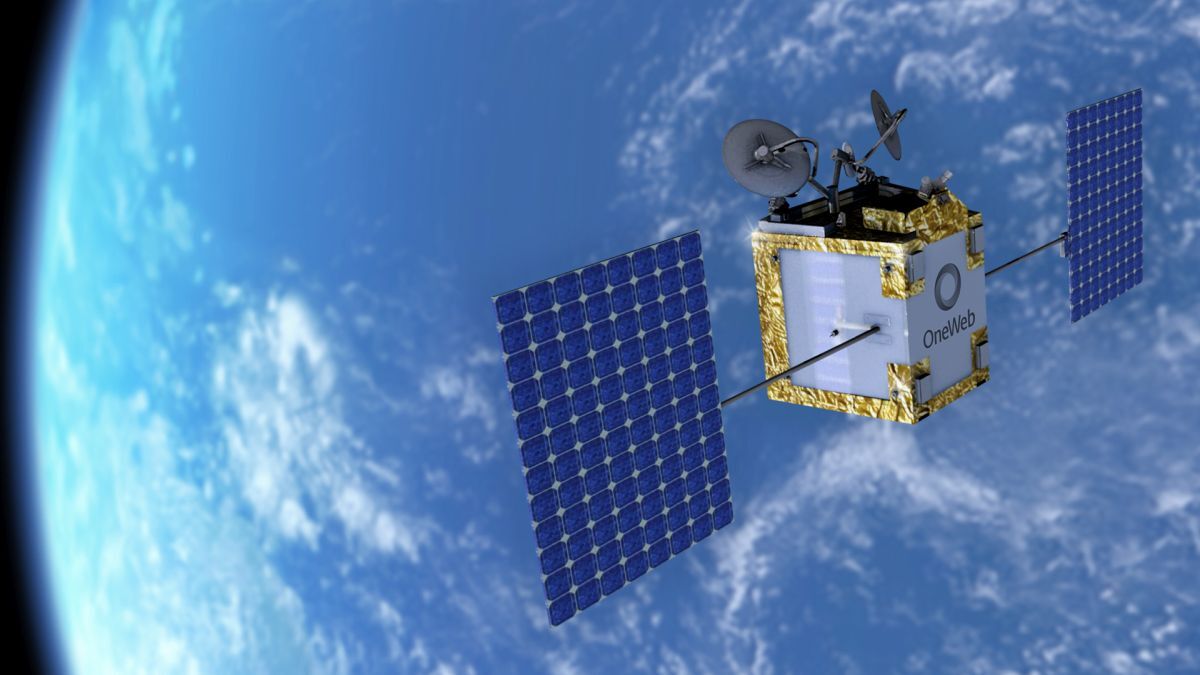
This year, low Earth orbit (LEO) satellites will start to augment connectivity available from geostationary (GEO) satellites. OneWeb expects to resume launching its LEO satellites using US-based SpaceX and New Space India facilities.
OneWeb, partly owned by the UK Government, saw its drive to build a global network of LEO satellites stalled when Russia invaded Ukraine. This cancelled a series of proposed launches from the Baikonur Cosmodrome in Kazakhstan, which is operated by Russia.
OneWeb has 428 satellites, 66% of the planned total fleet, in orbit. This is enough for a regional service of high-speed, low-latency connectivity north of the 50th parallel. It needs to launch the other 34% for a global network.
OneWeb director for maritime and energy Celeste Endrino-Cowley and vice president for maritime and energy Carole Plessy explained how LEO satellites would generate new opportunities for offshore communications during Riviera Maritime Media’s How LEO satellites will transform maritime and offshore connectivity webinar, held 22 March 2022.
Ms Endrino-Cowley said 648 satellites would be in 12 orbital planes to provide global LEO coverage using 40 ground stations. “We will be able to deliver 100 Mbps to a vessel with low latency of 70 ms,” she said. LEO satellites are 1,200 km from Earth, compared with GEO satellites, which are a height of 35,000 km, with a latency of 600-800 ms.
“Low latency really matters within the offshore industry,” said Ms Endrino-Cowley. “Our mission is to transform connectivity. To provide enterprise-grade connectivity at sea to support accelerated digitalisation within the industry.”
She expects LEO satellites will allow large volumes of data to be transmitted in real time for critical operations, such as remote inspection and surveys, offshore internet-of-things (IoT) and cloud computing. “IoT and cloud can be enabled with high-speed connections at low latency,” said Ms Endrino-Cowley. “The connected offshore field provides greater insight and improves performance across the value chain.”
Ms Plessy said OneWeb will pilot connectivity in the offshore sector this year and plans to offer LEO communications in the maritime market in 2023. “We will be working with our partners to bring connectivity to ships and offshore support vessels in 2023,” she said. “We will bring connectivity at sea with 10 times more bandwidth than available now, but at similar costs.”
“Low latency is critical for command and control operations”
Ms Plessy said OneWeb would work with distribution partners such as Speedcast, Marlink, Eutelsat and Applied Satellite Technologies (so far announced) and hardware partners, including Intellian. “This is a risk-free approach to launch with a proven solution and distribution partners who will package this,” said Ms Plessy. “We are working to make sure it fits in different sectors as there is no one solution.”
Owner perspective
Fugro director of positioning and construction support, Alastair McKie, said low latency and high speeds will be important for operating autonomous vessels for offshore applications. “Data volumes of up to 50 GB per day could be required to transfer data to shore,” he said. “Low latency is critical for command and control operations.”
Fugro requires low latency to remotely control its fleet of unmanned surface vessels (USVs), which have Intellian-supplied VSAT on board for Ku-band communications over GEO satellites.
For crewed vessels, bandwidth will need to be higher for welfare services and operational requirements. Internet and social media are growing in importance for offshore vessel crews. “Everyone expects to stream everything in real time,” said Mr McKie. “But we are not there at present, and it is a challenge to users and vessel owners.”
Other considerations are service quality, the bandwidth pipes to vessels, the price of connectivity and system redundancy. “Sometimes, total bandwidth is important and sometimes cost is more important. Flexibility is most important for all of this,” said Mr McKie.
He would welcome communications over LEO satellites for their low latency, high capacity and global coverage. “LEO will be part of the toolkit of the integrated communications package,” he said.