1. The necessity of avoiding the risk of delays from the perspective of canal congestion
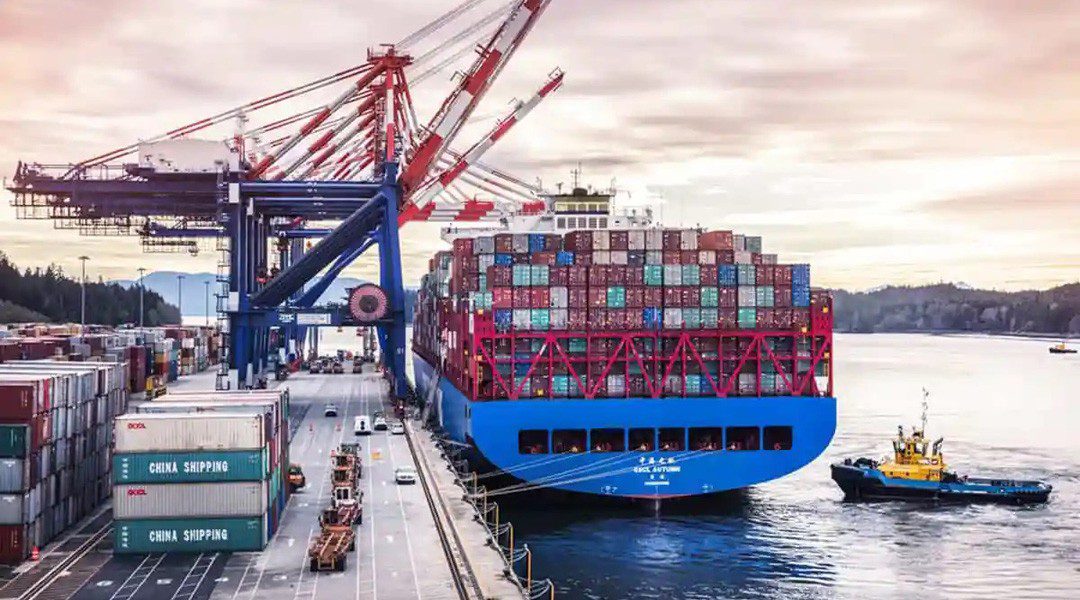
Since July, the Panama Canal has been affected by drought and continues to limit the number of ships passing through. At the end of July, the Canal Authority reduced the number of ships that could pass through from 36 to 32 per day. According to Maritime Traffic, 264 ships waiting to pass through the canal on August 16. Norton Lilly, a shipping agency, said that the average waiting time for some large cruise ships has increased to 18 days. Container rents on the Far East to North America route are still rising, while the risk of delays of around two weeks is unavoidable. Peter Sand, an analyst at Xeneta, said: “Congestion in the Panama Canal has increased, and shipping companies should consider their options and control risks. ”
Congestion in the Panama Canal is not unique, and the run-off of the “Nagaci” in the Suez Canal in March 2021 also caused economic losses to more than 400 ships, including the “Nagaci”, due to delays. According to relevant reports, on March 27, 2021, three days after the grounding accident, about 321 ships were forced to wait in place due to channel blockage; On March 29, 2021, the “Changci Ship” resurfaced, and the Suez Canal channel resumed traffic at 19 o’clock local time, at which time more than 400 ships had been queuing for several days; Then it took another three and a half days for the Suez Canal to return to flow. Since then, the “Naga Ci Ship” has continued to be detained by Egyptian authorities to investigate the accident and resolve the guarantee issue. As a 20,000TEU super-large ship, its cargo value is about $100 million, and the blockage of the canal has caused more than 420 ships to be delayed by an average of about 6 days. If you add ships that detour early, nearly 500 ships have suffered delay losses of varying degrees, with daily rentals of $3-60,000 and daily rental losses totaling up to $20 million.
The “Changci Ship” ran aground in the Suez Canal and was called the “black swan” event in the shipping industry, but similar grounding accidents have actually occurred many times in the Suez Canal. At the same time, the congestion in the Panama Canal has not caused ship delays this year. The repeated occurrence of “black swan” events means the existence of “systemic risk”. In fact, the risks of shipping delays extend far beyond channel blockages, inclement weather, strikes, fires, wars, mechanical damage, ship collisions, casualties and injuries on board, saving lives, contraband investigations, port anomalies, cyberattacks, and fuel non-compliance…… Various risks from both onboard and shore can cause delays on the vessel and cause schedule losses for owners and charterers.
For a long time, especially before the “Changci Ship” grounding accident, the shipping market and even the marine insurance industry did not pay enough attention to such a huge “systemic risk”, and were caught off guard by such incidents, causing a large number of lease disputes. However, at present, the daily rent of some ship types such as car carriers and LNG carriers once exceeded 100,000 US dollars, coupled with the rapid development of the trend of large-scale ships, once shipping delays occur, the operating costs and rental losses caused by the delay are bound to cause great economic losses and cash flow gaps and other financial risks to shipowners and charterers. There is no doubt that the risk of shipping delay has become an important risk that cannot be ignored in the shipping market, and the causality, unpredictability and uncontrollability of the delay risk are fully in line with the basic characteristics of insurance, which is increasingly causing the industry to think about the necessity of avoiding this risk.
2. Insurance analysis of underwriting delay risk: Take shipping delay insurance as an example
The characteristics of shipping delay risk include the basic elements of insurance and are a risk that can be quantified underwriting. For the marine insurance industry, providing flexible, economical and effective shipping delay insurance protection for shipping entities such as shipowners and charterers is undoubtedly a path requirement to help the industry avoid delay risks. However, due to factors such as underwriting scale and economies of scale, there are not many products in the marine insurance market that underwrite shipping delay risks, and only China Shipowners Mutual Insurance Association provides “Marine Delay Insurance” (MDI) insurance business.
Insurance with high market adaptability first needs to have broad and representative coverage. MDI divides the underwriting risks into two categories: “shore events” and “shipboard events” according to the location and type of impact of risks: “shore incidents” cover 14 types of delay risks, including shore strikes, shore fires, severe weather damage to shore supply chains, war, damage to freight vehicles, port channel closures, import and export controls, requisition or confiscation, etc.; “Incidents on board” covers 16 delay risks, including crew strikes, ship collisions, injuries and deaths on board, ship pollution, crime investigations, ship quarantine, ship fires, piracy or riots, and war. MDI’s extensive coverage covers almost all unexpected risks that can cause delays in the operation of a ship, with more than a dozen risks being the same as those under P&I and H&M, making shipping risks highly representative. It’s just that MDI, P&I, H&M, are different types of insurance, and they cover different targets of the same risk.
The flexible and economical underwriting method is the externalization of MDI’s financial attributes and shipping characteristics. The basic framework of MDI insurance is to allow the insured to personally select all or part of the risks in the coverage according to their own operational conditions, that is, the insured can only insure the “shore event” or “shipboard event” risk, or even only the individual risks. At the time of underwriting, each participating vessel registers a specific Daily Entered Sum (DES) at the time of underwriting, which constitutes the maximum amount of compensation that the insured can receive for delays. The determination of DES has a certain meaning, and the insured can agree with the insurer on this. Taking into account rental freight markets and vessel changes, the Insured may modify the DES with the written consent of the Insurer during a year of insurance, provided that it is based on a fair and reasonable estimate of:
(1) Daily revenue of the vessel (minus fuel or other expenses saved due to delays);
(2) the daily rent or other remuneration payable by the company (less expenses saved or due to delay);
(3) The daily operating cost of the ship.
Different policyholders can freely choose to determine their DES based on operating costs, rent levels, or a combination of other factors based on their position in the compound contractual relationship and the interest risk structure, so as to determine the premium and claim standards that meet their own project plan and budget needs.
In the case of the “Nagashi Ship” grounding accident, if the delayed ship is insured with MDI, the income of the “Nagaci Ship” and other waiting ships will be protected to a certain extent. The “Nagashi Ship” can receive up to 20 days of DES compensation, while about 400 ships blocked outside the canal can receive 5 days (6 days of delay minus 1 day deductible) DES compensation.
3. Interaction between shipping delay insurance and other marine insurance
Shipping delay insurance not only has its own independence, but also complements and connects with other marine insurance. As a traditional marine insurance product, P&I and H&M cover the risks faced in most shipping activities, which is very representative of maritime shipping risks, but they only cover the damage of ship property and the tort or contractual liability caused by these risks. At the same time, horizontally, MDI combines the special attributes of delay risk to include a broader risk category than P&I and H&M, such as cyber attacks, onshore supply chain delays, etc., so as to be more targeted to delay risks.
Under ship insurance, rental loss insurance (hereinafter referred to as LOH), as a popular insurance product in recent years, has the characteristics of ship insurance supplementary insurance to a certain extent, which can provide compensation for the loss of shipping schedule caused by the risk under ship insurance, but it is obviously different from shipping delay insurance in terms of function:
(1) In terms of deductible, MDI is generally 1 day, LOH is generally 14 days;
(2) In terms of compensation limit, MDI focuses on short-term delay losses in the early stage, so the MDI limit is up to 20 days. LOH focuses on long-term rental suspension losses, so LOH’s compensation limit is generally 90 days or 180 days;
(3) In terms of insurance, MDI can be insured through mutual aid dues or fixed-rate premiums, and the main body of the insured includes shipowners, charterers, charterers and ship operators. LOH is generally insured through fixed rates, and the insured is generally limited to shipowners or charterers;
(4) In terms of underwriting, MDI is underwritten by a separate delay insurance insurer and is not dependent on other insurance, and the underwriting risk covers almost all maritime or shore risk events that may cause shipping delays. As an additional insurance for ship insurance, most insurers do not underwrite it separately, generally on the premise of purchasing ship insurance, and the underwriting risk is limited to the risk under ship insurance.
Structurally, MDI and LOH have a certain connection under certain risks. MDI is positioned to supplement the possible deductible for LOH insurance, if the deductible is 14 days, MDI can cover the loss of income that may arise from the delay of the first 14 days until the rental loss insurance is applied to compensate for the loss of the insured, and on the other hand, it covers the loss of time caused by certain risks not covered by other LOH insurance. Therefore, in terms of structure, both vertically and horizontally, it plays a complementary role.
The following is an LOH claim case:
Insured vessel A only LOH was arranged. During the voyage, the ship found that the vibration of the main engine increased, and after anchoring, it was inspected and found that the screws of the main engine spindle shock absorber fixed the side plate were broken. After arranging for the manufacturer’s service engineer to board the ship for inspection, it was found that the spring plate in the shock absorber was seriously damaged and the main engine could no longer be used normally. On March 21, 2021, the tenant notified the suspension of the lease, and then the A car was towed to the repair shop by a tug for permanent repairs. As of May 26, 2021, the total time for rental loss suffered by the owner of Ship A due to delays in repairing machinery was 66 days. According to the terms of the rental loss insurance, after deducting the 21-day deductible period agreed in the policy, the final recognized loss time is 45 days, and LOH will compensate the rental loss amount of USD17,000.00/day * 45 days = USD765,000.00. In this case, since the A line was only insured with LOH, the shipowner had to bear the loss of the shipping schedule for 21 days, totaling USD17,000.00/day * 21 days = USD357,000.00. If the owner of the ship A is insured with MDI at the same time as the LOH, the MDI will pay for the rental loss for the 20 days before the LOH applies, and the owner will only have to bear the rental loss for one day (MDI deductible), i.e. only $17,000 in damage.
The case of Series A fully illustrates that joining MDI can provide more comprehensive protection for ship owners, charterers, and ship operators than only insuring LOH. In terms of limits and deductibles, MDI complements LOH very economically, as in many cases the insured may suffer the most severe losses in the early stages of the delay.
4. The significance of shipping delay insurance to the shipping market
Based on the breadth of the coverage, MDI can protect the stakeholders including ship owners, charterers, ship management companies, joint venture operators, etc., and insuring MDI can avoid the loss of ship schedule revenue caused by delays to a considerable extent for a wide range of shipping market players. Among many market entities, whether the economic losses caused by the risk of delays can be effectively avoided may be of particular significance to “financial shipowners” including “gold leasing companies” in addition to traditional shipowners and light charterers.
At present, in China’s shipping market, more financial leasing companies are becoming “new shipowners” through “operating leasing”. In the traditional “financing charter” relationship, the shipping leasing company will lease the ship to the charterer as a bareboat, and transfer all the risks and benefits related to the ownership of the ship during the ship lease period, which is essentially a financing method of purchasing the ship through installments. In the “operating charter” relationship, only the right to use the ship is transferred, and the risks and benefits related to the ownership of the ship are still borne by the ship lessor, that is, the shipping leasing company: the ship lessee only pays the relevant fees according to the terms of the charterparty contract, and the operating chartered ship after the lease period expires is returned to the lessor or purchased by the chartering company. Therefore, during the operating chartering period, once there is a shipping delay, the loss of schedule revenue caused by the delay will be borne by the shipowner (i.e., the shipping leasing company). Of course, in practice, the loss and the associated operational liability and legal risks may be transferred or redistributed through more complex contractual relationships. At present, China’s shipping financing market is in a critical period of growth, and under the influence of the turmoil in the Western banking industry, the participation of Chinese leasing companies has increased significantly in the new round of shipping financing. At the same time, the proportion of container ships in financial leasing ship types has declined, LNG carriers and car carriers have become hot spots for new shipbuilding, and China is occupying a high level of orders for these popular ship types with daily rents of more than $100,000. On the other hand, China’s shipping finance market is facing greater growth pressure, with lease expirations, an increase in early returns and redemptions, and the re-entry of European banks, all of which require relevant market players to carefully treat and handle every risk to cope with severe market volatility. With both challenges and opportunities, how to reduce the economic losses caused by shipping risks other than financial risks may become an important factor for Chinese shipping leasing companies to win. In terms of making up for the loss of income caused by shipping delays, MDI is currently the only insurance product that can help financial shipowners.
In fact, the significance of MDI to the shipping market has gone beyond insurance itself, and its financial derivatives enable the insured, namely shipowners and charterers, including shipping leasing companies, to hedge freight cycle risks by insuring MDI. The freight market hedging reflected by MDI not only helps to ensure the cash flow of shipowners, but also effectively helps shipping market players achieve the system goal of risk control quantification.
Whether the traditional shipping insurance solution is comprehensive and multi-dimensional is a question worth continuing to explore with the development of the shipping industry. MDI’s insurance rules allow shipping leasing companies, ship management companies, and charterers to join as “co-insured”, while multiple branches of ship management companies can insure MDI for participating ships as “group members”. In the core environment of ESG promoting the sustainable development of the global shipping industry, MDI’s insurance solutions can better combine shipping needs with financial characteristics, so as to help relevant market players cope with the development and changes of unconventional markets and escort the construction and operation of new and large ships.