For me, the most delightful thing is to lie on the sofa at home, stroking the globe—the five continents and four oceans, all laid out beneath my eyelids. My thoughts leap from one place name to another, and the charm, romance, and associations hidden behind these names evoke infinite longing. How I hope that one day, I can embark on new journeys to explore this unknown world.
I. An 84-Day Westbound Global Voyage
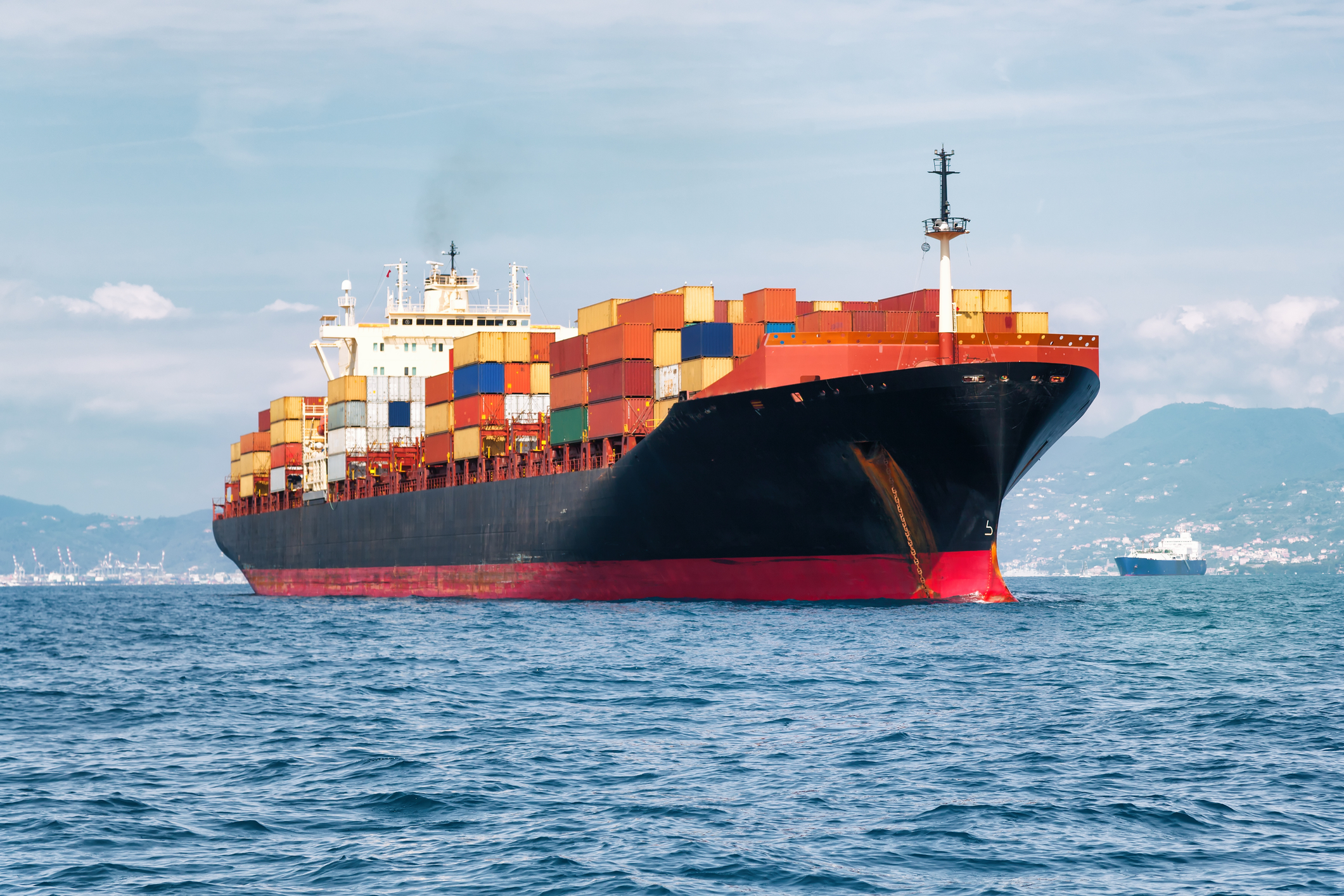
I was once a sailor, third mate, second mate, chief mate, and captain on a general cargo ship, then captain of a multi-purpose cargo ship and a small container ship, and later the captain of a large container ship. A typical voyage was the 84-day westbound global journey of a large container liner—departing from Shanghai Port, guided by the Shanghai pilot out of the Yangtze River estuary into the East China Sea; after brief stops in Hong Kong and Singapore to load additional cargo, passing through the Strait of Malacca, crossing the Indian Ocean, the Gulf of Aden, the Red Sea, and transiting the Suez Canal; then calling at Genoa, Barcelona, and Valencia before exiting the Strait of Gibraltar, crossing the North Atlantic to dock at New York, Savannah, and Miami; afterward, traversing the Panama Canal and continuing westward along the Mexican coast, calling at Long Beach, Seattle, and Vancouver; finally, crossing the North Pacific, passing through Japan’s Tsugaru Strait into the Sea of Japan, and returning to the home port of Shanghai.
An 84-day journey, devoid of the luxury of a cruise ship or the thrill of a sloop, only the routine work and life of the maritime industry—day and night, setting the clock back by one hour each day, working, resting, sailing, berthing, entering ports, handling procedures, loading and unloading containers, departing… a cycle repeating endlessly.
The ship’s speed is relatively slow compared to cars or trains, though container ships are relatively fast, reaching about 25 knots (46 kilometers per hour). Thirty or forty years ago, most ships could only manage around 10 knots. Compared to high-speed racing games, with GPS in the sky, VTS in ports, and mandatory onboard systems like AIS, electronic charts, VHF, MF radios, satellite phones, and collision avoidance radar today, navigating a ship is much easier than it was for our ancestors. However, we can never afford a “GAME OVER” moment.
II. Entering the Depths of Shanghai Port and Breaking Out of Asia
Many ports worldwide, like Shanghai Port, operate in close relation to the tides. But Shanghai Port does not rise and fall with the tide; it is always busy. At high tide, a long procession of ships of various sizes and types enters the South Channel and North Channel deep-water routes from the Yangtze River estuary, riding the high tide in single file toward Shanghai Port or terminals along the Yangtze River provinces. The captain of a large, heavily laden vessel must calculate the usable tide height, deduct the required under-keel clearance, to load more cargo at the port of departure and still enter Shanghai Port. Before the high tide at Changxing, the massive inbound fleet in the deep-water channel meets an equally massive outbound fleet of laden ships—two parallel lines of vessels moving in opposite directions, each keeping to their lane, a spectacular sight. After passing the deep-water channel, they enter the Waigaoqiao Channel, one of the world’s busiest waterways, where ships from all directions converge, creating a scene of “a hundred boats vying for passage” that is no exaggeration. Ships entering the Huangpu River of Shanghai Port must also calculate the tidal current, aiming to dock at the initial ebb tide or, at the latest, by the end of the ebb, to maximize the convenience and safety of berthing operations. The owners of small ships laden with yellow sand need only consider the tide, striving to sail with the current as much as possible, riding the rising tide to harness nature’s power… At such times, these sand carriers resemble a school of fish crossing the river, bustling and bustling, driven by profit. So many inbound ships must eventually leave Shanghai Port, some choosing to depart on the ebb tide, perhaps without any set pattern…
A seasoned Shanghai Port pilot once told me that they don’t care about holidays or weekends; they care about whether it’s spring tide or neap tide. Their day is 24 hours and 50 minutes long. Without consulting tide tables, they simply calculate the lunar date to know the exact time of high tide, when it’s best to depart or berth. My former general cargo ship visited this regular semi-diurnal tidal port, where the tide arrives punctually twice daily, multiple times. The ship would sail inward with the current from the Yangtze River estuary; stroll slowly along the Huangpu River, “reviewed” by tourists on both sides of the Bund; glide past Dongjiadu, Manlizui, Zhagang, and other twists and turns… arriving at the port’s depths in Minhang District’s Zhagang, requiring continuous pilotage for eleven hours.
Now, my large container ship easily passes through the Taiwan Strait, sails the South China Sea, traverses the Strait of Malacca, and enters the Indian Ocean—effectively leaving Southeast Asia. In the past, Zheng He’s voyages to the Western Seas were a feat of immense scale and difficulty, with over two hundred sailboats crammed into the twenty-nautical-mile-wide Strait of Malacca, advancing majestically like a gathering storm. Even today, organizing and commanding such a massive fleet would be a highly complex系统工程—back then, there were no sound signals, flag signals, light signals, let alone radio communications.
Zheng He’s fleet made seven voyages to the Western Seas, reaching so many countries’ ports—truly no easy task.
Asia has the largest population, is the world’s factory, and a hub of shipping, with the most shipping companies. It’s no exaggeration to say that more than half of the world’s ships are in Asia or on their way to Asia. Many Asian countries, such as the Philippines, India, and China, are major seafaring nations and exporters of seafaring labor. But many Chinese seafarers, engaged in inland river shipping, port operations, or coastal domestic trade, never break out of Asia in their lifetime. My father was one of them, which might be why I had a globe at a much younger age than my peers.
III. Sailing to Unfamiliar Places
The greatest advantage of serving on container liners is that it made me as familiar with the workflow as driving to my mother-in-law’s house—second nature. I am easily content and often downplay the difficulties encountered in work and life. To illustrate the high cost-effectiveness of the job—when I was a rule-abiding officer on a small container liner on the China-Japan route, I would often tell my family the exact day of my return upon boarding, even specifying whether it would be morning or afternoon, including whether I’d join them for lunch or dinner. I’d tell them what delicious food or fun attractions were available at each port, encouraging them to make requests—youthful ignorance of my family’s concern for my safety.
When, during a voyage, I received a telegram (in the past, every long-voyage ship had several telegraph operators) ordering me to transfer to a new route and ports I’d never visited before, a mix of emotions arose, but I’m certain the strongest was excitement. Perhaps, like me, you had a globe from a young age, often spinning it, wide-eyed, searching for those tiny, unfamiliar place names, filled with fantasies. And today, I could finally break free from the daily monotony, sail my ship to an unfamiliar port, meet unfamiliar people, see unfamiliar scenery…
In theory, an internationally trading ship can sail to any port not restricted by insurance companies, as long as the port provides a berth where the ship can safely float—that is, sufficient berth tonnage greater than the ship’s full load displacement, and enough depth to avoid grounding. Route planning is the first step of the long journey, far more poetic than preparing supplies, fuel, water, and other mundane matters. However, the reality is that, as captain, I have little discretion in route selection. For example, from China to a port in the Mediterranean, you don’t even need to翻阅 thick stacks of Royal Navy资料; just gently turn the globe to see that you must pass through the Taiwan Strait, South China Sea, Singapore Strait, Strait of Malacca, cross the Bay of Bengal and Arabian Sea, enter the Red Sea via the Gulf of Aden, and transit the Suez Canal into the Mediterranean. For ocean crossings, there is no single fixed optimal geographic route. As captain, under the premise of safety, economy is the primary concern—the aforementioned Tsugaru Strait is chosen for economy. In the 1970s, Americans introduced the concept of weather routing, which fully considers waves, swells, wind, currents, and other factors to avoid stormy areas, ensuring safe navigation while minimizing voyage time and maximizing economic efficiency. If the company requires weather routing, we mostly have to follow the “instructions” of the weather routing company.
If I had the chance to ask seniors or colleagues about a new port, beyond inquiring about safe navigation, I was more interested in how to conveniently reach scenic spots, what local specialties offered good value, and where to find bars with unique ambiance. Because the captain of a globally trading multi-purpose cargo ship might not call at the same port twice within several years, perhaps only once in a lifetime. Thus, the captain’s job is filled with uncertainty, poetry, novelty, and challenge…
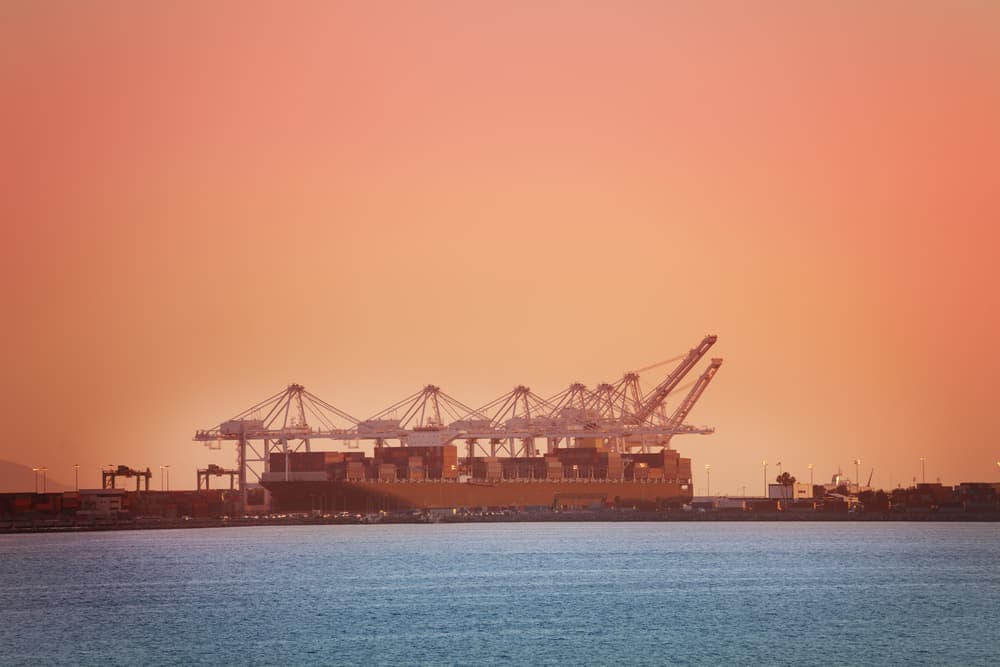
The approaching destination port is an exciting high point. After ten days or even nearly a month of deep and shallow sailing, after dozens of days and nights of researching materials and indirect inquiries, after daily discussions over tea or meals, and possibly encountering storms or fog, the unfamiliar port gradually overlaps with and clarifies from the imagined one before our eyes—we welcome the port pilot, assisting tugs approach us, our mooring lines are sent to the bollards on the wharf, our ship berths steadily, agents and relevant port officials come aboard to complete procedures, cargo handling begins… At this moment, tired, I gaze at the skyline of the unfamiliar port city, feeling a sense of accomplishment welling up inside.
IV. Ocean Voyage Route Design
The great circle route is a fundamental concept in cartography. Contrary to the rhumb line, the shortest distance between two points on a nautical chart is not a straight line connecting them, but rather a curve that bulges towards the pole. In the winter of the North Pacific, a route that bulges more towards the North Pole means high winds and rough seas, whereas a flatter route often enjoys calm weather with light winds and gentle waves. However, the captain’s professional ethics coupled with the shipowner’s strict demands always compel us to head resolutely towards higher latitudes, as long as it is the most optimized economic route. In my countless voyages across the North Pacific, I have never once caught a glimpse of the Hawaiian Islands…
There are also times when choices are difficult to make. If a ship is sailing from New Zealand to the UK, given that the longitudes of the port of departure and the port of destination are almost 180 degrees apart, this journey across the equator, the Greenwich meridian, or even the International Date Line first faces the directional question of sailing east or west. Heading west, should one take the Cape of Good Hope or the Suez Canal? Heading east, should one take the Strait of Magellan or the Panama Canal? Although the voyage through a canal is shorter than going around the capes of South Africa or South America, can the high canal fees offset the savings in fuel and shipping time from the reduced distance? If one forgoes the Suez Canal due to the rampant Somali pirates, or chooses Cape Horn due to congestion in the Panama Canal, then how should one consider the fierce winds and violent waves at the high latitudes of the Southern Hemisphere?
As an ocean-going captain, you might encounter unforgettable experiences—like this time when the COSCO SHIPPING Panama gained the right for the first voyage through the expanded Panama Canal, which really made the ship’s Indian captain famous (COSCO SHIPPING has some chartered ships and ships under flags of convenience, which have foreign seafarers). Therefore, if your ship is the first call after the company opens a new route, your ship is the largest vessel the port has ever received, or your ship is on its maiden voyage for a major company, or even the first ship to sail to the other country after the establishment of diplomatic relations between two nations, then what awaits you might also be flowers and fine wine. And when you see the nameplate with your name on it at the podium or take a photo with some dignitary, you really want to say to your father face to face: Dad, thank you for buying me that globe!
V. Bits of Seafarer Life
Life on board is relatively monotonous. A large group of men living together in a relatively confined space is somewhat like comrades-in-arms, somewhat like educated youth sent to the countryside; some relationships are like brothers, some like father and son; it also creates drinking buddies, smoking buddies, card-playing friends, and chess partners. After the advent of computers and mobile phones, they are replacing what used to be the main forms of entertainment on board—like playing cards and chess—because almost everyone has one now. After dinner, everyone retreats to their own room to watch movies, go online, or sit in a corner browsing WeChat, thus further shrinking the confined space of the ship into even smaller spaces. Eating is one of the most important activities on board. For most holiday dinners, everyone sets work aside, takes out the local specialties their wives or mothers tucked into the corners of their suitcases, fills their glasses again and again, and forgets their loneliness in the noise and slight intoxication. And when dawn comes, everything returns to its original state.
In the memories of mainland Chinese crew members, some Asian ports are closely associated with shopping—the semi-automatic parasols from old Singaporean shops in the 1970s, the launch boats filled with large and small items at the Hong Kong Fire Services Department pier in the 1980s, and the authentic Japanese electronics in the Kobe duty-free shops in the 1990s are all fond memories for seafarers from that era of material scarcity. But now it’s different. We might buy nothing, or we might buy Louis Vuitton bags, Pierre Cardin clothing, Rolex watches, Chanel cosmetics, Lafite wine, etc., although most are bought for others. Foreign shop assistants feel that Chinese seafarers are impressive and have purchasing power. If there were no restrictions, someone might even ask me to help bring back luxury cars or yachts, because I’ve already been asked to help bring back real estate advertisements from developed countries—they are getting restless.
Receiving notice that you can go home on leave after working for eight or nine months is certainly exciting, but the happiness at home always feels short-lived. When the telegram arrives to fly to a certain port to join a ship (we don’t use telegrams anymore, but we still call it a telegram, meaning it must be executed), the whole family becomes cautious. My wife silently helps me pack my clothes, my dad puffs away on cigarettes incessantly, my mom always叮嘱 (tells) me to take care of myself and also care about the lives of other crew members, my mischievous son plays quietly by himself in a corner not daring to make a sound, the hen still laying eggs hides away, and the farewell drink lacks the enthusiasm and畅快 (uninhibited joy) of the welcome drink… My cyclical work and life begin again. (July 2016)
Source: Eating Salted Radish, Authors: Cai Xuekang, Lu Yueming